
Japan - November 2025
Japan, Again? Absolutely.
It started out as a joke. When we were planning where to go this year, we joked, “Japan?” Then gradually it became a half-joke, until it wasn’t a joke at all anymore.
We just can’t get enough.
But, I will say, I feel like it’s different now. I don’t know if I’ll still feel this way in a few weeks or a few months, but I felt like we were running out of things to do when we were in Tokyo and Kyoto. I also felt like Japan has become completely overrun with tourists - granted, we, too, stick out like a sore thumb, me in my bright pink puffy and colorful Cotopaxi backpack amongst the locals dressed in black, white and beige. Even compared to just last year, there are so many more tourists, prices have gone up significantly, and I almost feel like some of the customs are starting to fade, like how the Japanese people used to receive and offer money with both hands.
The small towns still retain their charm, but even there, we found ourselves surrounded by tourists.
This trip was born with a desire to visit Kinosaki Onsen, a quaint little picturesque town in the middle of nowhere known for public hot spring baths and ryokans. We had also learned quite a bit about the Japanese Alps - Nagano and the snow monkeys, Matsumoto and the castle, Shirakawago and the thatched roofed houses. Since our travel time was late November-early December, we figured we could capitalize on (what we thought was) the path less traveled and enjoy autumn and the beginning of winter in Japan.
Another consideration was that we wanted to have a relatively affordable vacation. We maximized the use of credit card points and miles. All in all, the trip was $5,000 for the two of us for 11 days, including flights, accommodations, a rental car for the road trip part of the adventure, meals and the two additional bags of souvenirs we came home with.
Day 0: Wednesday, November 26th - EWR to HND
We had a direct flight from EWR to HND (UA131) that departed at 9:40. I had gotten the United credit card, which allows for two passes to the United Club a year, and we opted to check out the United lounges prior to our flight. We went to the lounge by Gate C123 (there is another one by C74), which was spacious and had large windows overlooking the tarmac. It even had showers, though we didn’t scope them out. The lounge was pretty crowded, but not too difficult to find seats. There was a breakfast spread of eggs, breakfast meats, breakfast sandwiches, fruit, a barista. I was surprised by the number of children and teenagers, and made me grateful that I was not brought up to travel in airport lounges when I was younger, grateful for the basics…humble beginnings if you will. In my opinion, the United lounge is nicer that the Priority Pass lounges, simply because there have been so many people eligible for Priority Pass of late.
On the flight, perhaps for the first time ever, my husband and I both slept. Not the whole time, but definitely napped a bit. Normally, our strategy is to stay awake for the entire flight, so that when you land in the afternoon, by the time you check into the hotel and grab dinner, you’re exhausted and sleep at a normal time, if not a little early, get a good night’s rest then hit the ground running for the first full day in Japan. We took short naps, and were still able to employ our strategy without driving ourselves crazy. I remember during our 2023 trip, I was so tired after checking into the hotel at 5PM that I didn’t want to venture out for dinner, but forced myself.
The flight going to Tokyo was longer than I remembered in the past, a whole 14 and a half hours! I passed the time by finishing my audiobook (The Frozen River), watching a couple of movies (The Accountant, The Accountant 2, Materialists, I’m not sure what else), reading November 9 by Colleen Hoover. Typically, for these very long flights, we try to book toward the back where there are two seats by the windows instead of three - in the past, we’ve gotten lucky and there is extra space to put our personal item and still have plenty of space to extend our legs. We weren’t able to secure those seats for this flight, and were assigned a window and middle seat, but we were fortunate in that the traveler who was assigned the aisle seat didn’t show, so we had the row to ourselves and plenty space to spread out.
Day 1: Thursday, November 27th - Tokyo
Our flight landed in Haneda at 14:50 in Terminal 1. Those with connecting flights had to collect their checked bags before catching their connection. We hadn’t filled out the immigration and customs forms online for the QR code, like we had in the past, so had to fill out on paper. If you fill out the forms ahead of time, you receive a QR code and it streamlines the process and is much more efficient.
After passing through customs and immigration, we reloaded our Suica cards by the Monorail and JR desk. Last time we were in Japan, we purchased Suica cards (not the Welcome Suica for tourists) and they were so useful for trains and subways and buses. We took the monorail to Hamamatsucho then took the Yamanote Line to Tokyo Station to pick up our Shinkansen tickets for Saturday (to Matsumoto). We stopped by the bus station, which was in the station building but accessed from the outside (we had to walk out of the building to get to the bus station ticket office), to see if we could get tickets to Kawaguchiko. We left this as an option with flexibility since we weren’t sure if the forecast would be clear, but all morning bus tickets were sold out. The first available bus would be 12:10 which wouldn't get to Kawaguchiko until 14:00 and the sun sets at 16:25. We were hoping to see Kawaguchiko in autumn with foliage, but didn’t think that the bus options would leave us with enough time to make the most of the day.
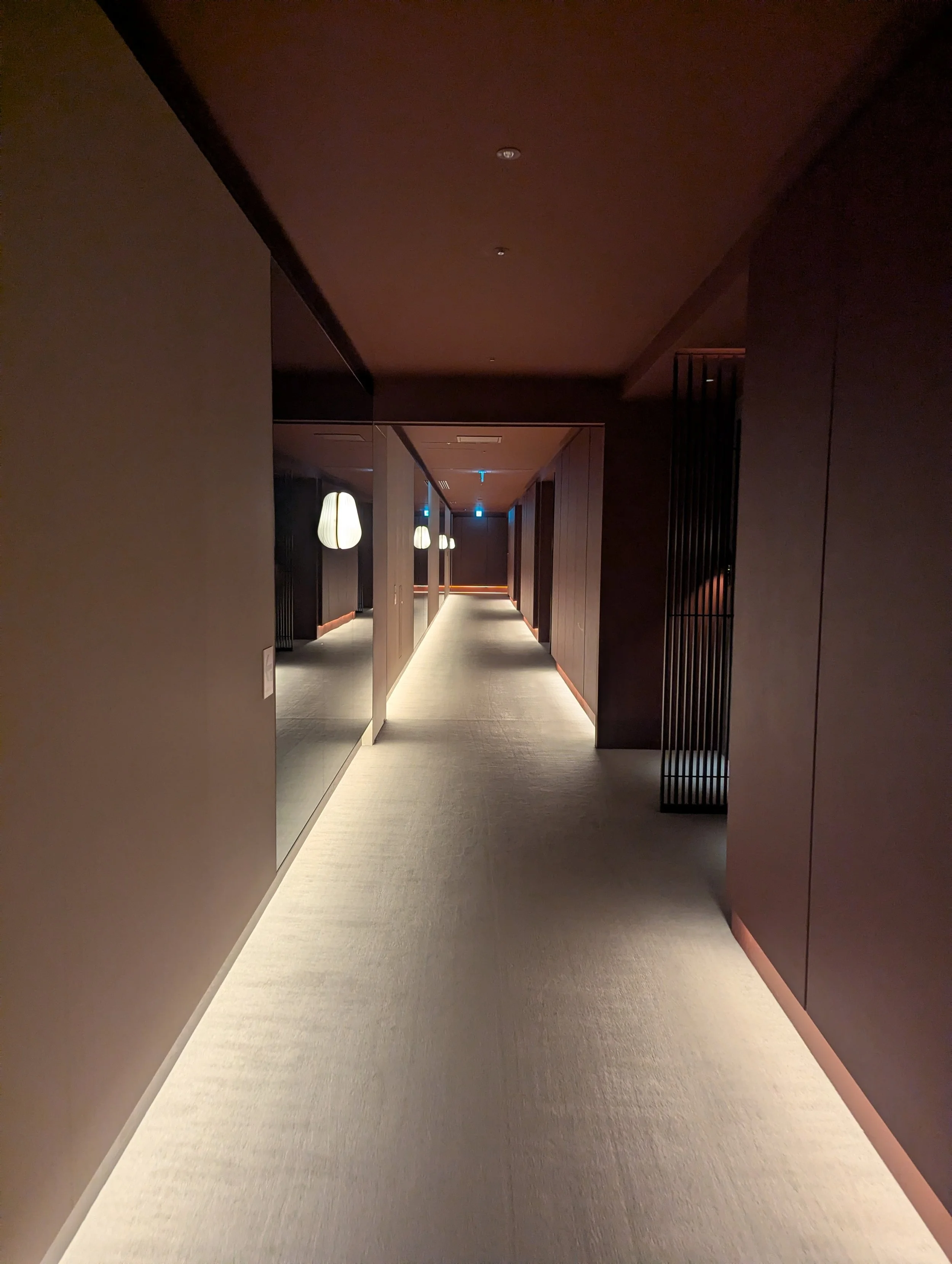
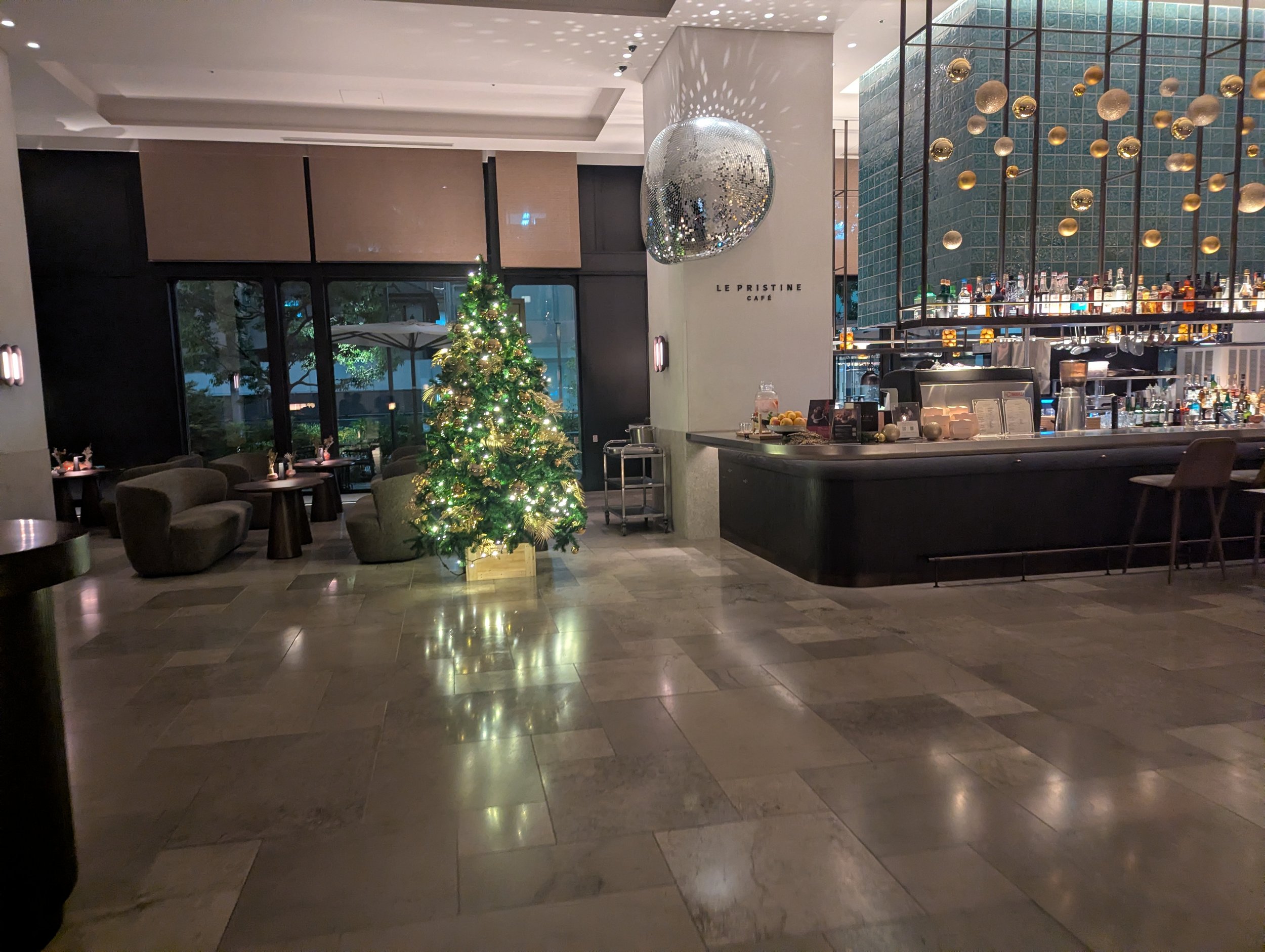
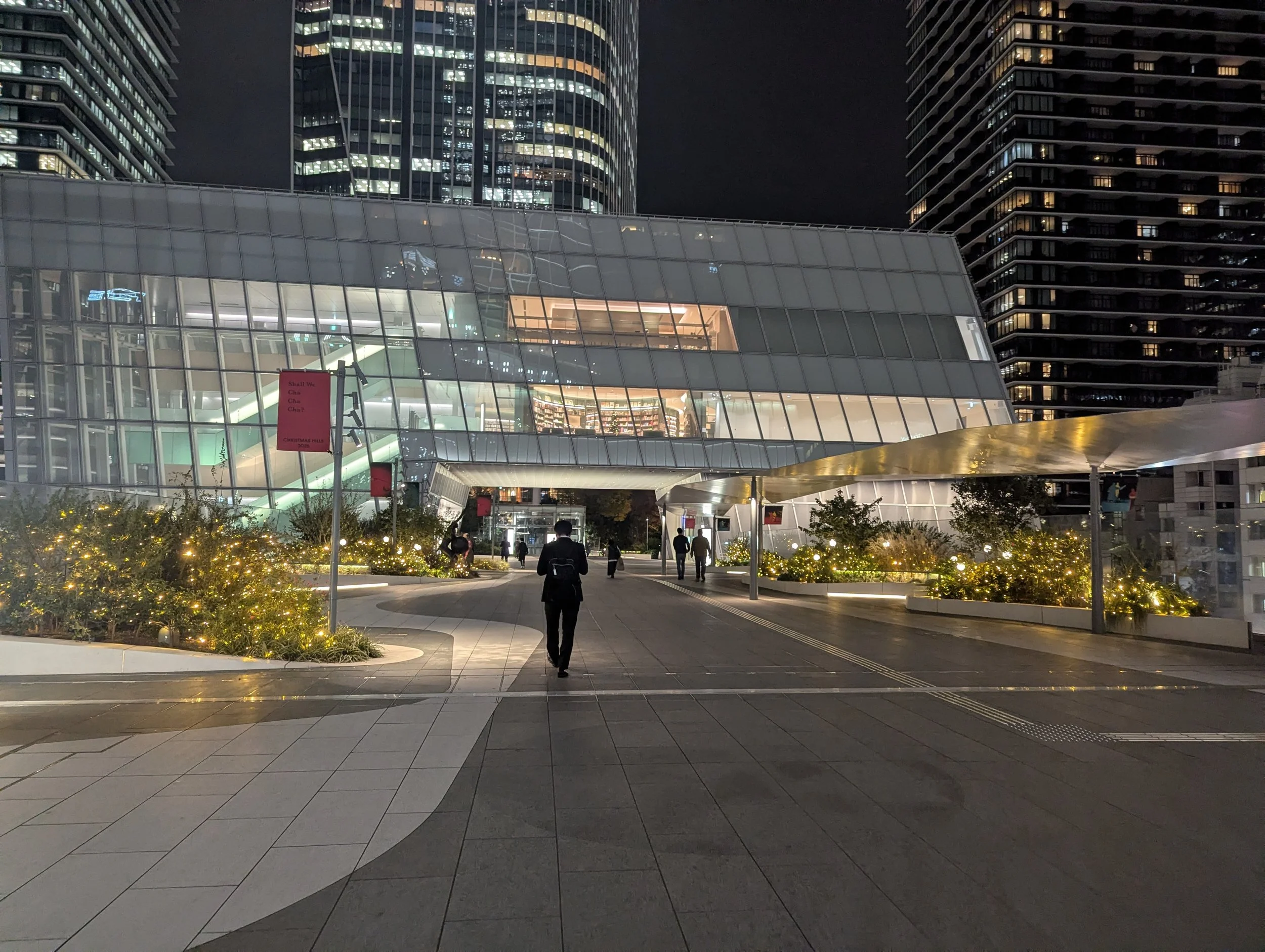
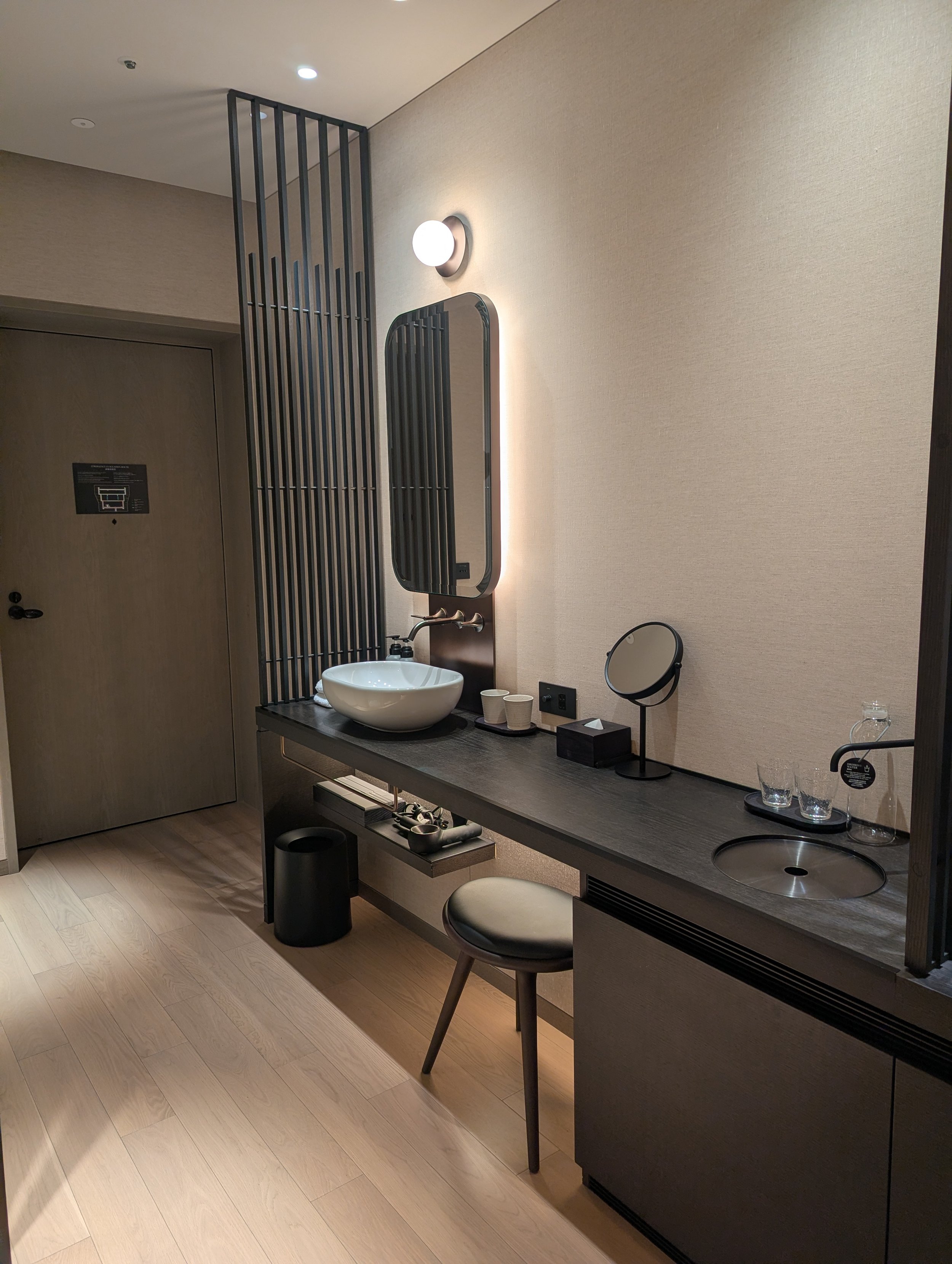
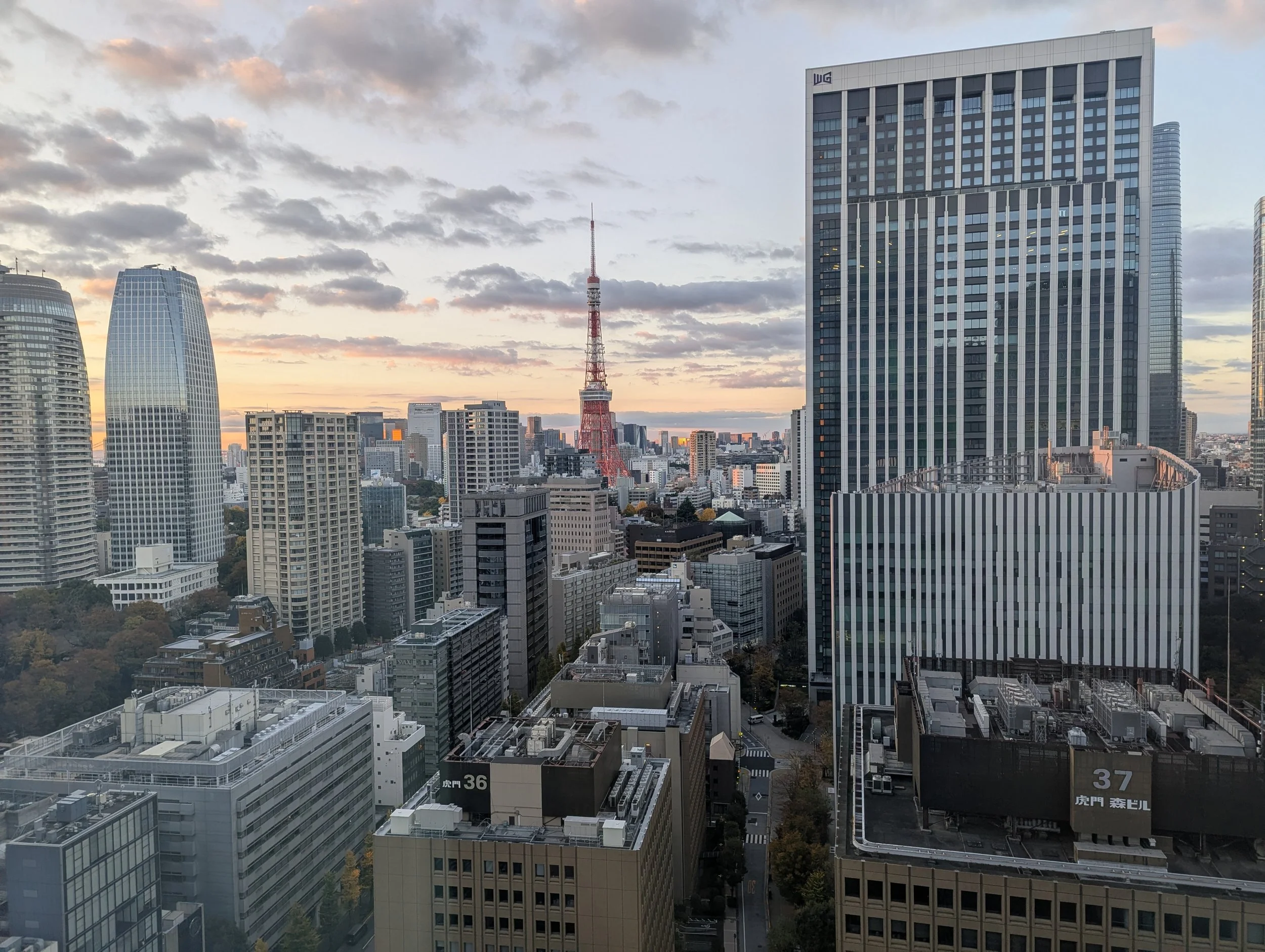
It was 16:40 by the time we had finished our errands of picking up tickets, and we hopped onto the Ginza line to get to our hotel, Hotel Toranomon Hills - a swanky place. It was a little tricky to find the entrance of the hotel from where we exited the subway. The main entrance felt like it was at the back side of the building; it turns out there was another entrance from the Toronomon Hills Station Tower/Mori Building - with open space and lots of escalators we could see through large glass windows - but we didn’t know this at the time. We were upgraded to the top floor (14th) with a view of the Tokyo tower.
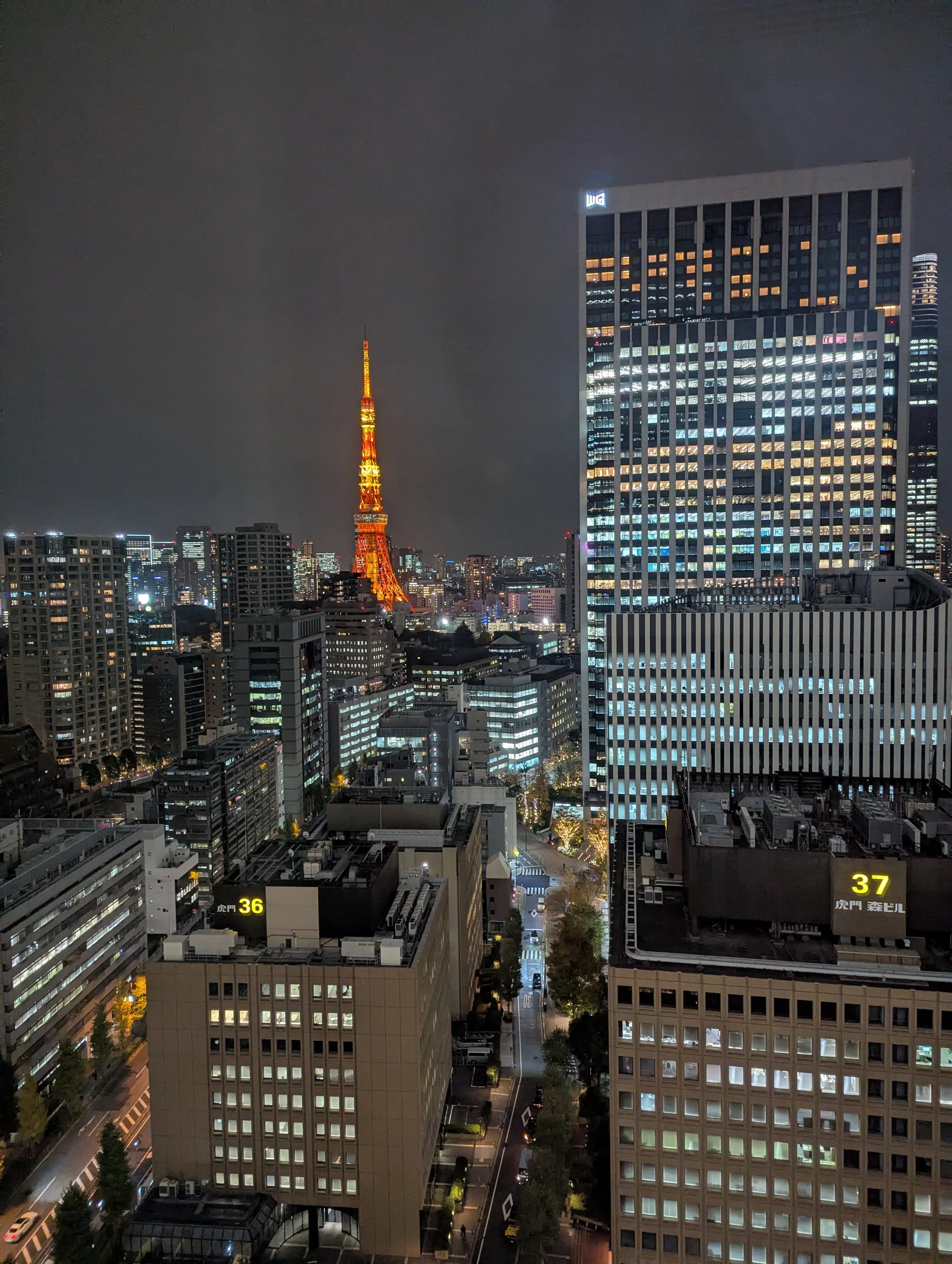
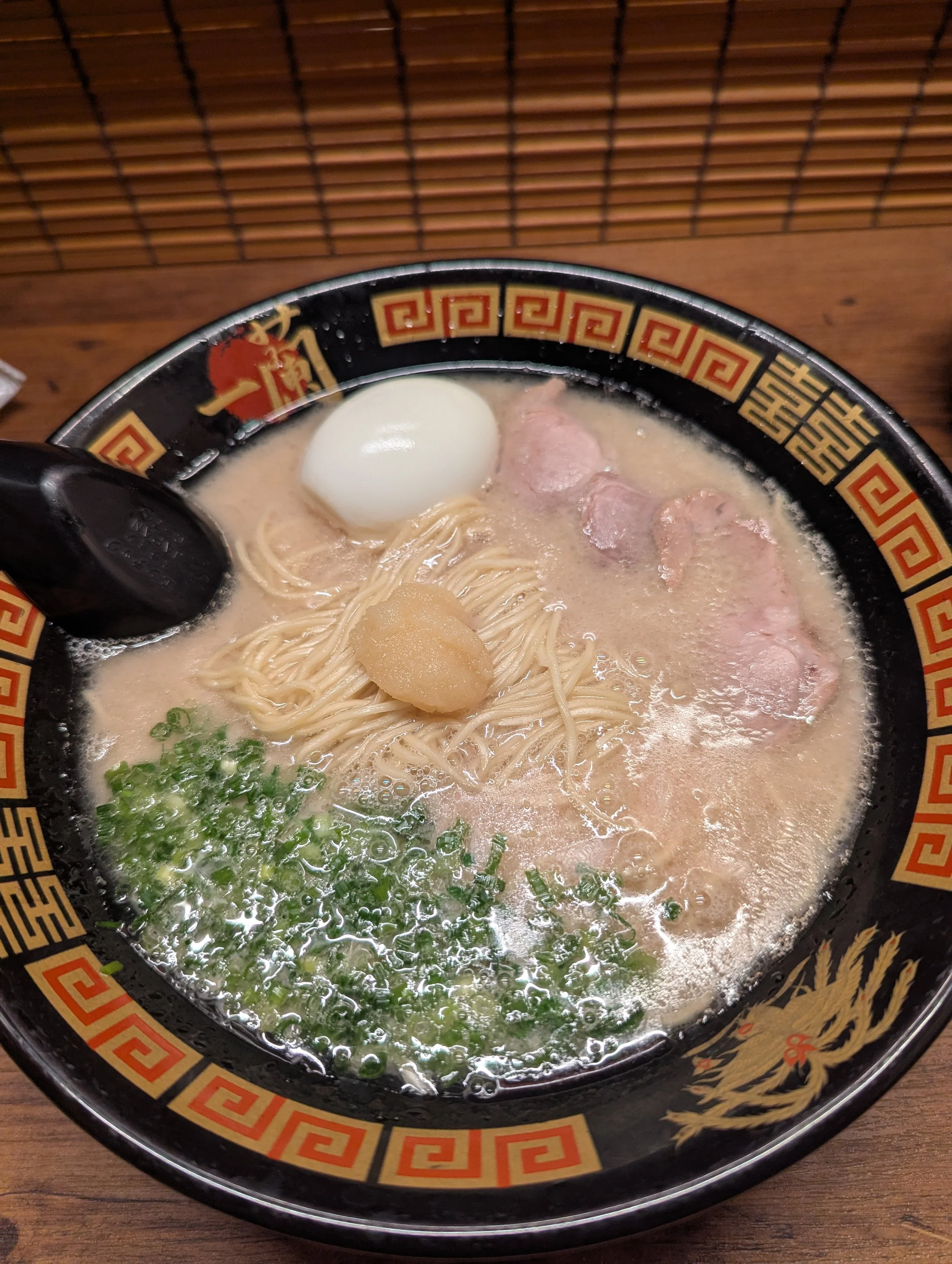
We settled in and freshened up before venturing out for dinner. Over the past couple of trips, it has become tradition for us to go to Ichiran for ramen the evening we arrive in Japan. The first time we did this, in 2023, we were in Shinjuku, and I recall being so exhausted that all I wanted to do was sleep, but Kevin dragged me out - this was our first Ichiran experience and it was great. This time, we walked 15 minutes to Ichiran and arrived at about 6PM and it did not disappoint. There were only a few people waiting when we got there. The rich broth was so rewarding and comforting and it felt like coming home. When we left, after eating, it was 18:20 and there was a long line. This is one of the best things about these ramen shops - you’re in and out and you leave satisfied.
Even though we were tired, we stopped at Lawson on our way back to the hotel. On our way to the airport, Kevin’s cousin had told me about socks that Lawson and the other konbini sell with their respective colors - and I wanted a pair. Later in the trip, I also found socks at Family Mart, but they weren’t really my style, but I was not able to find 7-Eleven socks.
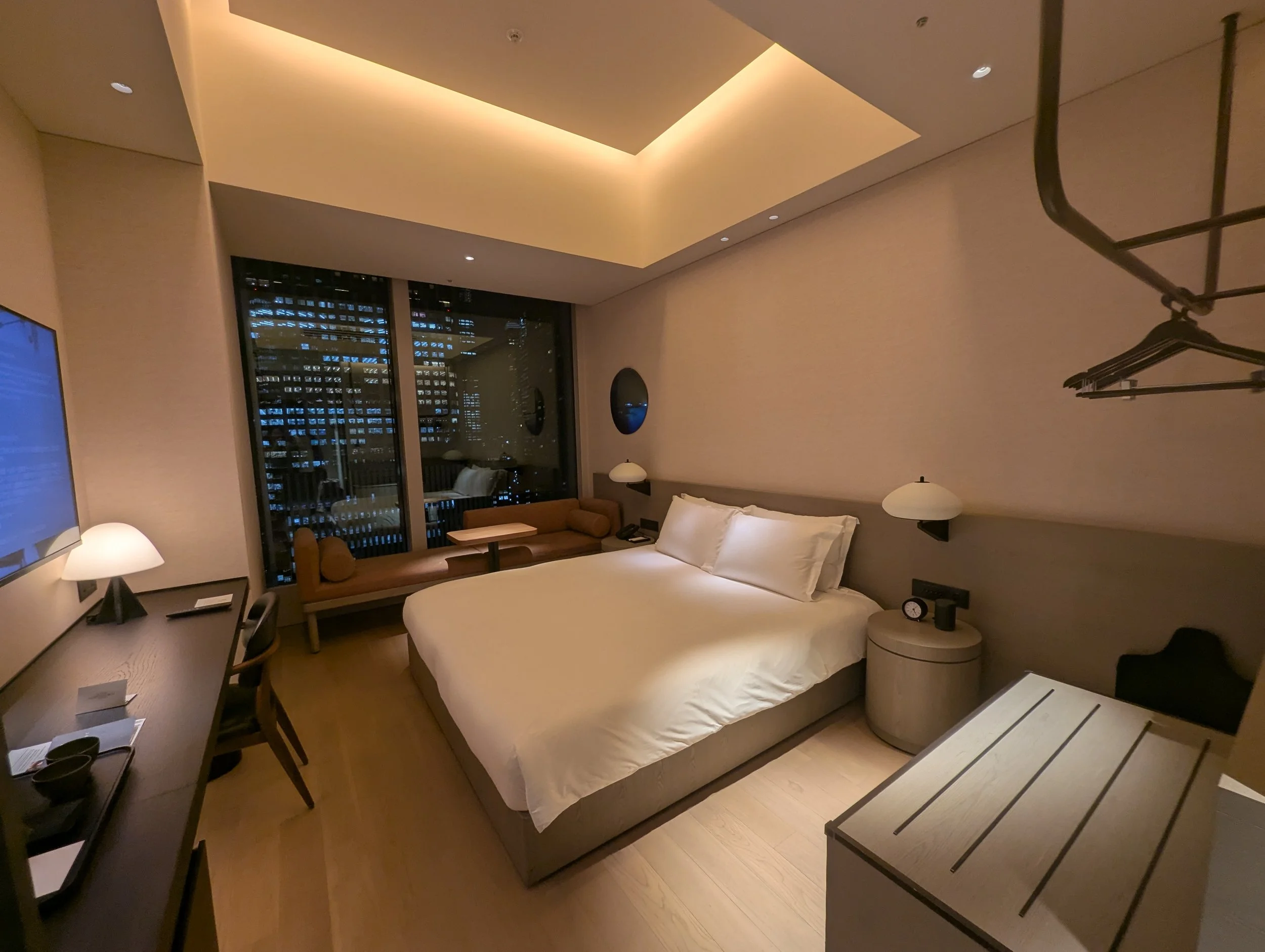
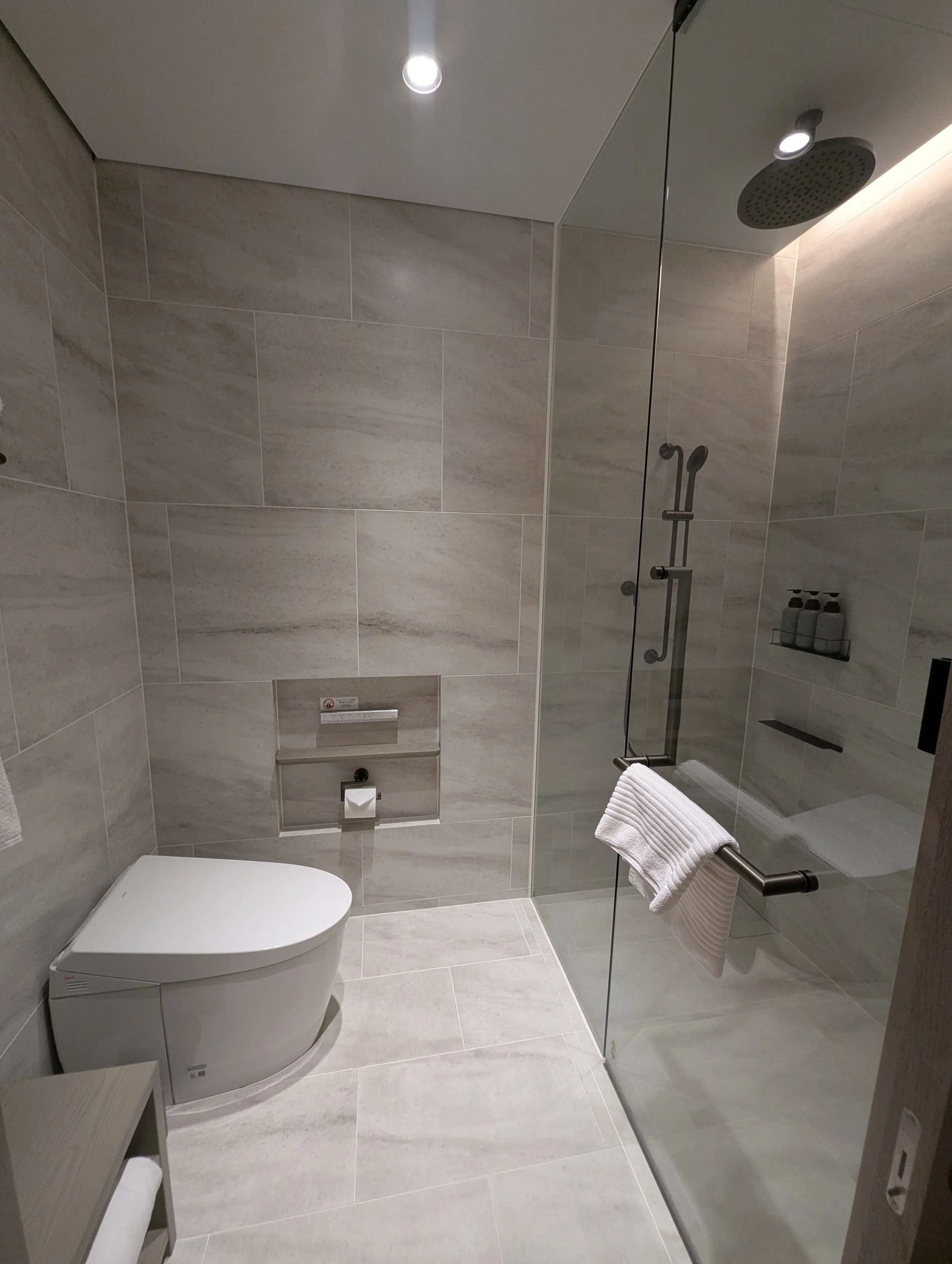
We were back at the hotel at 18:45. Kevin was curious and looked up whether there were any bus tickets online or train tickets available for Kawaguchiko from Shinjuku, as opposed to Tokyo Station - couldn’t hurt to check, right? - but the earliest available would get in at 1PM. Oh, well - guess that just means we will have to come back! Anyway, I’m pretty sure we were in bed by 7PM and fell asleep instantly.
Day 2: Friday, November 28th - Tokyo
I first woke up at 12:15AM. Then every now and again until about 4:45AM, when I finally decided to just get up. Over the summer, I had tried (and mostly succeeded) to become a morning person - I would wake up early at around 6AM, and have my coffee and read and go for a walk around the neighborhood. I am very much a circadian creature, so it has been very difficult for me in the winter time when it’s dark in the morning and dark in the afternoon. In any case, I thought I’d take advantage of my jet lag and being awake at 4:45AM.
I ventured to the lounge on the 11th floor and had a quiet morning to myself. At exactly 5:00AM, the music suddenly turned on and startled me since I had previously been the only source of noise, but the soft lounge music completed the vibe. It was still dark out, but I found a perfect seat by the large glass windows, from which I could see Tokyo Tower glowing proudly in the night, and with a golden Christmas tree inside the lounge to my other side—an unexpectedly cozy view. Cappuccino in hand, I enjoyed a few peaceful moments to read before the city truly woke up. The lounge itself was a pleasant surprise: showers, bathrooms, and even small “resting rooms,” which I later learned are meant for early arrivals before check-in or for lingering after check-out.
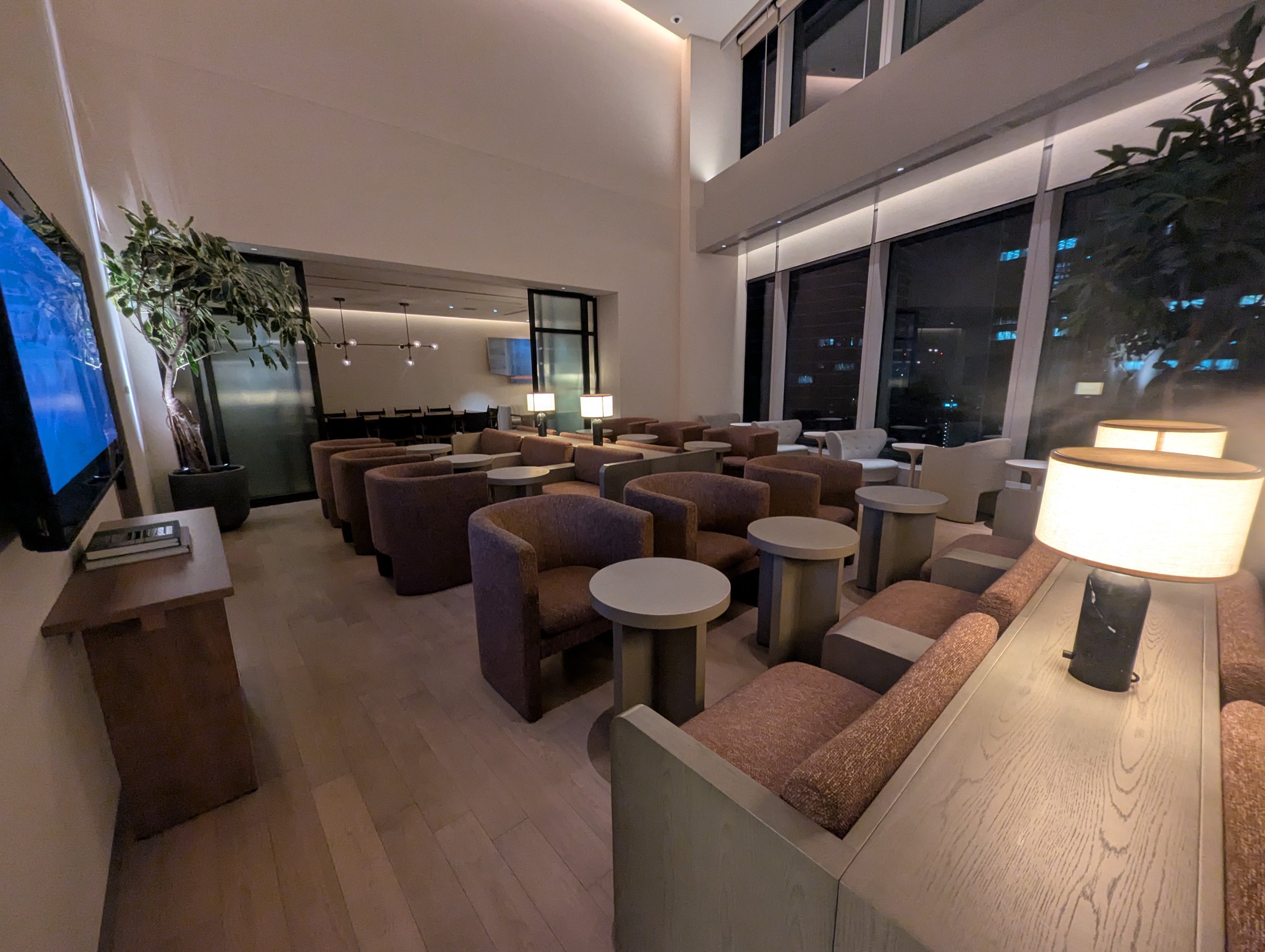
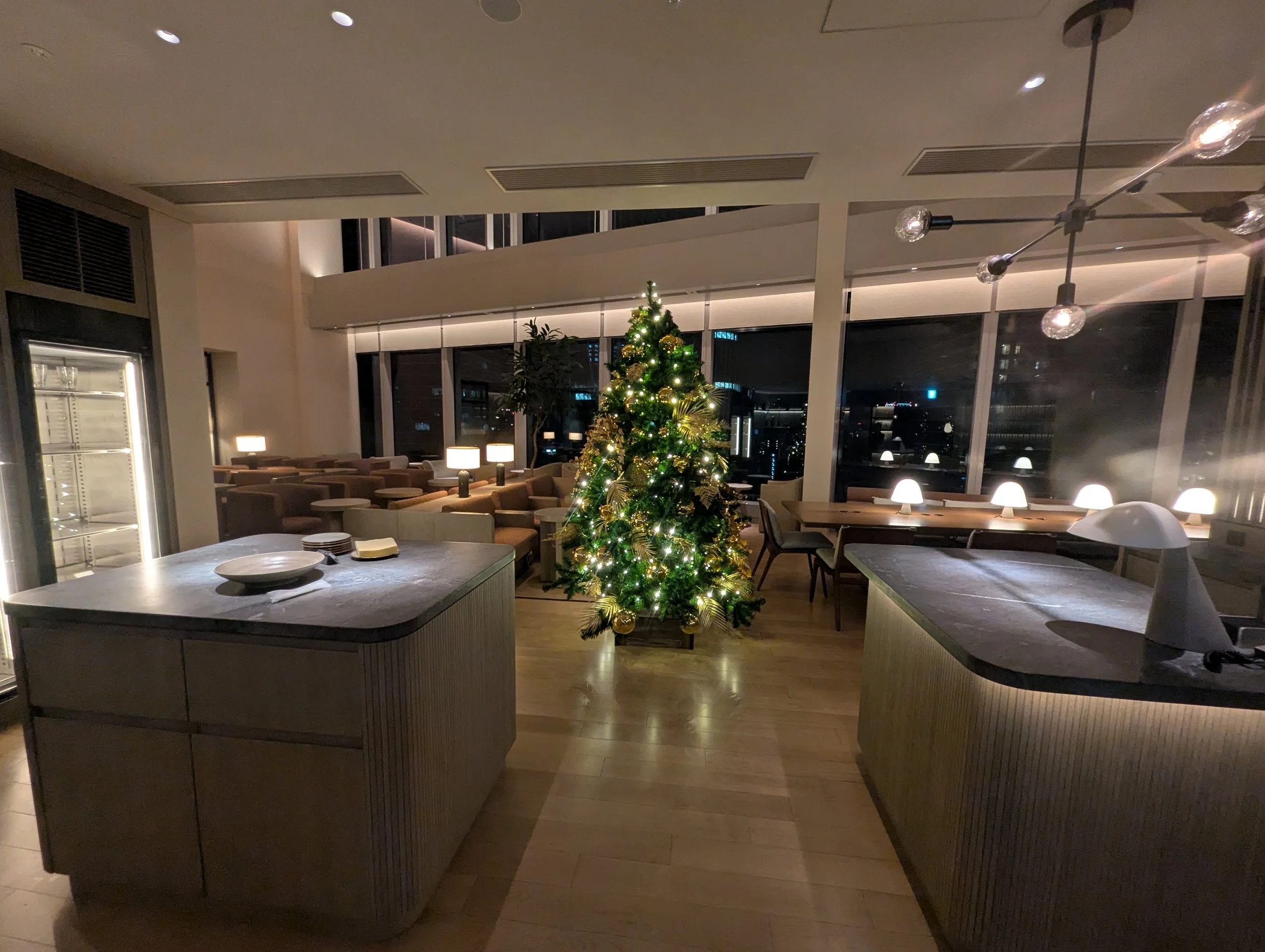
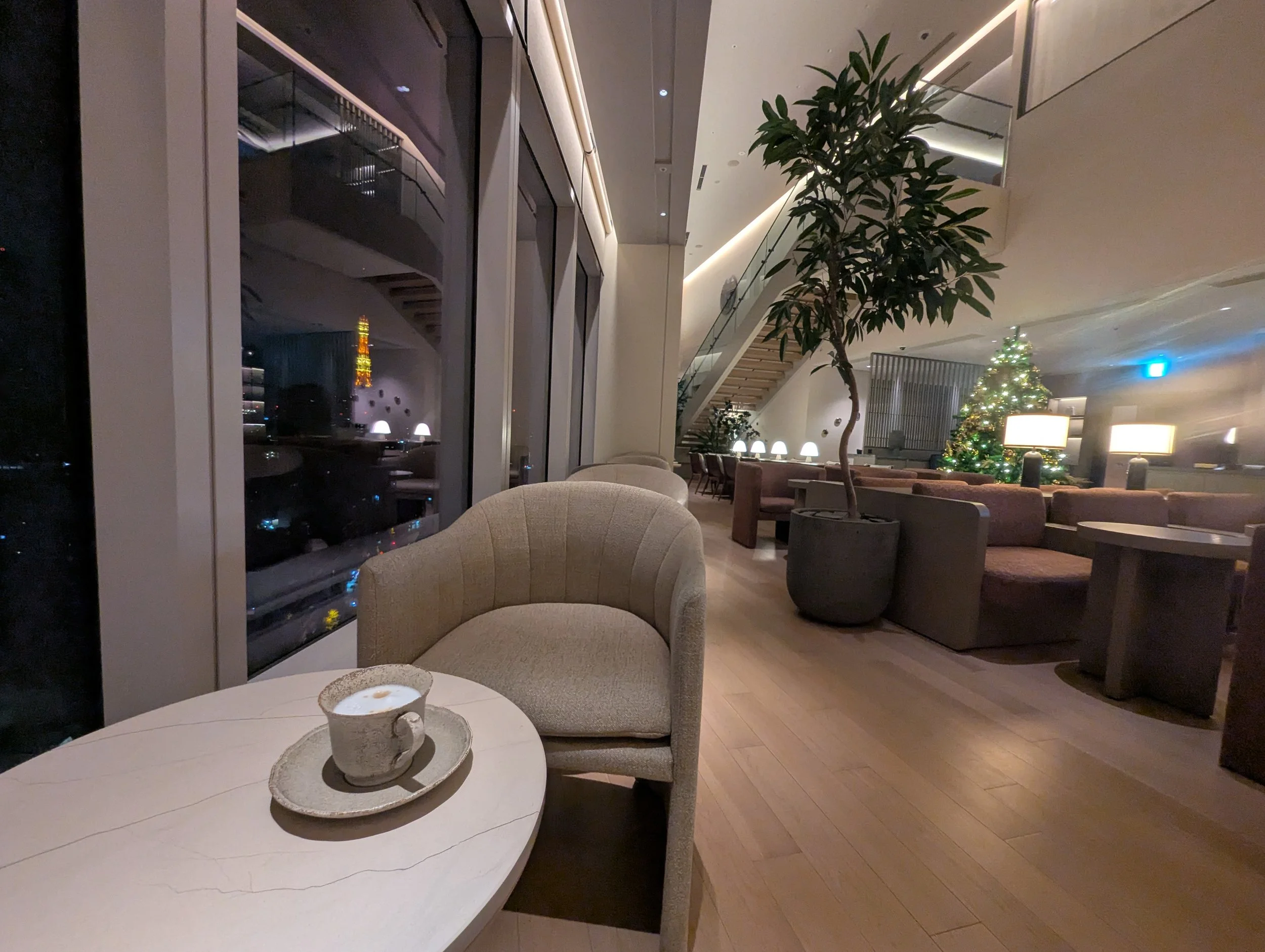
We hadn’t made solid plans for our day in Tokyo, since we wanted to have the flexibility to go to Kawaguchiko if the weather was nice and we were able to get transportation.
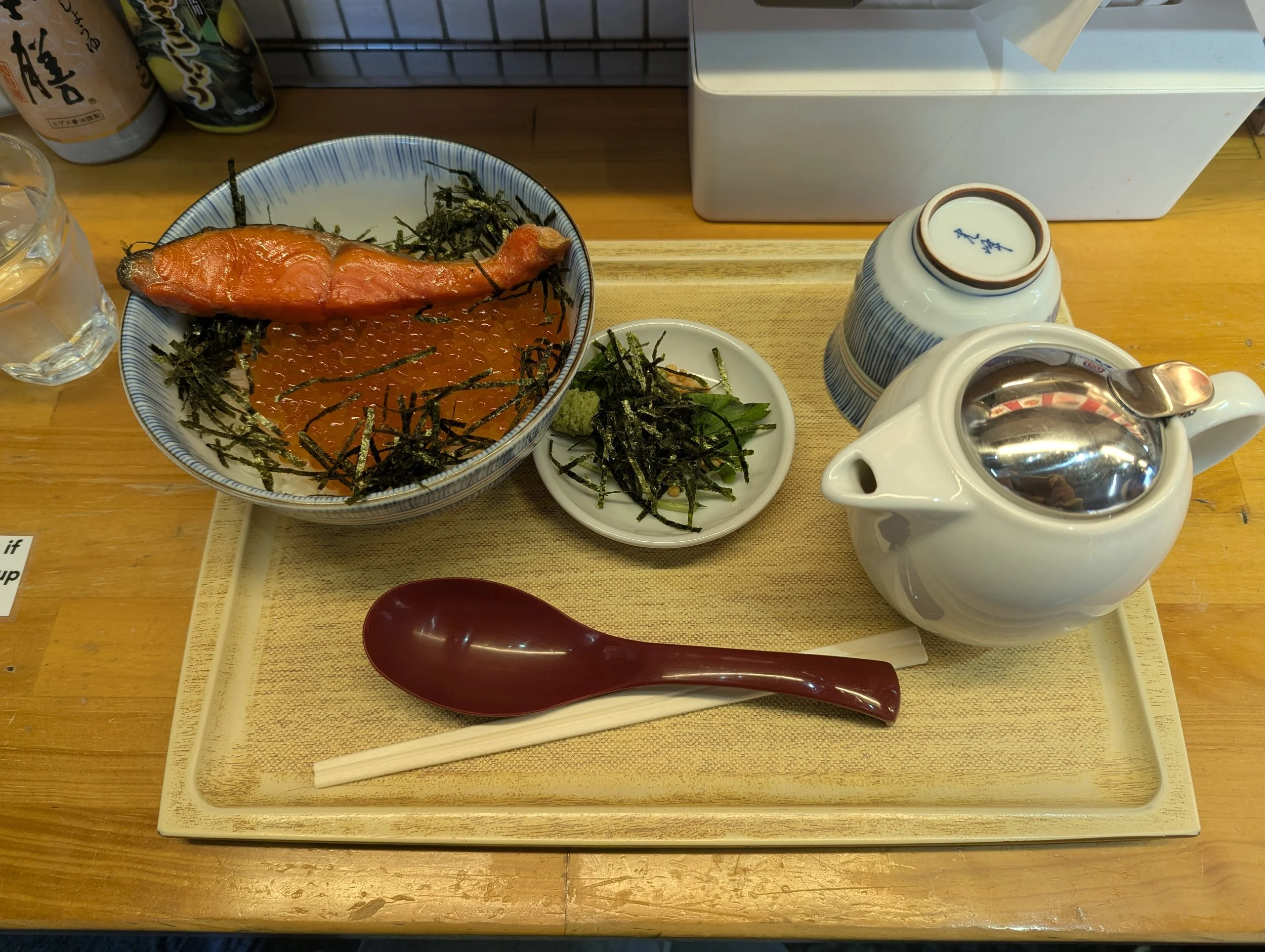
We left the hotel at 6:45AM and arrived at Tsukiji by 7:00 via the Hibiya Line, which we were able to catch in the Toronomon Hills building that is connected to our hotel. Our first stop was the onigiri shop, lining up before the crowd grew too long—there were already about eight people ahead of us. This place has been on Kevin’s list for years, but the last time we were here, they were closed that day. From there, we went straight to Tadokoro Shokuhin for ikura salmon bowls. We had this same breakfast last year. It’s on the corner of the market run by a handful of Japanese ladies, most of which are quite elderly but still very active and mobile - very impressive. Each bowl was ¥3,500 and came with dashi to pour over the rice, which felt especially comforting in the crisp 45 degree morning air.
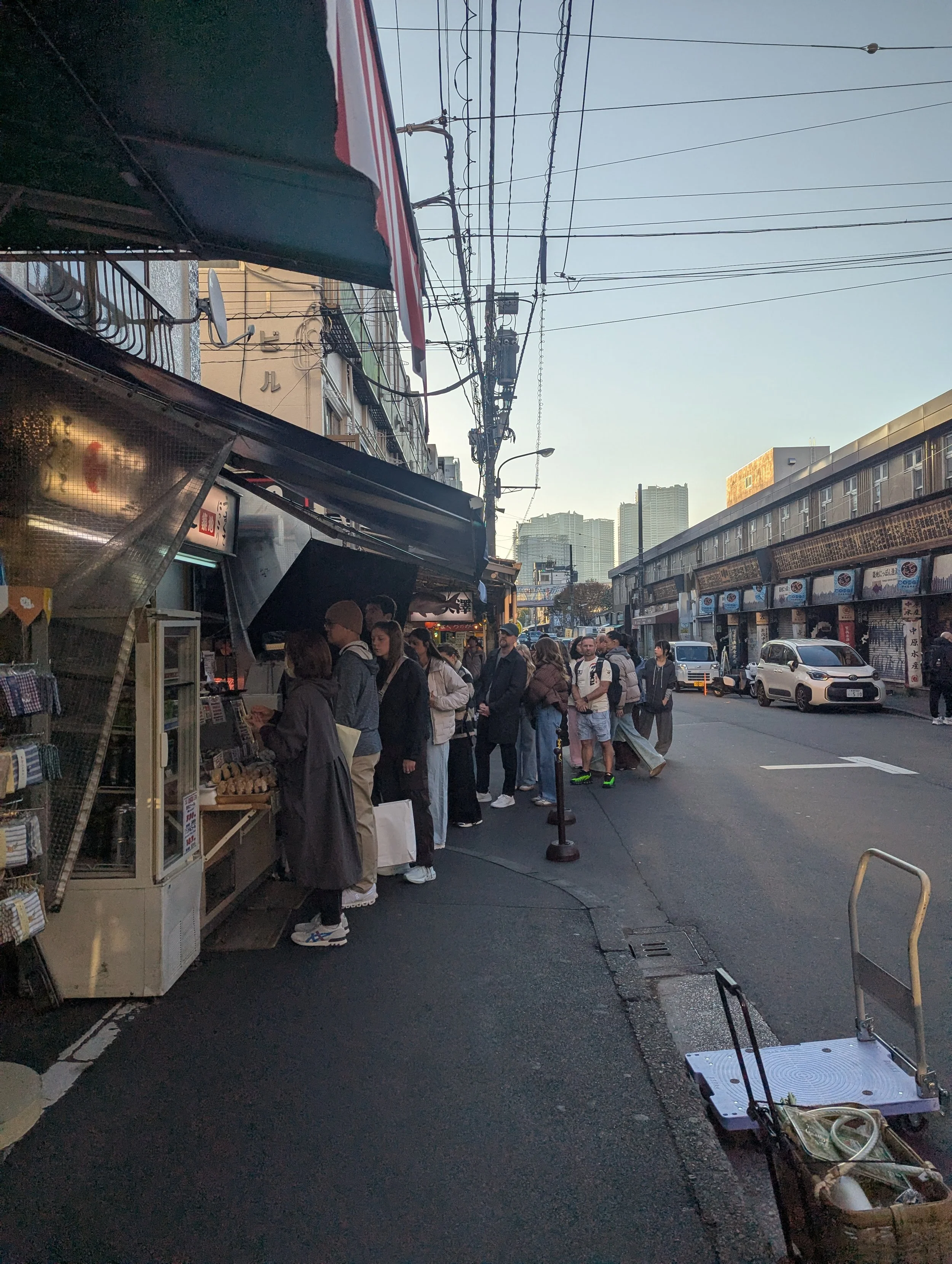
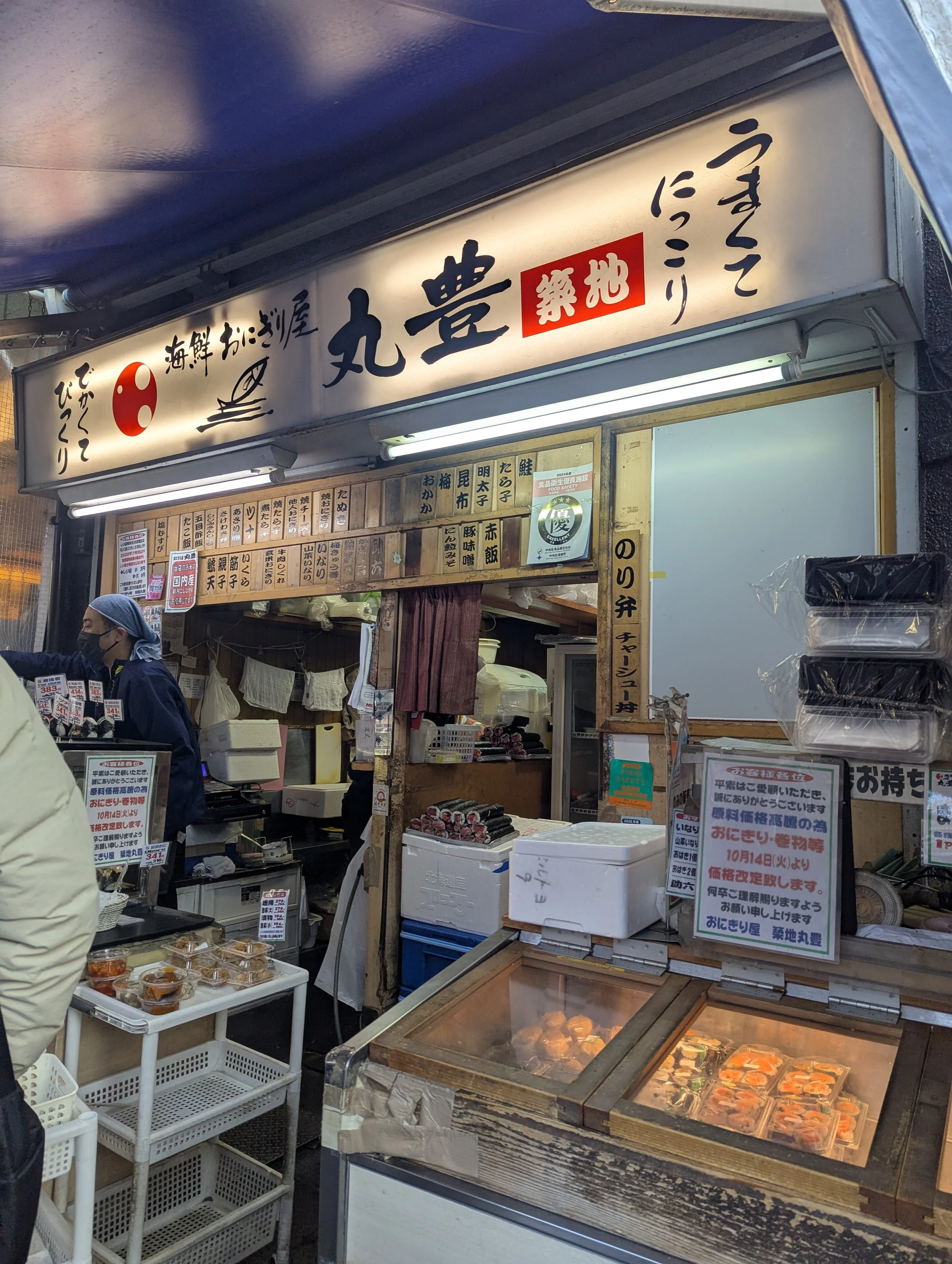
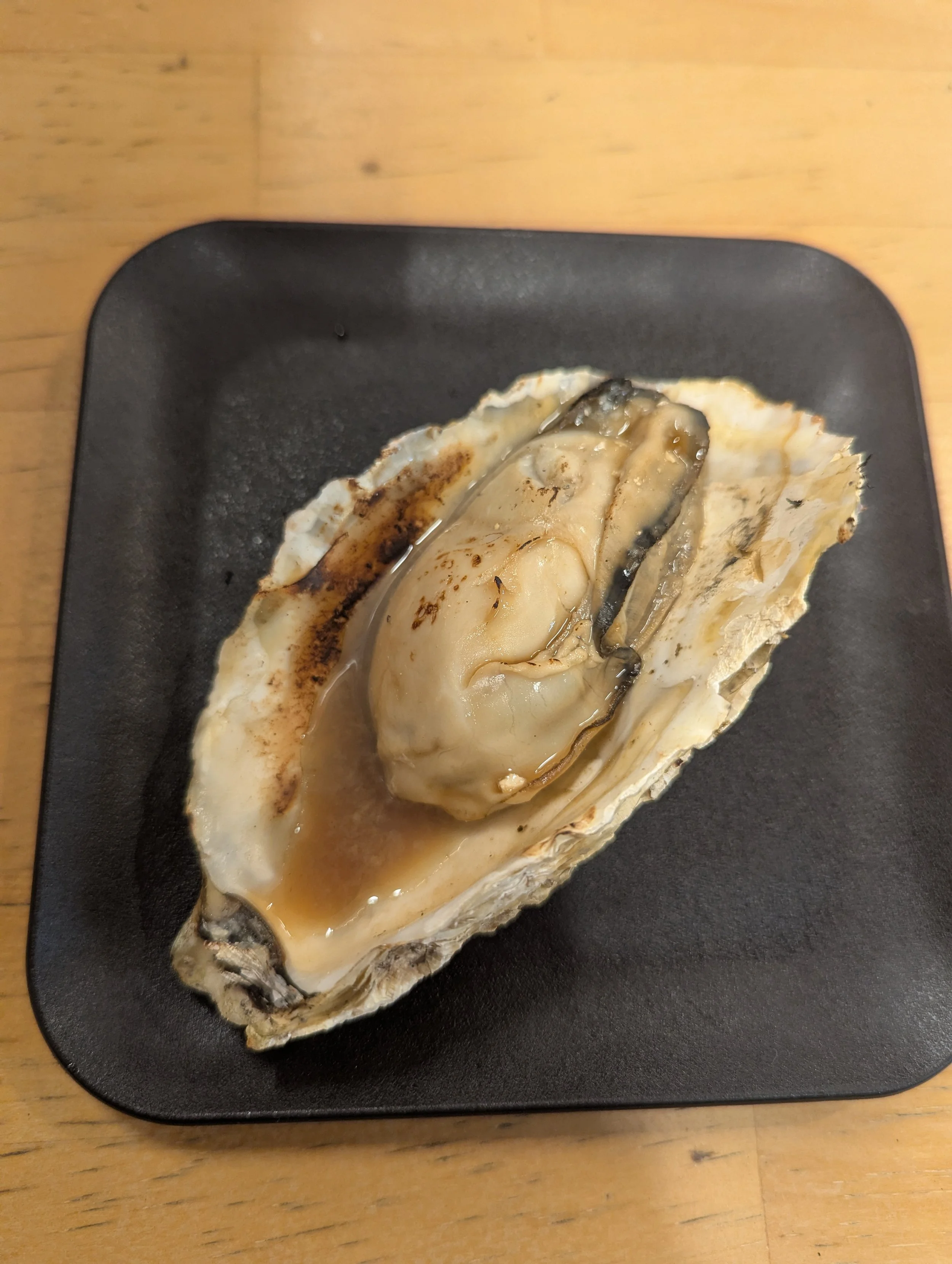
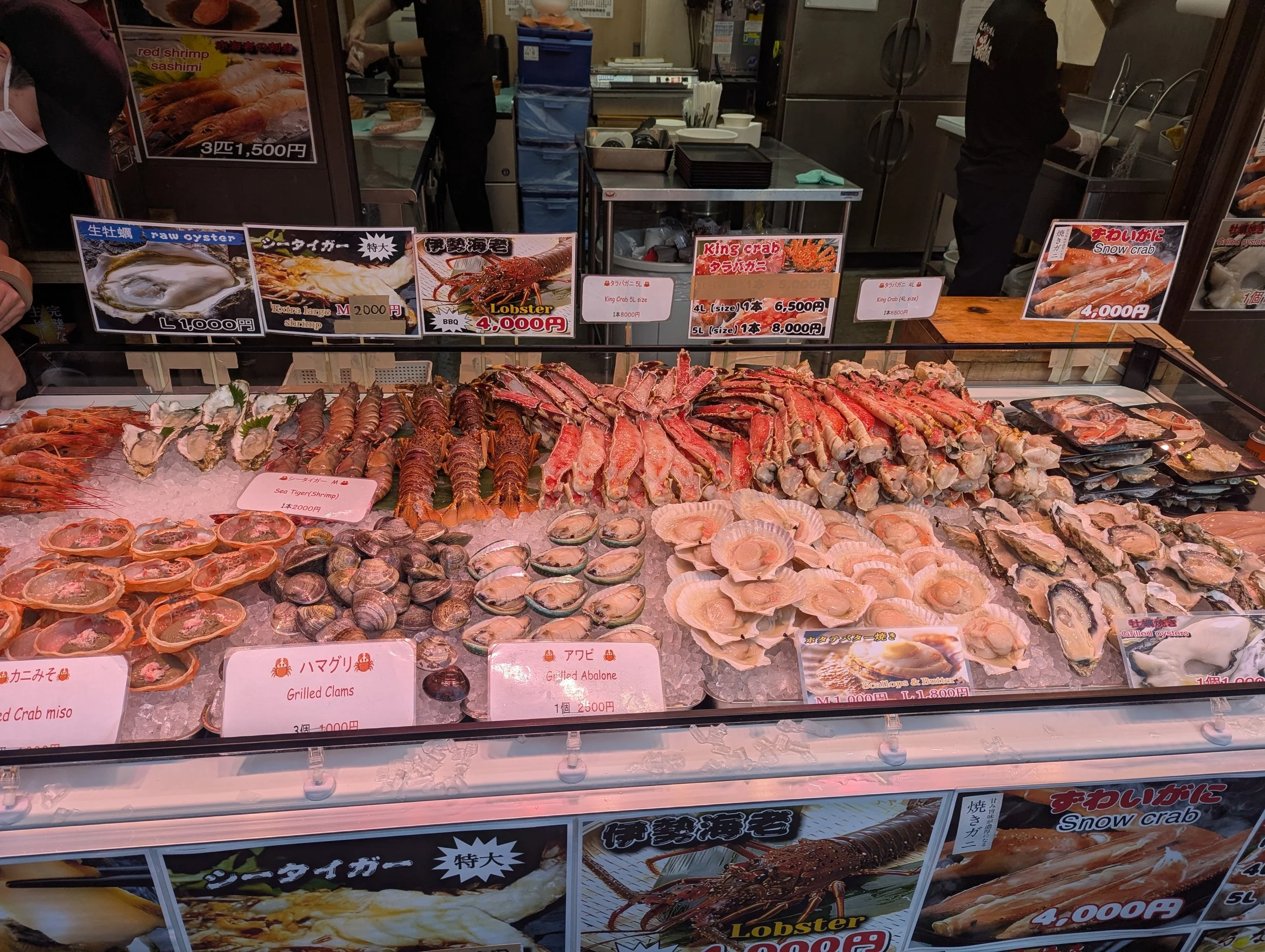
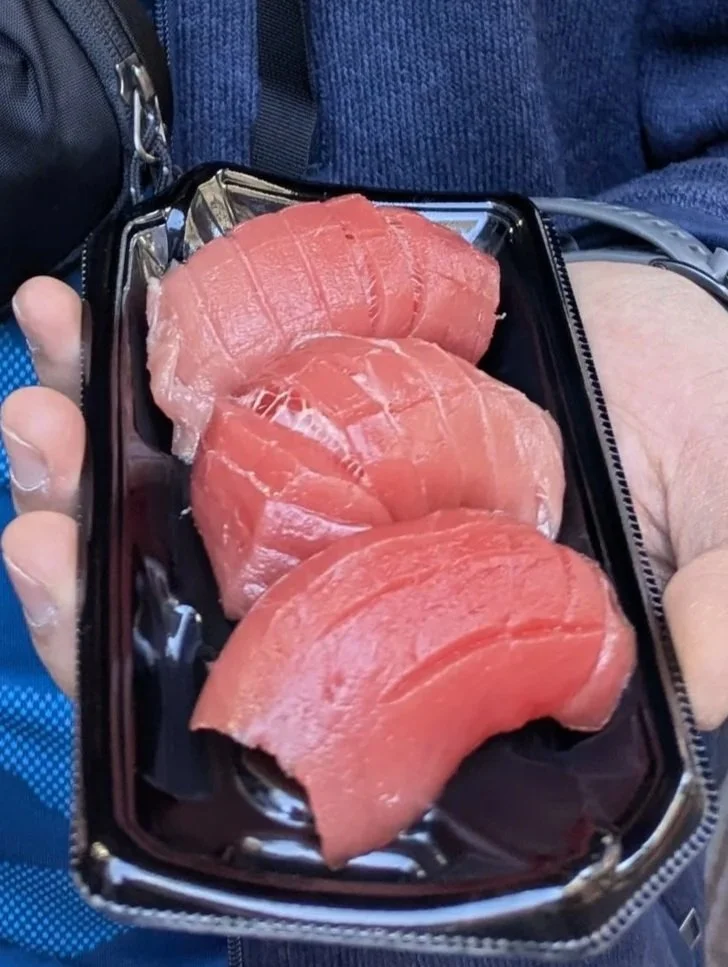
Between 7:40 and around 9:00, we wandered Tsukiji Market, grazing as we went: tuna sushi, coffee and matcha, grilled oysters, unagi, and even a king crab leg. It was Thanksgiving at home, and we joked that Kevin’s king crab leg was his turkey, since he missed turkey this year and Thanksgiving is his favorite holiday.
In all the times we've been to Tokyo, we have never been to the Imperial Palace or Imperial Gardens. We’ve tried, but the last time we got there at around 4:45PM and they close at 5PM so they were no longer letting anyone in. Unfortunately, it wouldn't be this trip either. The palace grounds were closed for a palace event. For future reference, tickets can and should be purchased in advance for the palace anyway.
Instead, we went to Shinjuku Gyoen National Gardens. When we had stayed in Shinjuku in 2023, visiting the gardens was on our list but we didn’t have time to visit. Now, as autumn was approaching in Tokyo, we figured it would be a great time to visit and see the foliage. It was also a beautiful day to be outdoors. We wandered through the gardens then to Meiji Jingu, past the sports fields. Stumbled upon the Tokyo Christmas Market (1000 yen entry), wandered the shops. It was super cute with lots of shops, just as you’d imagine a Christmas market in Europe, with large areas to eat. To us, it felt very unnatural to be at a Christmas market because it was 75 degrees out. We had taken off our jackets, but the locals were still wearing their down coats - we definitely stood out.
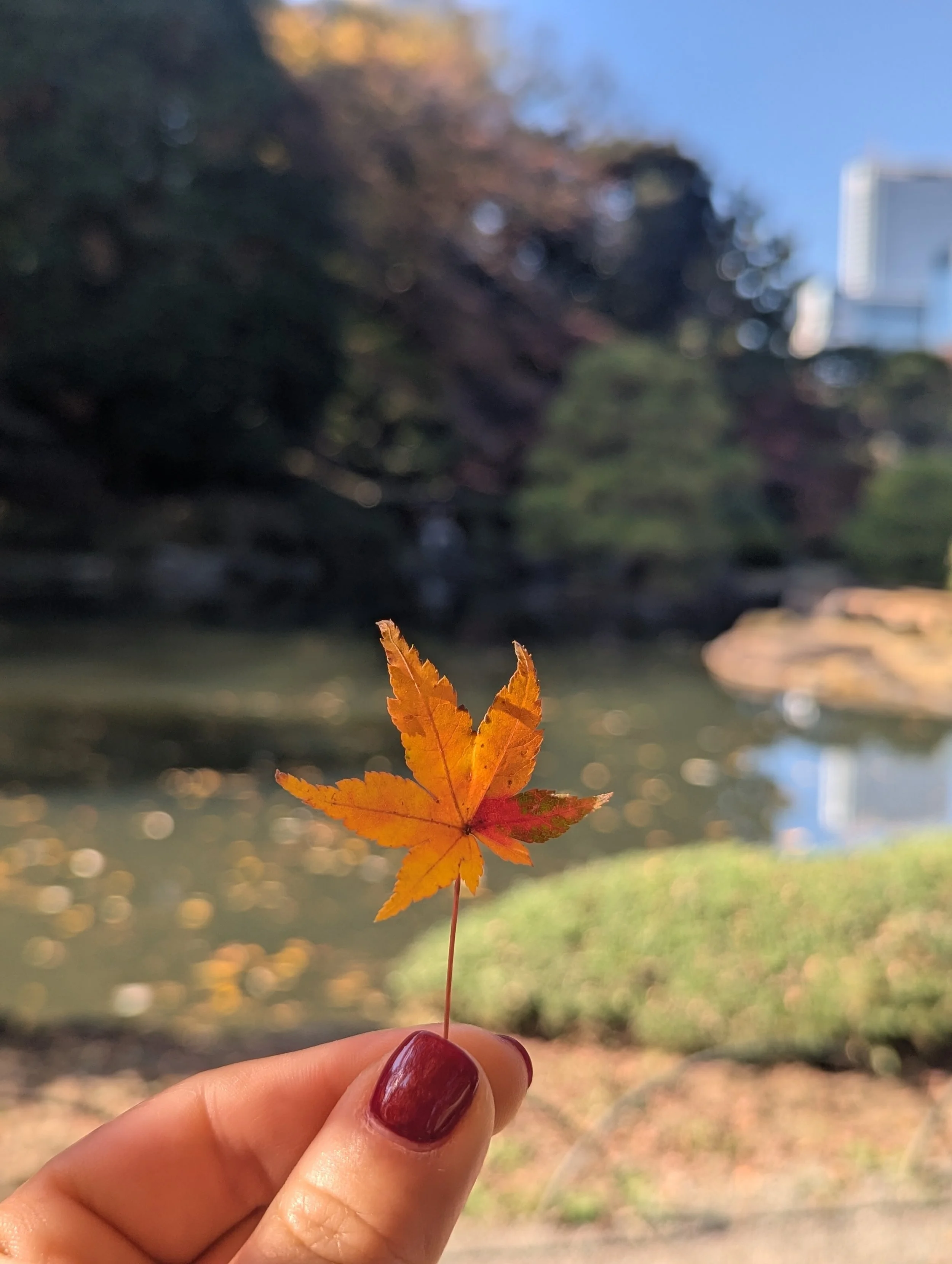
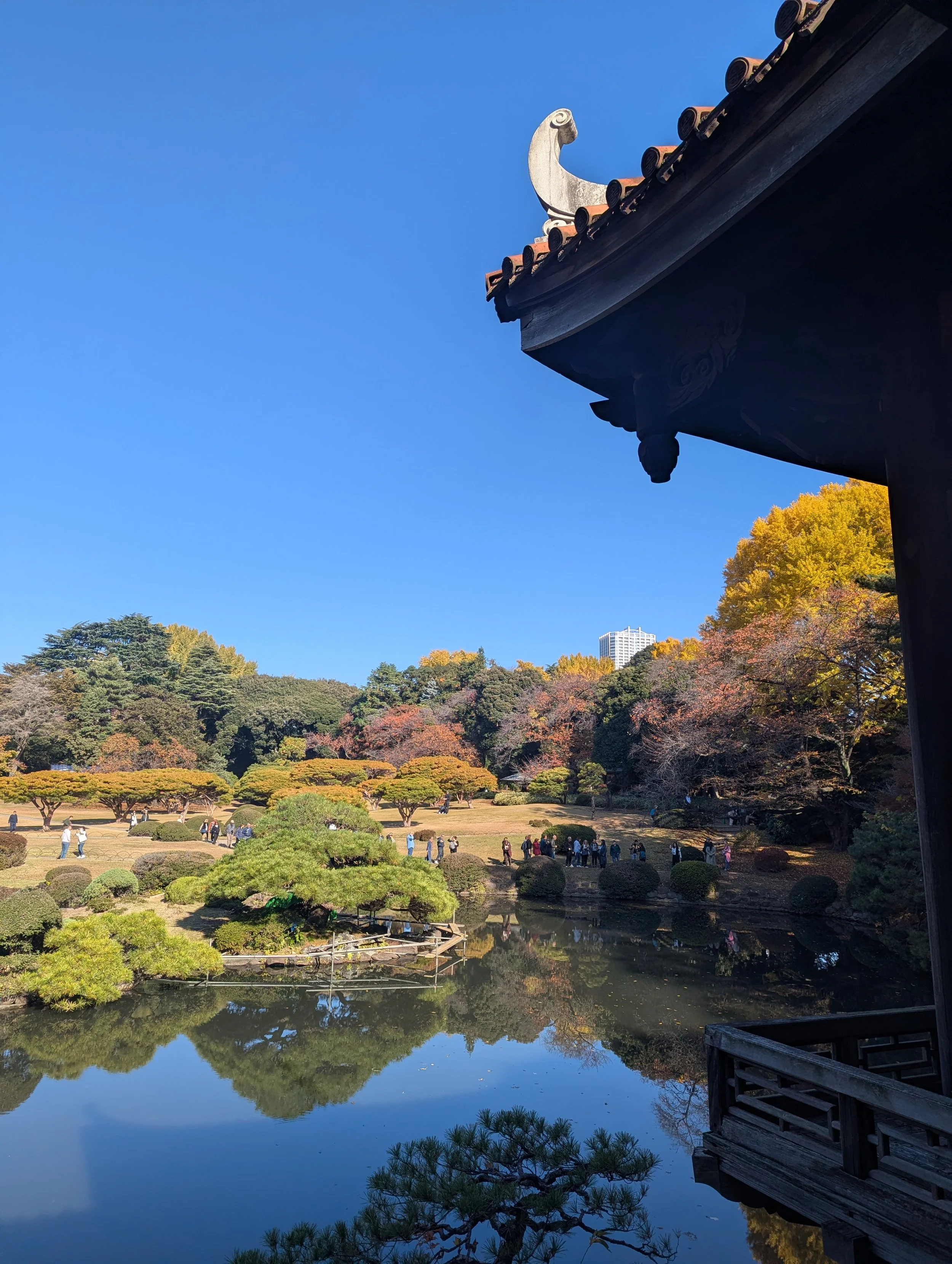
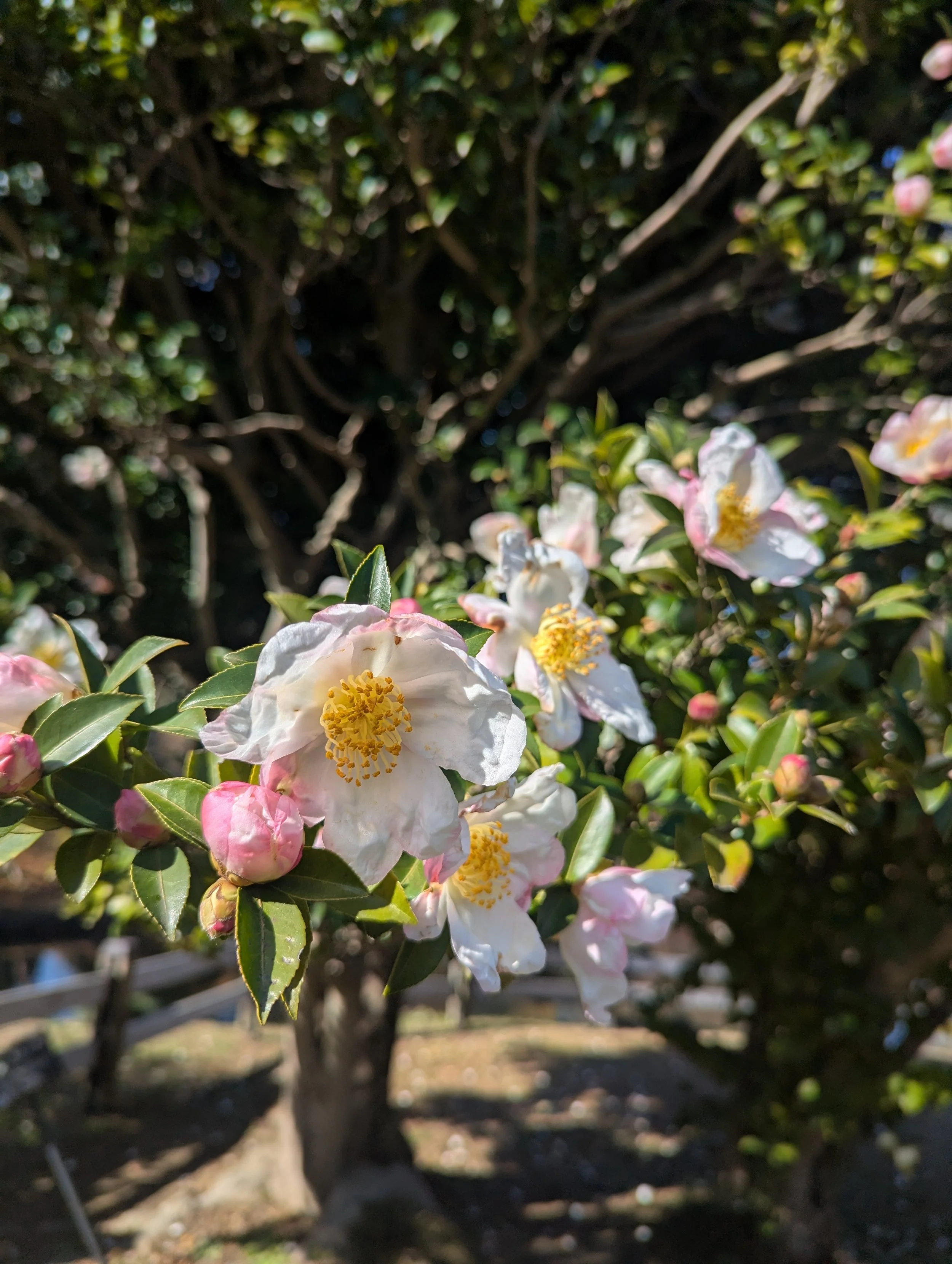
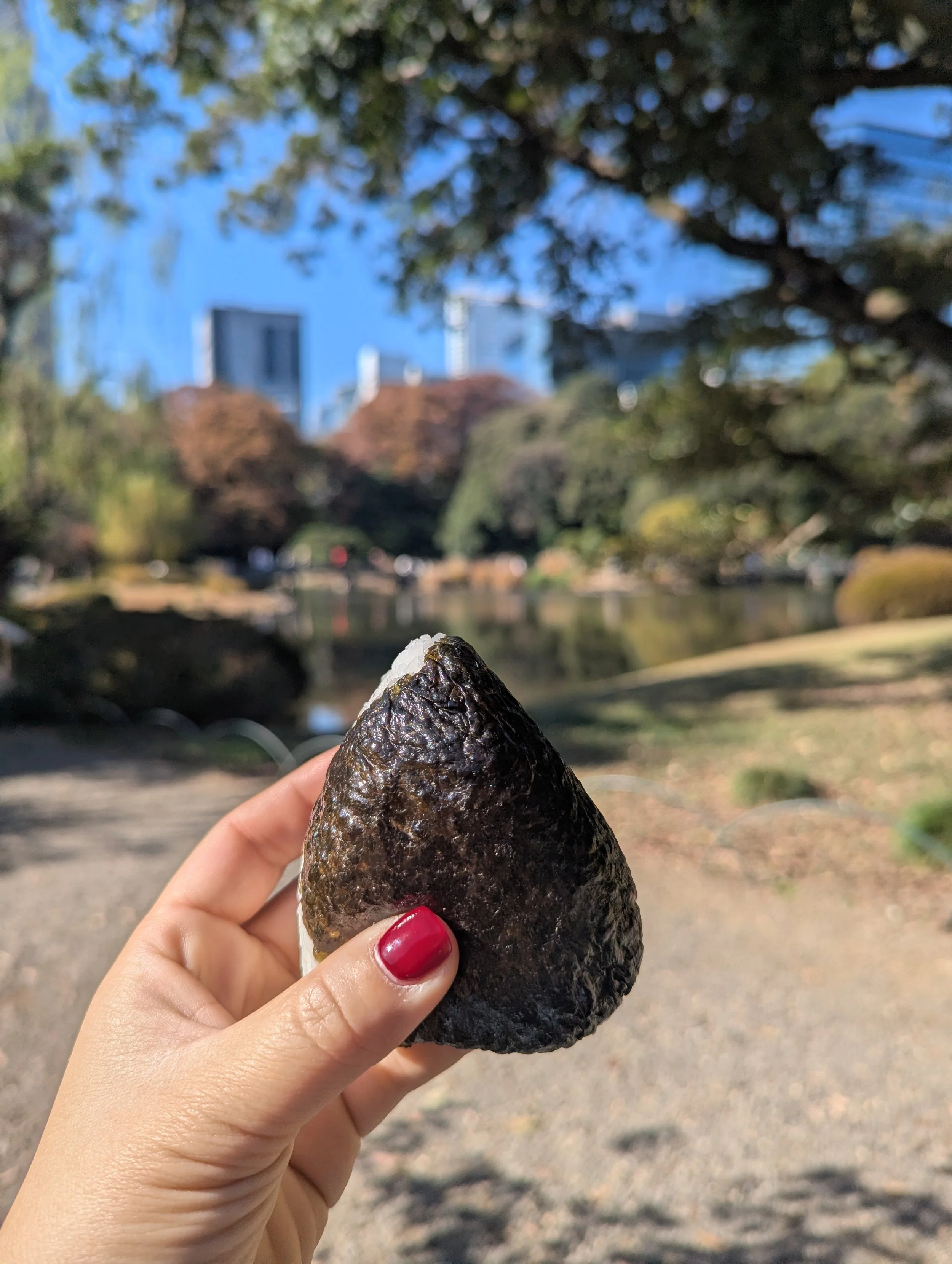
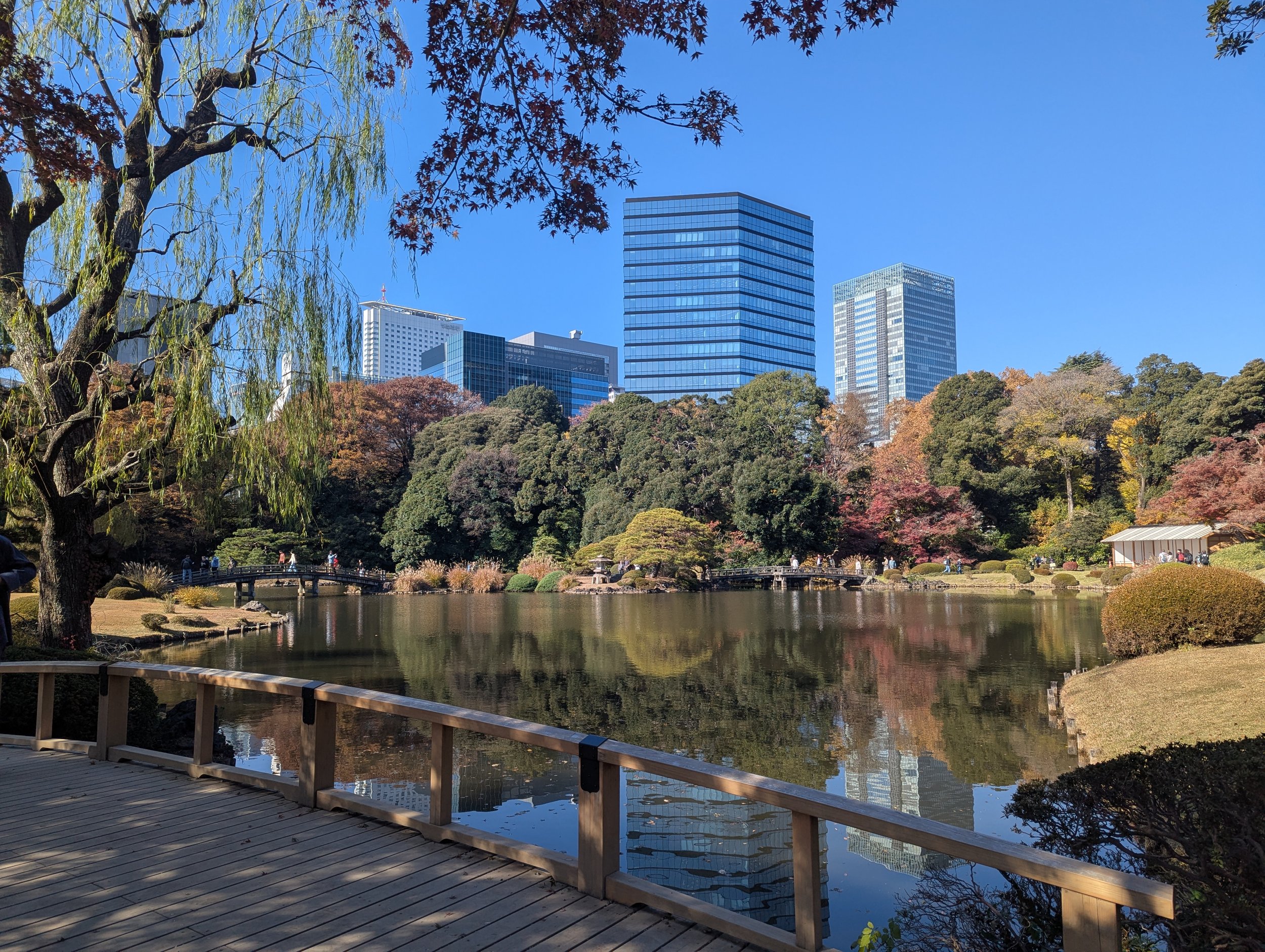
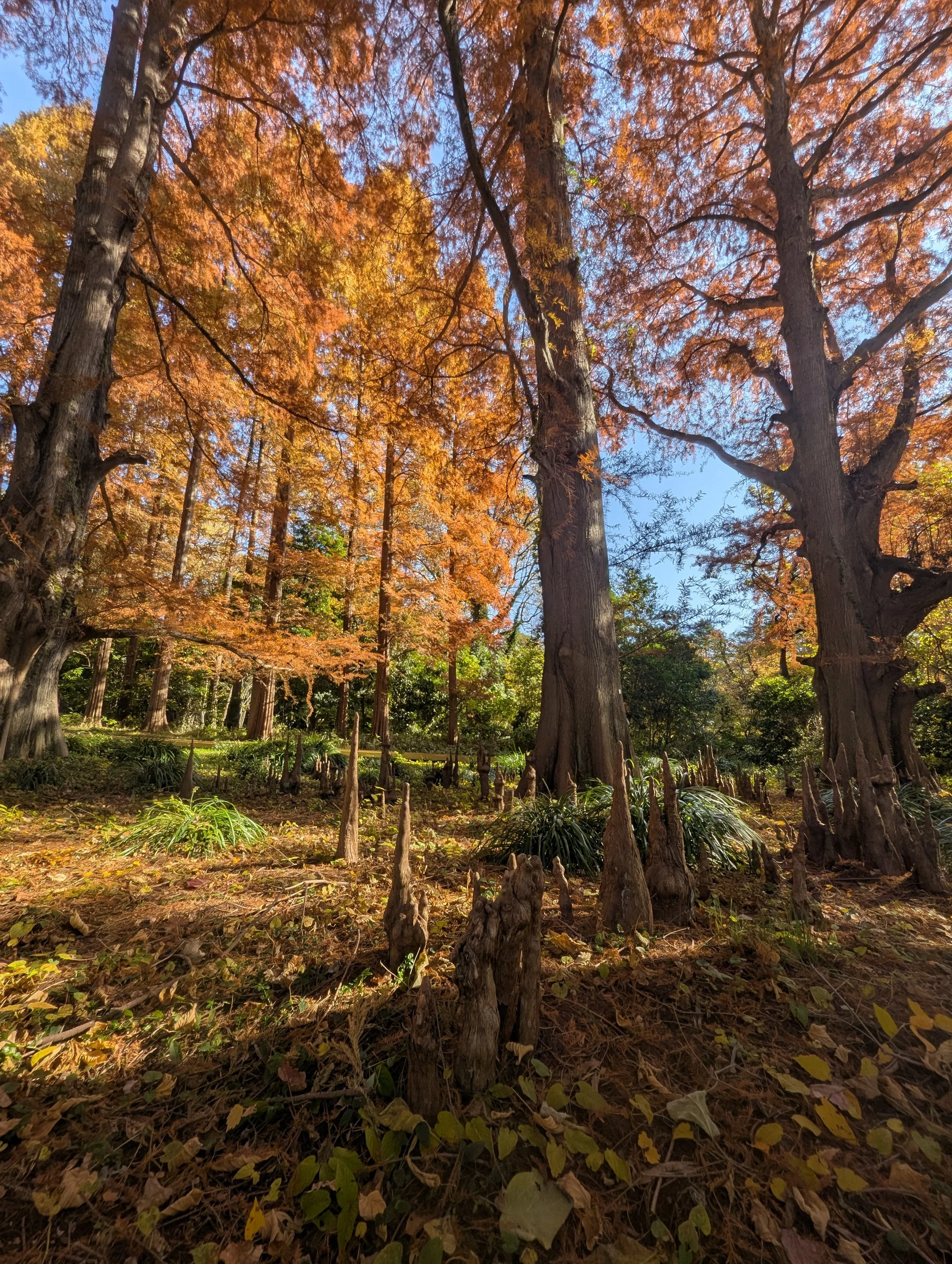
On the other side of the field where the Christmas Market was held is a road lined with gingko trees. They were beautifully golden, and perhaps less beautifully crowded with tourists. We weaved our way around the tourists and the falling yellow gingko leaves. It was still a great experience and gorgeous.
At 1:00, we were on our way to Asakusa. We reached the station before Asakusa (Tawaramachi) around 1:30 and stopped for lunch at a sushi place Sushi no Wa. Given the time, we wanted to get lunch before continuing our explorations, since many restaurants close mid-afternoon. I ordered the 12pc (medium fatty, lean tuna, ikura, unagi, shrimp, sea bream, yellowtail, striped jack, whelk, salmon, fluke fin, scallop). Kevin ordered the northsea rice howl (salmon, scallop, uni, ikura, red prawn, sweet prawn, snow crab). Left restaurant around 2:20 and walked to JINS. We have discovered the secret of purchasing eyeglasses in Japan. We did this last time, and for me, it was the first time ever that my glasses truly fit my face, because they are made for Asian faces. Plus, they are extremely affordable compared to purchasing glasses at home. We browsed the new styles and submitted our order at 2:40. The other great thing is that they are so efficient. They tell you when the glasses will be ready - in this case, I think they said 40 minutes. Last time, we stayed close and wandered the mall.
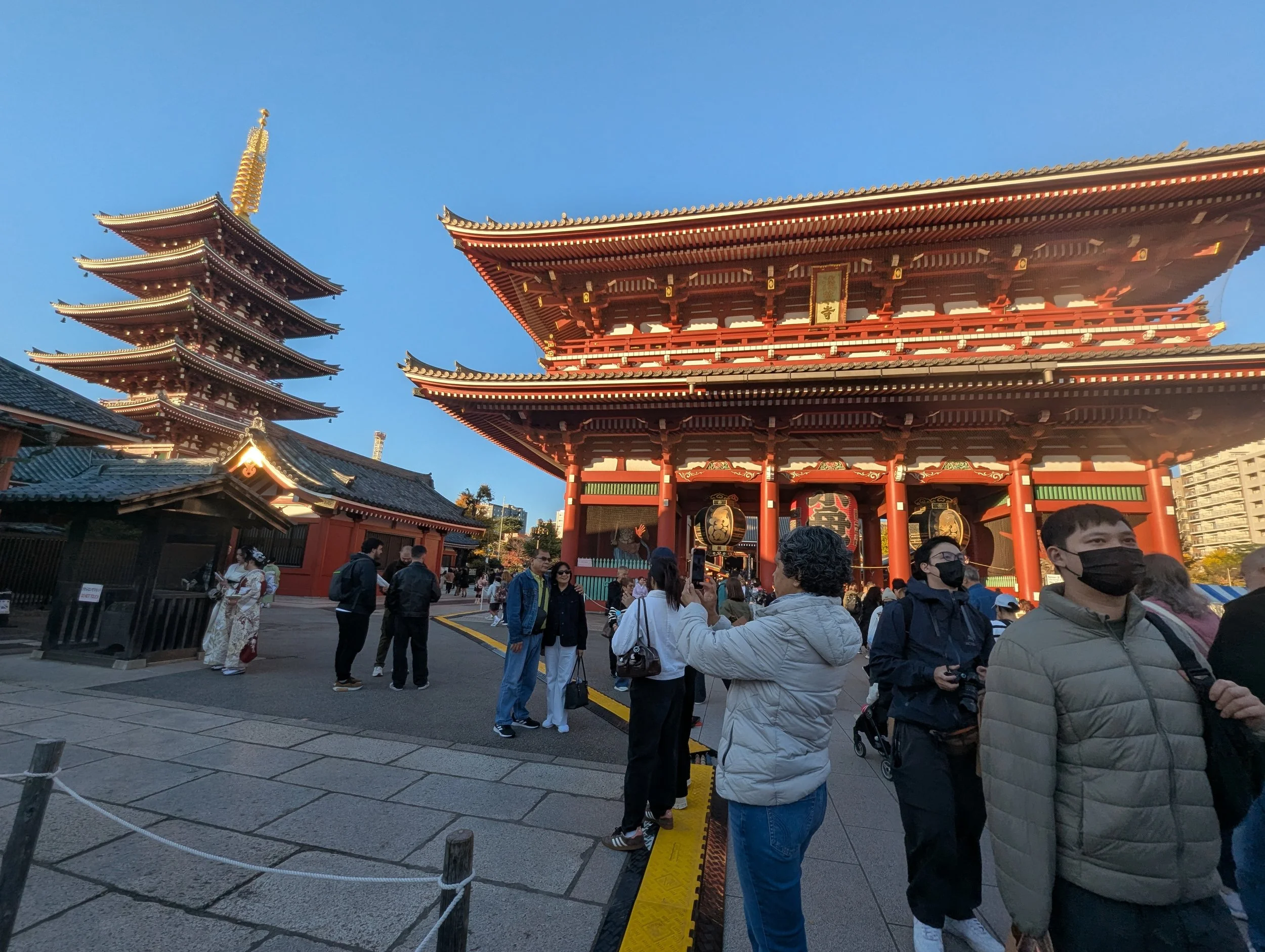
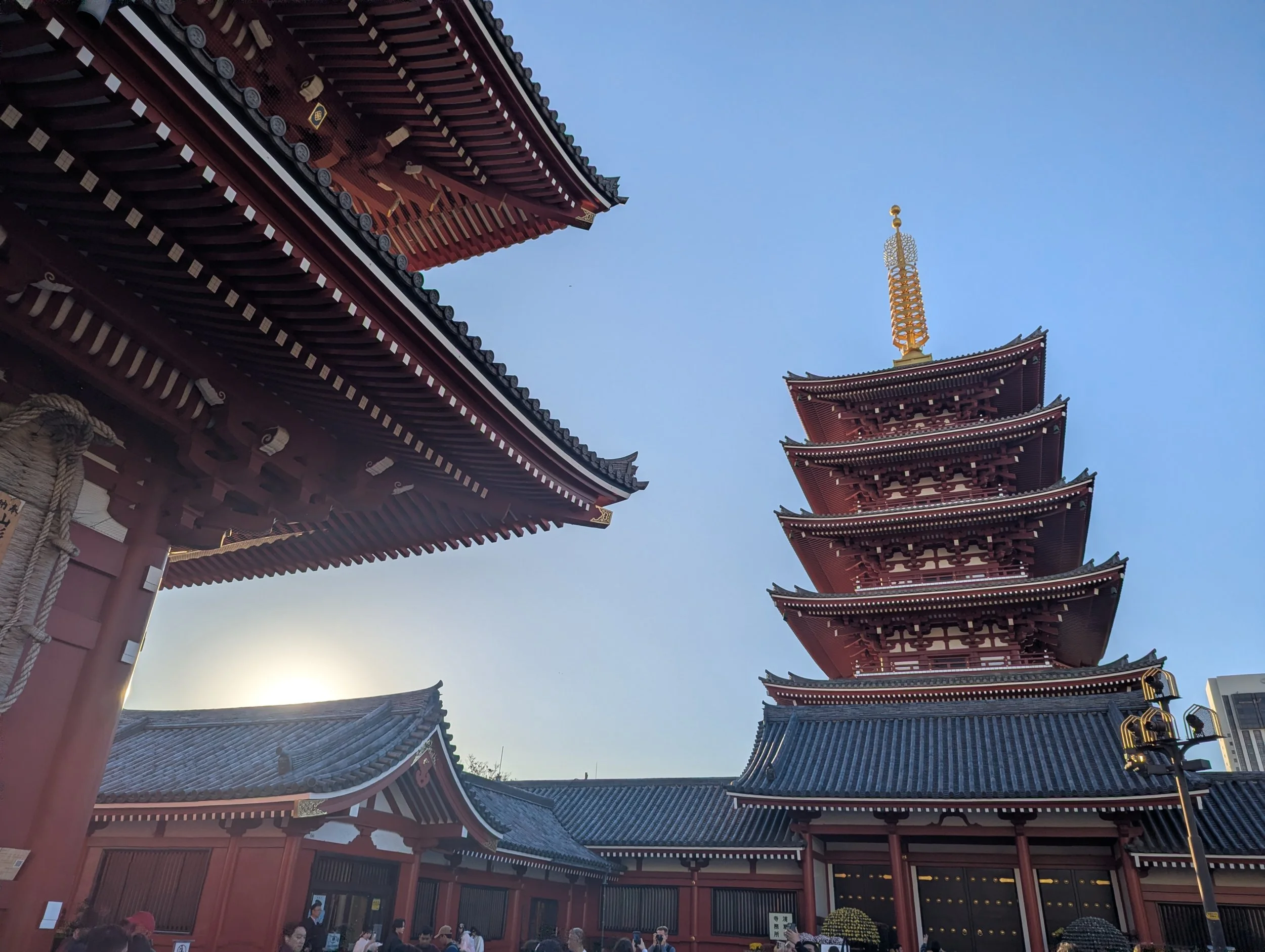
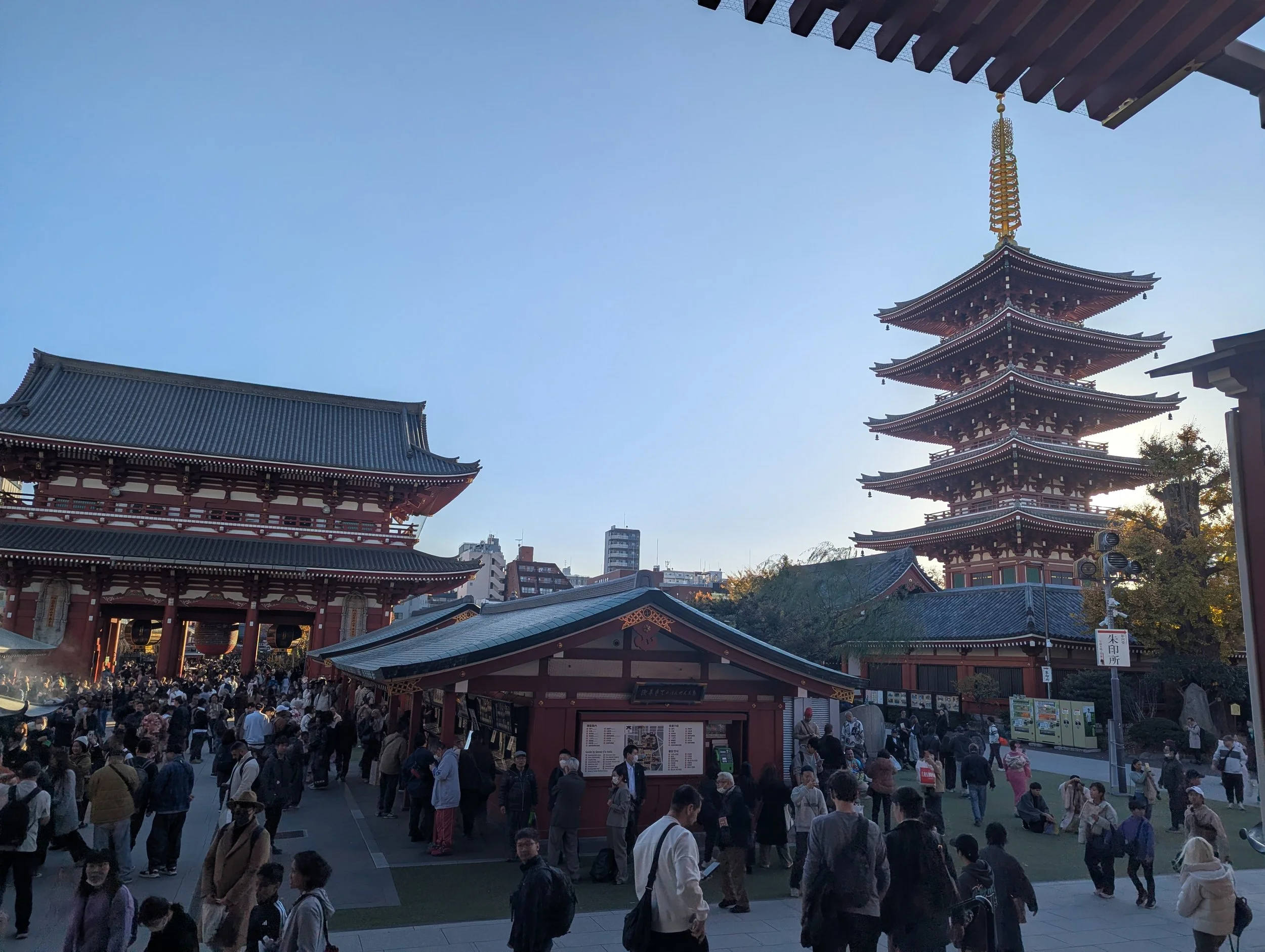
This time, we went to Senso-Ji Temple, which is just a couple blocks away. Kevin’s sister had asked us to pick up a certain charm from a temple, and we knew Senso-Ji has them. Many temples sell good luck charms for different things, like health and happiness, or marriage, or studies, or travel. Despite the crowds, Senso-Ji is always nice to walk around. We spent about an hour then went back to JINS to pick up our glasses, which were waiting and ready in a little locker for us.
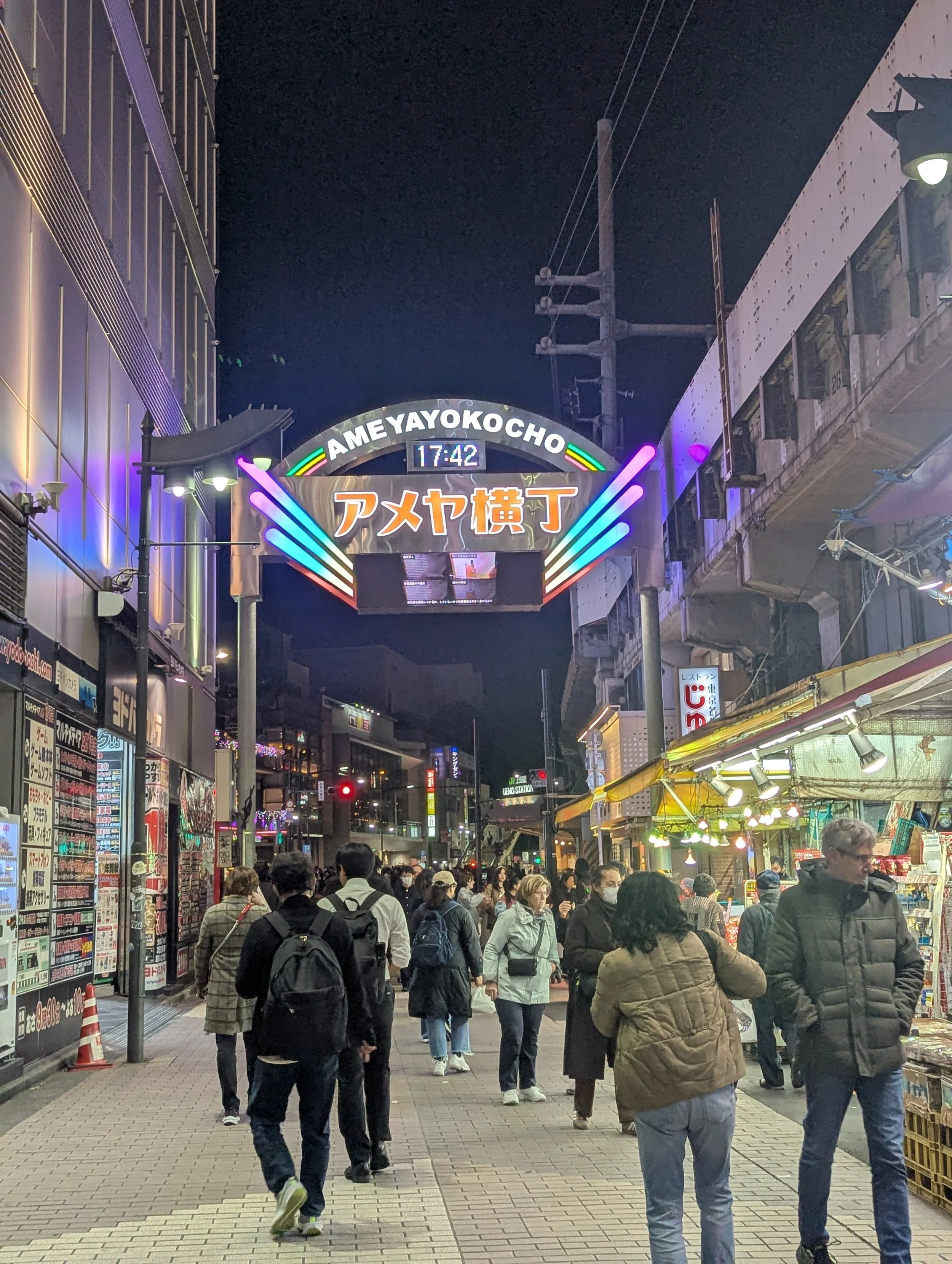
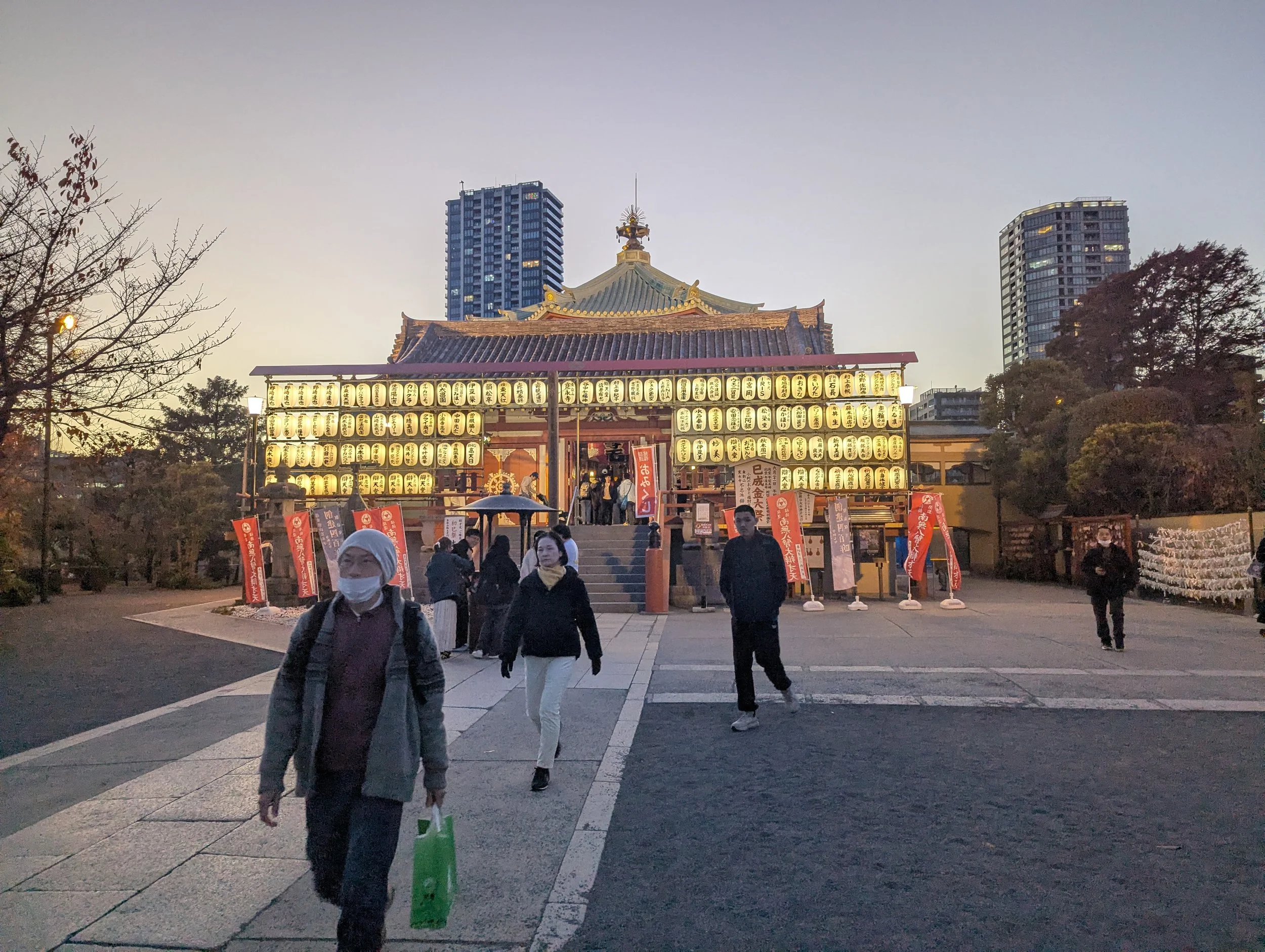
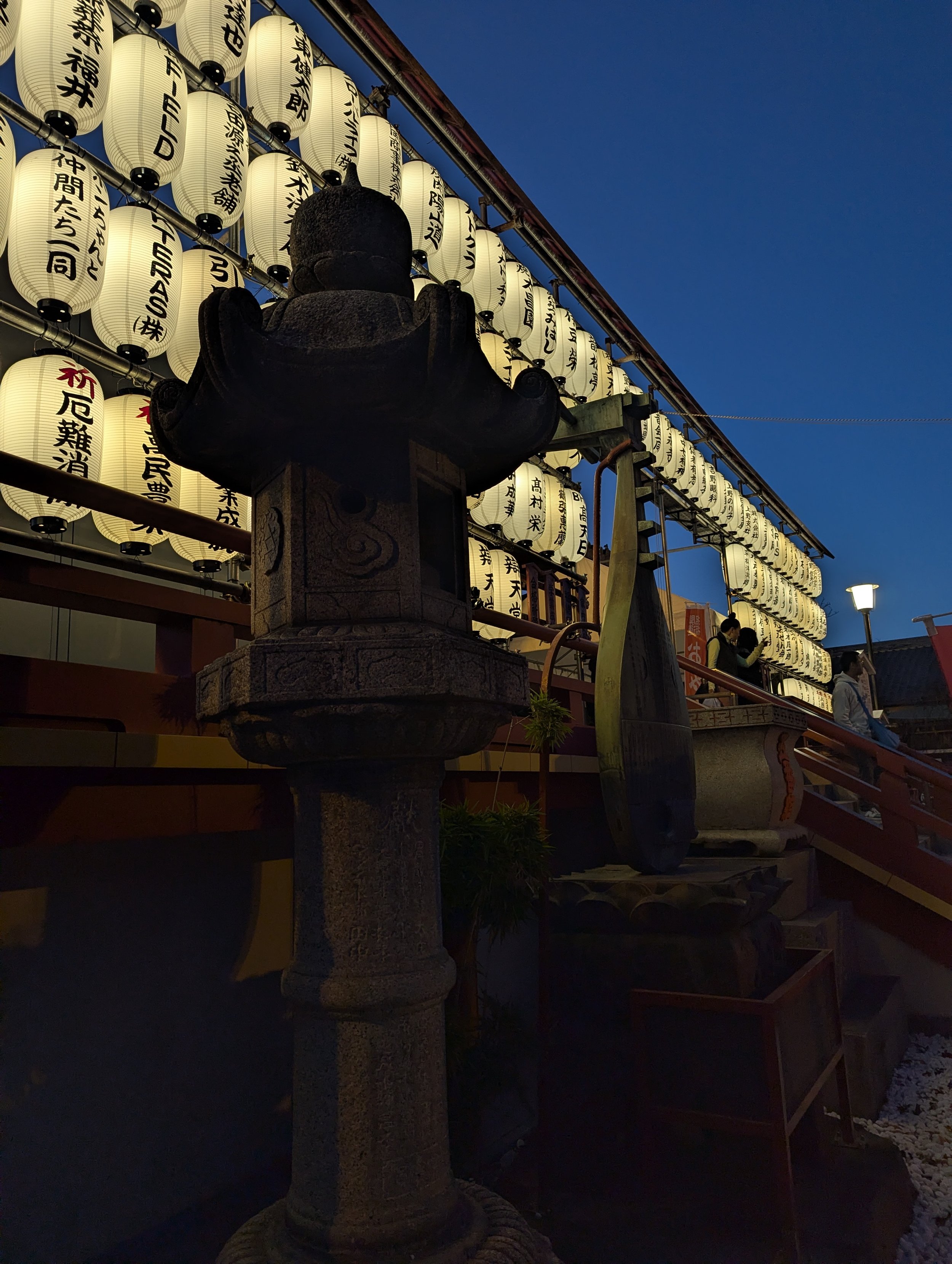
The next stop on our Tokyo adventure was Uenoand Ameyo Yokocho. We stumbled upon a cool shop of recycled kimono - they sold things like collared shirts made of kimono fabric, and neckties and belts and jackets. I think they maybe even had shoes. We didn’t buy anything, but I love the idea of upcycling kimono and the style of it too. When we left the market, we found ourselves in yet another Christmas market! This one was much smaller, just outside of Ueno Park. It still had the shops and plenty of seating to eat and Christmas music, but they also had lots of props to take photos with. Then we wandered around Ueno Park until the sunset. We hadn’t been back to Ueno Park since our very first trip to Japan in 2017. It was springtime and daytime, and looked very different from our memories of the park (I think we also entered from the opposite side). There were pop up shops selling antiques that were fun to browse.
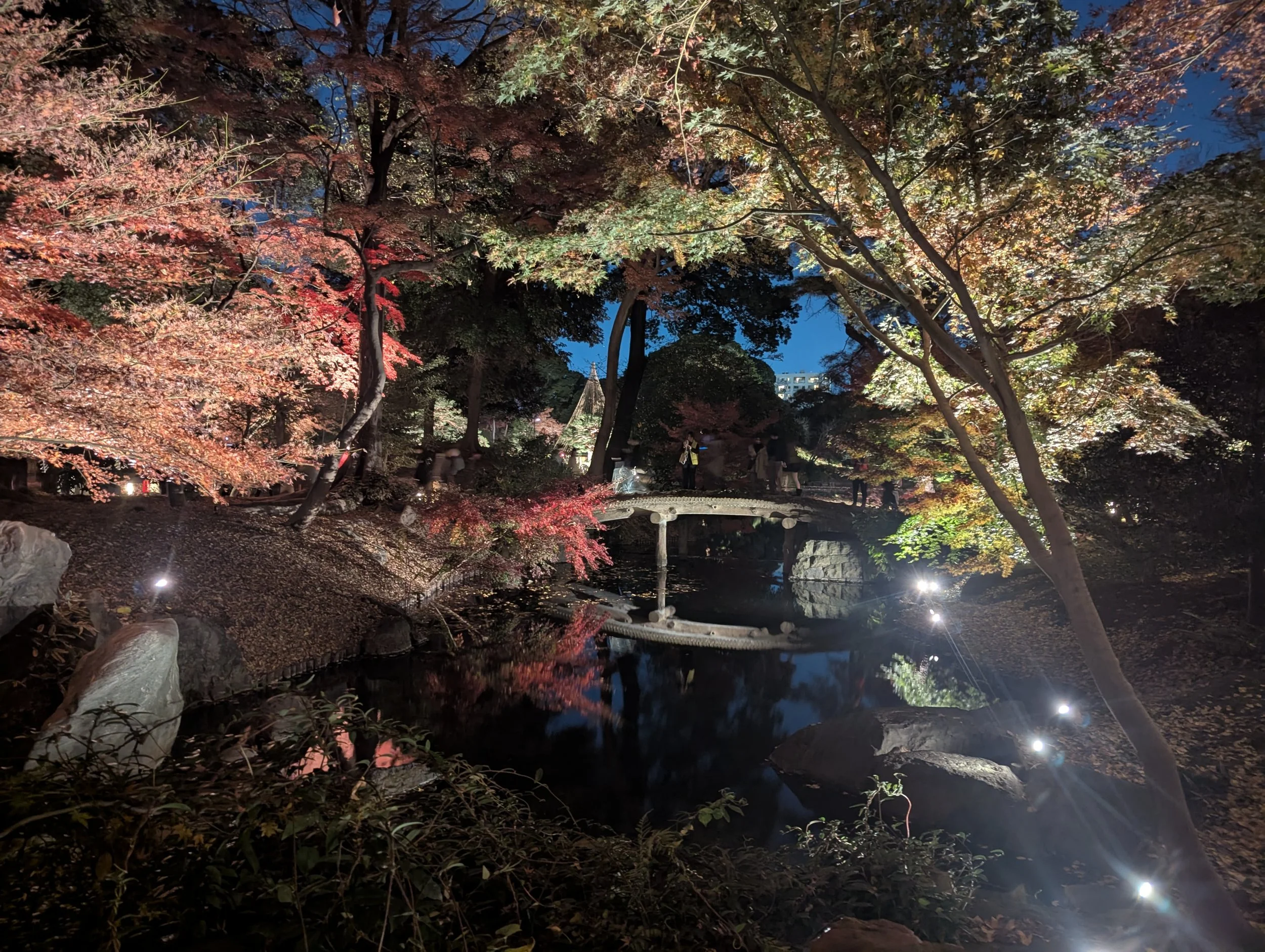
Our last activity of the day was Rikugien Gardens. The previous night, when we weren’t able to get tickets to visit Kawaguchiko, we read that Rikugien Gardens has a nighttime illumination in the fall highlighting the foliage, and we were able to secure tickets. Rikugien Gardens is located northwest of Ueno Park. It was well staffed and easy to find. Again, just like I would expect anything in Tokyo, it was crowded, and at times, perhaps a little frustrating and made it difficult to enjoy, but for the most part, people were respectful. We hadn’t been to these particular gardens in the daytime, but the illuminations were very peaceful. There were a couple of stands for snacks, like dango, and there was a teahouse where you could sit, enjoy the view and a cup of tea, but I don’t remember seeing any true food. We spent about an hour here walking the grounds, from 6:15-7:10.
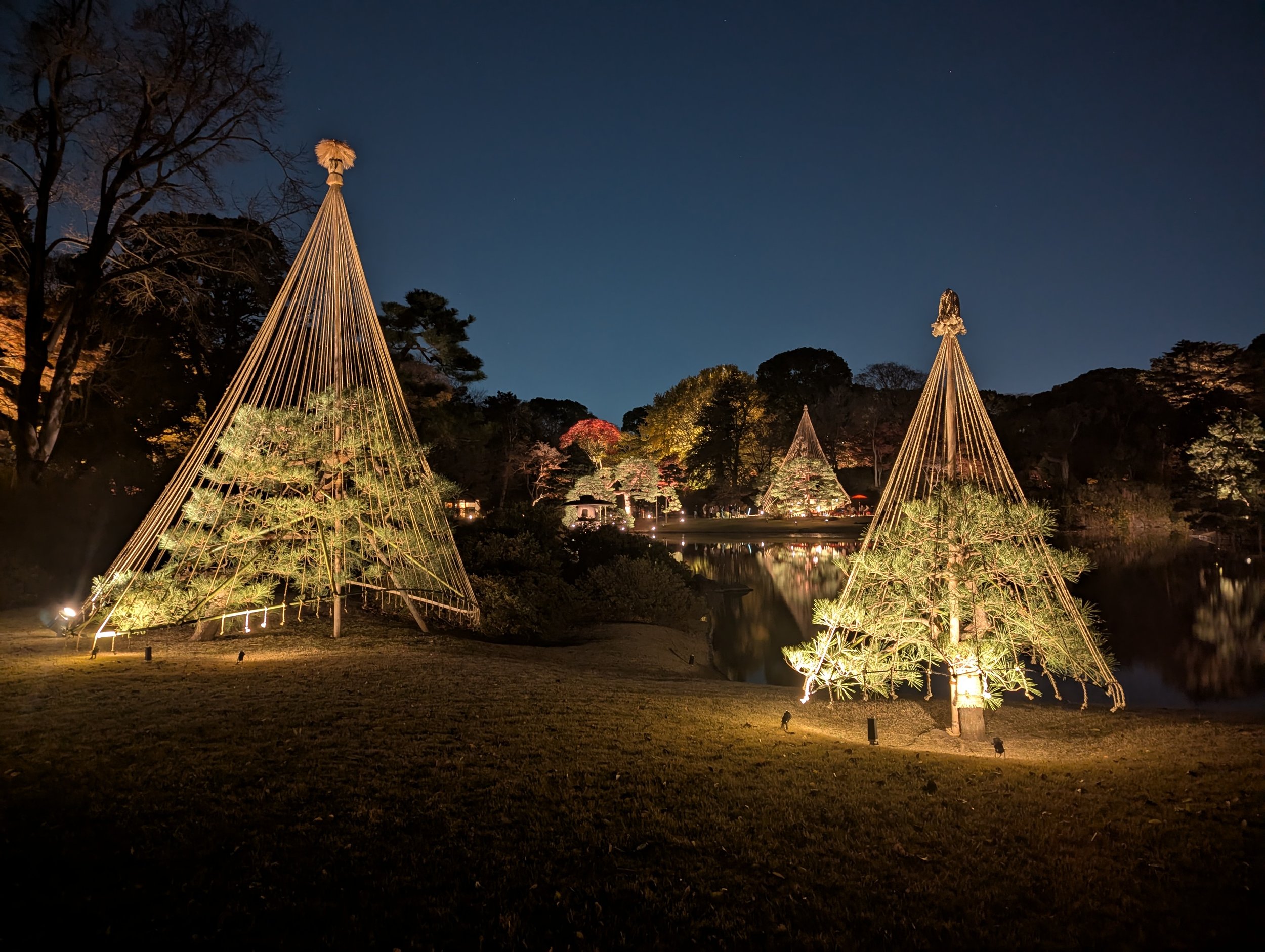
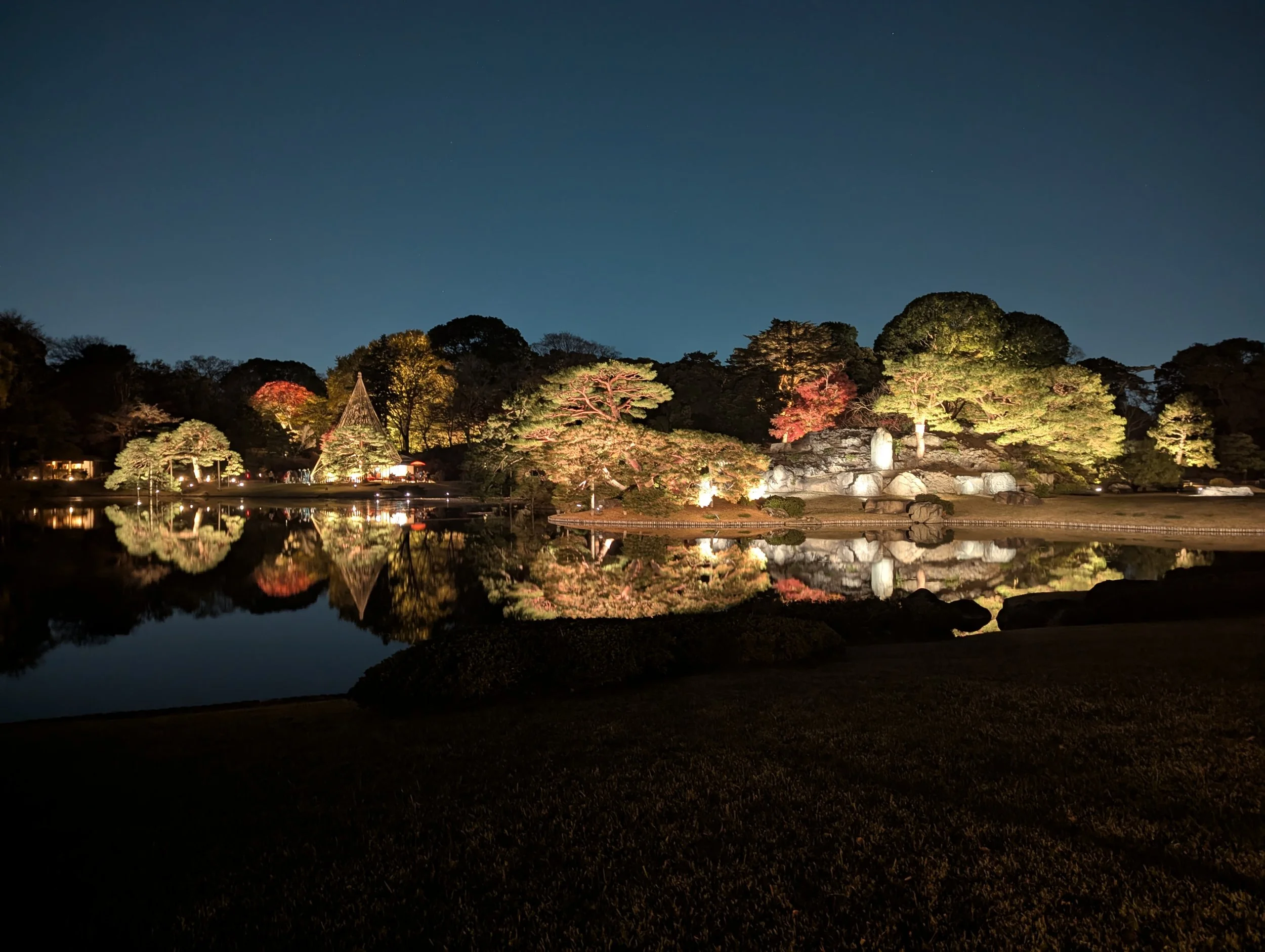
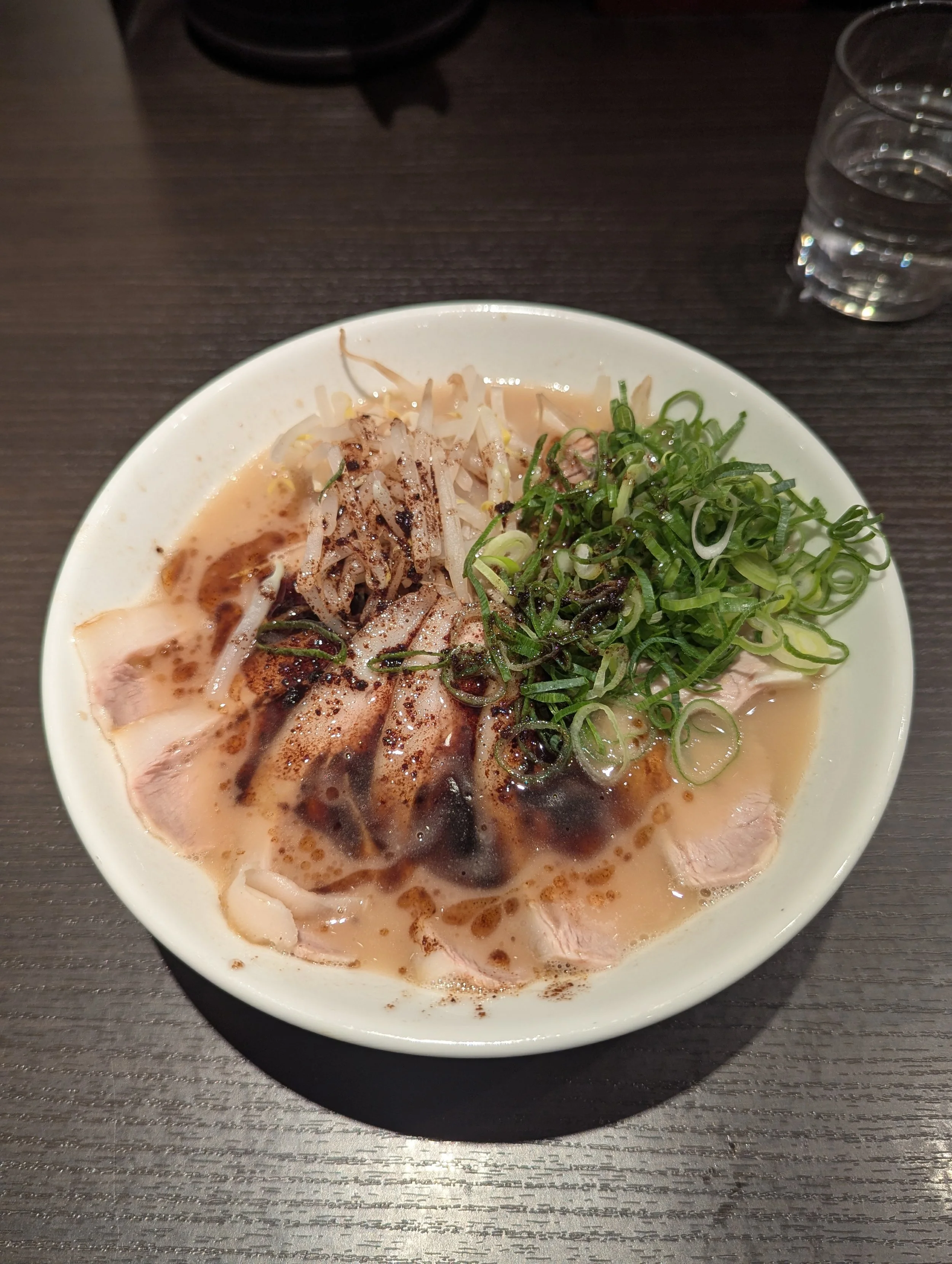
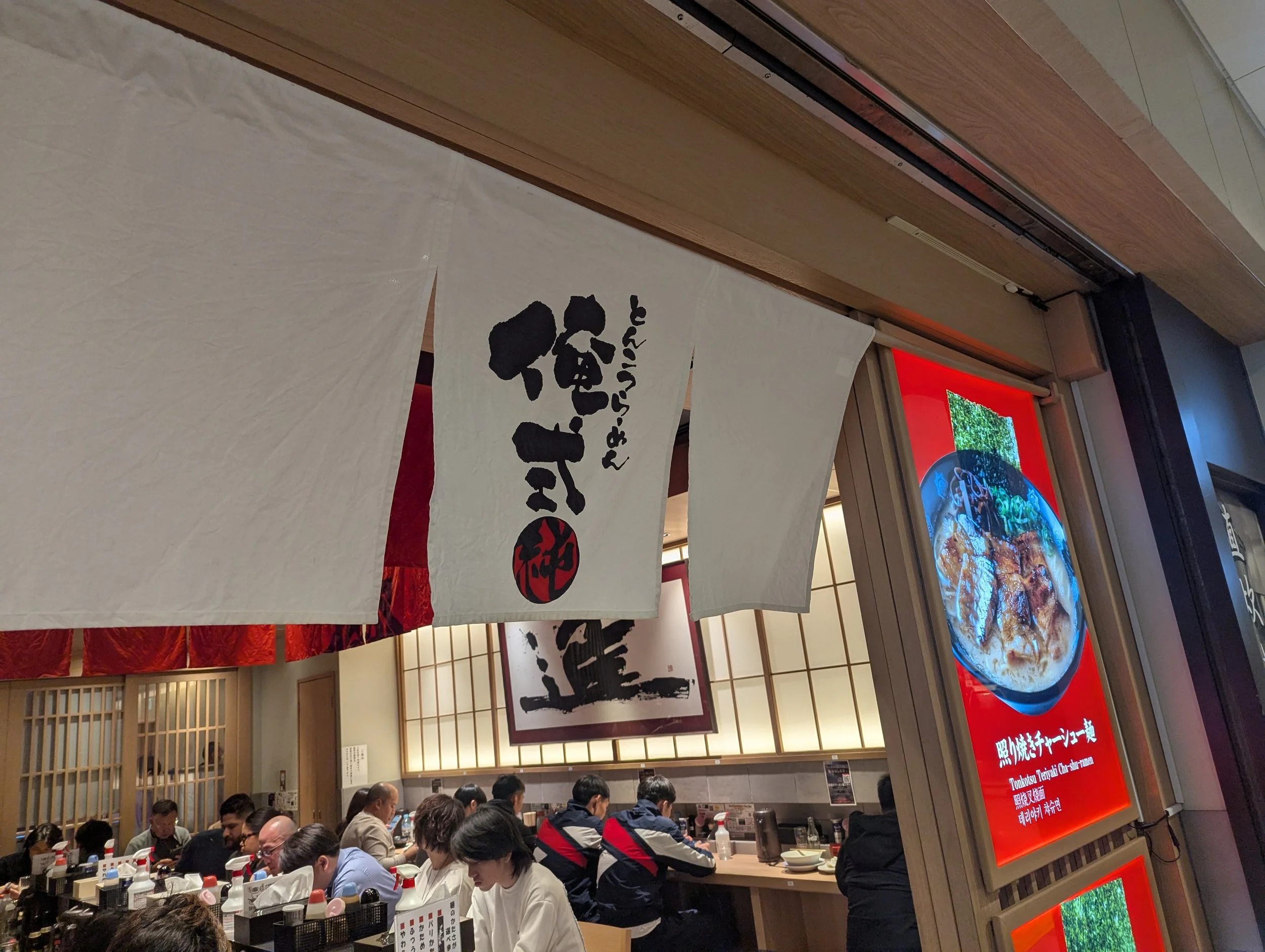
We made our way back to Tokyo Station. I was apparently so tired that I fell asleep on the train. The ramen street is level B1. We went to Oreshiki Jun for tonkotsu style ramen. Ramen was the perfect meal after being out on the brisk evening admiring the trees. We’d later joke that this trip was our ramen tour because we had ramen so often - the perfect autumn/winter cozy meal, and quick and delicious!
We were back at our hotel at 9 sharp and off to bed to recharge for the next leg of the trip!
Day 3: Saturday, November 29th - Tokyo to Matsumoto to Takayama
I woke at 6 to my alarm. I found it was much easier to adjust to the time difference this time, which was a pleasant surprise because after last trip, I had a very difficult time adjusting, both ways. Went to to the hotel lounge for cappuccino and this time, since it was after 6, there were juices and fruit and slices of pound cake (fruit was a nice treat because fruit in Japan is expensive).
We brought our cappuccinos and treats back to our room so we could pack. It has only been one day and we already have a lot of stuff, but couldn't resist this beautiful glass Christmas tree from the Meiji Jingu Christmas market.
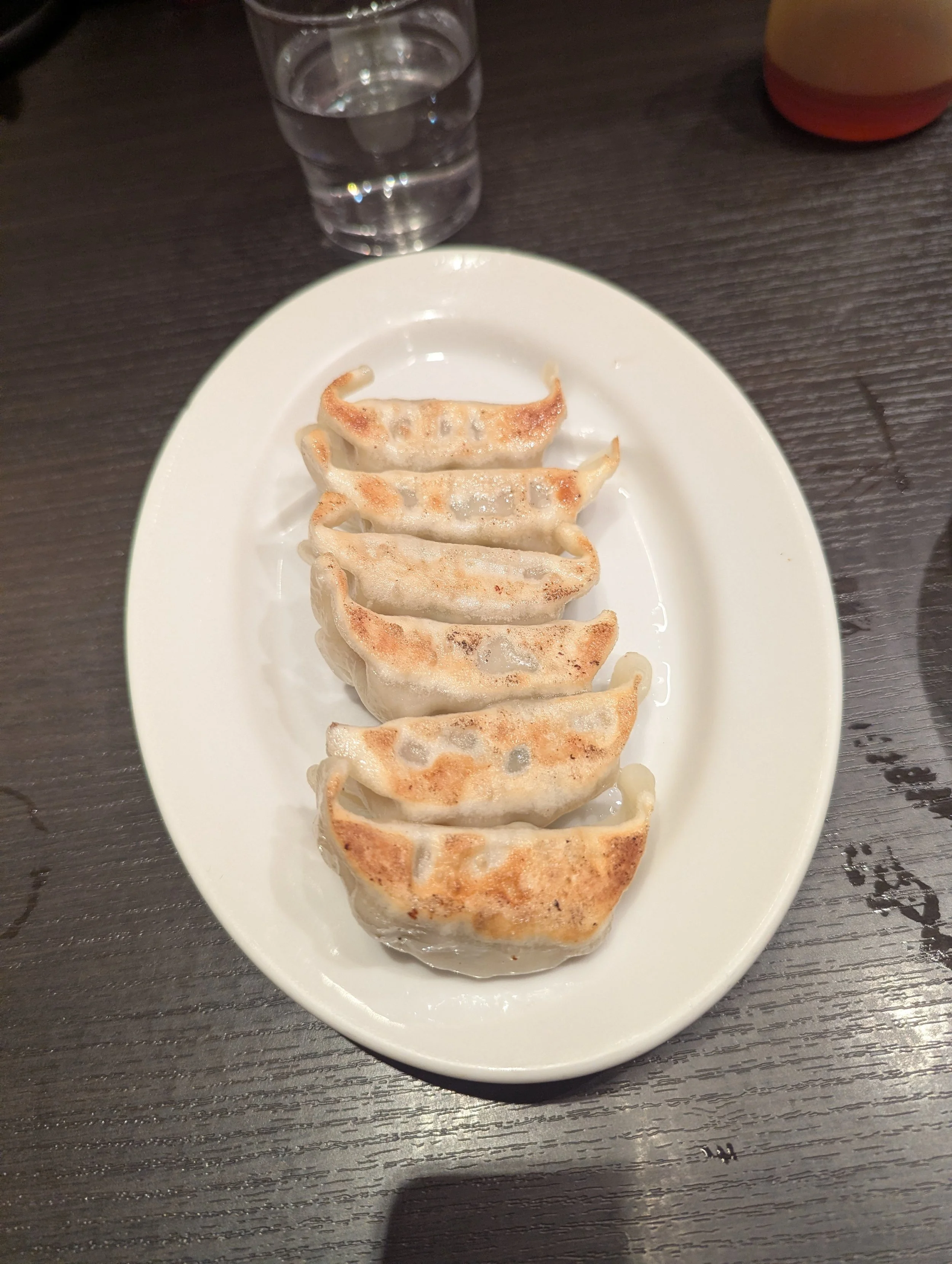
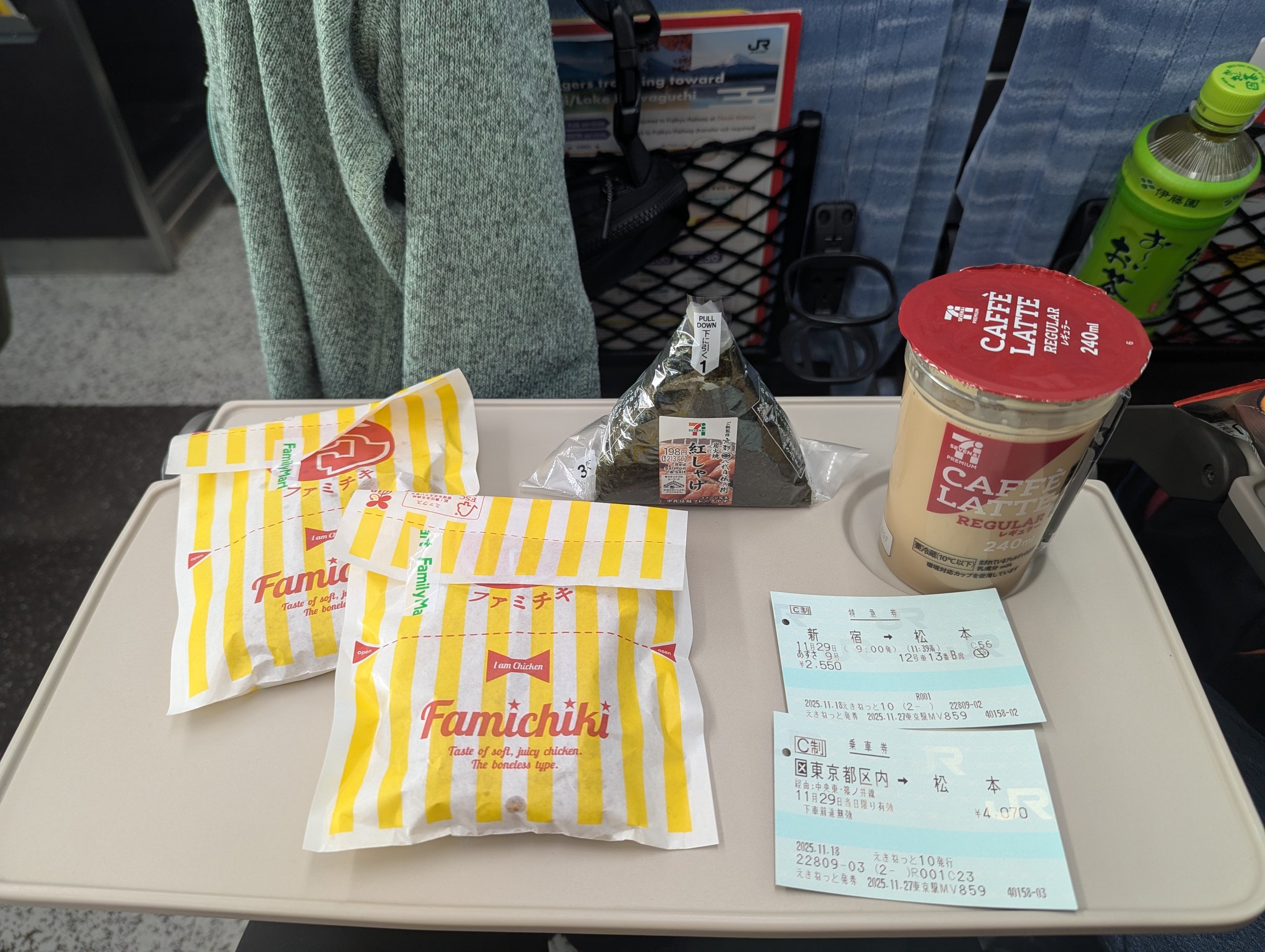
We showered and packed. We left our room at around 7:40 to check out and to head to Shinjuku Station. It is our experience that Shinjuku Station is one of the main stations when traveling to other cities, making it a convenient home base in Tokyo. We left the station for 7-Eleven/FamilyMart in search of curry pan but neither had. We opted to try famichiki (FamilyMart fried chicken) instead - original and soy garlic for me - and Kevin comparing famichiki with 7-Eleven spicy chicken.
We were back to the station at 8:40 to find our way to the platform for the Azusa9 Limited Express for Matsumoto, via the JR Gates (Chuo Line). Doors to the train opened at 8:45 for our 9:00 train, as Shinjuku was the origin station. Tracks 9&10 share a platform, and both sides had trains to Matsumoto, ours leaving at 9AM on track 10 and the other from track 9 at 9:02. It was confusing to determine which train was ours, and we had to ask the conductor. Once we boarded, someone else thought we were in his seat, but it turns out he was on the wrong train, probably meant to be on the 9:02. I’m glad we weren’t the only ones that were confused.
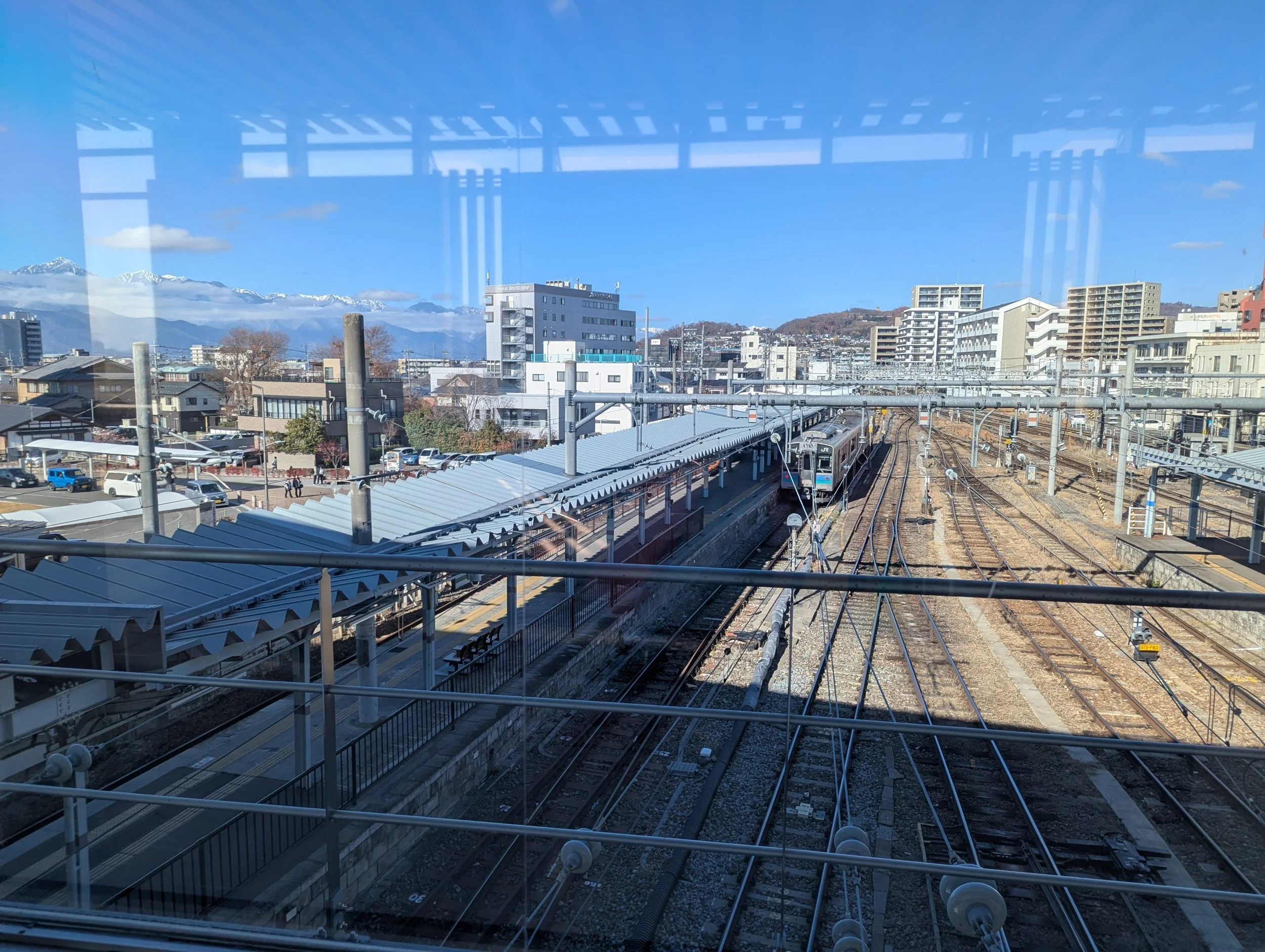
We arrived in Matsumoto at 11:40. It was already cold, just getting off the train, quite the contrast from the 75 degree day we had the day prior in Tokyo. There were officers on the platform holding a "Welcome to Nagano" banner - so cute, so Japanese!
Matsumoto is northwest of Tokyo, the gateway to the Japanese Alps. Located in Nagano Prefecture, which is also known for snow monkeys, although we won’t be seeing them this trip, also a main hub for outdoor activities like skiing and hiking.
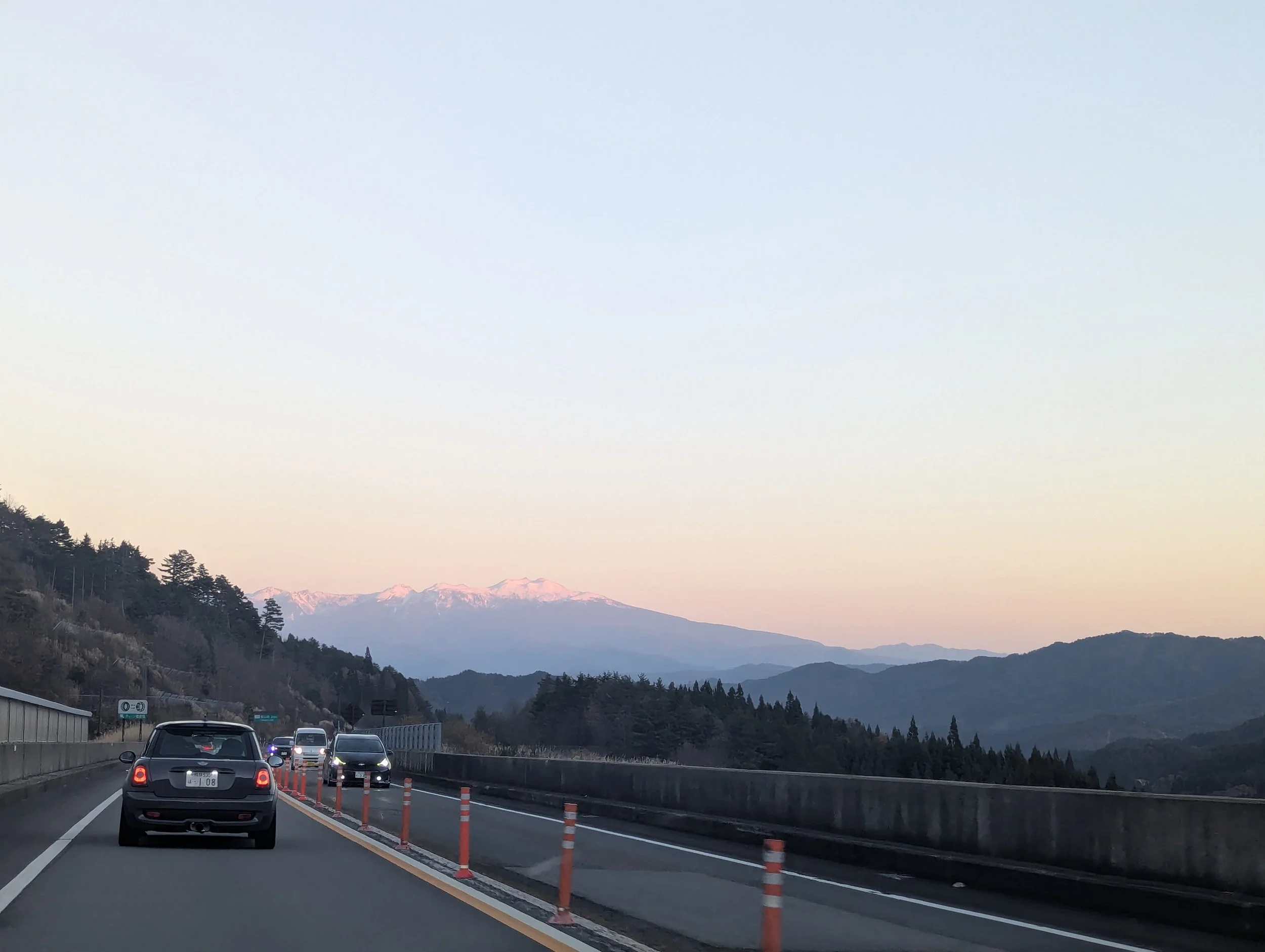
From the station windows, you could see the snow capped mountains in the distance!
For this trip, I finally found myself a stamp book. We had seen many videos online of people collecting stamps as they travel across Japan from the towns and places they visit. I’ve always wanted one but couldn’t find an appropriate stamp book. I even tried shopping when we were in Japan last, but the stamp books sold in Japan are meant for temple Goshuin stamps, not the fun stamps I was interested in. Prior to this trip, I ordered custom blank page notebooks from Etsy that would be my designated stamp books. At Matsumoto Station, I found my first two stamps!
We stored our luggage in a coin locker on the upper level for 800 yen. There are smaller lockers which cost less, but this locker fit both our suitcases and our backpacks. We exited via east exit.
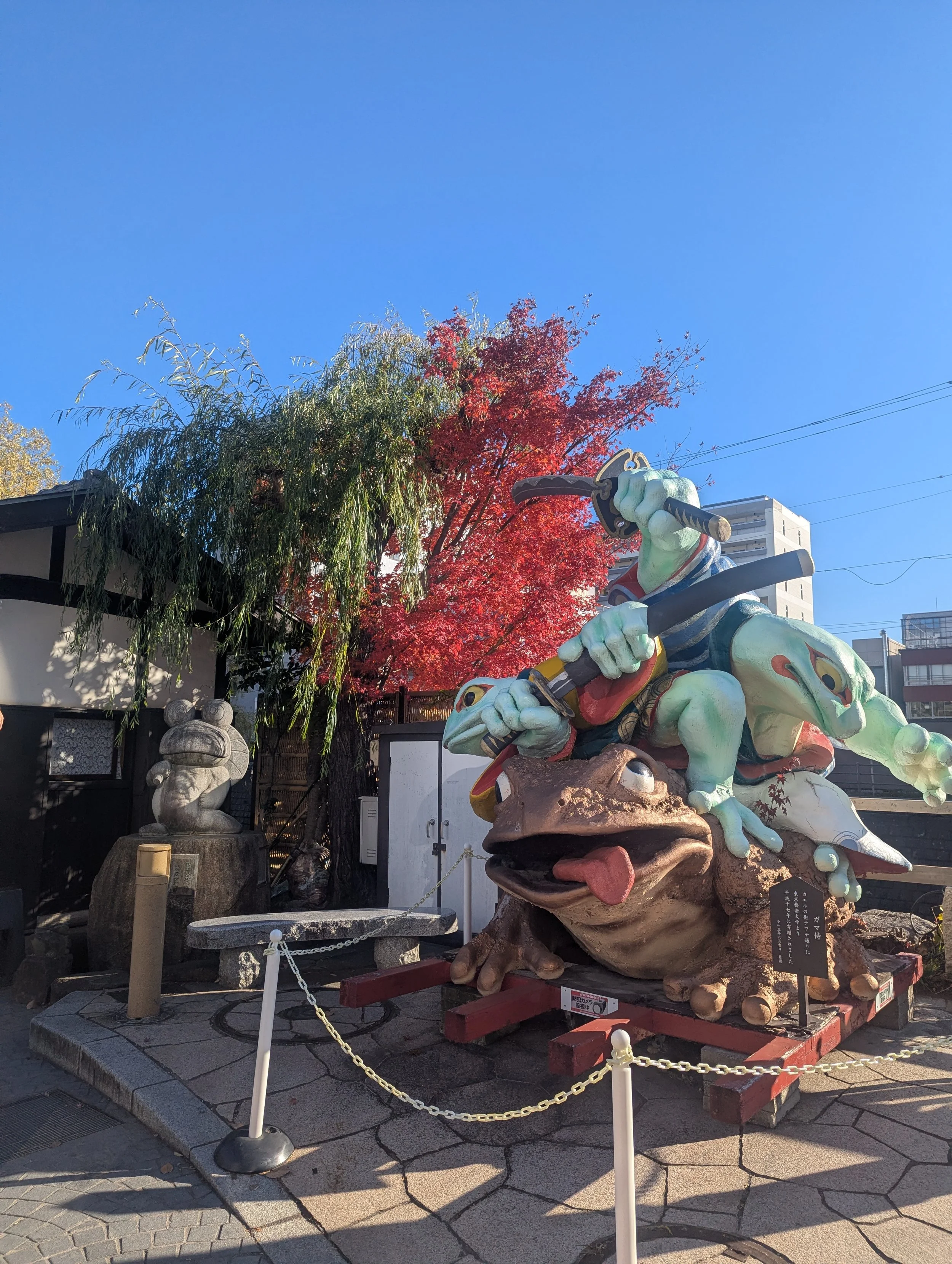
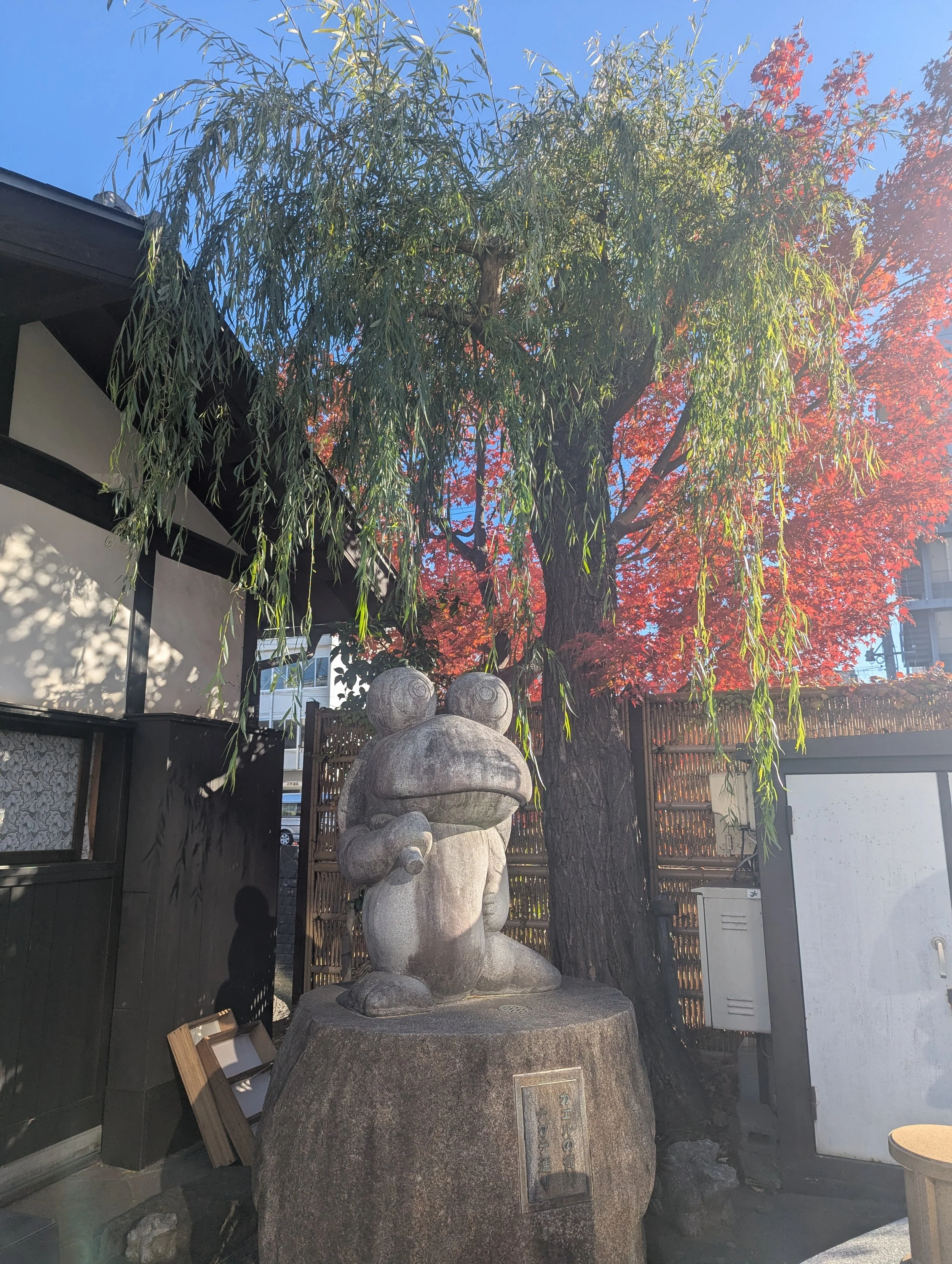
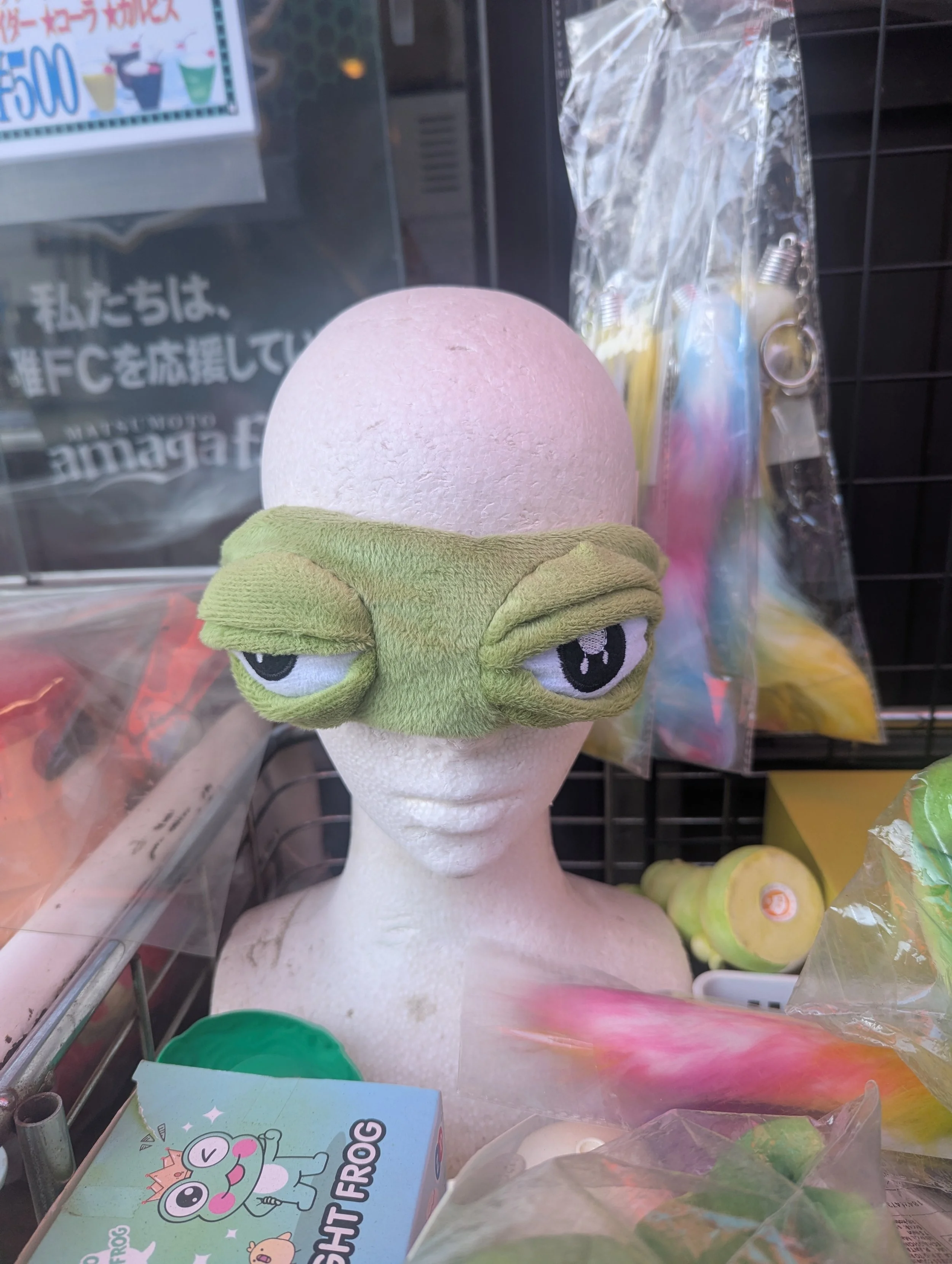
Matsumoto is known for soba, miso, grapes, apples and sake. Knowing these help guide us on what foods to focus on during our time in that city or region. We didn’t have anything grape flavored, but we did see grape Pocky. Matsumoto is also known for frogs and seemed to be big on instruments and music. Multiple people on road walking with instruments, statues, Yamaha music school, stores selling instruments.
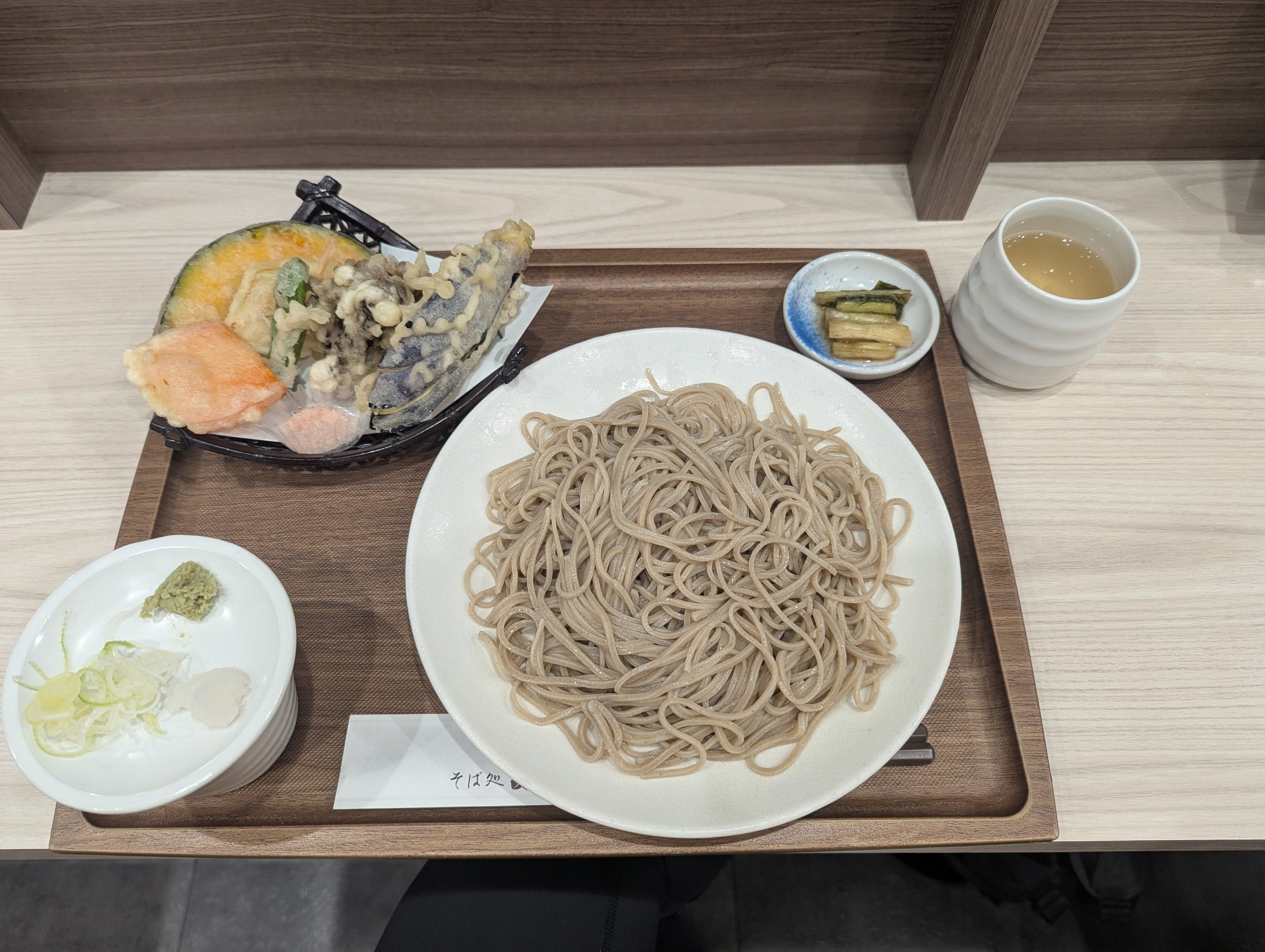
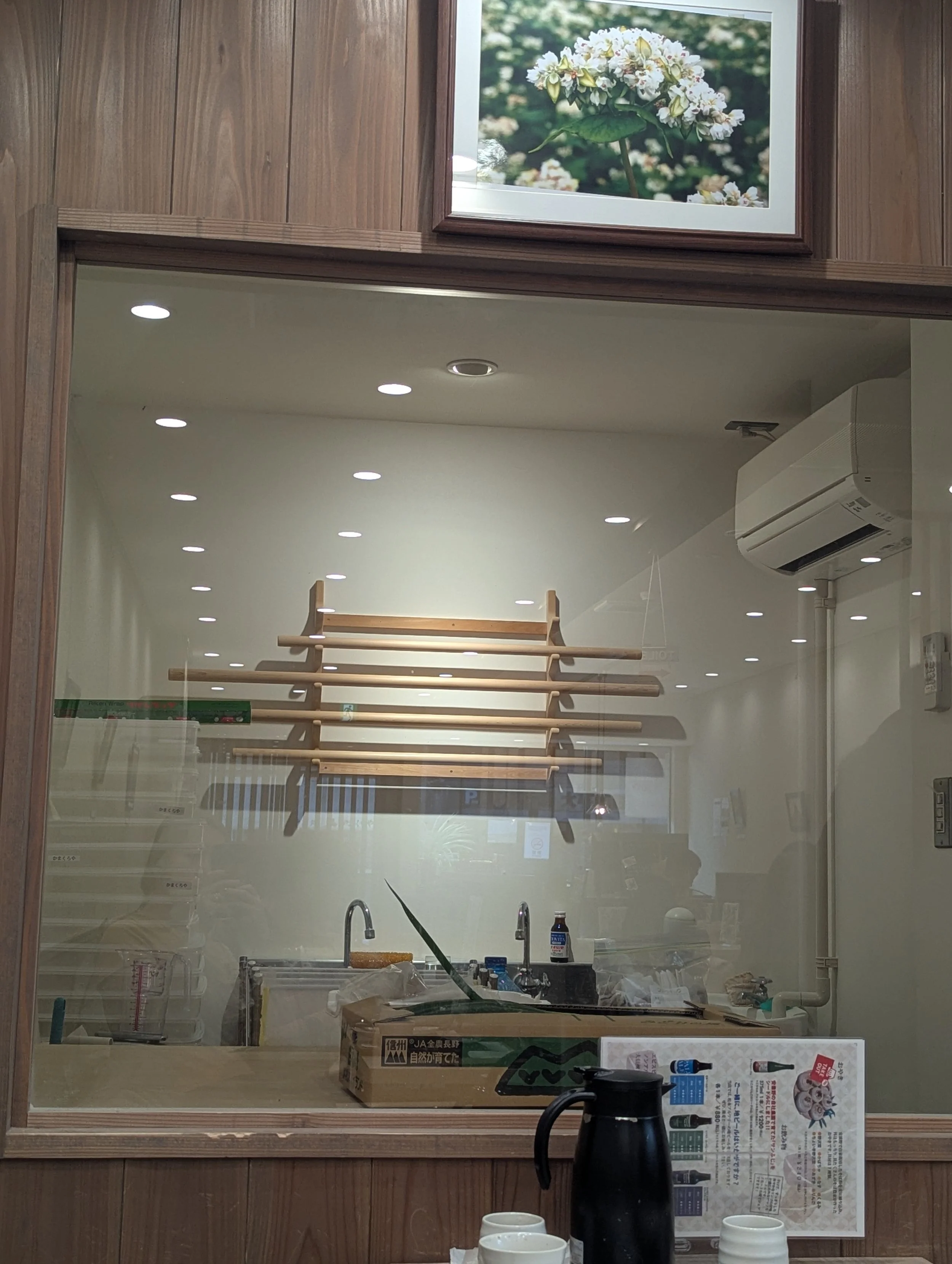
We walked ten minutes in the direction of Matsumoto Castle, and had lunch at 12:10 at a soba shop. We found it on Google Maps, and located it by the photos on the listing, which was more difficult than it sounds because soba/noodle shops often have a similar storefront. It was 1500 yen each for soba and tempura set, which includes maitake mushroom. Like many noodle shops, it was a quick yet fulfilling meal. by 12:40, we were on our way to the castle, which was less than five minutes form the restaurant, and probably about a 15 minute walk from the station.
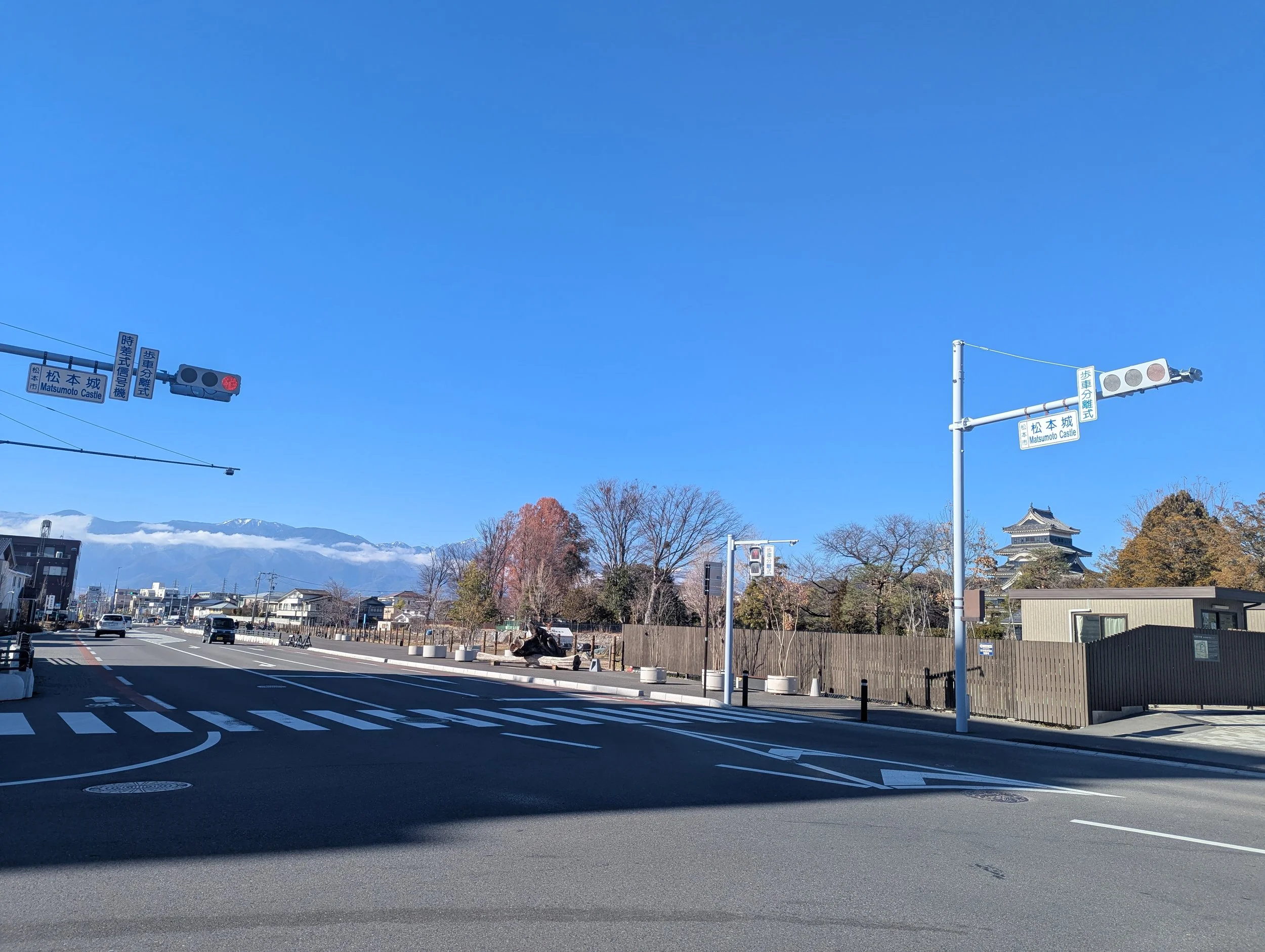
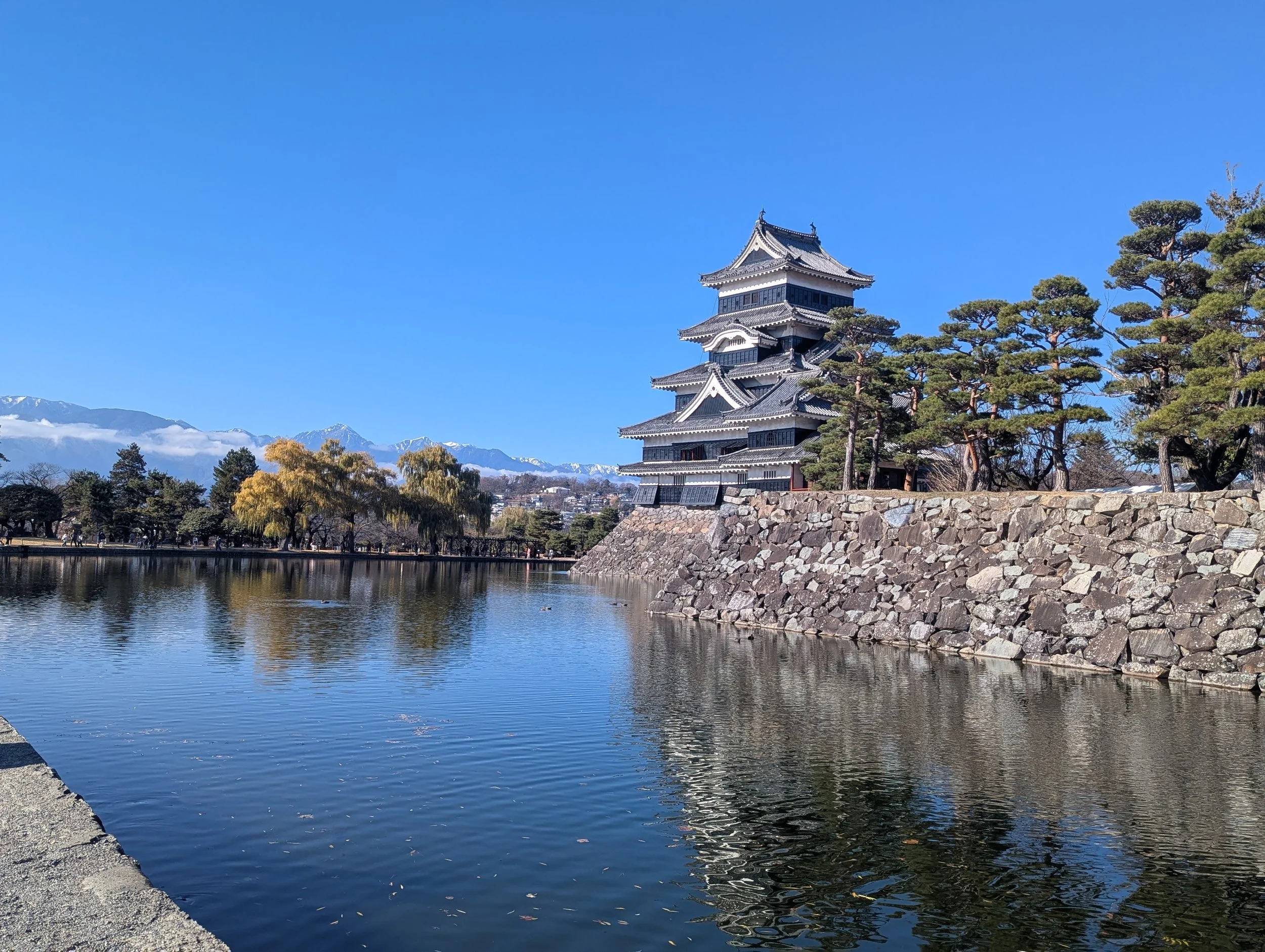
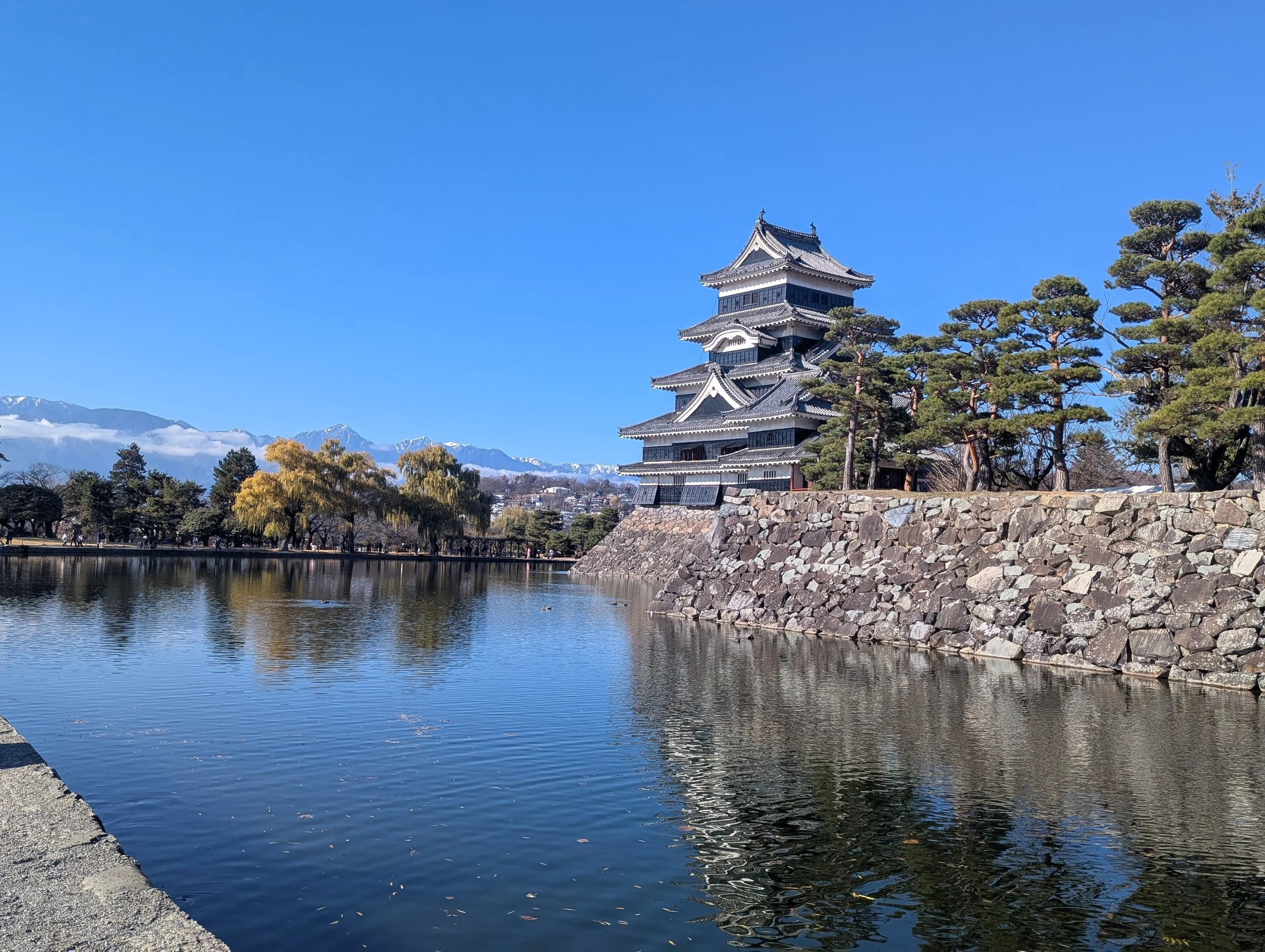
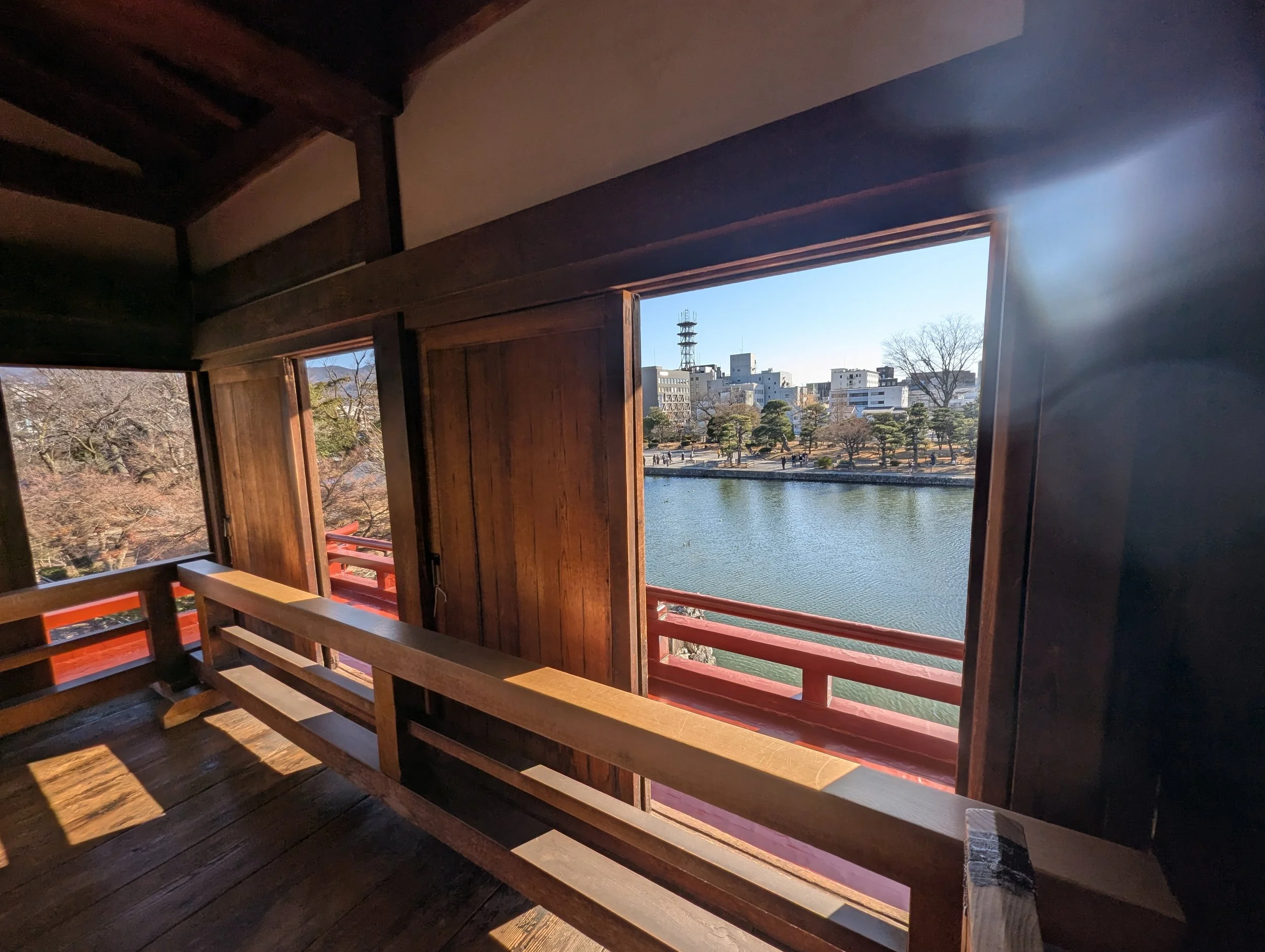
Matsumoto Castle is “The Black Castle”. It is one of the original castles that has never been destroyed, town petitioned to preserve it; it had been marked for demolition in the late 1800s when there was a Meiji order to destroy all former feudal fortifications. The fish decor on the castle are actually tiger/dragon heads with fish bodies and were meant to protect the castle against fire. They come in pairs, the female fish has a closed mouth and the male an open mouth. Castle entry was 1300 yen per person and is well worth it. Visitors must take off shoes when inside, so I recommend you wear socks, ideally Barre socks with the sticky bottoms because the wood floors can be slippery, and the stairs are steep and narrow. One dad had his child on his shoulders coming down the very steep steps, made me nervous. Part of the displays were the guns and muskets. There is a secret third floor that is dark, cannot be seen from outside. There is a shrine at the top, in the ceiling. Moon viewing room overlooking the gardens - one of only two castles with this feature. Gives me inspiration for our home - I would love a moon viewing room.
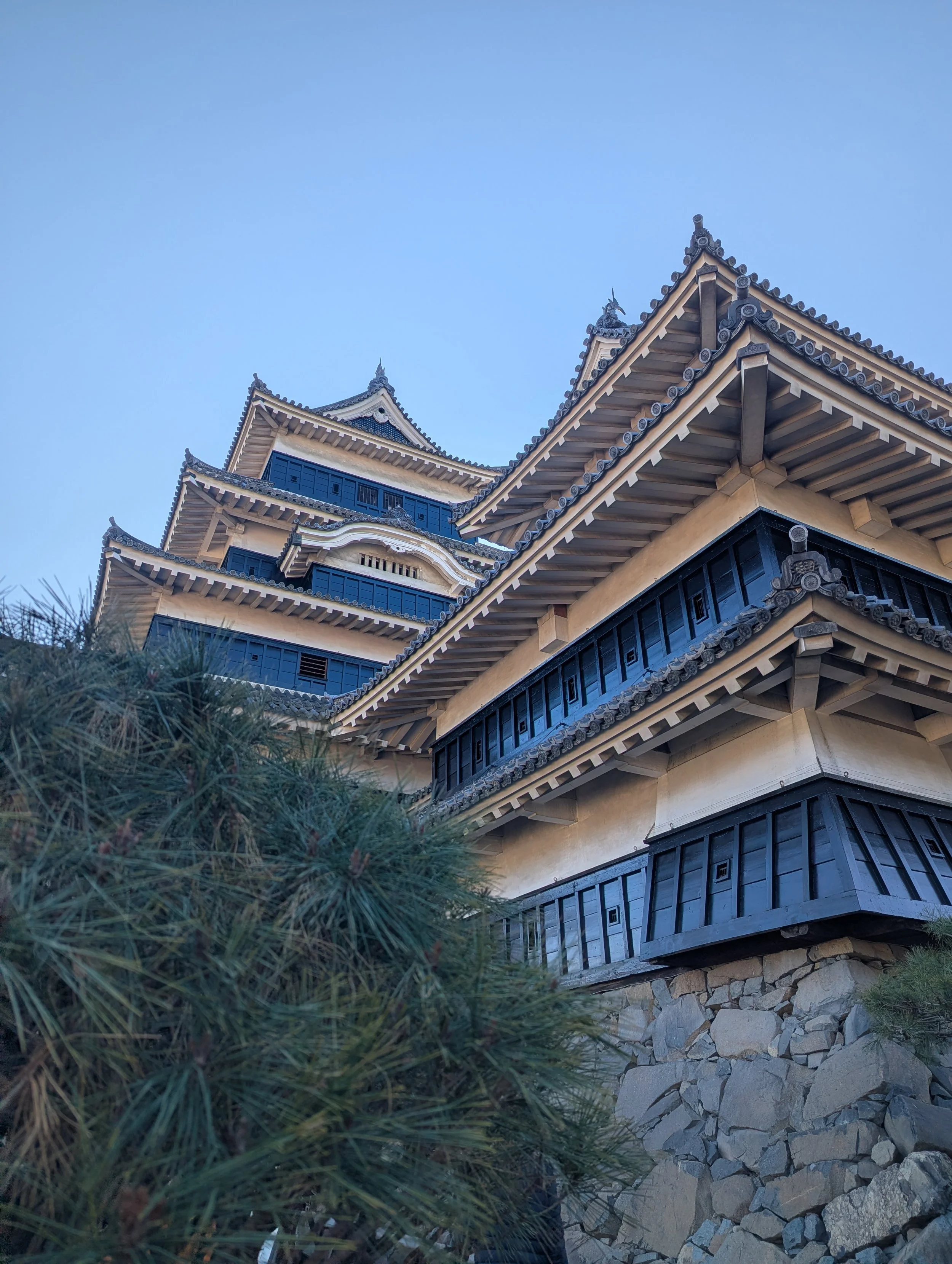
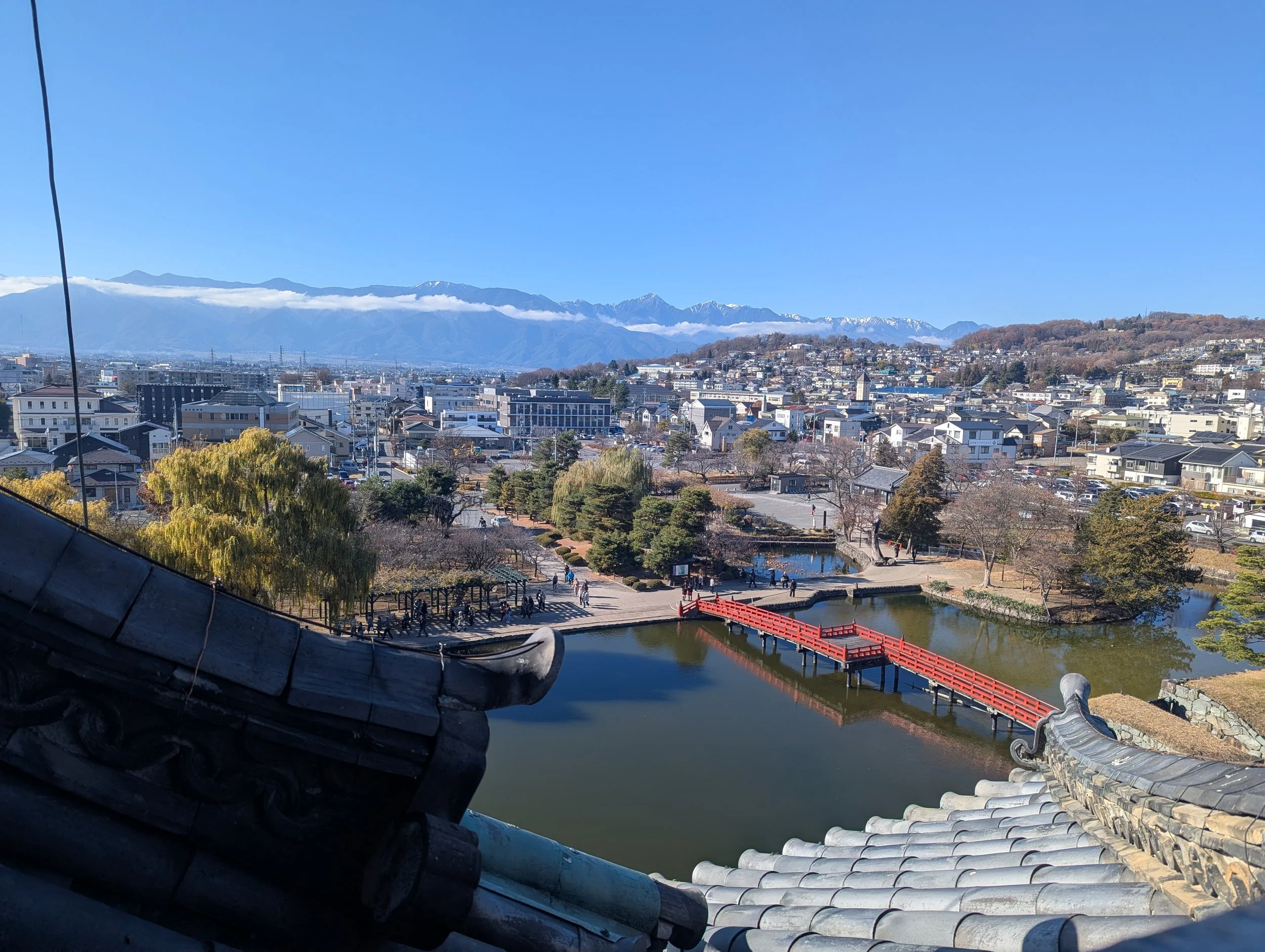
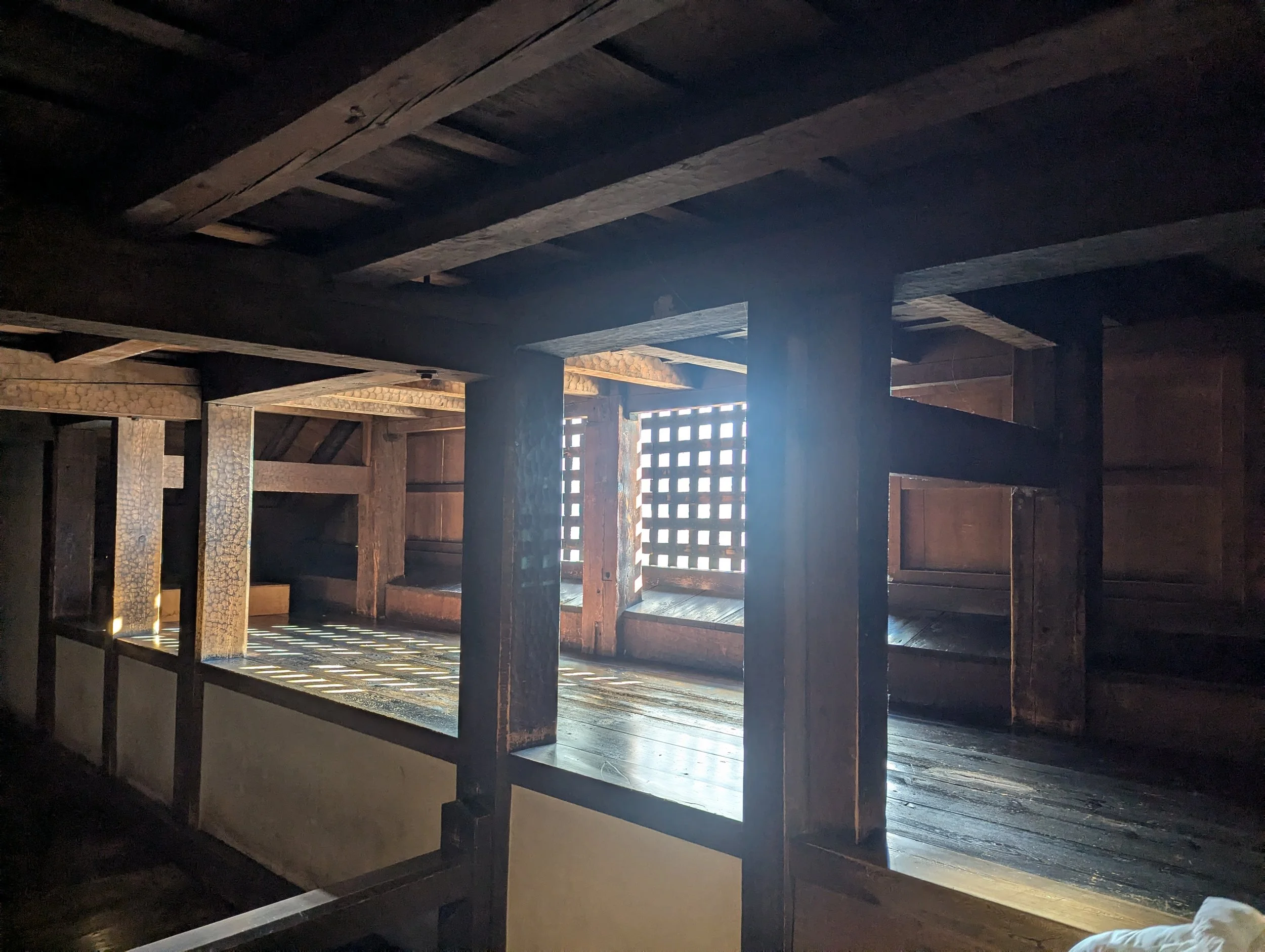
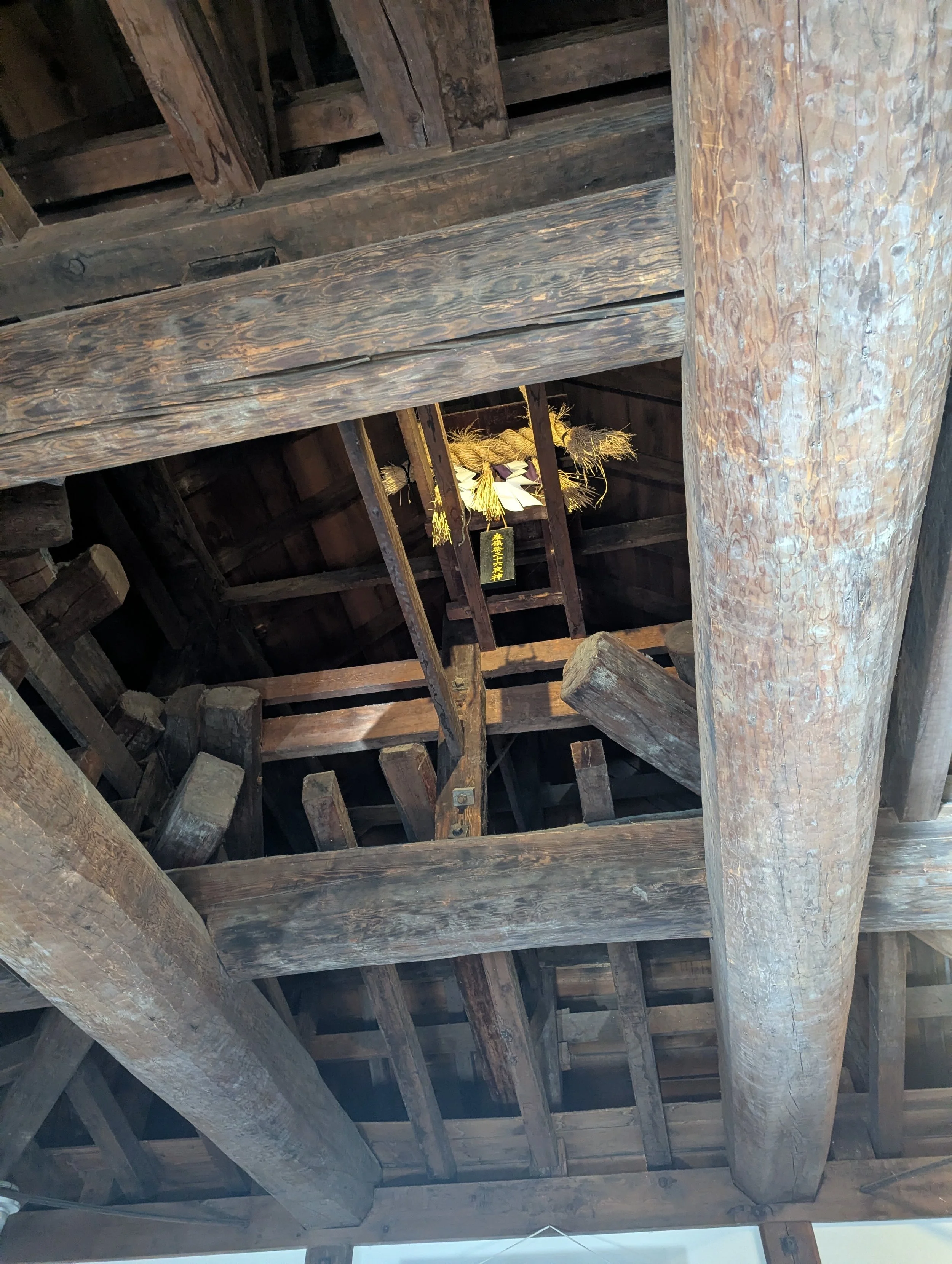
From the Castle, we checked out Nawatedori and Nakamachidori. The streets were pretty small, shopping streets with souvenir shops and snacks. Around 2:30, we started working our way back to the station to retrieve our luggage, and pick up our rental car, which was two blocks from the station.
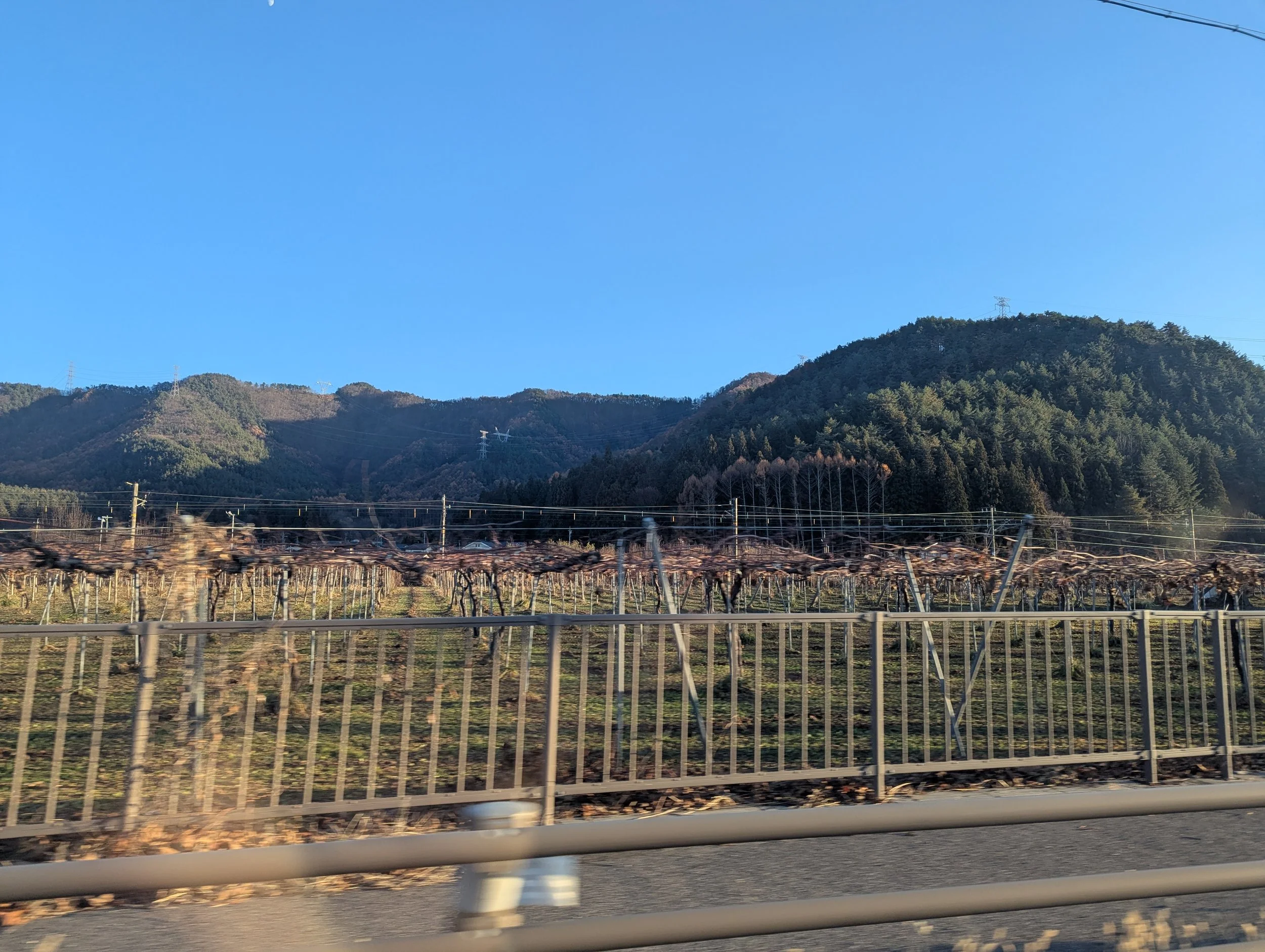
Matsumoto was serving as the origin point for our road trip through the Japanese Alps. We embarked on our road trip at 15:15 for Naraijuku. We passed several wineries and a lot of grape vines as we were driving, which they grow horizontally on terraces, unlike the vertical vineyards in Italy.
We parked at Naraijuku at 16:10. It was 47 degrees and golden hour. It felt colder than 47 degrees, we were in our puffies and hats. I’m not sure if it was because we were there so late in the day, or if it is because it is off the beaten path, but Naraijuku and this section of the Nakasendo was very empty. Most shops were closed, but also very few people around. We encountered only a handful of other groups. It was very peaceful and quiet - definitely worth the detour. Can't capture the vibes with photos, but just imagine old traditional Japanese buildings with black wood, sliding doors, pink skies, snow capped mountains in the distance, and it’s quiet and calm.
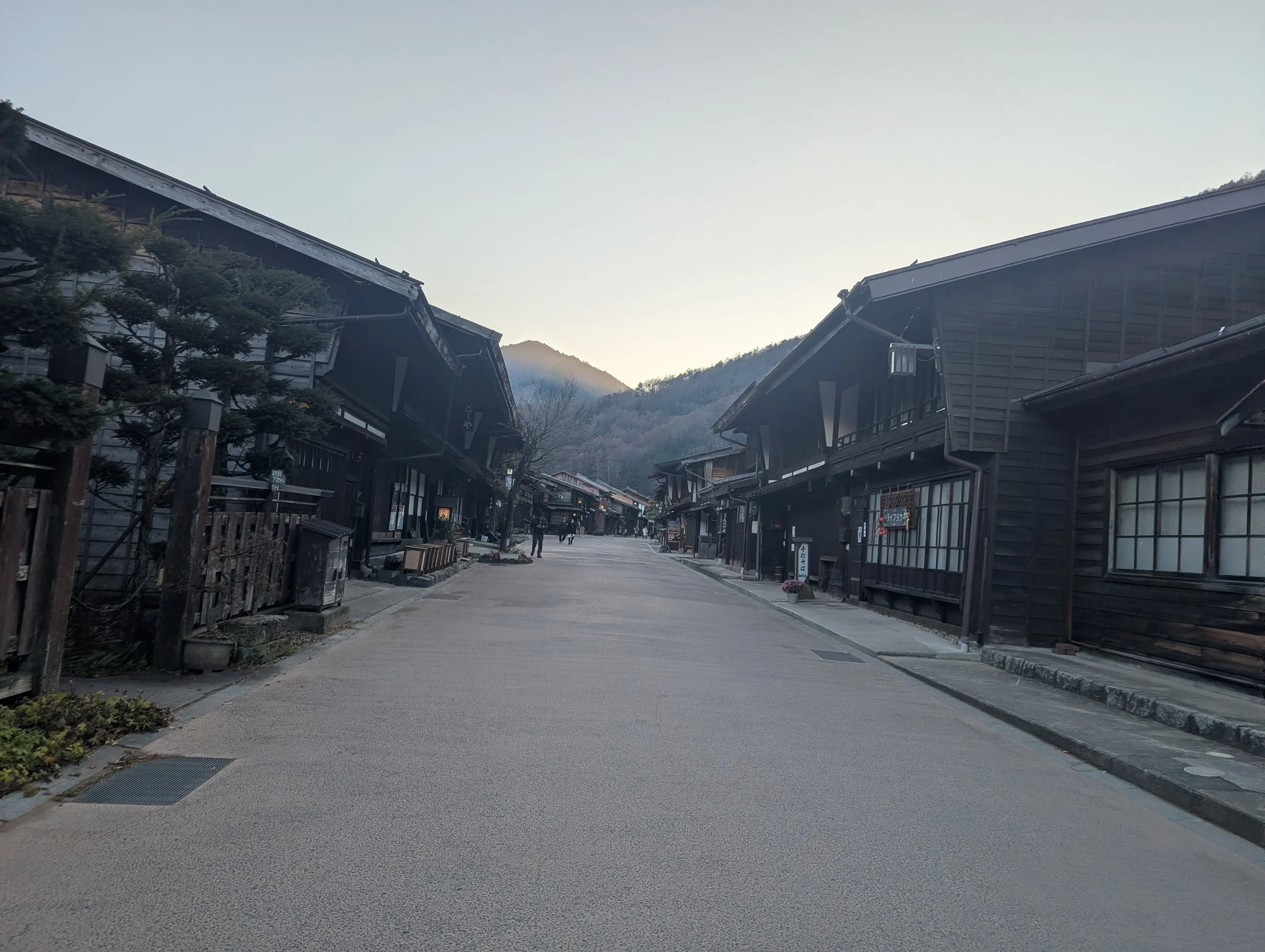
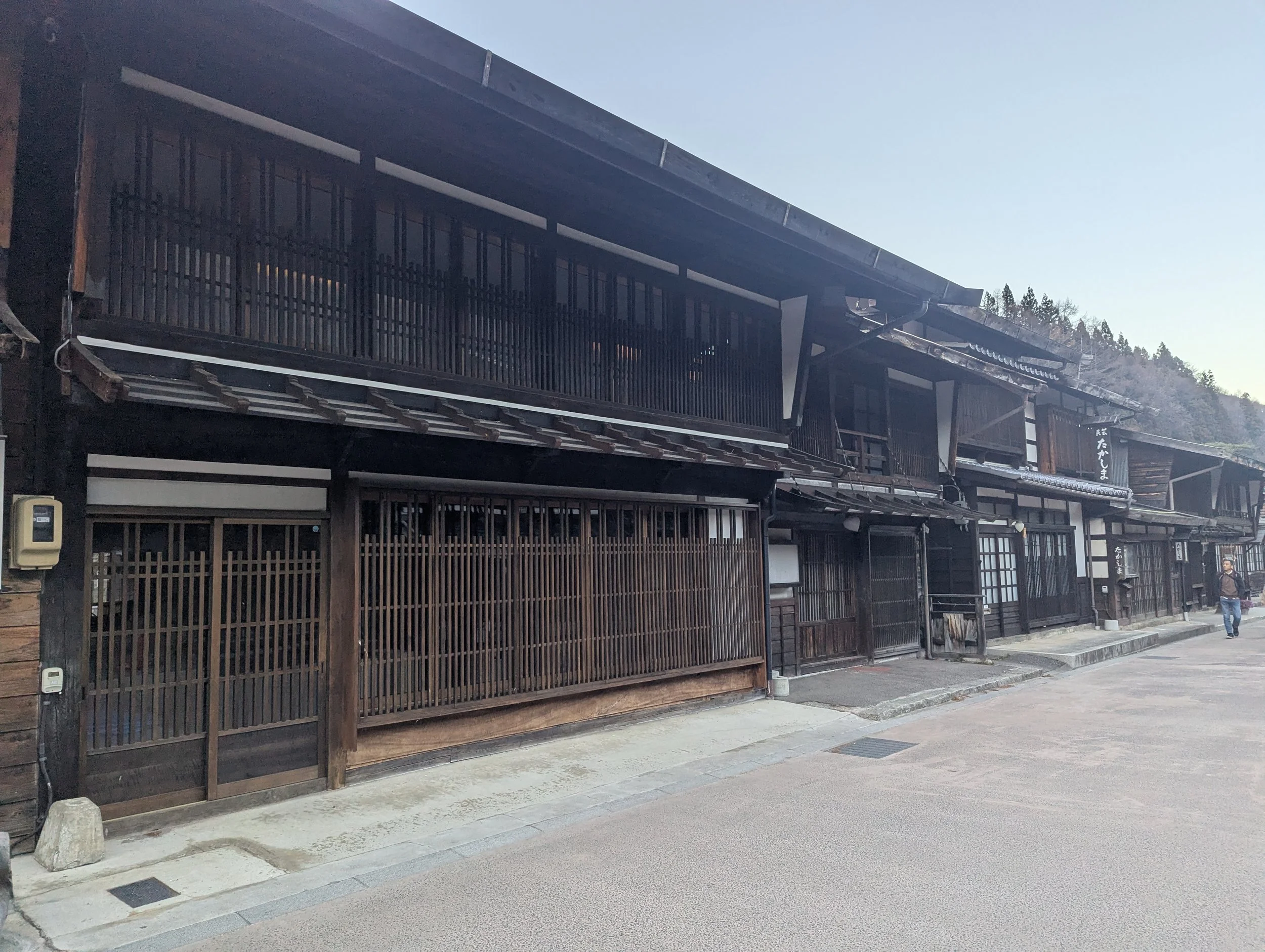
We left Naraijuku at 16:45. We didn’t feel like we rushed, perhaps because most shops were closed anyway, but we still had another two hours drive to get to Takayama. We did not realize the entire journey would be on winding mountain roads instead of highways, and it snowed during the drive.
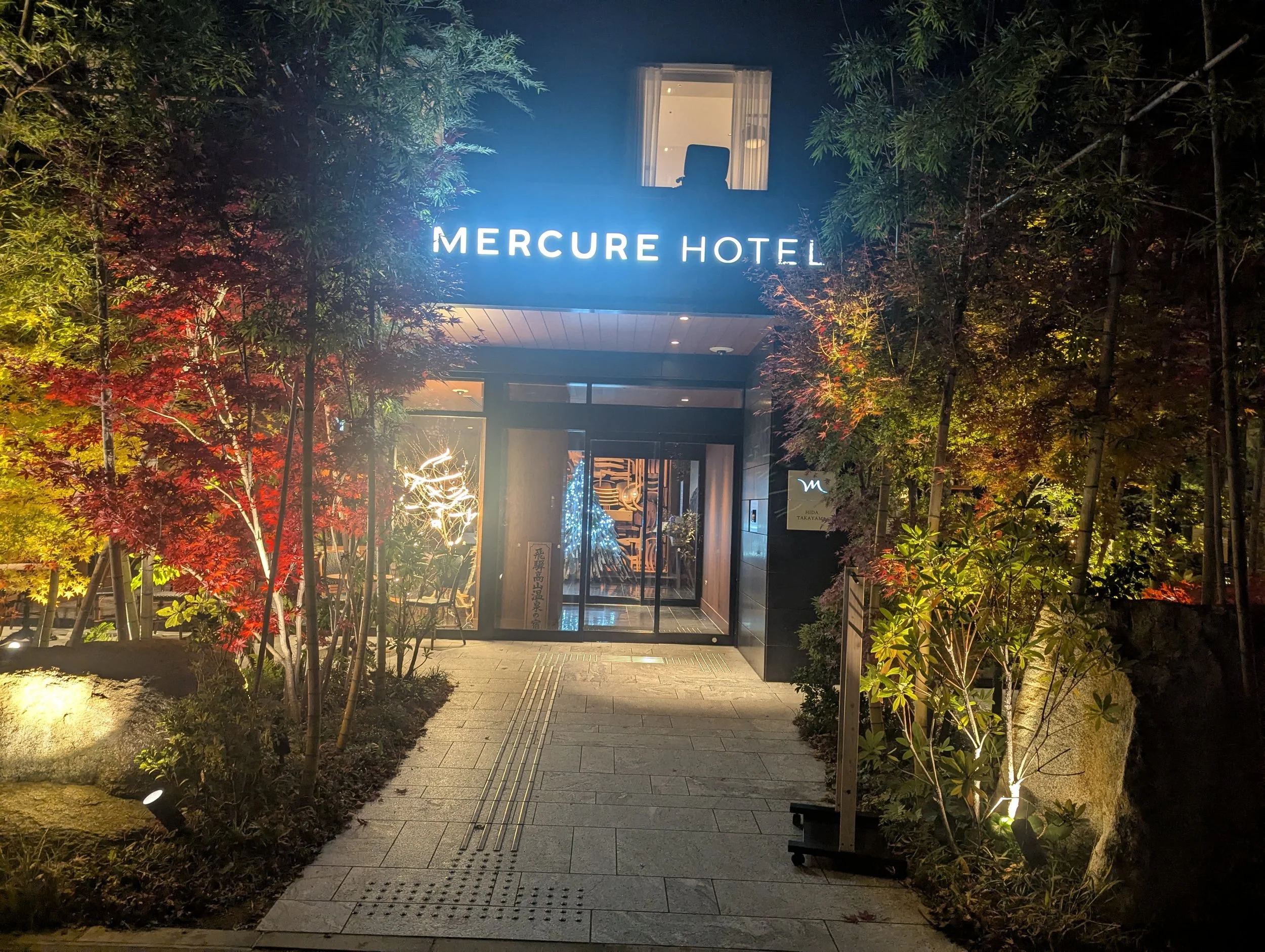
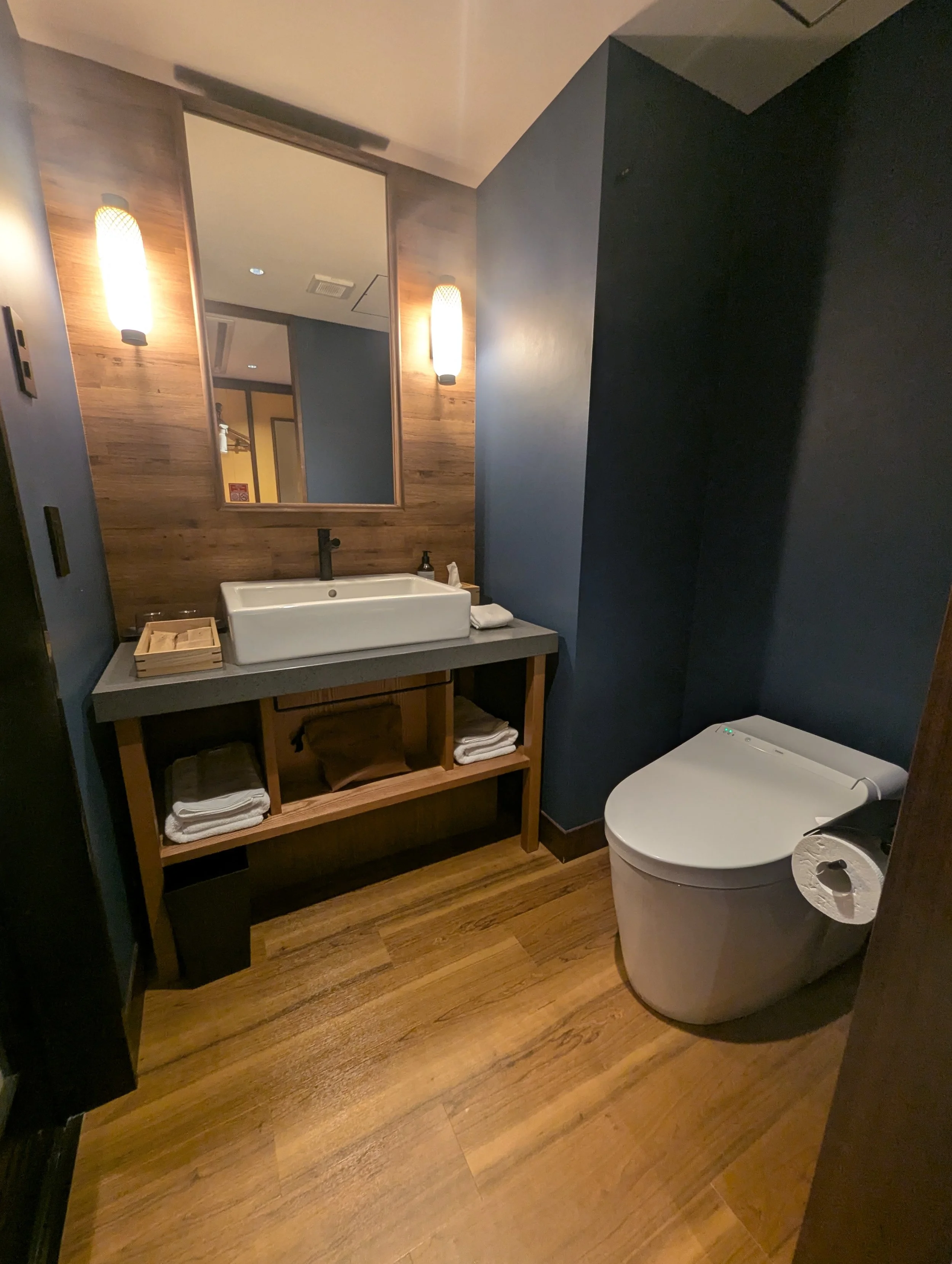
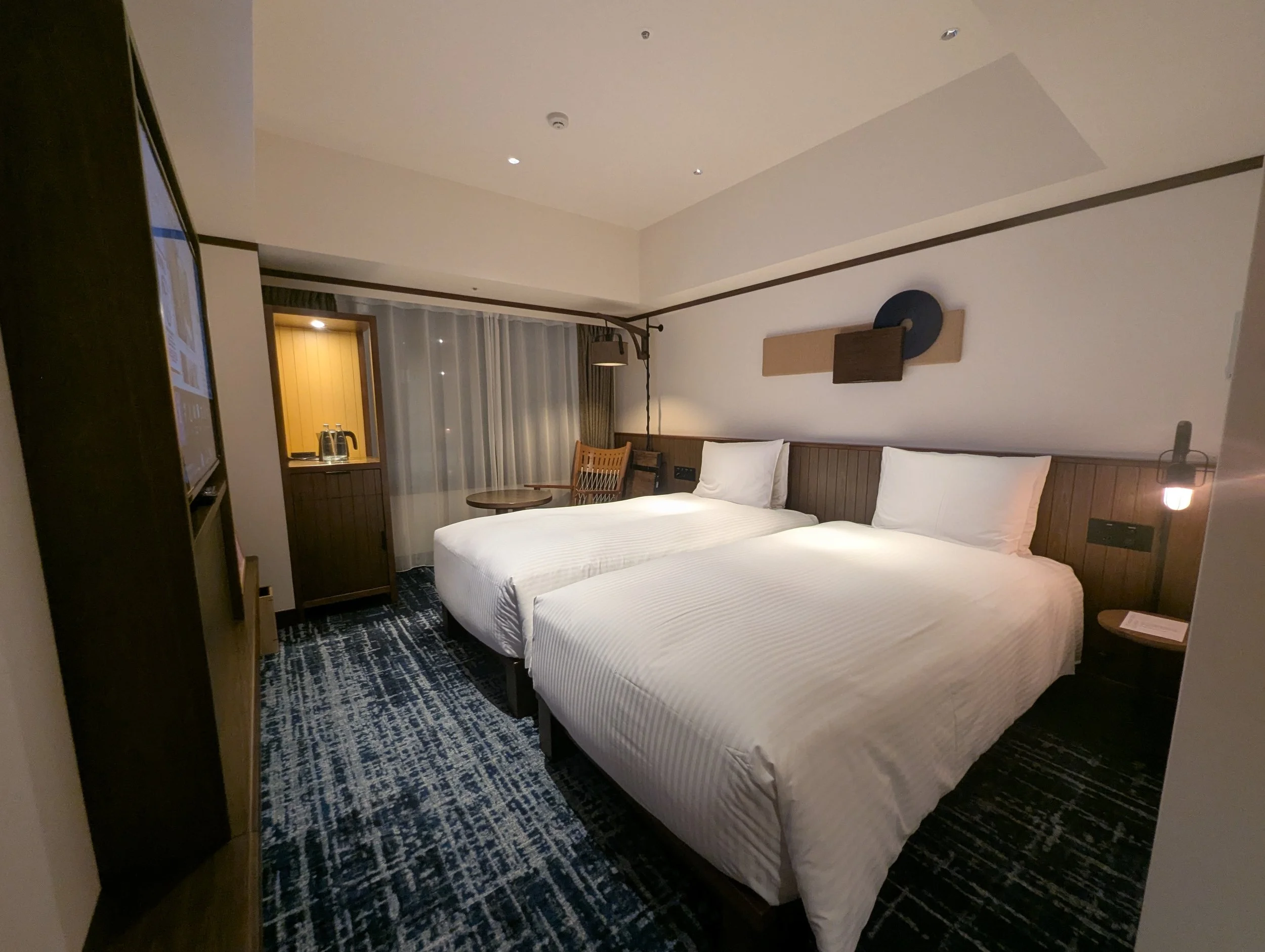
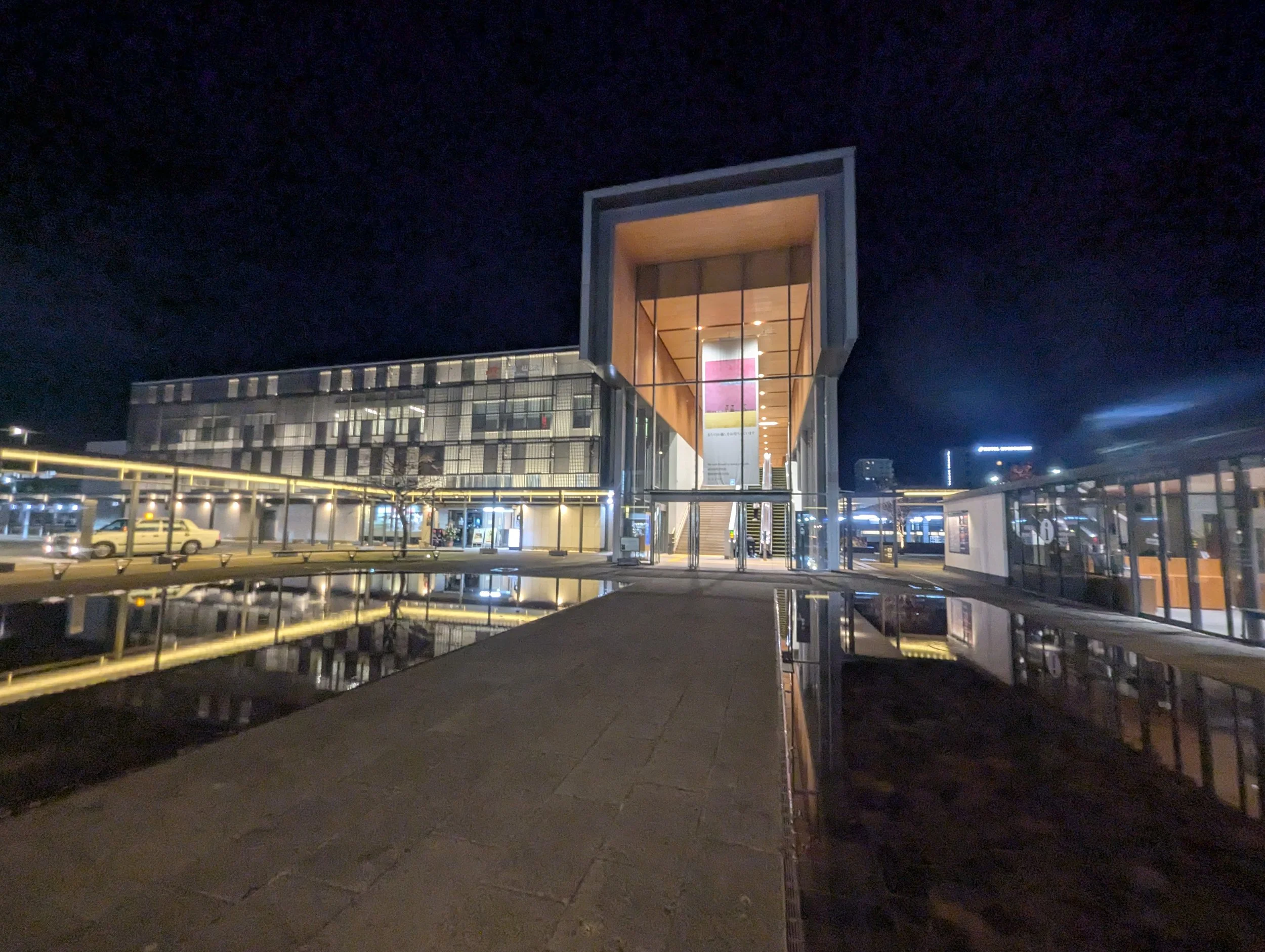
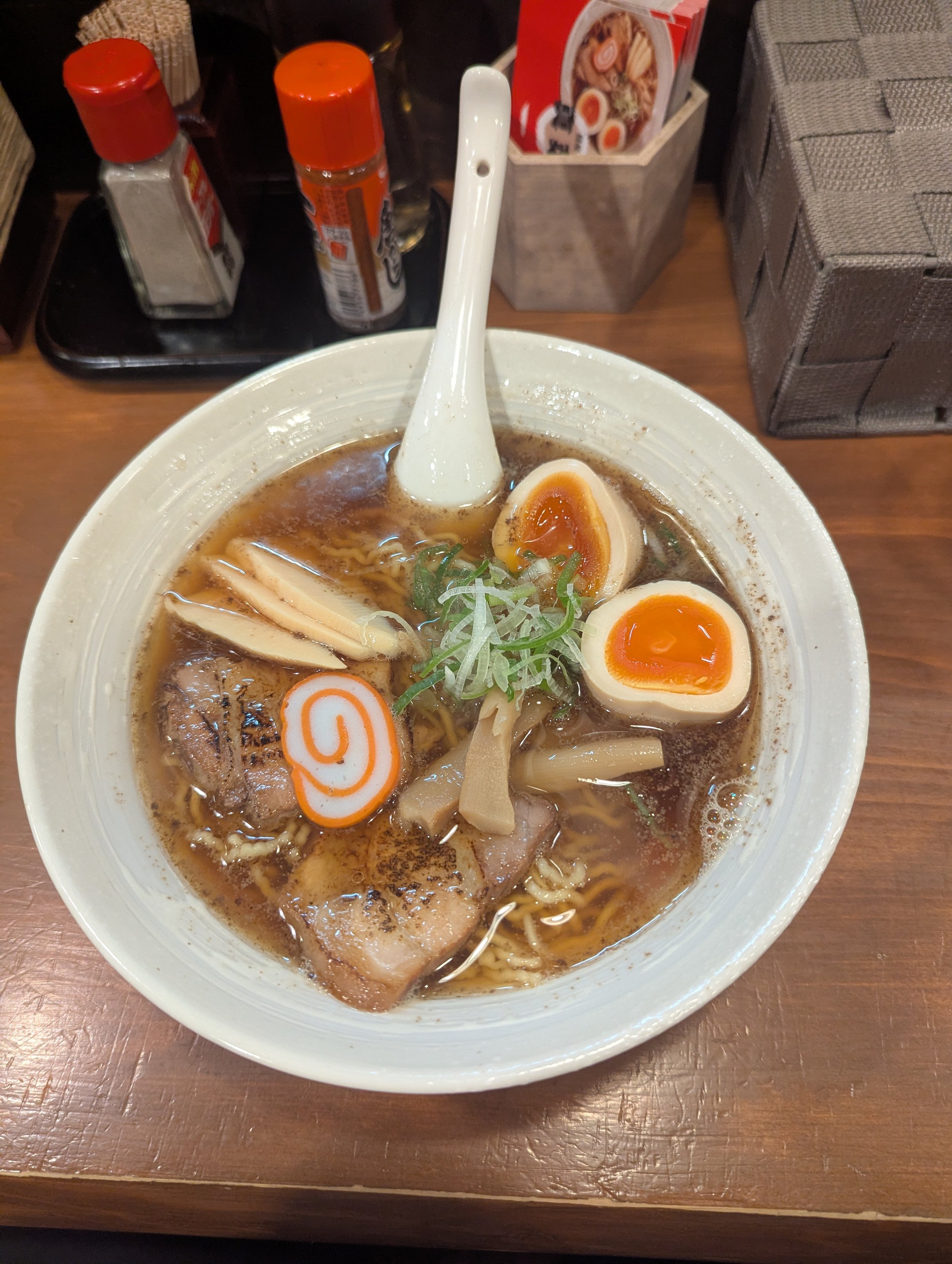
Got into Takayama at 18:45. Kevin dropped me off at the hotel to check in, he went to park the car (we had researched where to park before our trip, the lot we chose was behind the station). We met at the station, a block from the hotel and walked to 麺屋真菜. There was a full house but no line (inside was a family of 4, family of 5, and 3 (or maybe the latter was a family of 8) - all foreigners, not Japanese. We arrived at 19:00 and had to wait outside. Takayama seemed very quiet, not too many people walking around, but it was cold. We didn’t feel like finding another restaurant, and one of Takayama’s specialties is chuka soba, which is what this shop serves. There are four seats at the bar, two tables of two and one table of four. At 19:15, there were three people waiting behind us. We were seated at 19:26 and by 19:44 it was full again. It was run by only two people. I got deluxe regular size, Kevin got deluxe large. What differentiates deluxe is roasted port and egg. The egg was spectacular: perfectly cooked, creamy, flavorful. By the time we left, it was 37 degrees, felt like 34...and it did indeed feel like 34.
After dinner, we walked the couple blocks back to hotel and we were in our room at 8 and getting ready for bed.
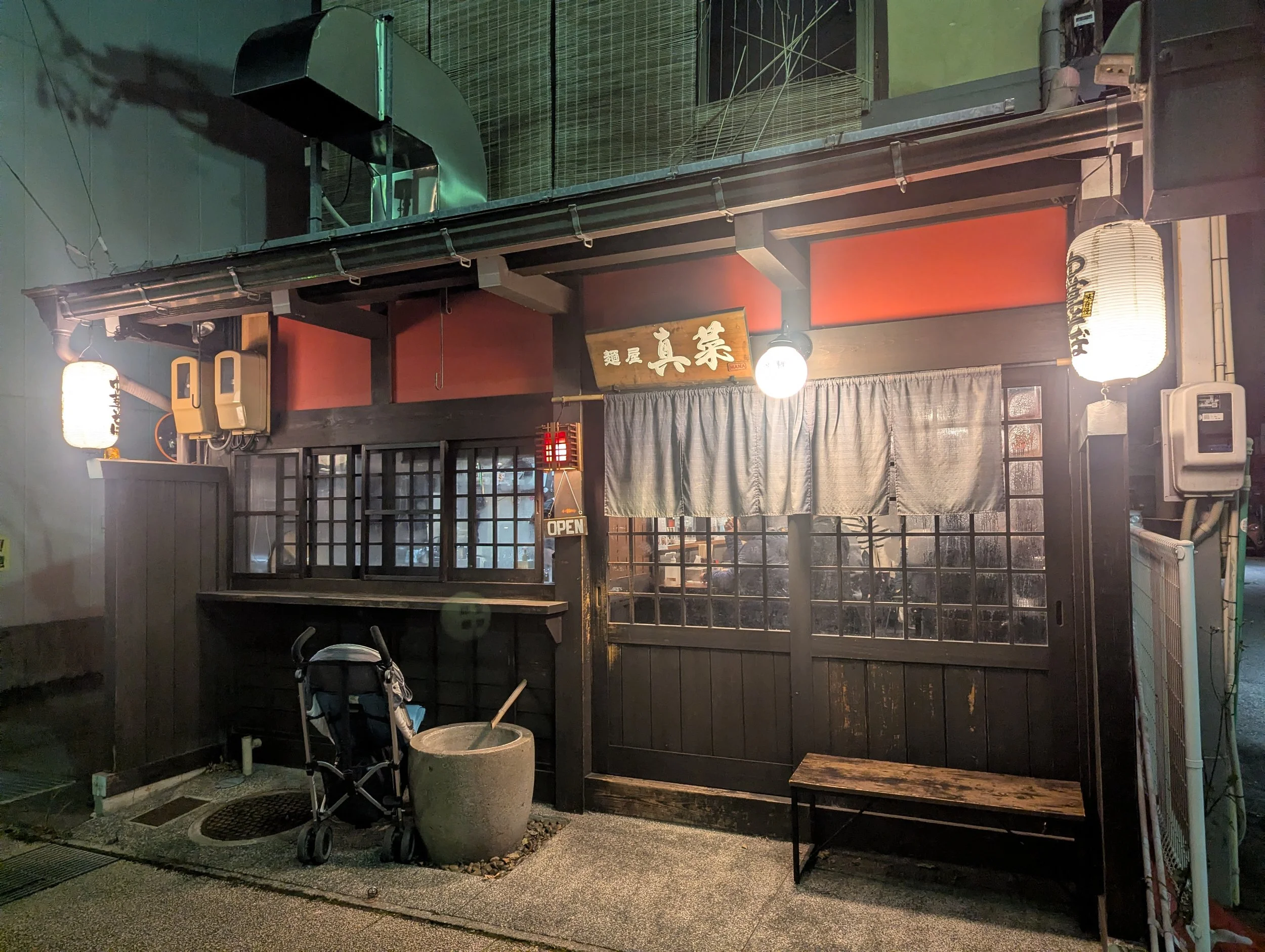
Day 4: Sunday, November 30th - Takayama and Shirakawago
I woke at 6AM, just before my alarm, to Kevin snoring. When we stay in a hotel with onsen, we aim to visit the onsen first thing in the morning, as early as possible, to increase our chances of having it to ourselves, and then still having the entire day for exploring. Our hotel had an onsen on the 9th floor. We got there at 6:20 and agreed to meet in 20-30 min. Usually, all we need is a 15 minute soak before it gets too hot. Even though it was so early, there were already three women in before me and one who came after me. There was one inside bath, and two outside baths - one of which was very small, smaller than a jacuzzi. The outside bath was really nice, with a small garden and trees on the perimeter of which I imagined was the edge of the roof. Even though it was 28 degrees outside, it felt perfect. I stayed until 6:40, at which time I had started to prune and was sweating. Kevin came out a few min after me. Usually outside of the baths are vending machines - typically, they have cold drinks (milk is popular). One of the vending machines here had instant noodles. If you know Kevin, you know he purchased the chuka soba instant noodles from the onsen vending machine, which he prepared in the room and says it was one of his favorite things he ate the entire trip!
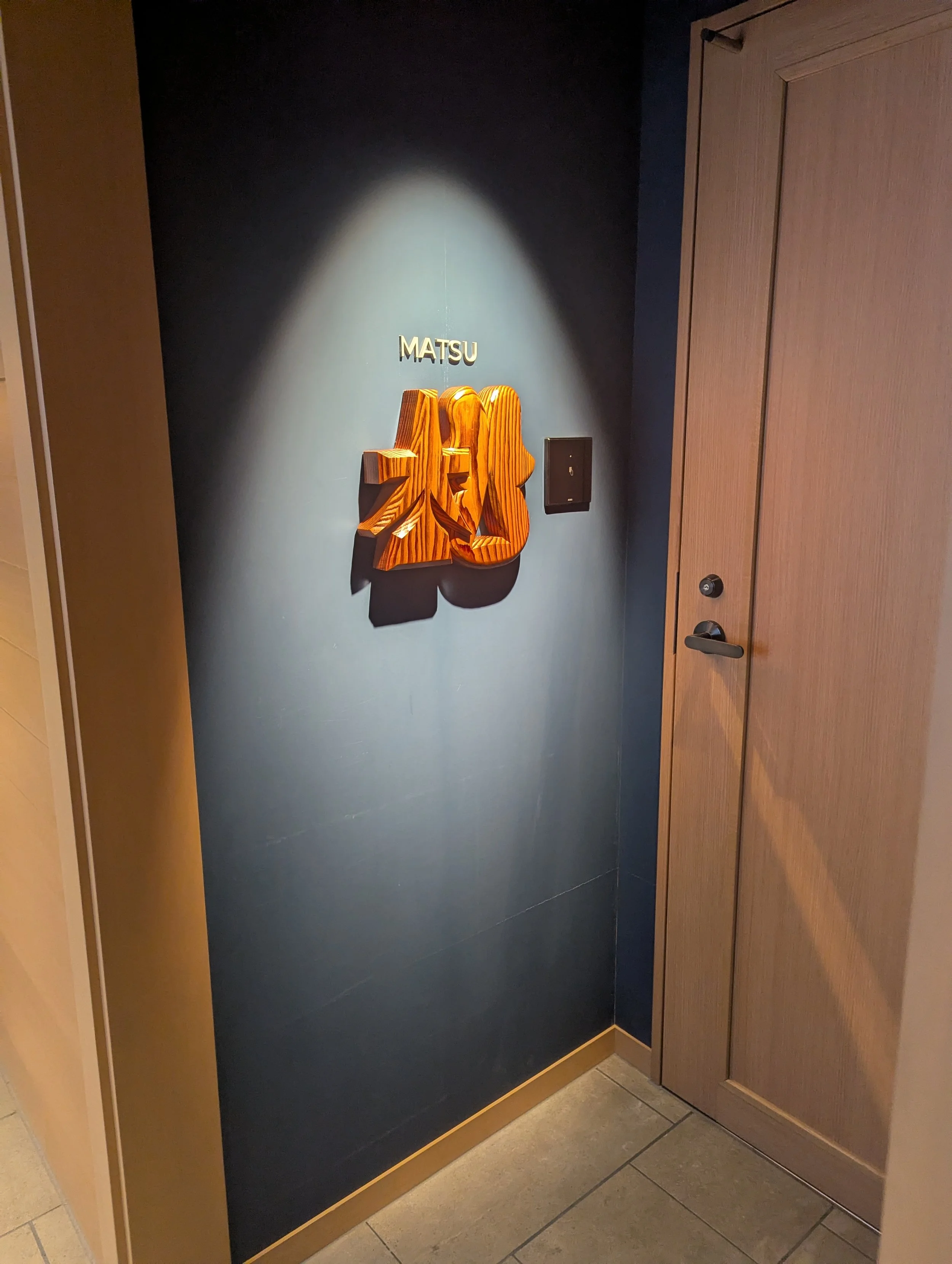
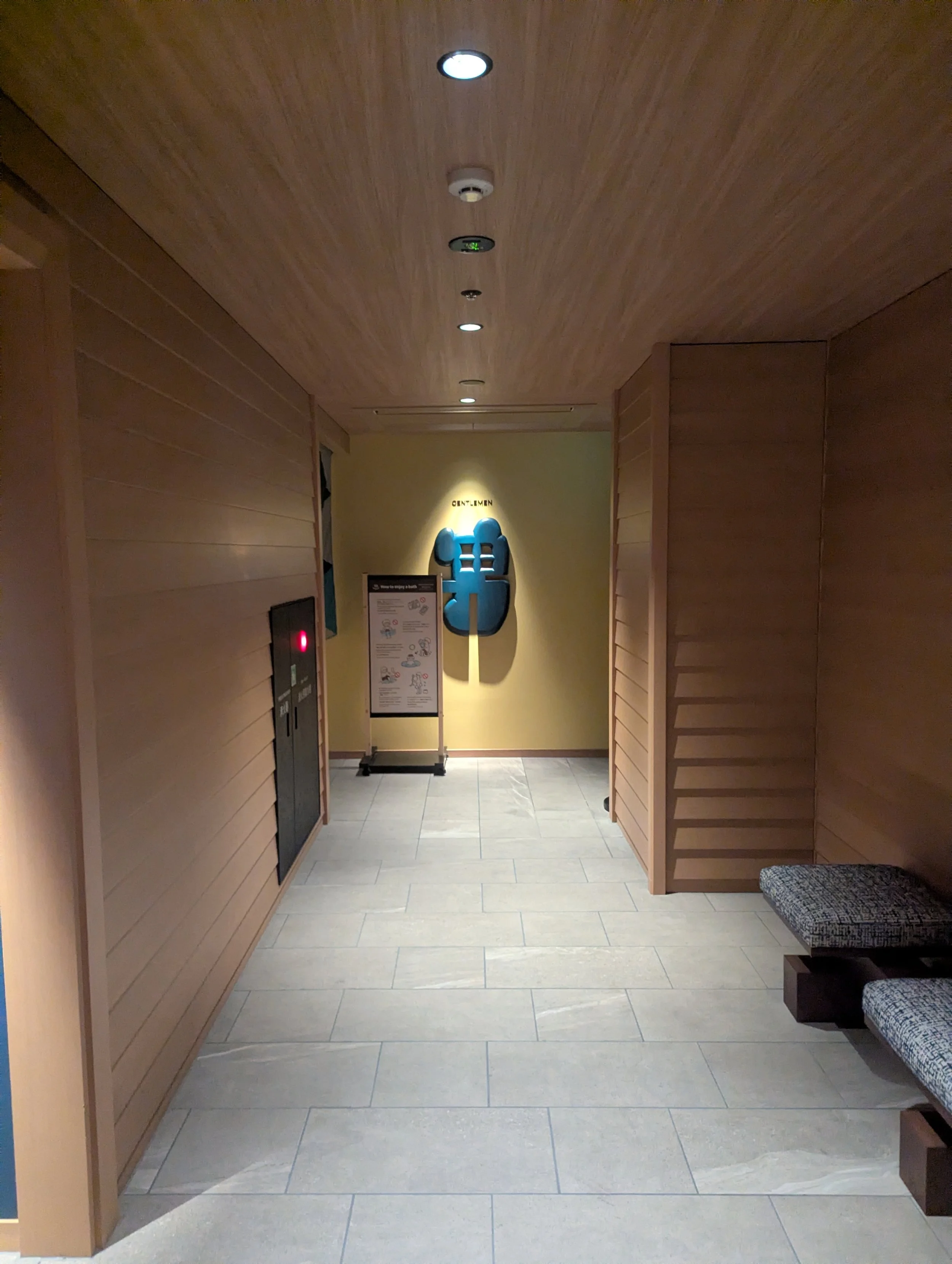
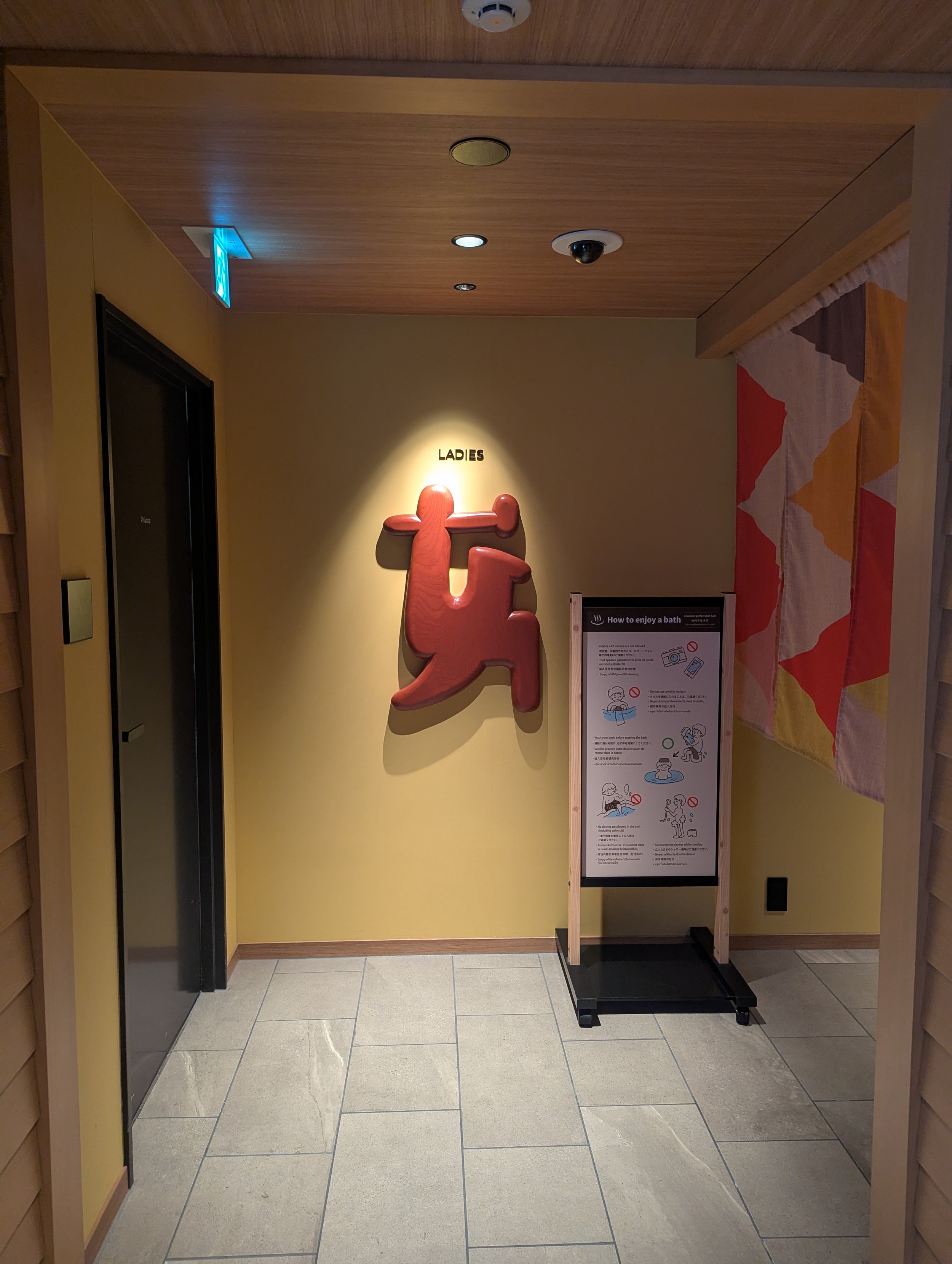
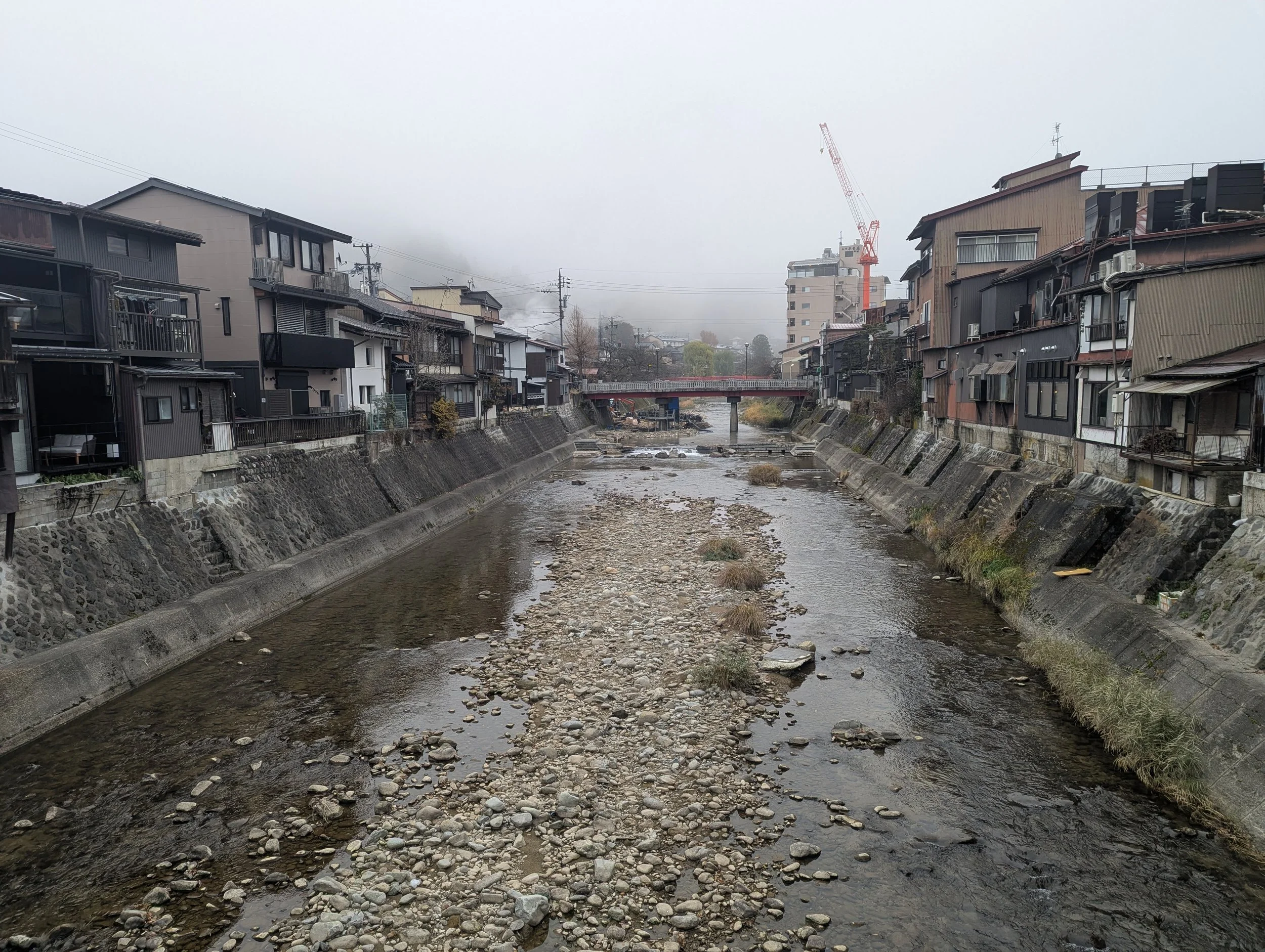
We got ourselves ready for the day - which obviously included pre-fueling with instant chuka soba - and left the room at 7:05 to explore the Takayama Morning Market. It was a short 10 minute walk from our hotel. We had learned that the morning market opens at 7, but even so, not all the stalls were set up until probably like 8 or 8:30. Some stands sell food and drink (what we are there for), others sell local crafts while others are more for locals selling produce and grocery-type goods. The stalls are lined up on one side of the road, by the river, and there are actual brick and mortar shops on the other side of the road.
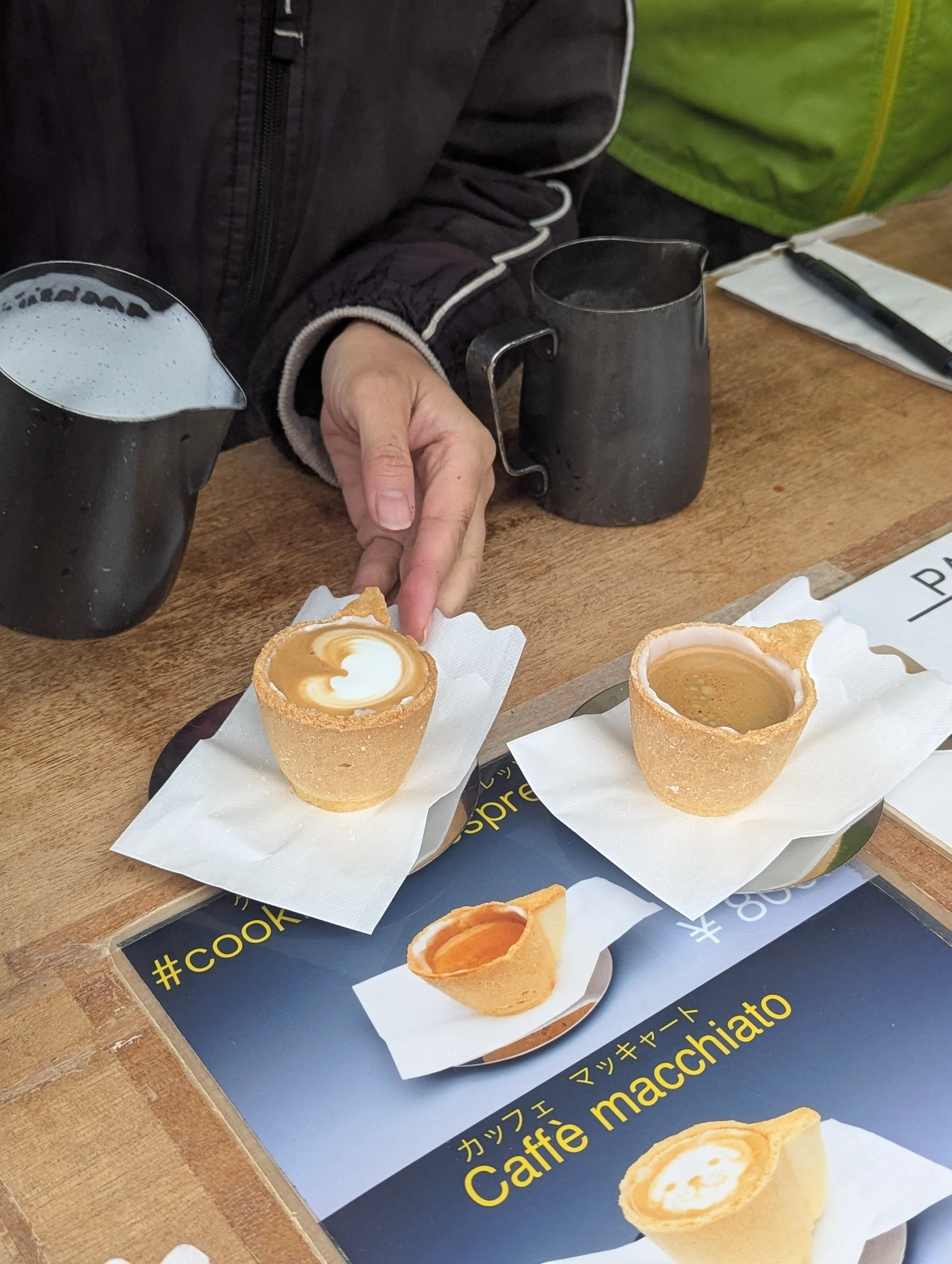
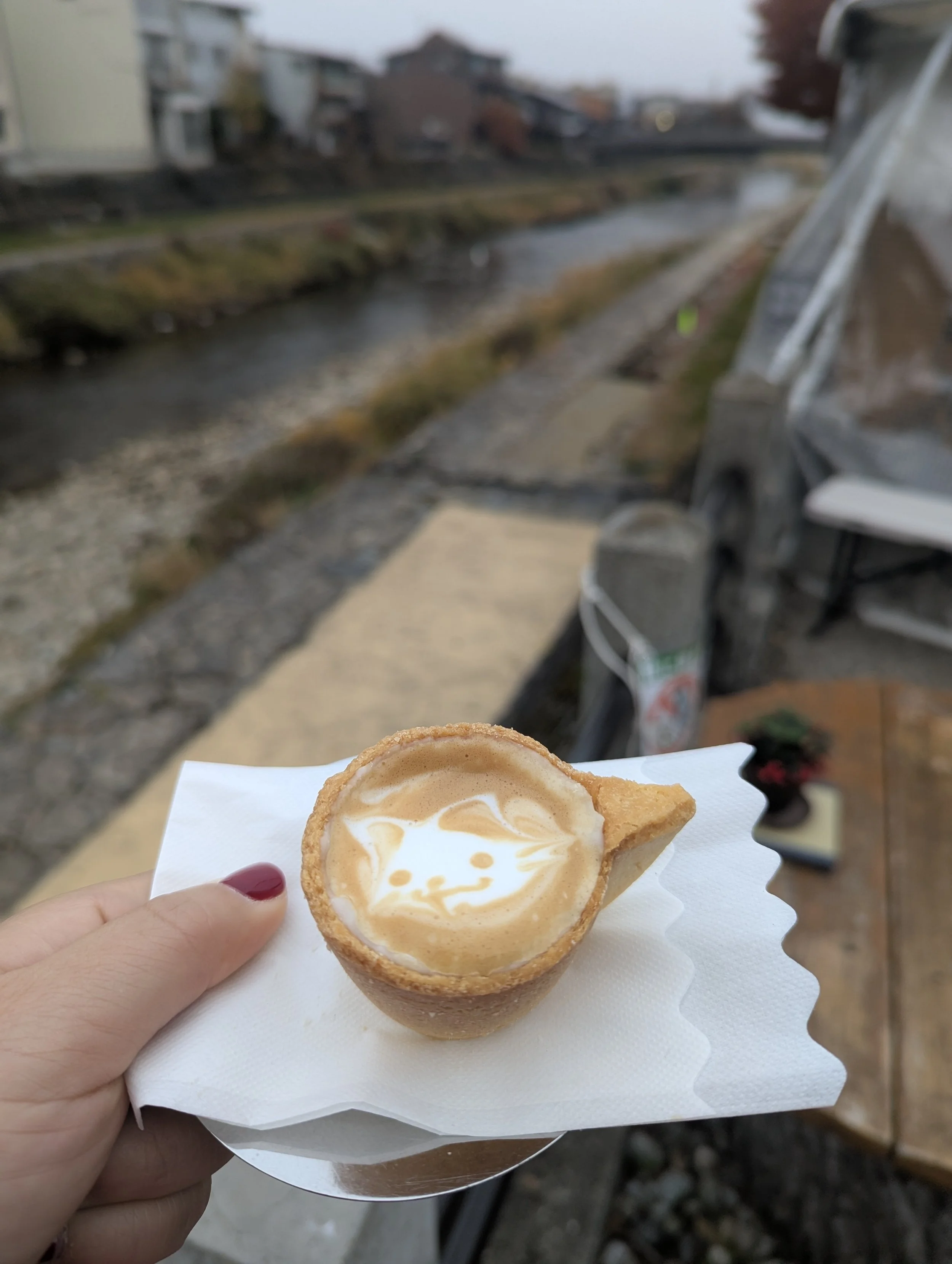
Our first stop was for coffee. We had seen this on several YouTube videos, and yes, probably a little gimicky, but also just the kind of touristy thing I’m into - espresso and espresso drinks served in a cookie cup! yes, a cup made of cookie, lined with sugar, so you can eat it after or as you sip your espresso. They offer four options: 1) Macchiato in a cookie cup for 900 yen, 2) Espresso in a cookie cup for 800 yen, 3) Americano in a regular, non-edible cup, 4) Cappuccino in a regular cup. These guys were also playing Taylor Swift music, so you know they have my heart. Espresso, cookie (in cup form) and Taylor Swift - could you want more?
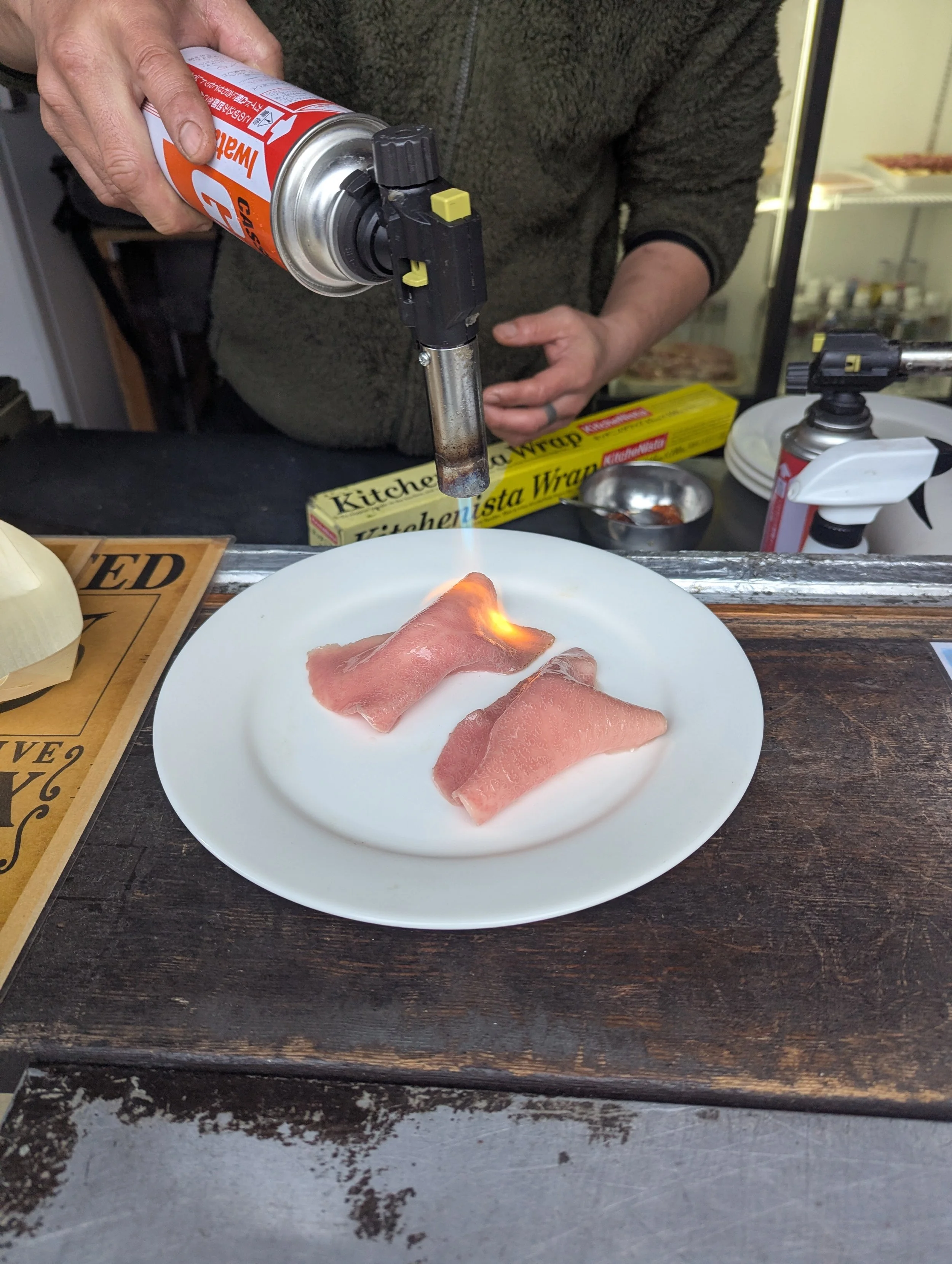
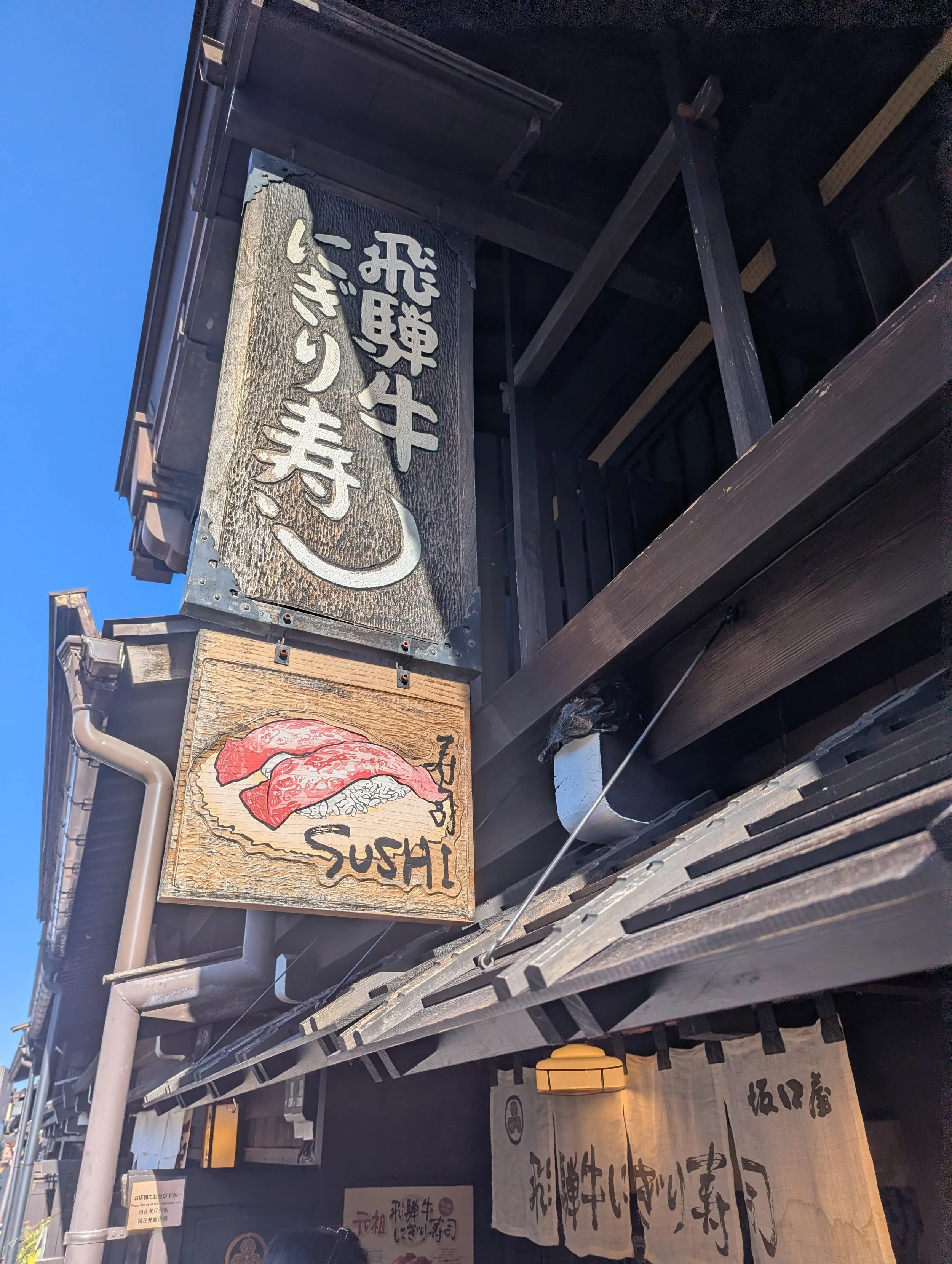
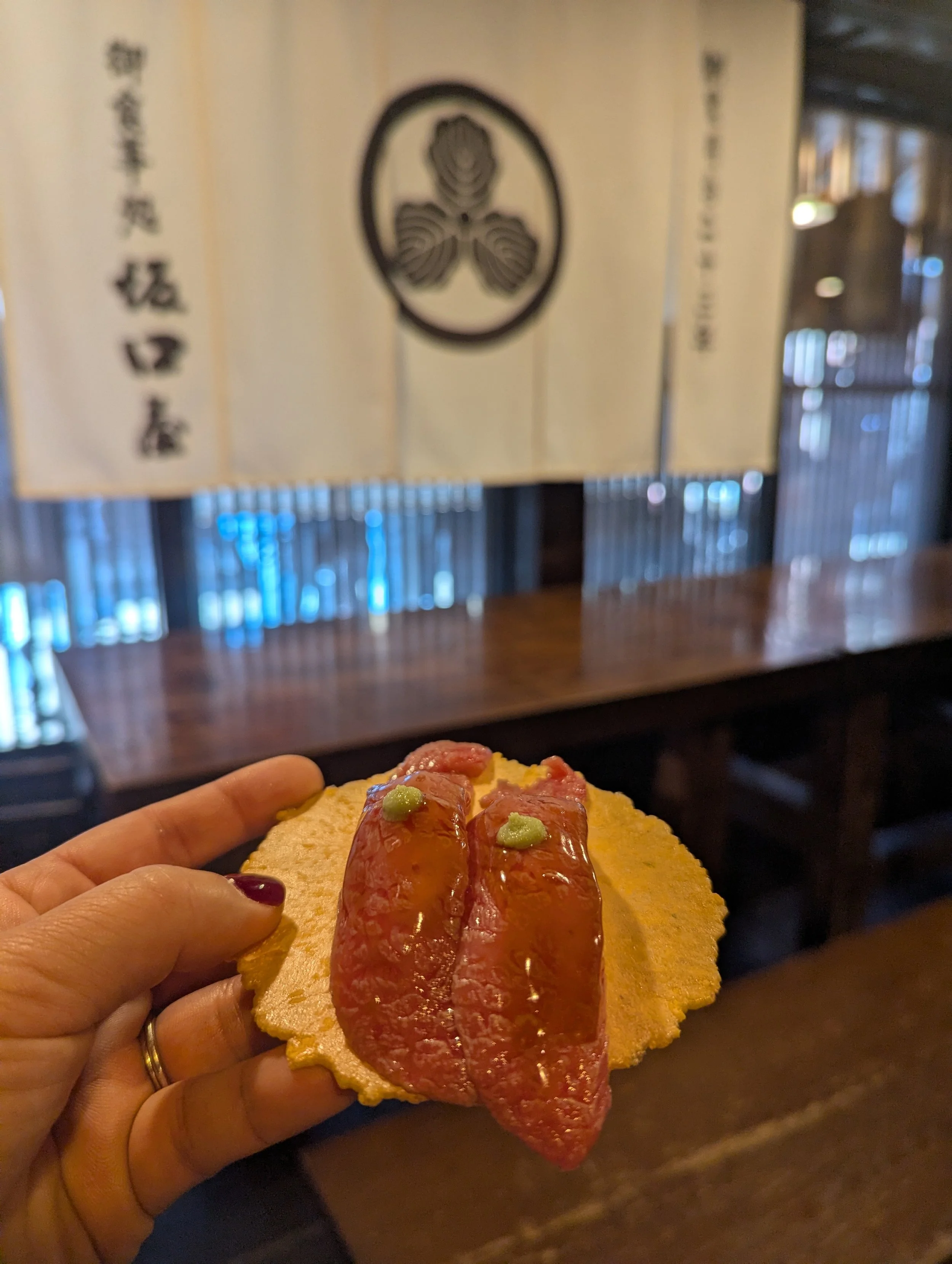
A little ways down the road was another stall we’d seen and heard about, called the Meat Box. We each ordered Hida beef sushi, dressed with ikura, for 900 yen each. They also offered grilled Hida beef skewers. HIda beef is the local wagyu of the region.
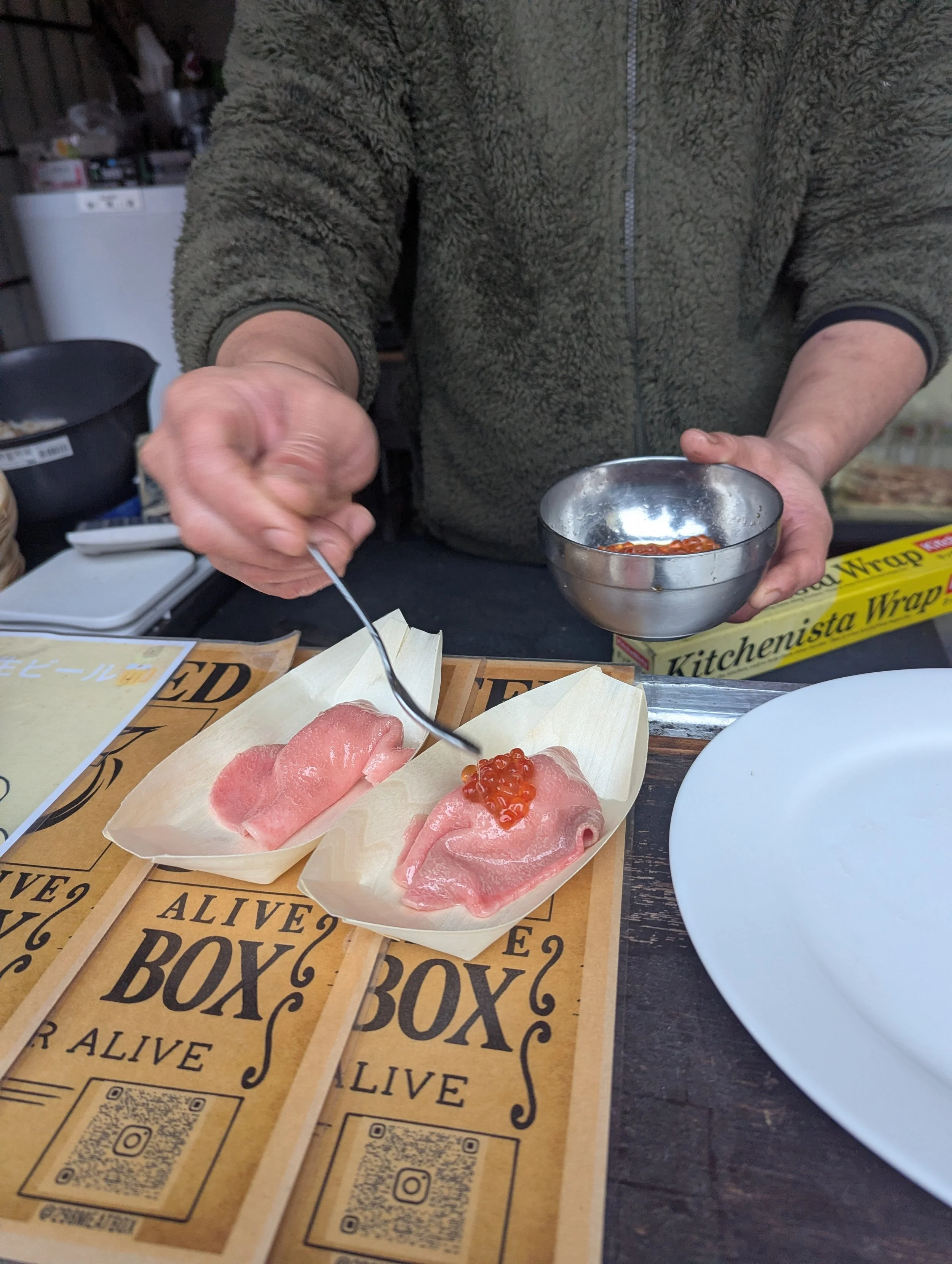
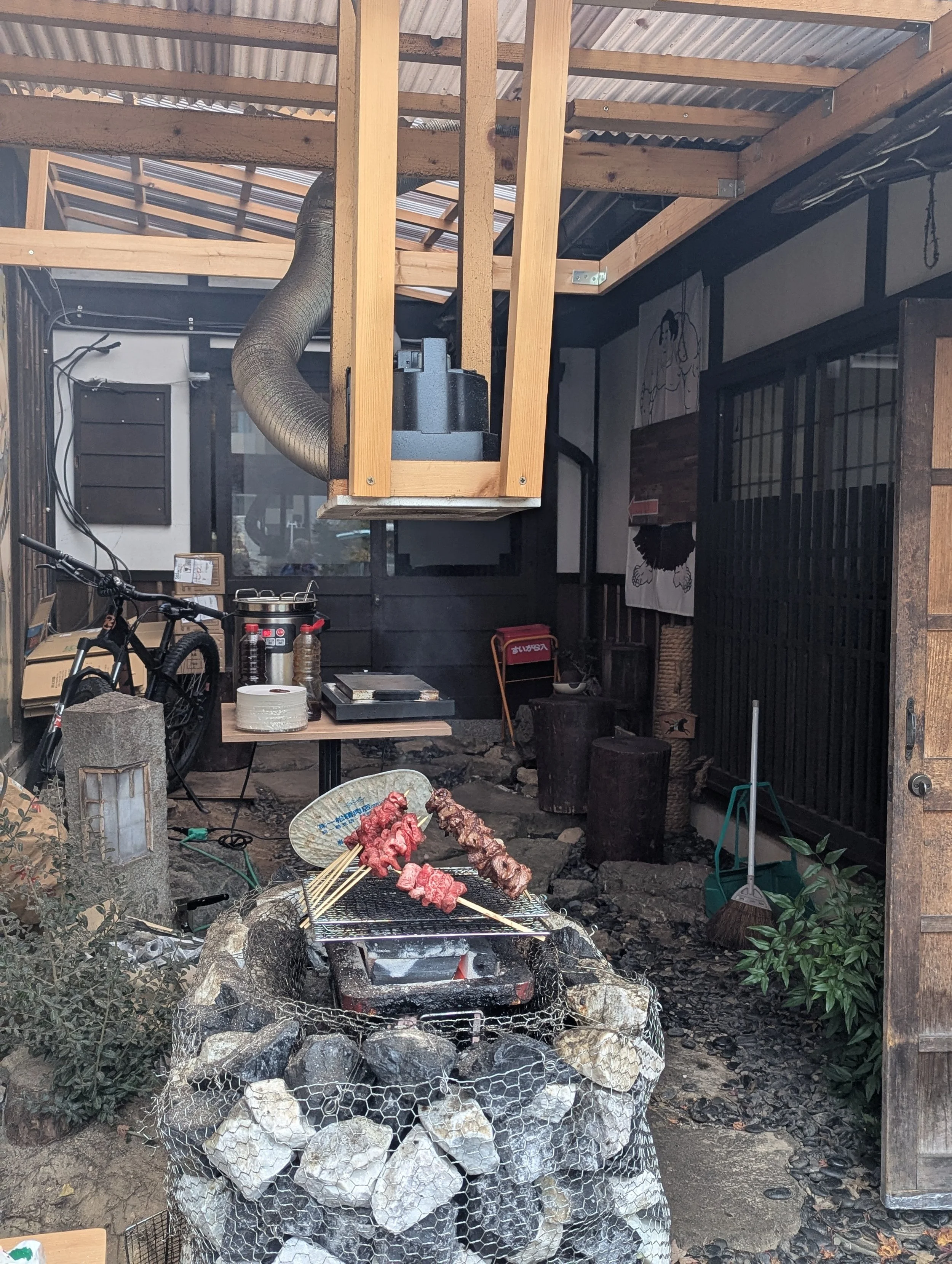
We browsed the morning market, popping into this shop here or that shop there. It was not what I'm used to with other morning markets - less actual food, more shops. It became more and more bustling as the morning progressed. We purchased Hida beef chips and jerky, other souvenirs. The morning was quite cold, so stopping into the shops was great to warm up every now and then too. One shop was serving samples of mushroom broth that really hit the spot. Another shop served samples of miso soup - we purchased some miso here, as Takayama is known for miso. There was an onigiri shop at the end of the road.
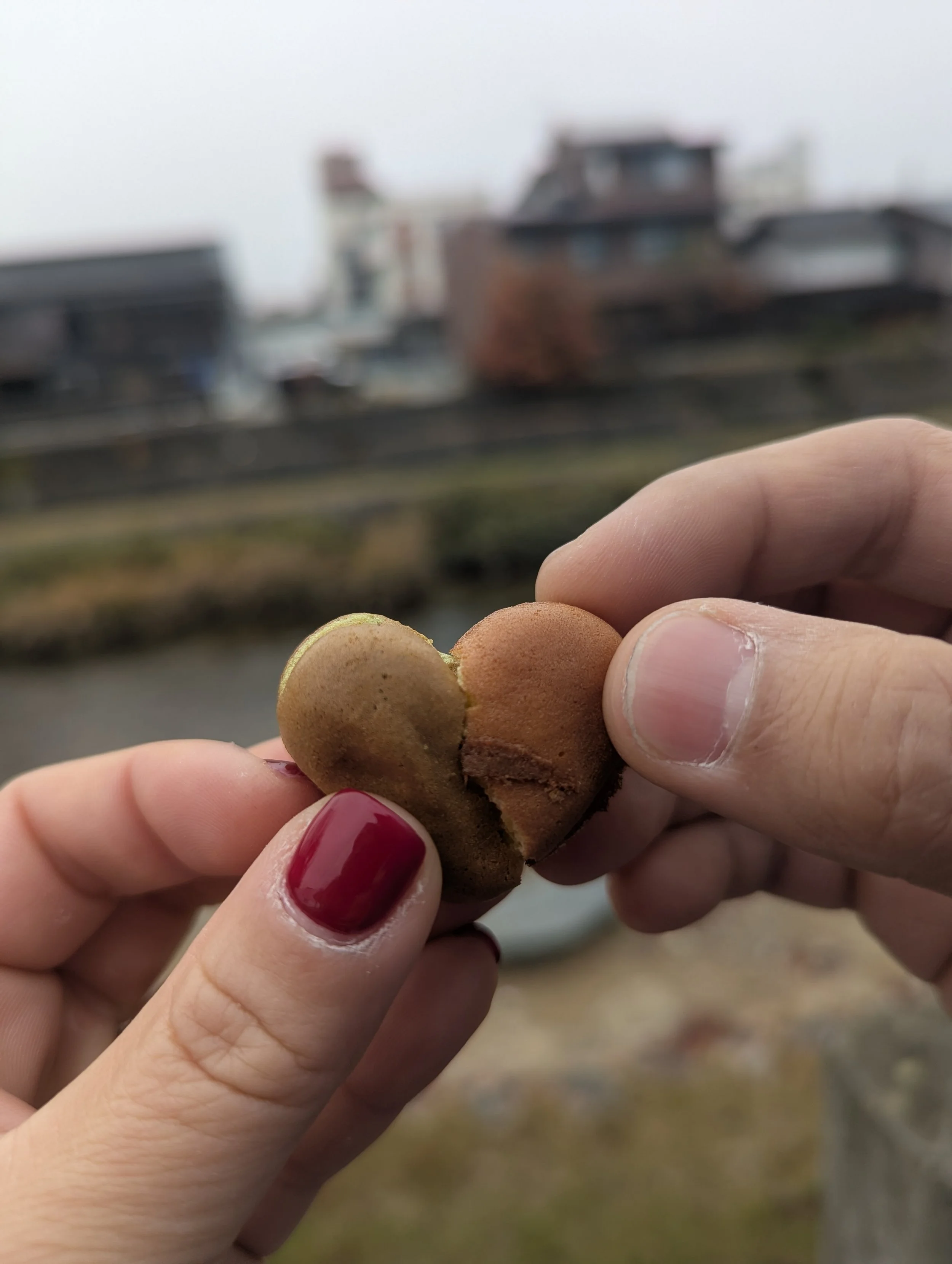
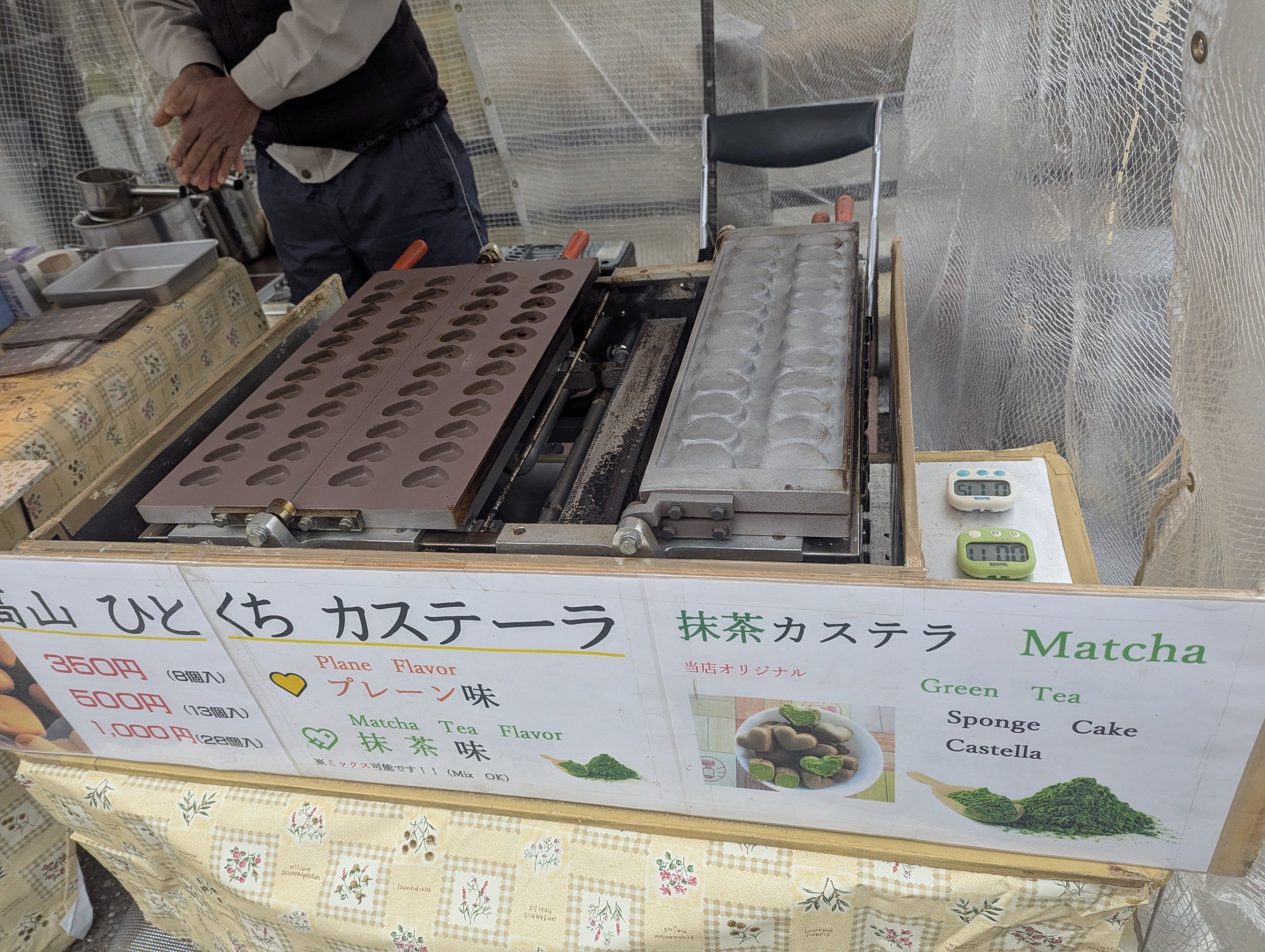
After completing the morning market, we walked down Sanmachi but everything was still closed.
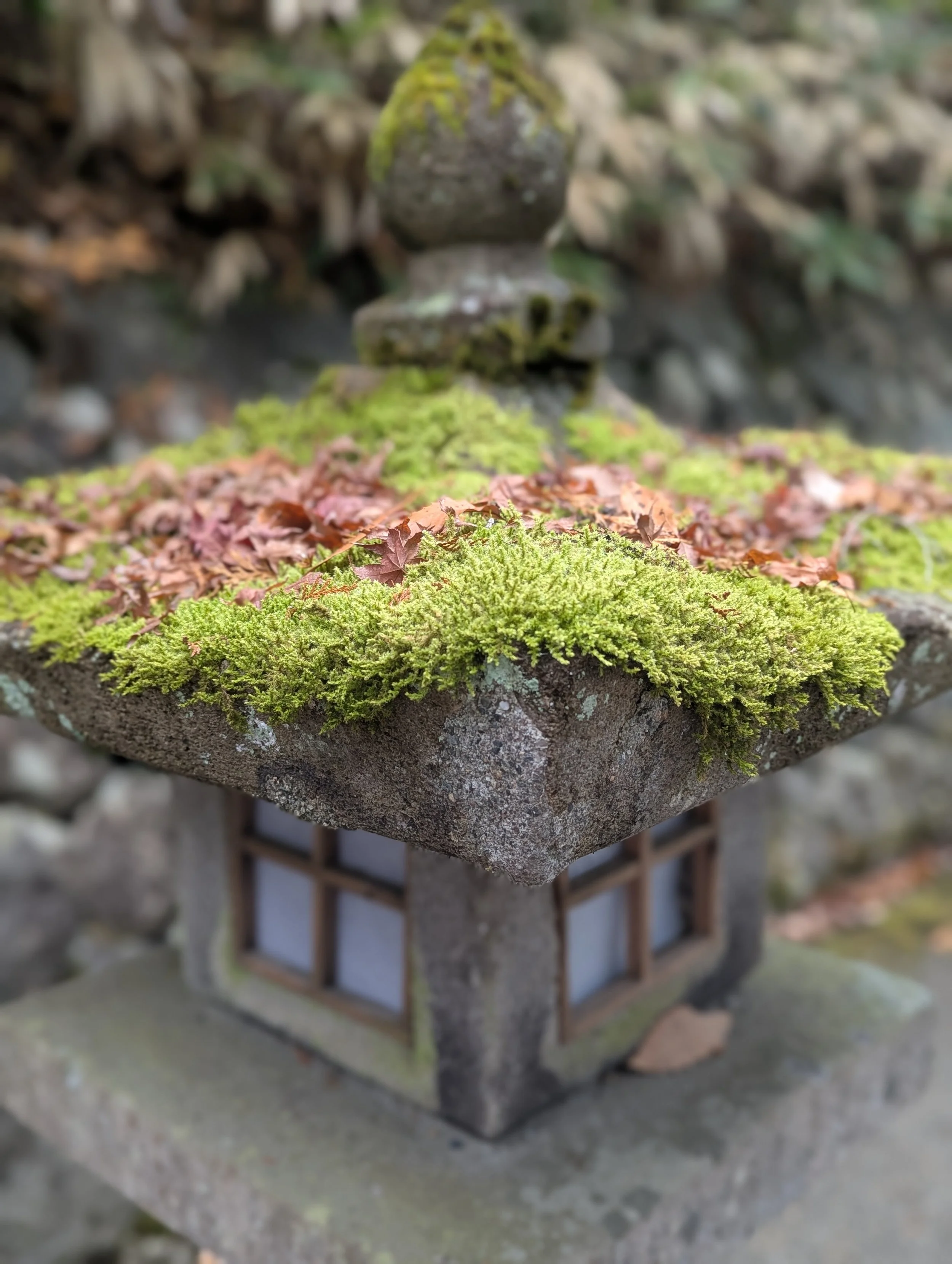
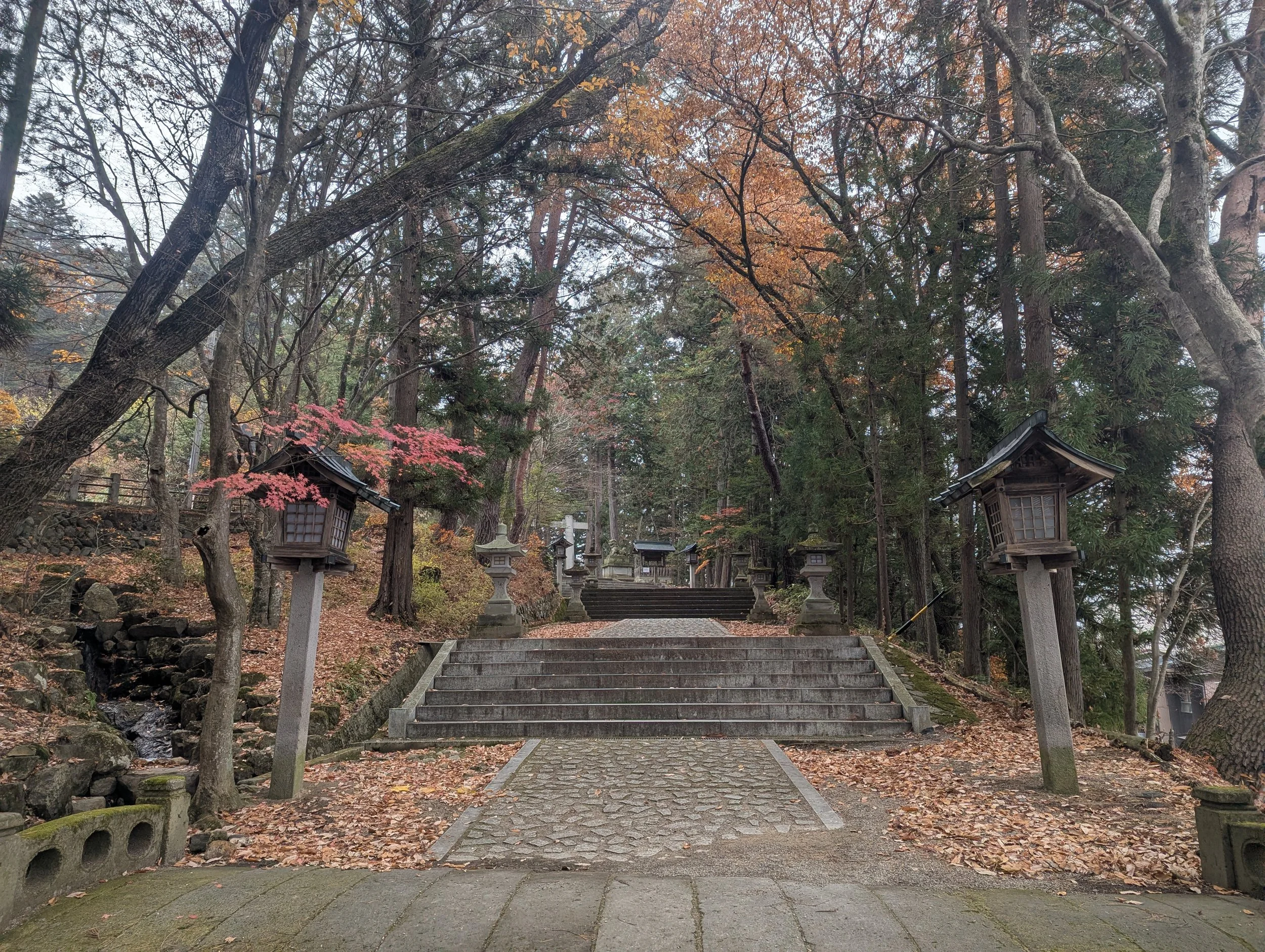
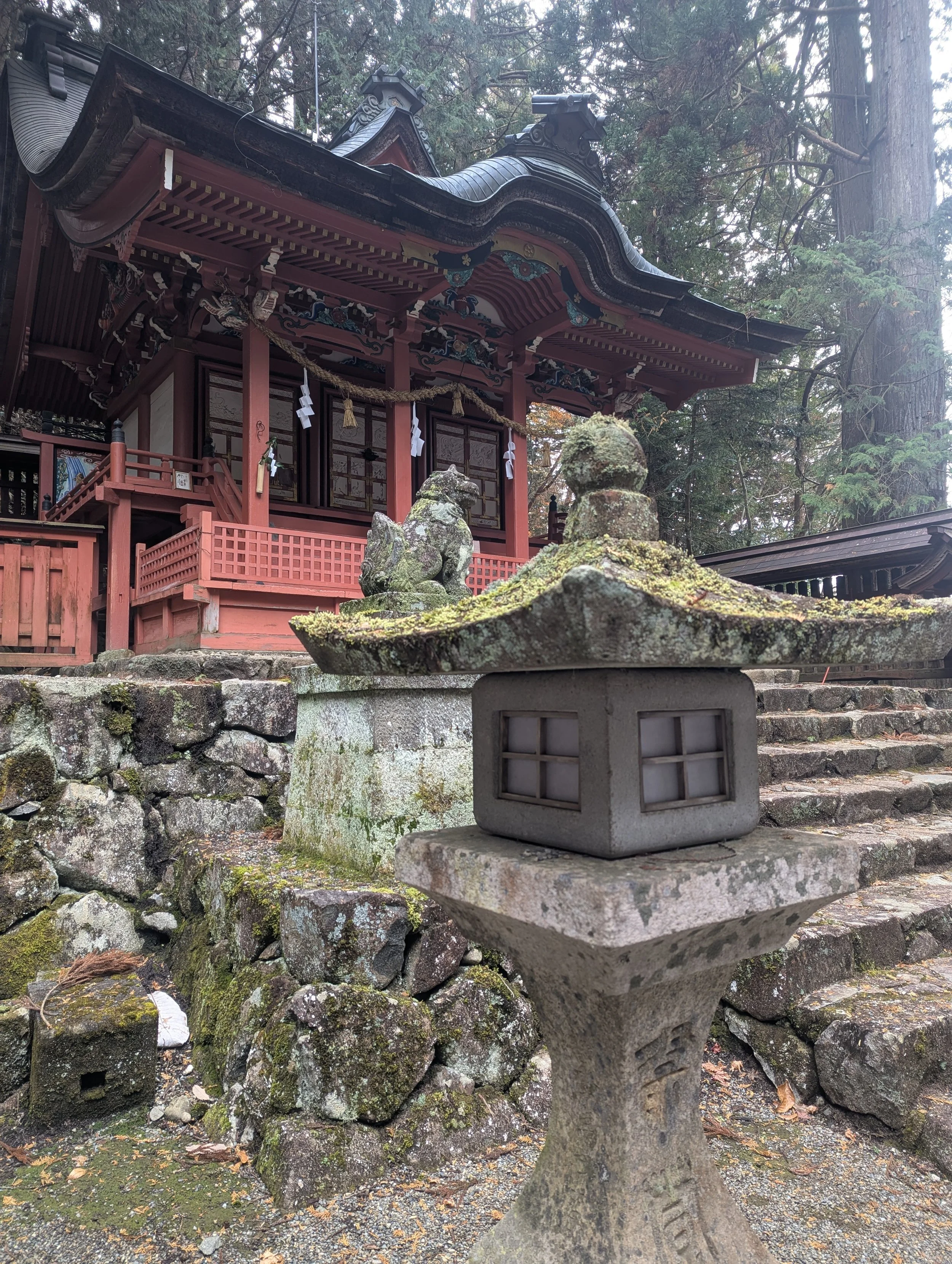
There was a stamp at the Takayama Info Center, and we incidentally found out about the stamp rally so we went on an adventure via Hie Shrine. We had the whole place to ourselves. Very pretty and moody with the fall foliage. Once back in town, we followed the map for the stamp rally. We had picked up the card when we were at the Info Center. The map noted a handful of sites throughout the city that have a corresponding stamp - layering the stamps of different colors, from the different sites, on the card would reveal the full image. If you ask me, it’s a pretty clever way to get tourists to visit the main sites in town. That being said, we didn’t enter all the sites - for example, one was at a museum that we didn’t explore. We finished the stamp rally at Daimasa at 10:45.
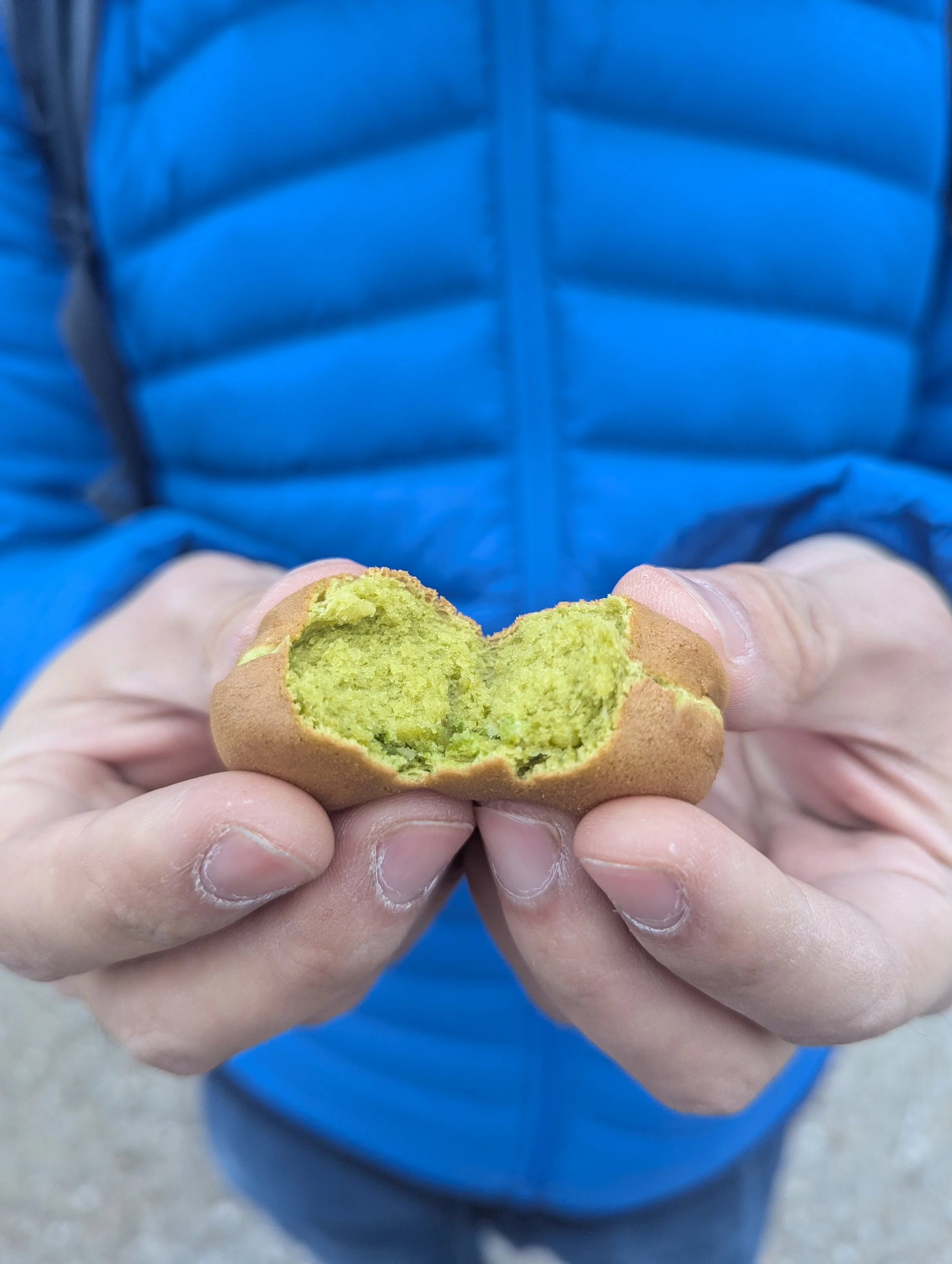
Since Sanmachi was closed early, we headed back there to find the shops were open and the tourists had moved in. We stopped for Hida beef sushi on senbei - a small shop where you order at a window, but there is a seating area inside, accessible by ducking through a short door. We decided we didn't have time for a proper lunch if we were to make it to Shirakawa, as planned. We had been sampling foods all morning anyway and weren’t particularly hungry. On our walk to the car, we picked up Hida beef buns to eat on the road. By the time we were at the car and on the road, it was 11:50 and 47 degrees.
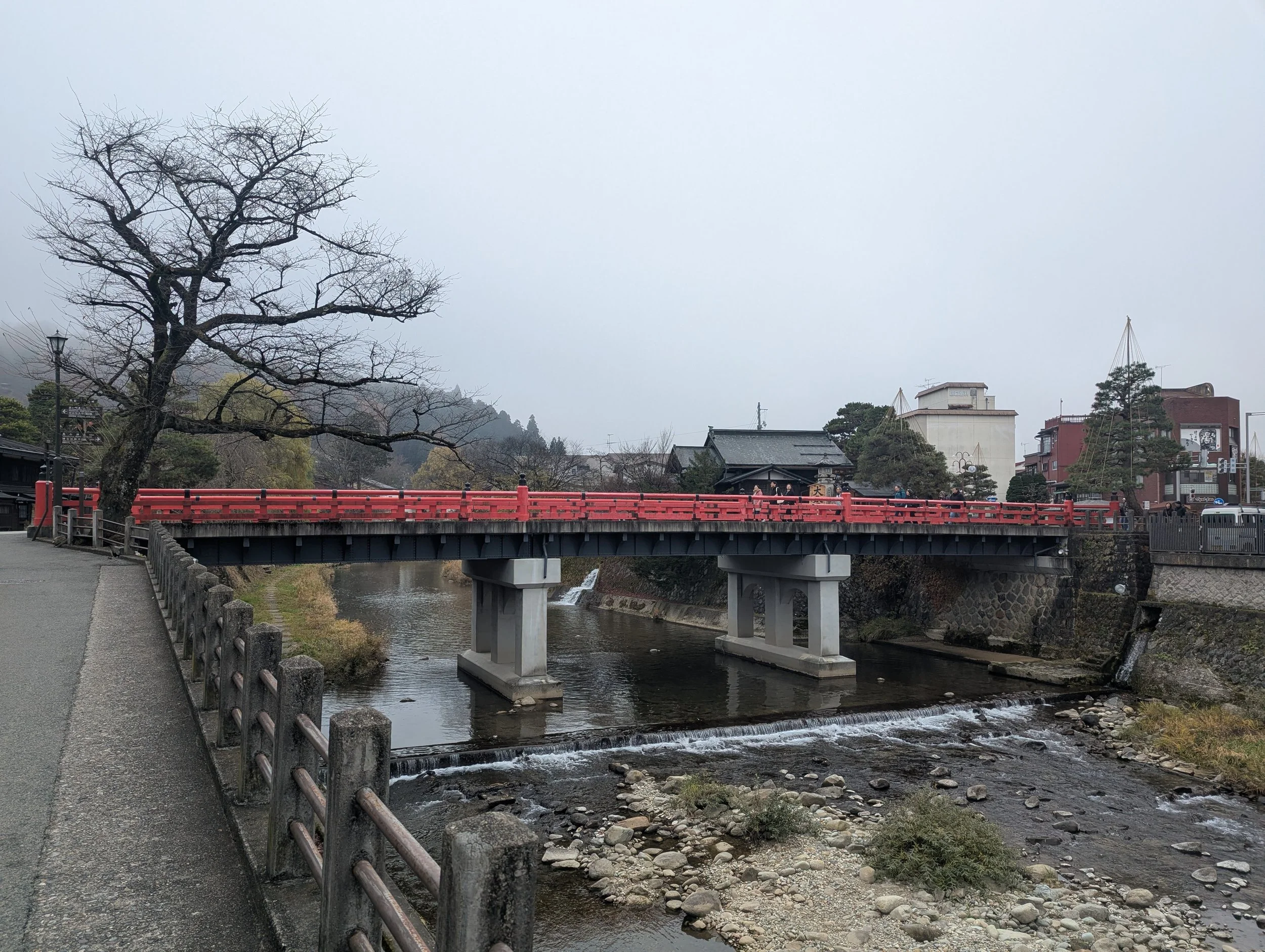
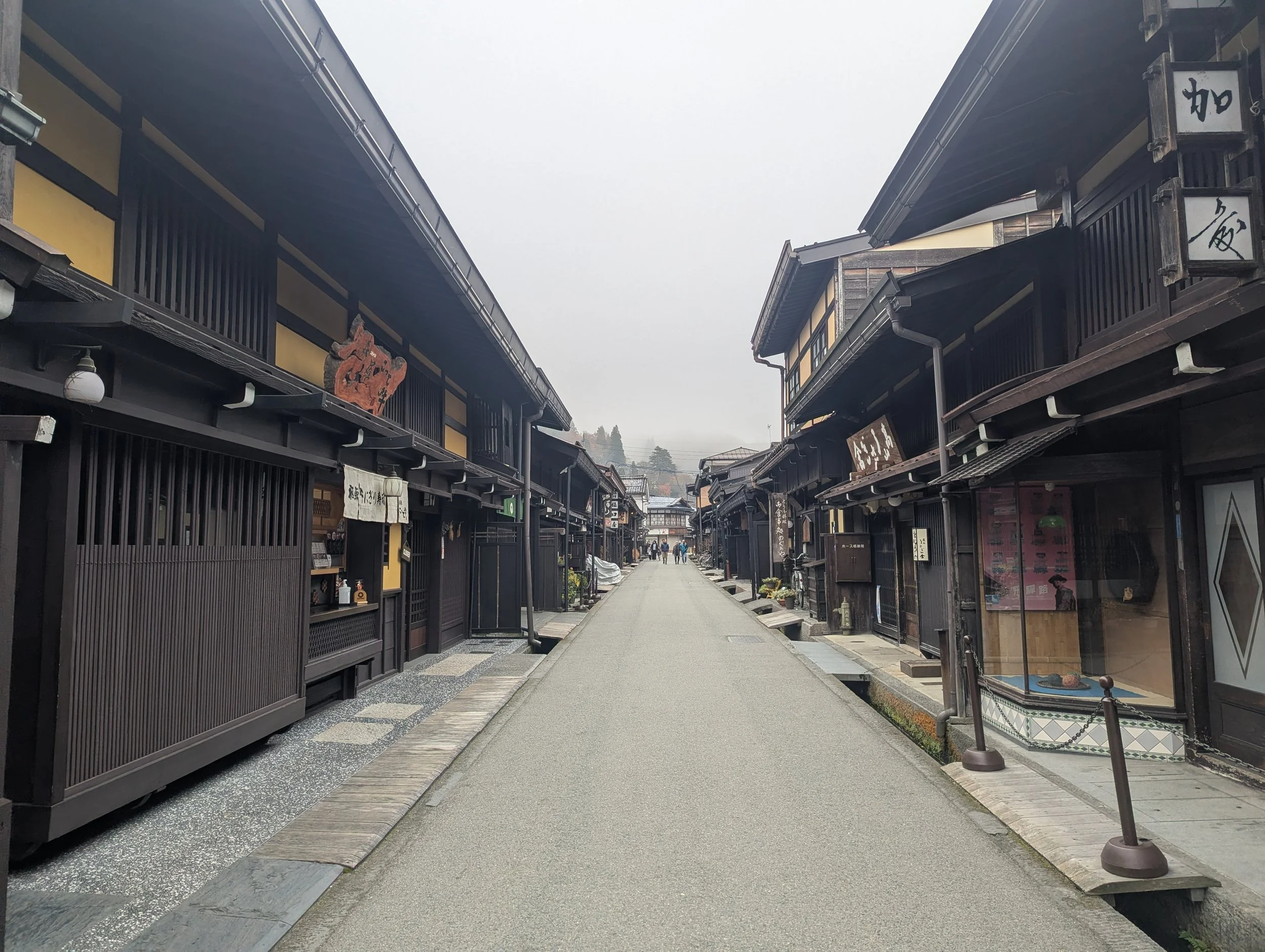
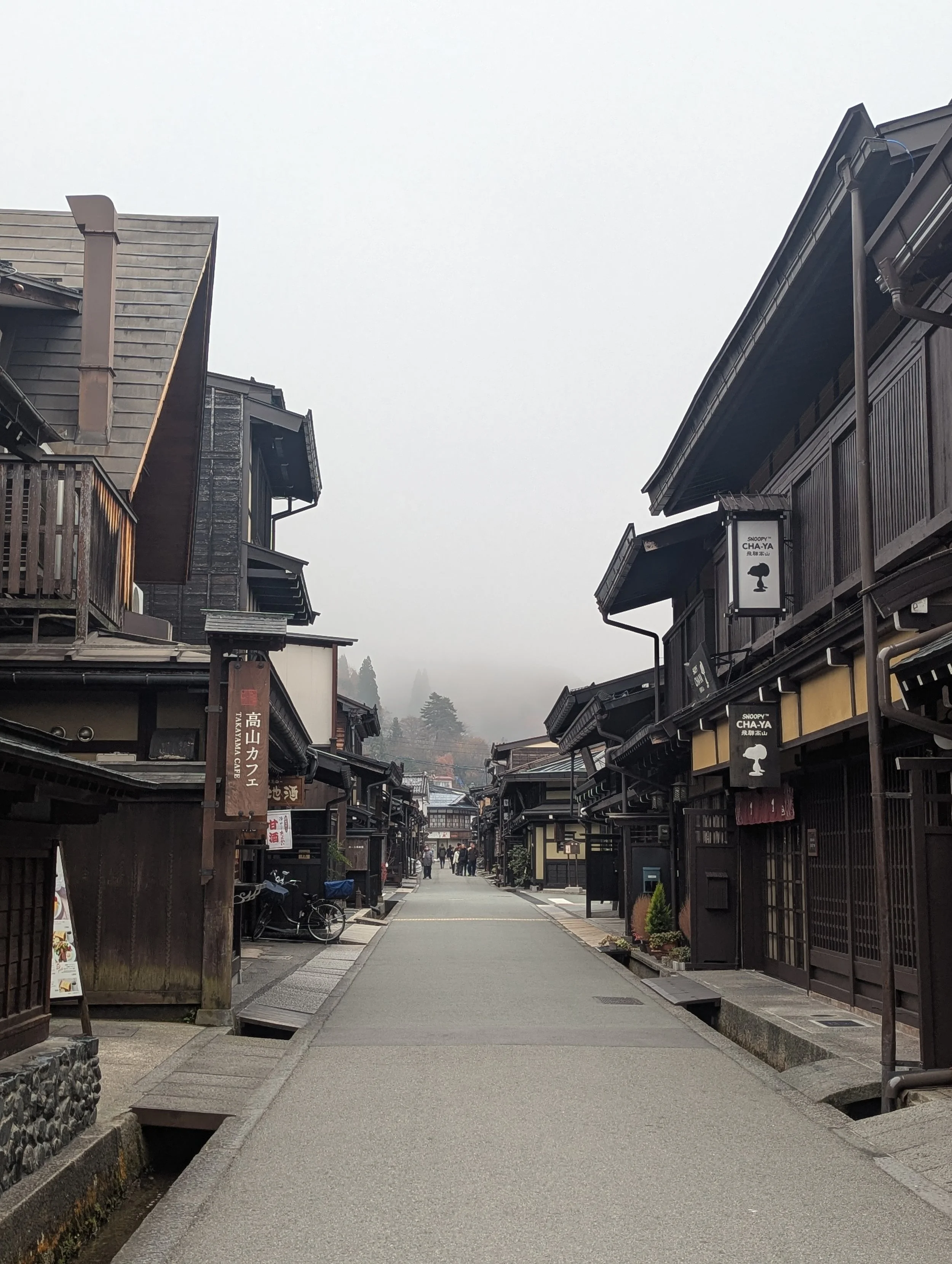
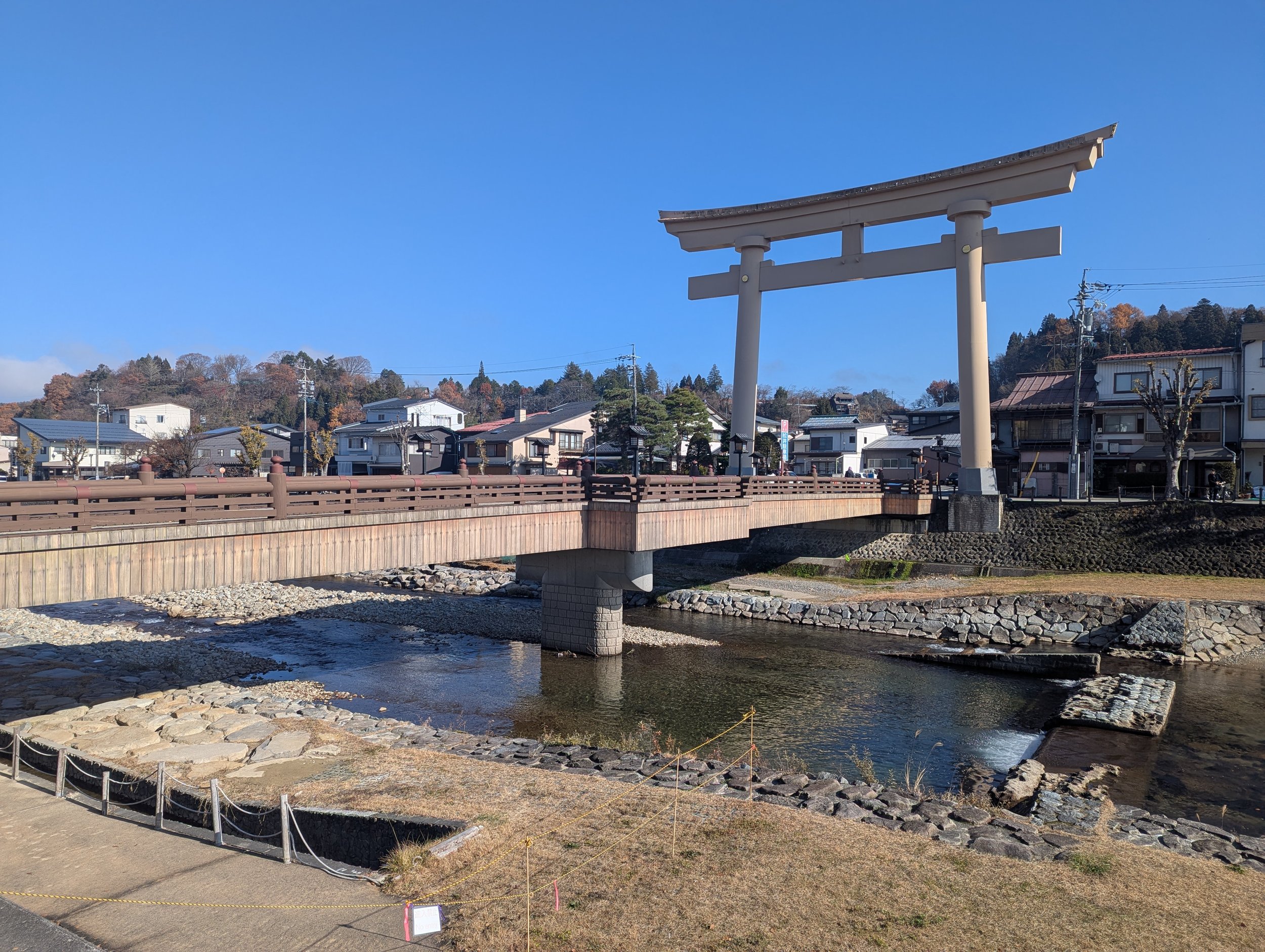
We were estimated to get to the Observation Deck at 12:45 but took a wrong turn that added half an hour, bringing us south and around to go north instead of just northwest. Japanese highways are one way, minimal exits. There are rest stops (which are apparently big things in some areas with malls, food courts, attractions like ferris wheels) but one way, not common among both directions, so there was no way for us to turn around. The GPS was not clear regarding the exit, didn't give a direction just "take the exit" when it was a fork in the road, and the signs did not match what the GPS showed.
The plan was to go to the observation deck first since that parking lot closes at 3:30, but it was closed to cars, shuttle bus only. The guard told us to park at Seseragi, which is what Kevin had planned. We had passed it on the way, but there was a line to get into the parking lot. At this point, we didn’t have a choice. We got in the line of cars to enter the parking lot at 1:20 and parked at 1:35. As inconvenient as it may seem, the system worked quite well. Instead of the free-for-all of people weaving through the aisles searching for parking spots on their own, the attendants let in cars as others exited, and indicated where open parking spots were. Parking here at Sesergi was 2000 yen, and the lot closes at 5PM.
From the parking area, follow the long suspension bridge to get to Shirakawago. We didn’t realize it, but there are things on the side of the parking lot that we did not check out.
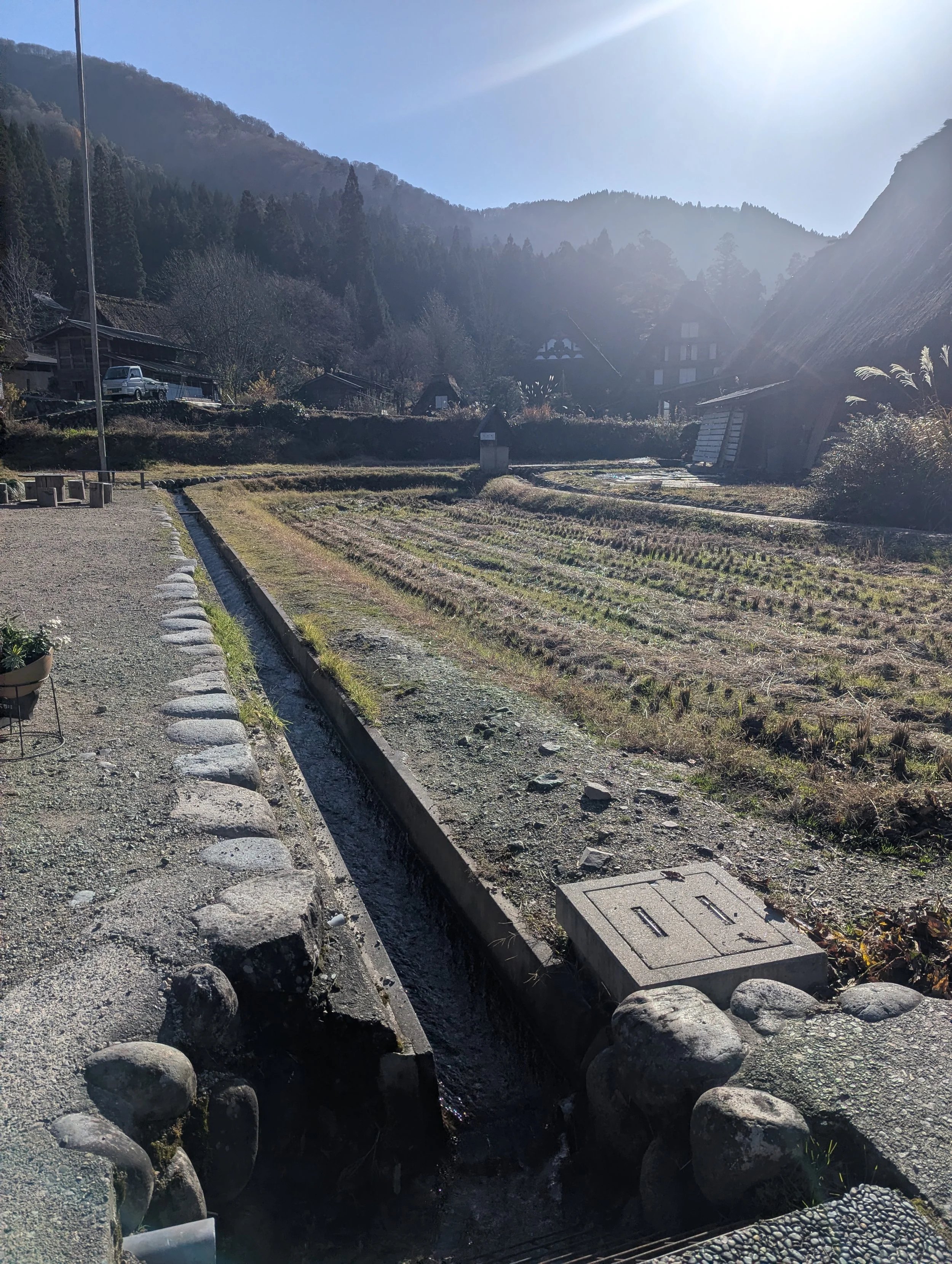
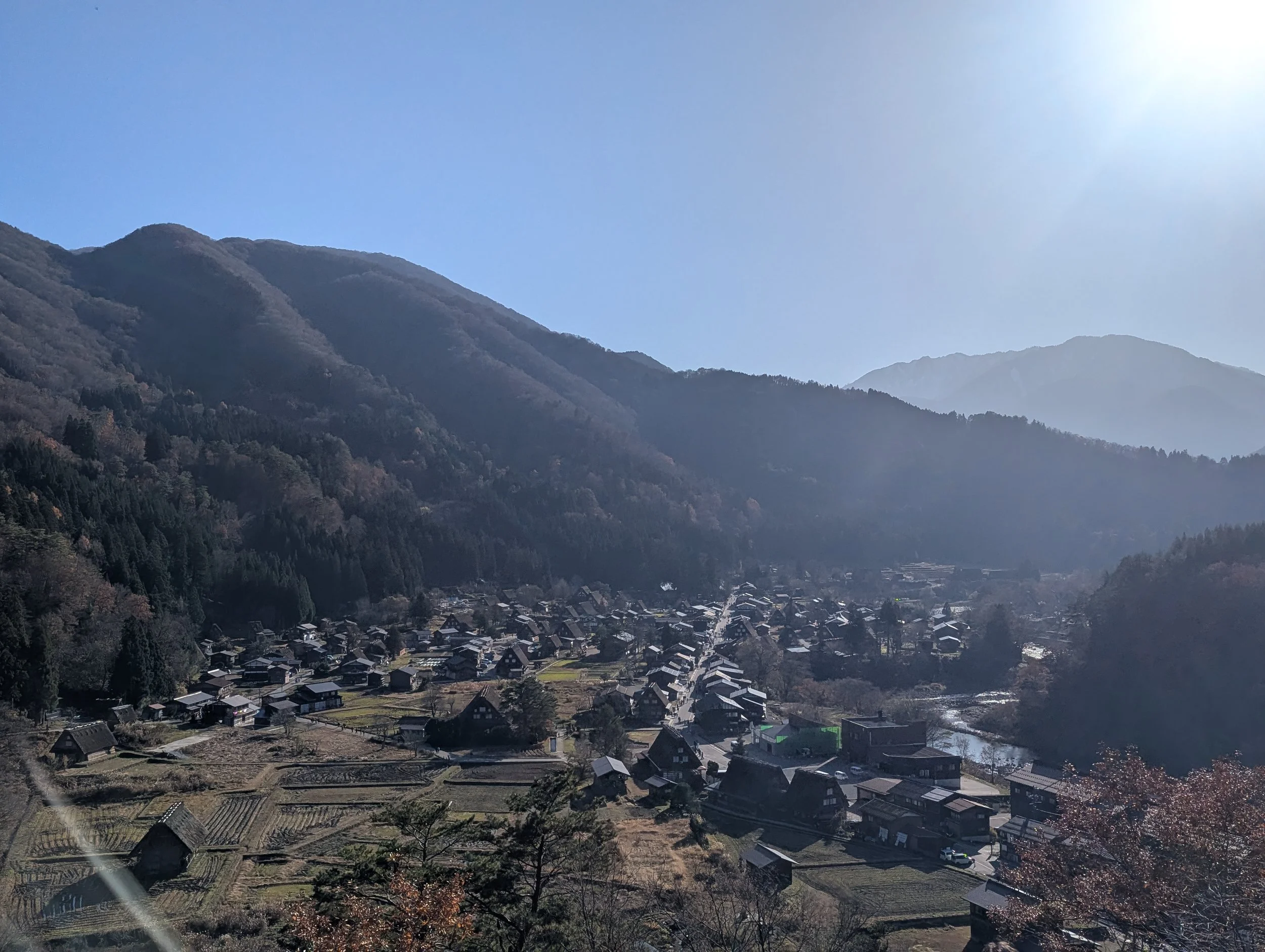
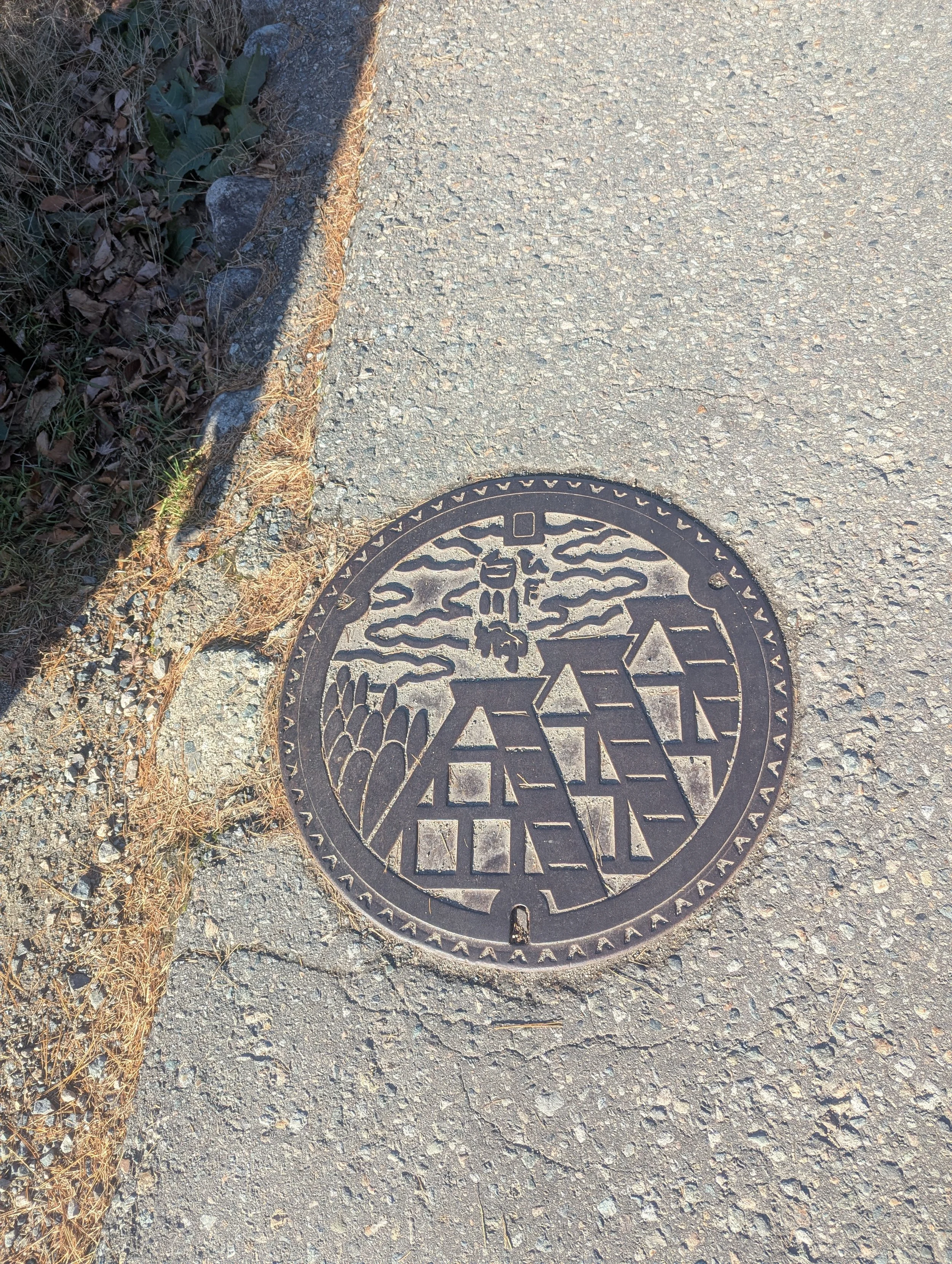
Shirakawa is known for thatched roofed houses. It is apparently extraordinarily beautiful in winter, when everything is blanketed in snow. Some of the houses are available to stay overnight, others are museums. We wandered around the sleepy town, that was not actually very sleepy but filled with tourists. There were paved roads winding through the buildings. We followed the path to an incline up to the observation deck, which overlooks the entire town. From the observation deck, at least at this time of year, the sun was harsh and not cooperative for the sake of photos. I could imagine in the morning or at golden hour, the view would be spectacular. At the observation deck, there is a souvenir shop that was extremely crowded, and shops for snacks and ice cream. There are places to sit and enjoy the view.
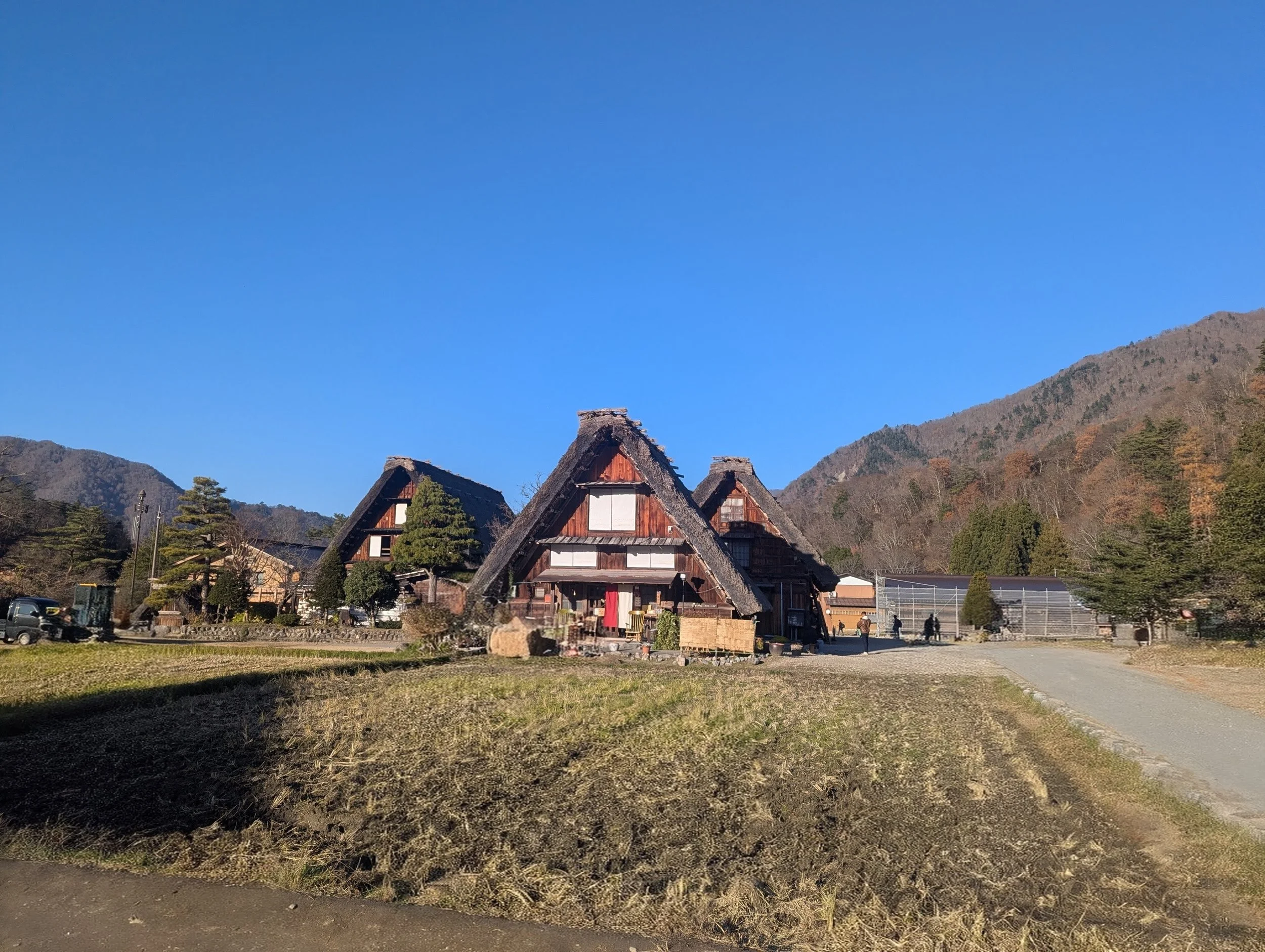
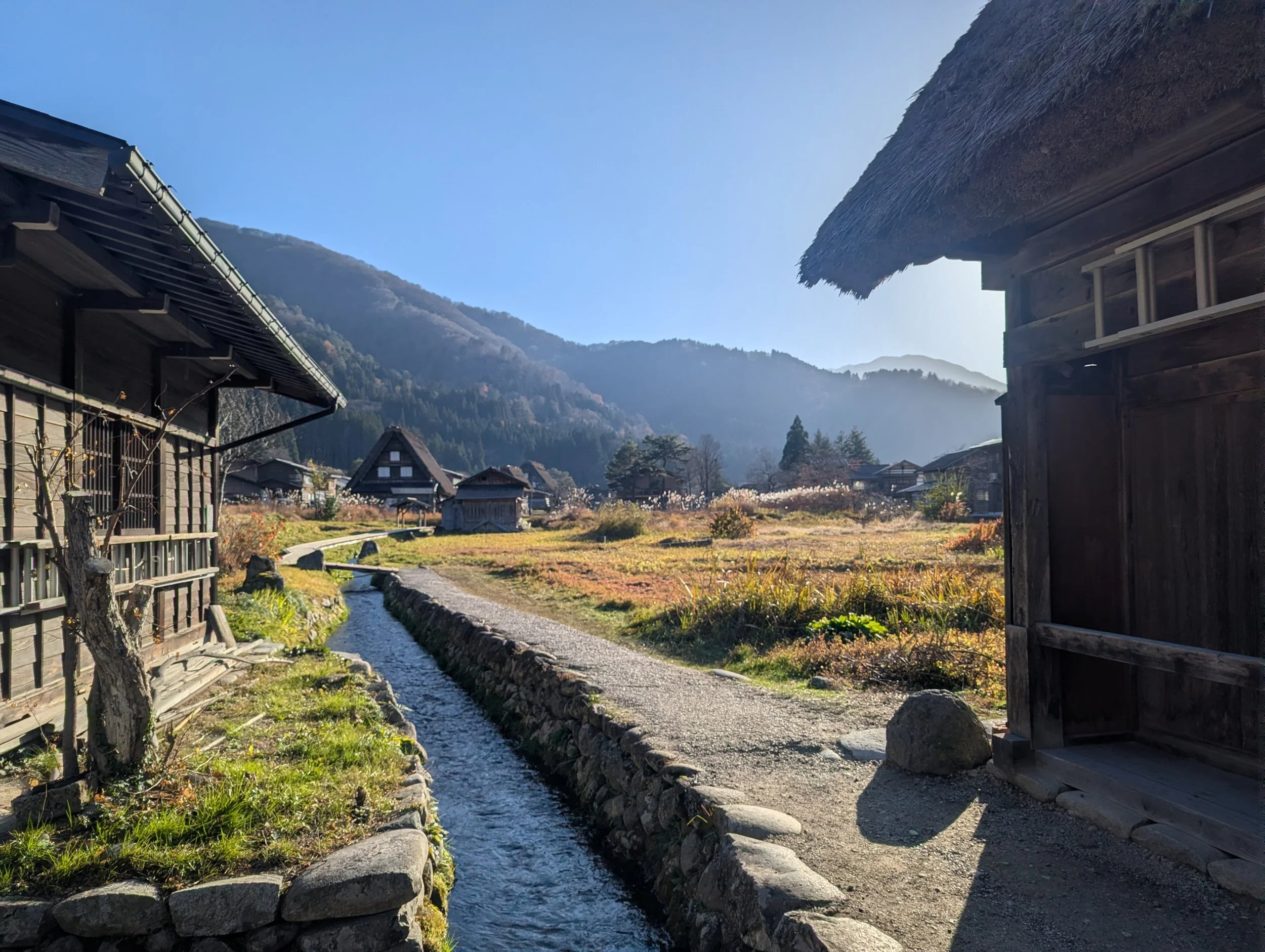
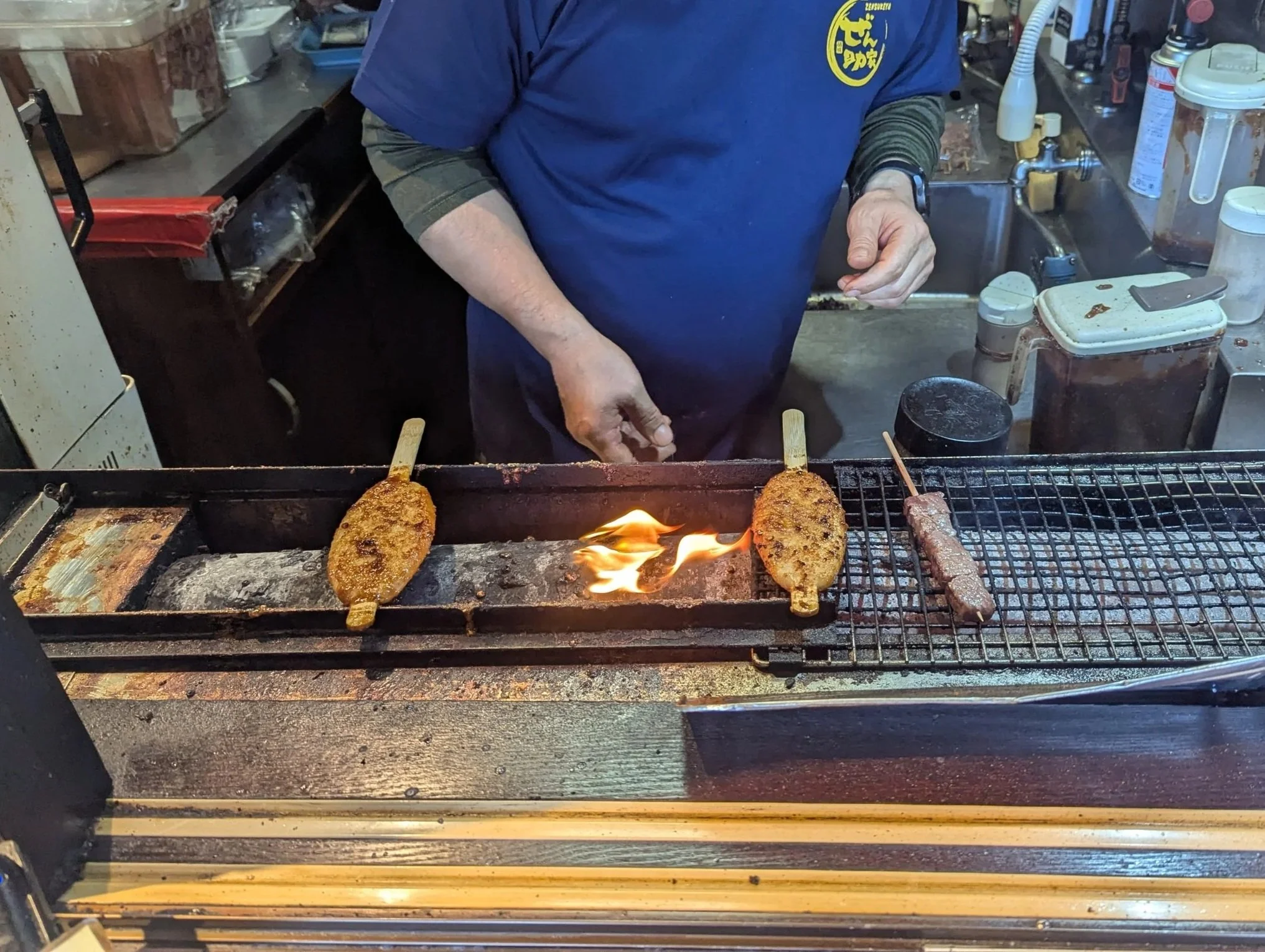
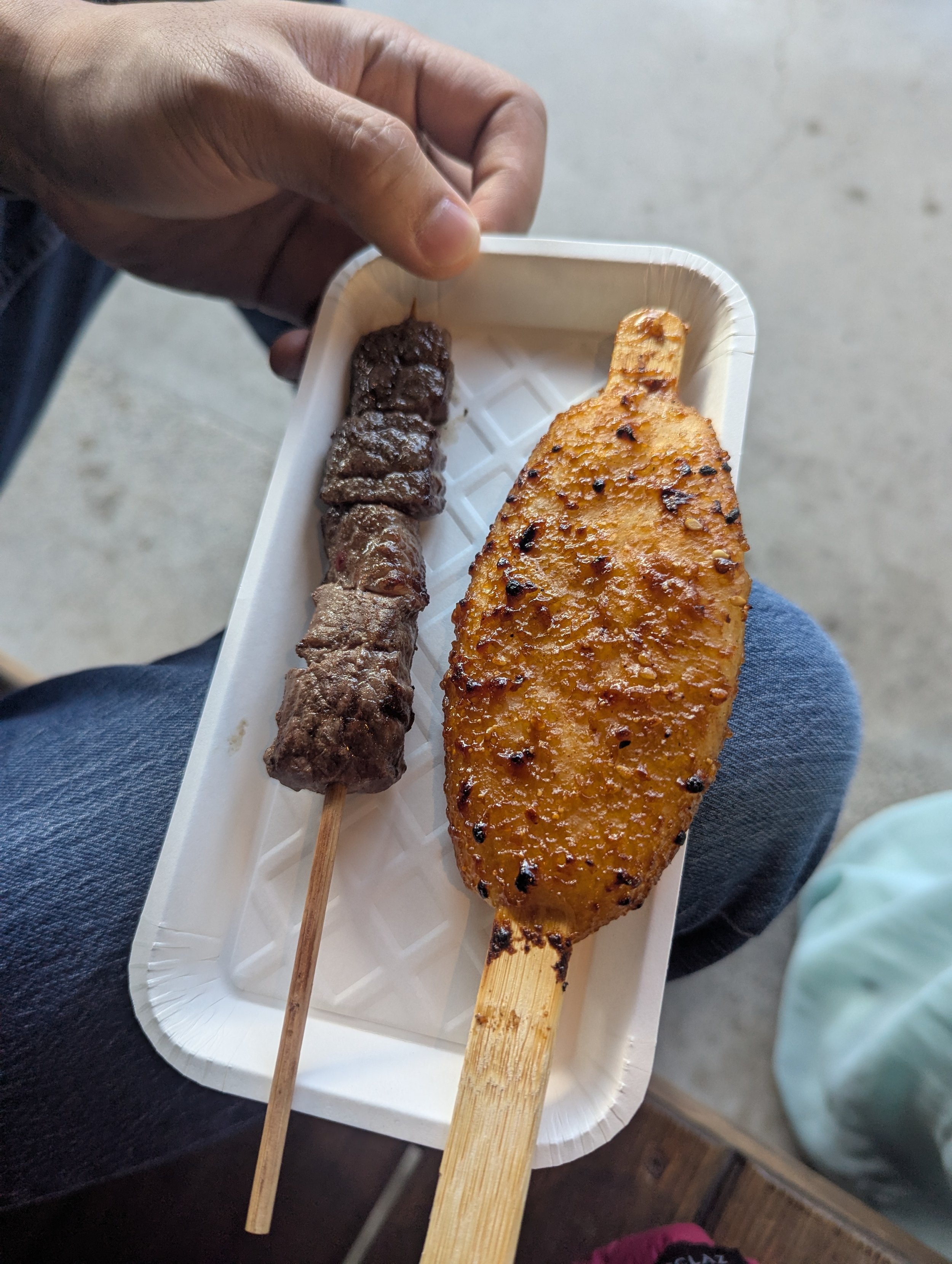
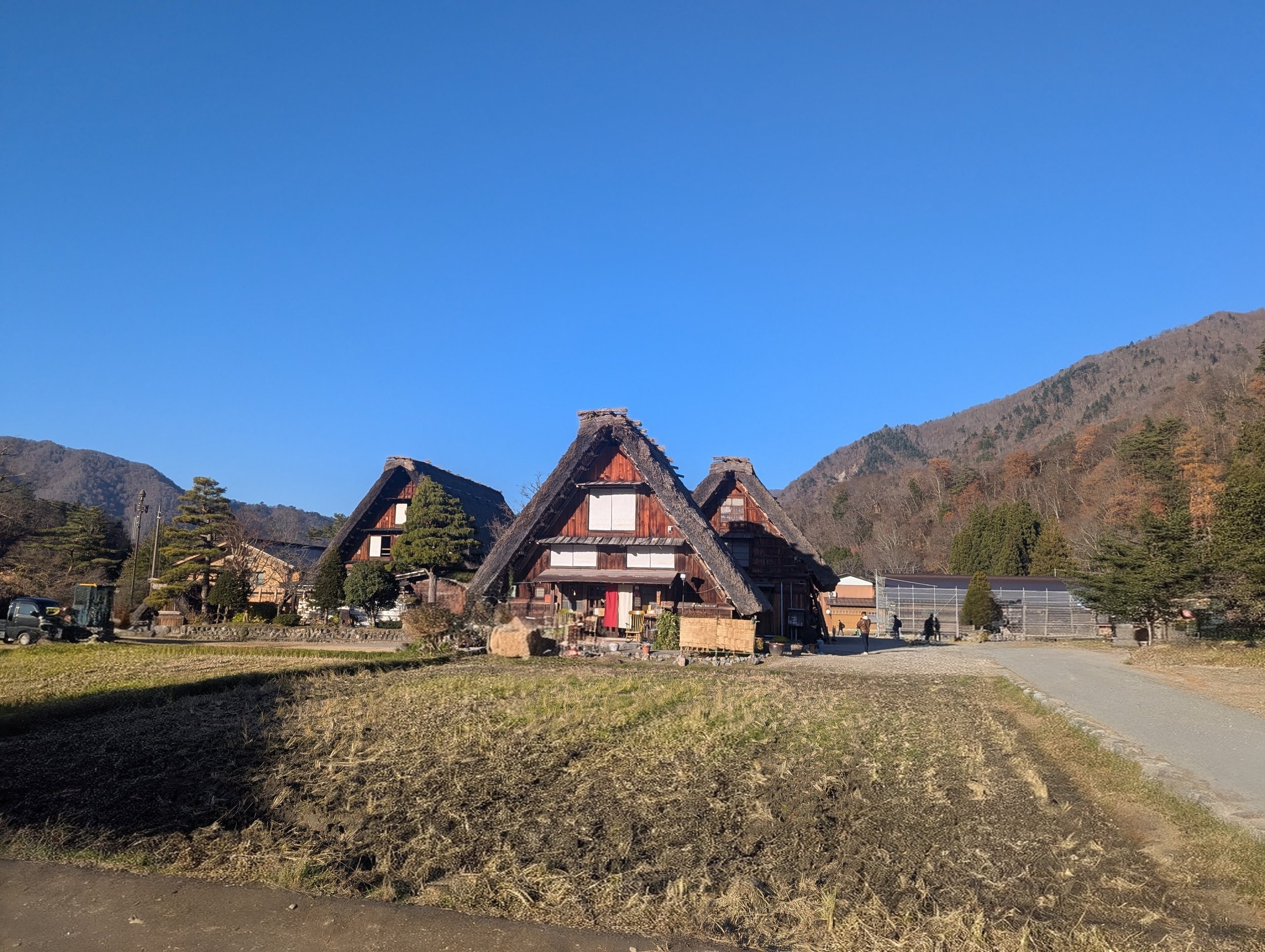
Back in town, we found the famous view of the three houses. Previously, I had been looking for it, but only took note of the hoards of people. I should have known. Just next to the the Instagrammable spot was a grill shop, where we got a skewer of Hida beef and a skewer with grilled mochi coated in miso, called gohei mochi.
As we wandered, we passed the famous pudding shop, one of the top things to do in Shirakawa. There was a pretty long line, so we figured maybe we would come back, especially since Kevin isn’t a huge fan of pudding.
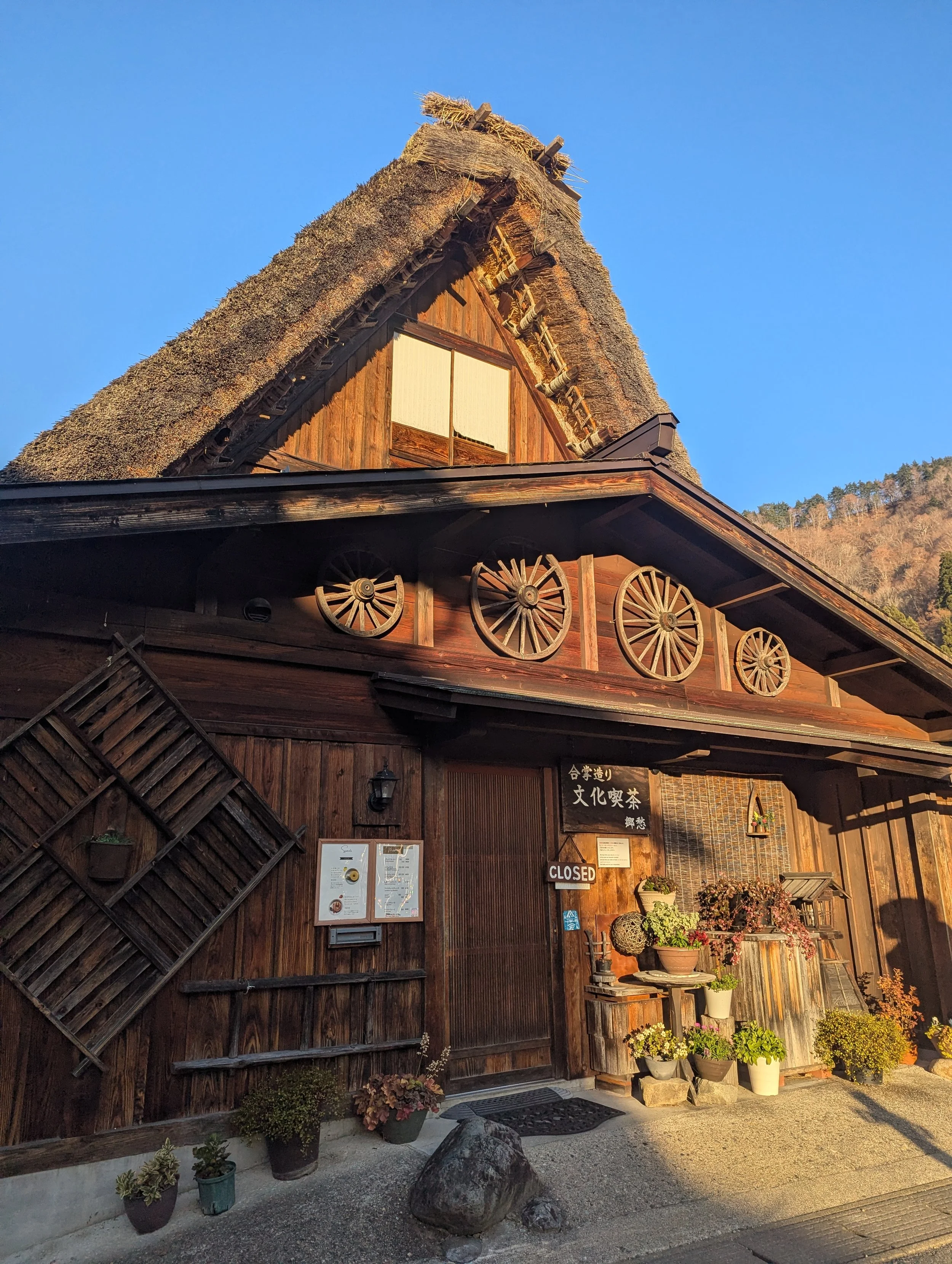
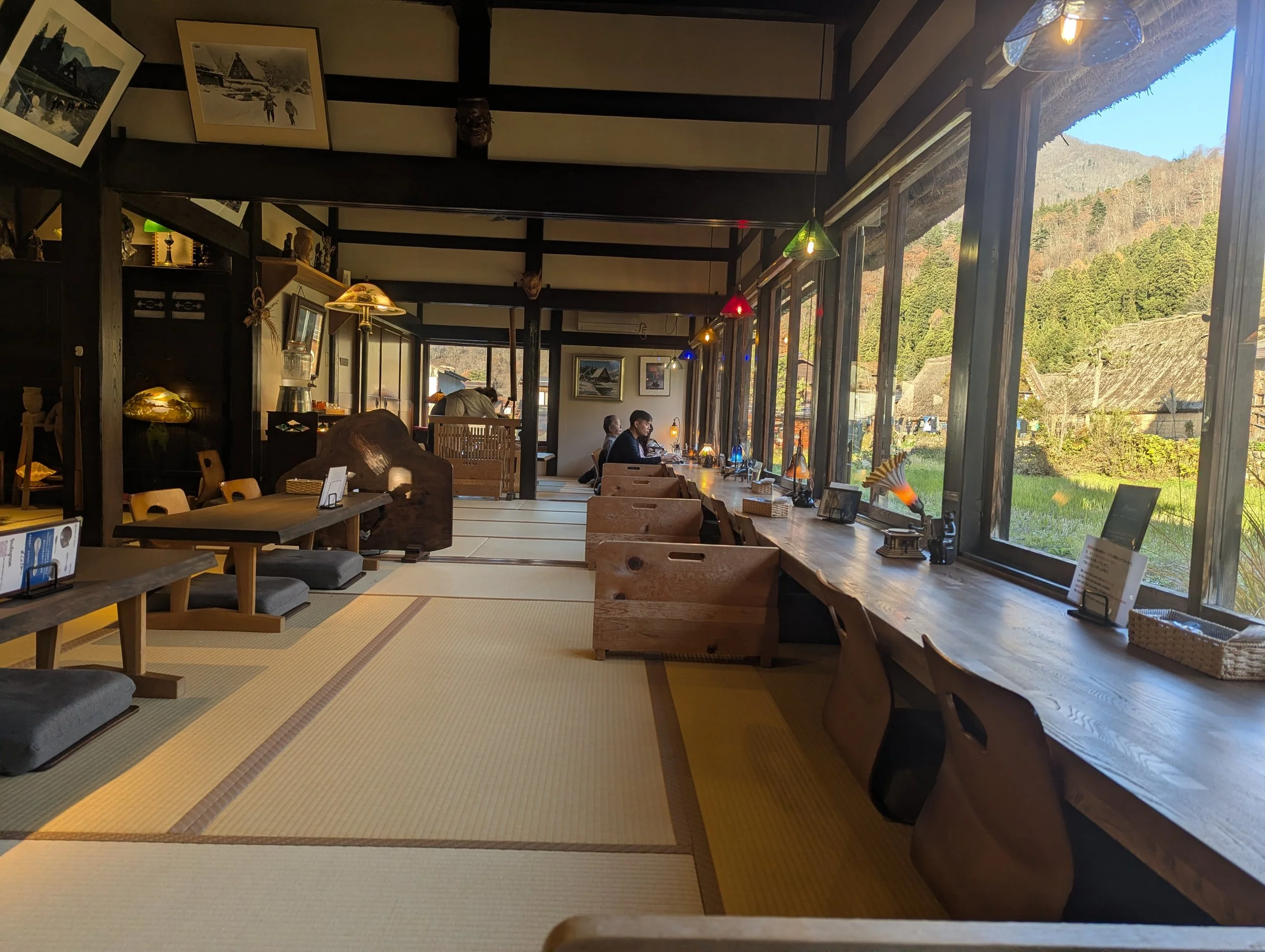
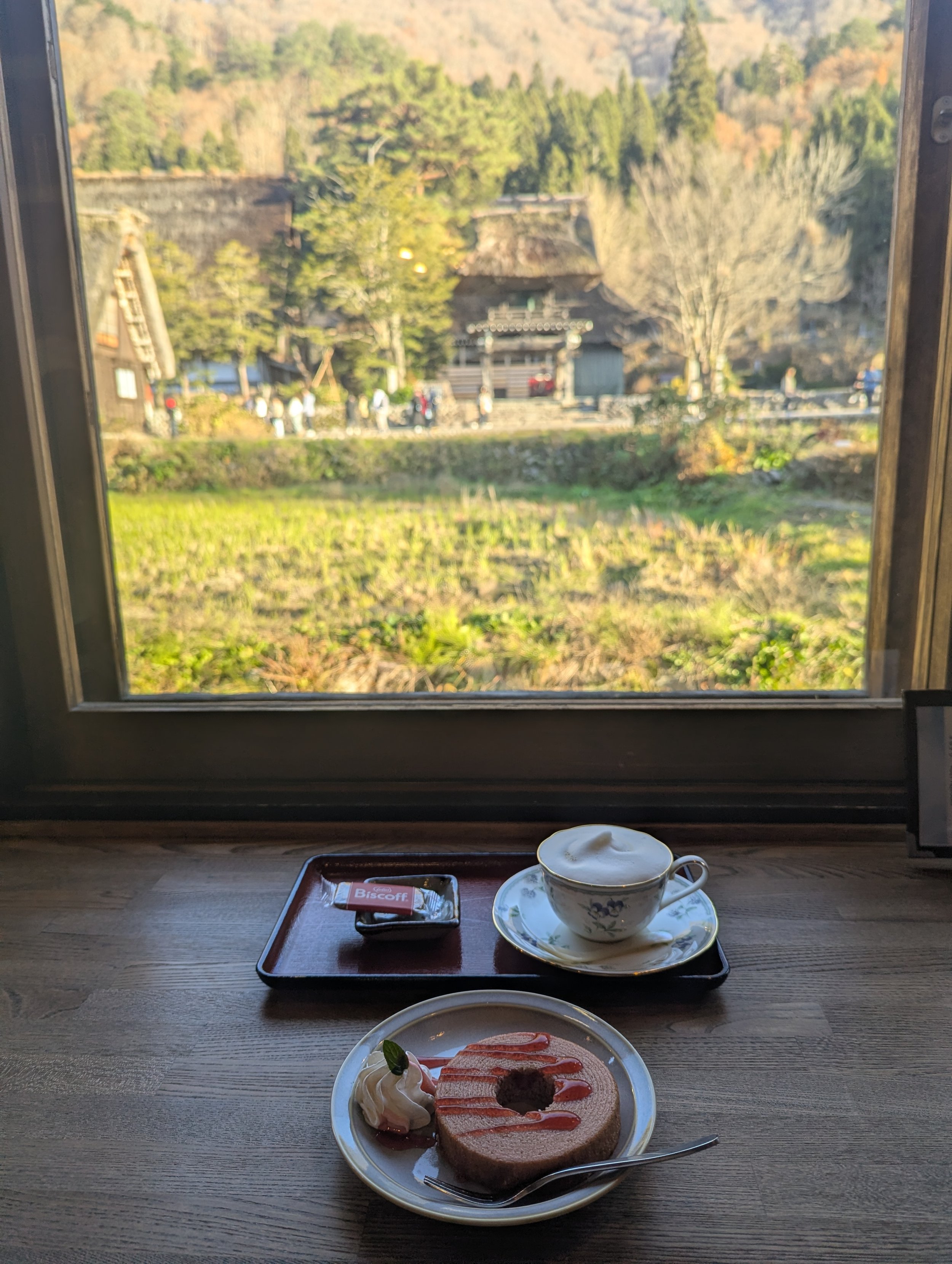
One of the experiences I wanted to do at Shirakawa was the cafe overlooking thatched roof buildings. I had taken note of it while browsing Google Maps. We got there at 15:15 and the sign on the door said closed, even though the hours said it was open until 16:00. I sulked and pouted for a minute. I had just said, “well, nothing we can do about that,” and turned around when the door opened and people exited. A staff member had walked them out and flipped the sign back to open! She welcomed us in. It was a large open area, mostly of tables on the tatami mats, and tables looking through the panoramic windows. Classical music played and completed the vibe. We were seated at one of the windows, at the end, next to a bookcase filled with all sorts of books. I ordered a soy milk cafe latte and strawberry baumkuchen, Kevin ordered a coffee and lemonade baumkuchen. I counted 14 seats by the window and three additional tables (two tables for two, one table for 4). We enjoyed our drinks and cake, and the views. Just outside our window, across the grassy field, was the pudding line, growing longer by the minute. Needles to say, we did not go back for pudding, but we were very content after our time at the cafe.
The stamps at Shirakawa are at the bus terminal in town, and the info center by parking lot, but the stamp is the same at both. We left Shirakawa at 4PM. Even though we only spent a few hours, we felt like we saw everything we needed to see. We could have gone to see inside of of the gassho houses, but we didn’t. You have to pay to go in and it wasn’t a priority for us at the time.
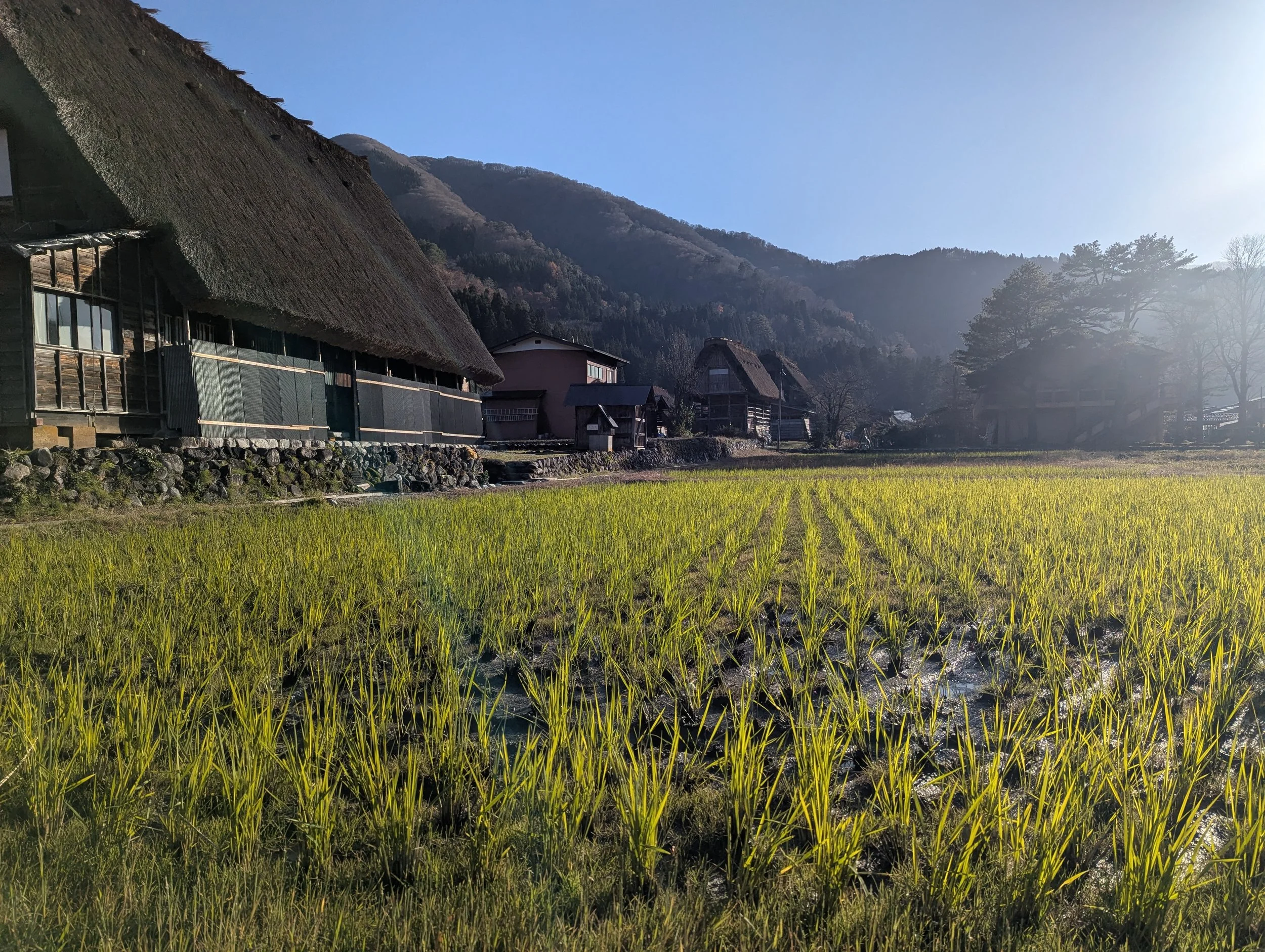
My initial impression was that I was underwhelmed by Shirakawa. We both expected there to be more thatched roofs but many buildings were not. Maybe it was the season - I imagine summer is lush and winter with the snow are gorgeous - when we went there were some green rice patties but most plants were beginning hibernation. The cafe experience turned it around for me. I thought the observation deck was underwhelming. But again, could be due to the harsh sunlight.
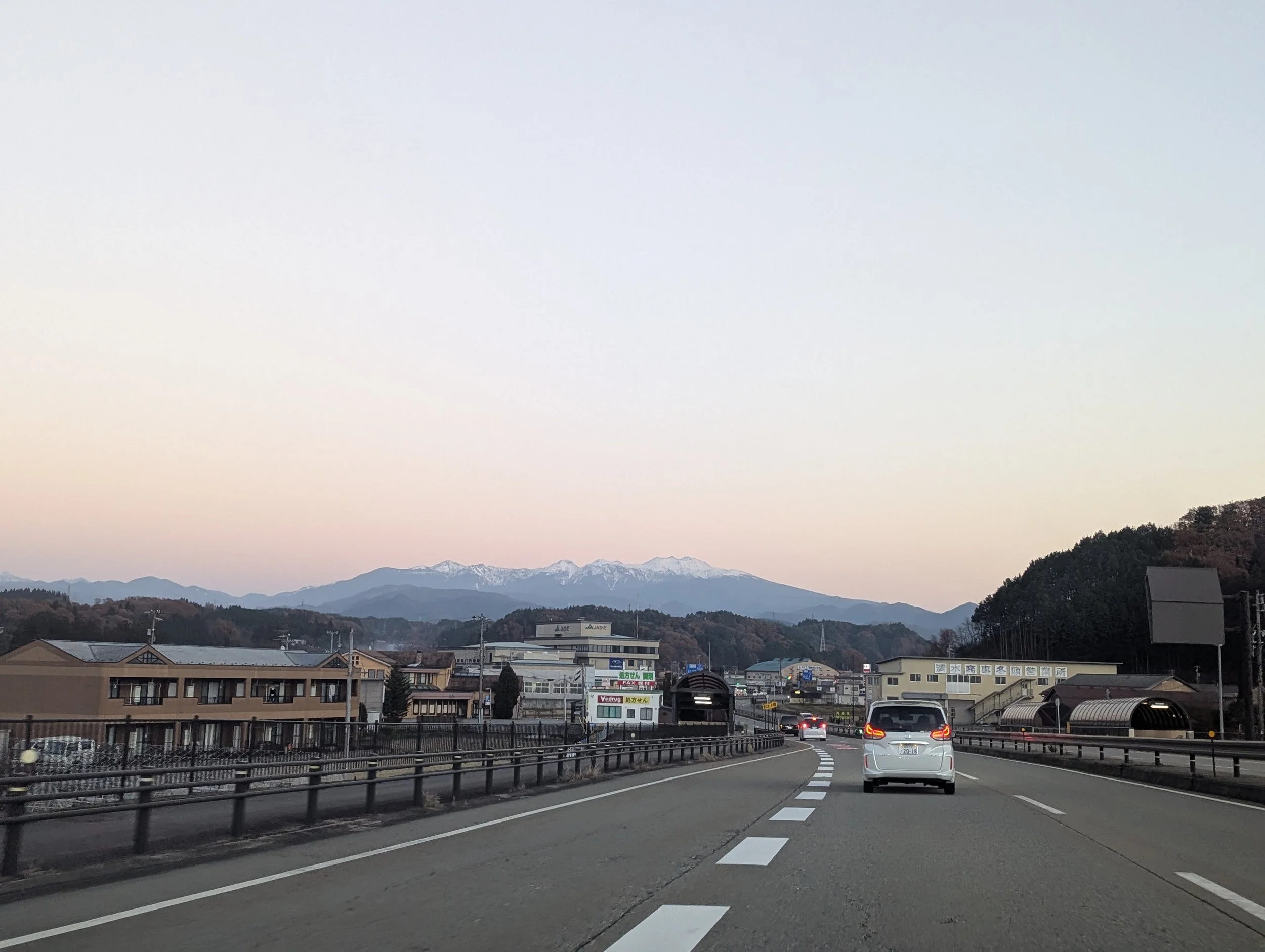
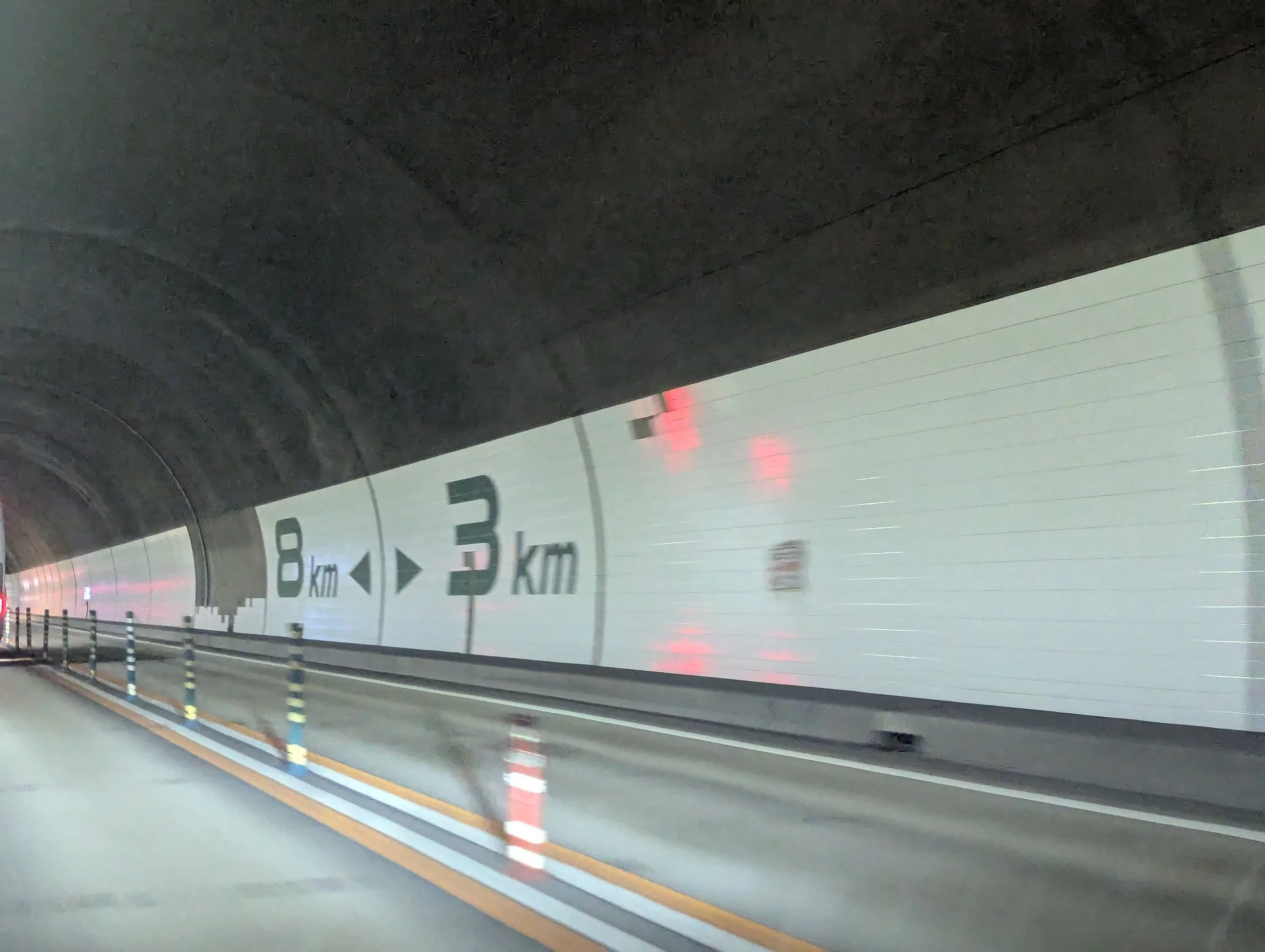
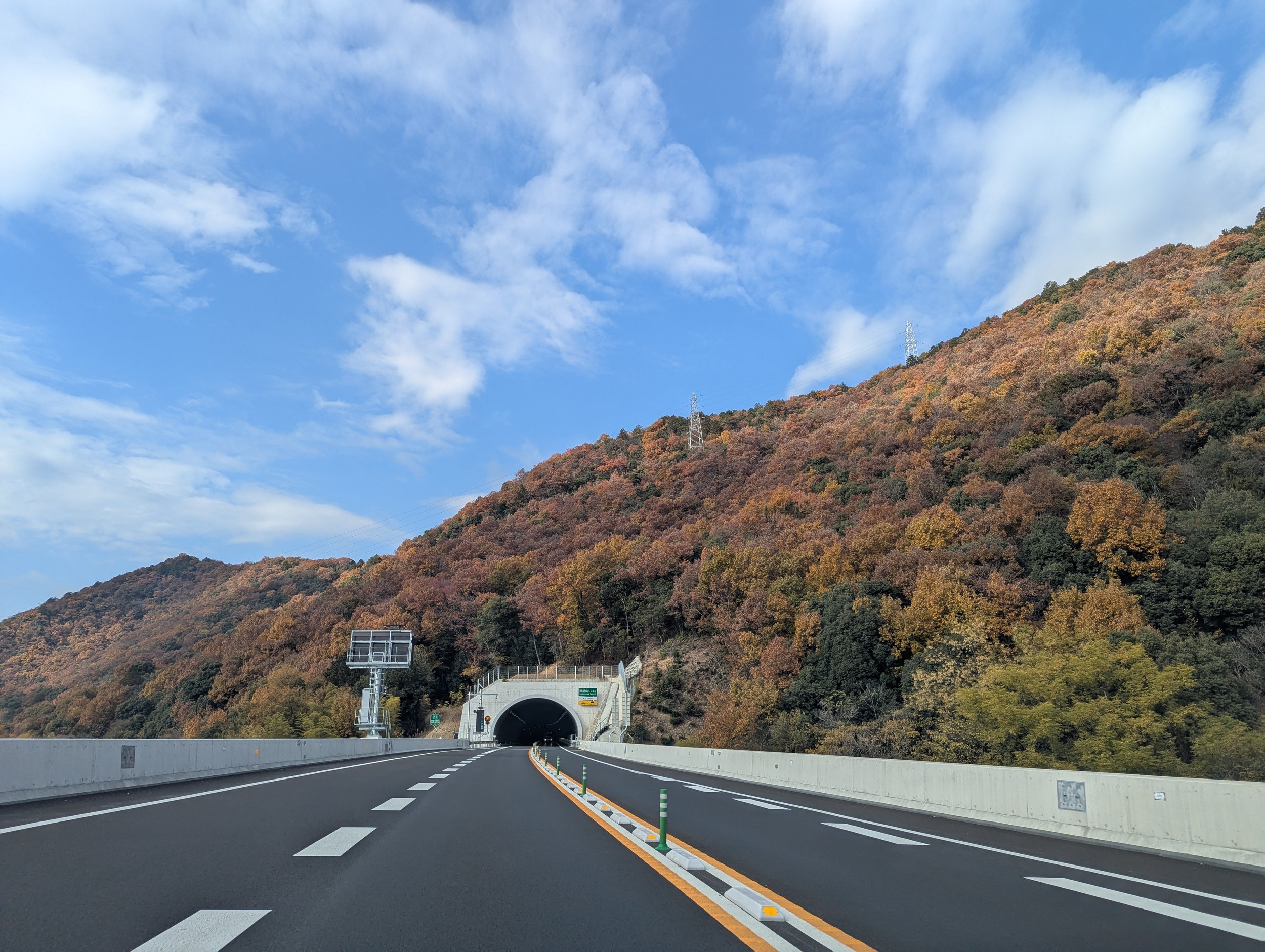
Driving to Takayama (from Matsumoto) and Shirakawa has lots of tunnels through mountains, which made for a really cool drive, and also made us think about the infrastructure of Japan. Mountains everywhere, but their innovation allowed them to make their way.
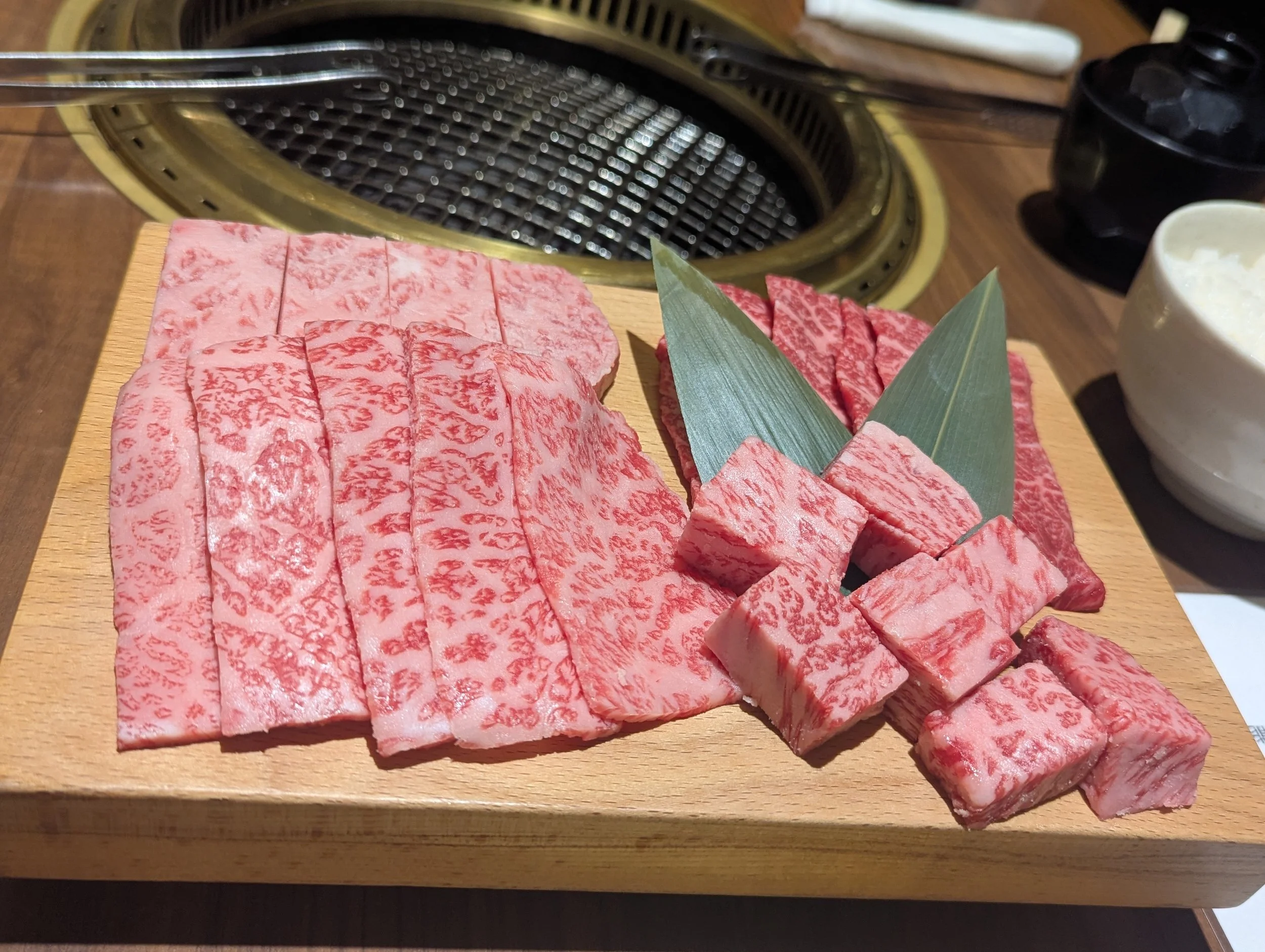
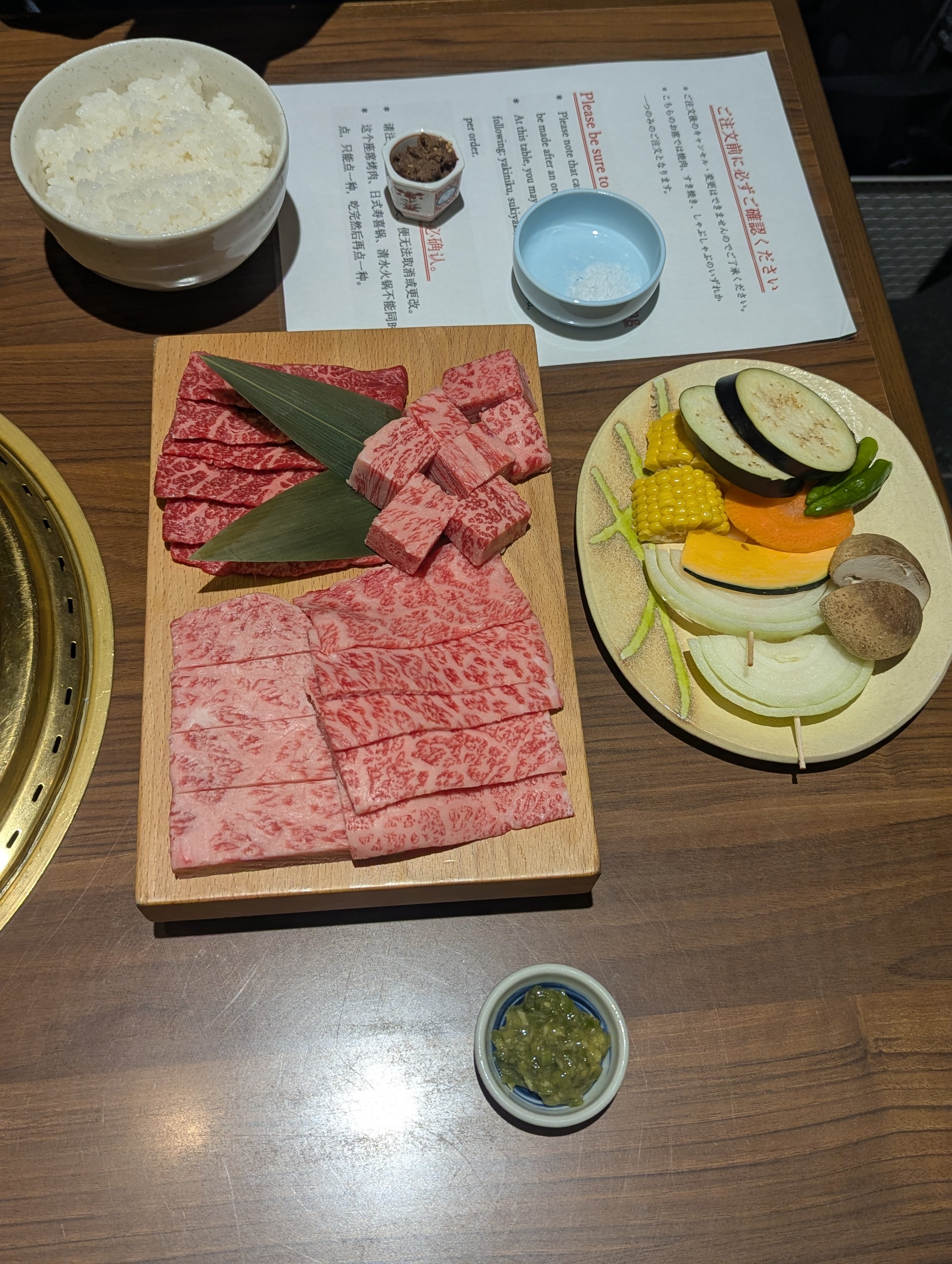
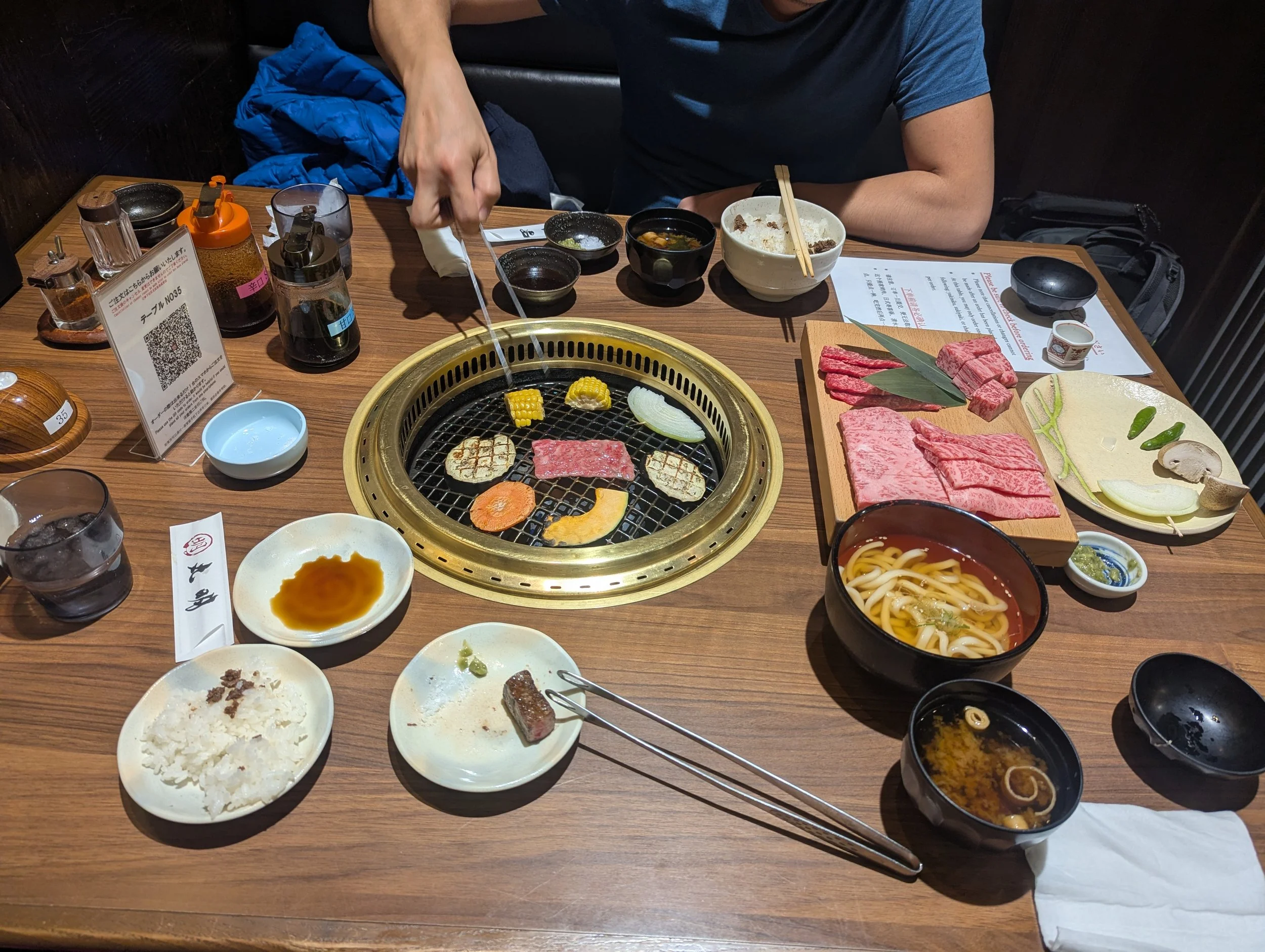
We were back at the parking lot behind Takayama Station at 16:45, and made it to the info center at the station before they closed to get the Takayama stamp. Kevin had found a yakiniku restaurant that he wanted to go to and he had read to arrive early because it gets crowded fast. We sped-walked to Hidagyu Maruaki. I joked that Kevin has never walked so fast. Arrived at 4:58 and joined the wait list. There was a short wait before we were called to be seated. Ordering is exclusively done via QR code. The food came out really quickly, fifteen minutes after we had arrived at the restaurant to join the waitlist.
I know it is a yakiniku restaurant - and don’t get me wrong, the Hida wagyu was fantastic - but I don’t think I’ve ever had a bowl of more perfectly cooked rice. Wasabi was 50 yen and really good, chunky and a little slimy but so good. Entire meal was really good.
Back at hotel around 630 with our bellies full and souls happy. We planned the next day and I read, and we were in bed at 830.
Day 5: Monday, December 1st - Gujo Hachiman and Omi Hachiman
Another early morning - the jetlag helps us wake early and make the most of our days. We enjoyed the onsen from 6:15 to 6:50AM. I was the only one there. I felt like the water was hotter today, although it more than likely wasn’t. I like that the shower room/indoor bath is super steamy so it gives privacy naturally. It was 31 degrees that morning. Takayama is cold and wintery, being located in the mountains. It was probably the coldest here than anywhere else on the trip.
We packed and checked out if the hotel at 7:30. Headed to FamilyMart for breakfast snacks before hitting the road. The entire FamilyMart was filled with tourists. Even while we were checking out of our hotel, a tour group was convening, and many people with suitcases were making their way toward the station.
We ate our FamiChiki in the car as the car warmed up. We hit the road at 8, for the last leg of the roadtrip, headed to Kyoto. A lot of the highway was 50kph despite being a relatively wide two lane highway. It was a really beautiful drive through the mountains. Leaving Takayama was a moody low fog from the rivers on the cold morning.
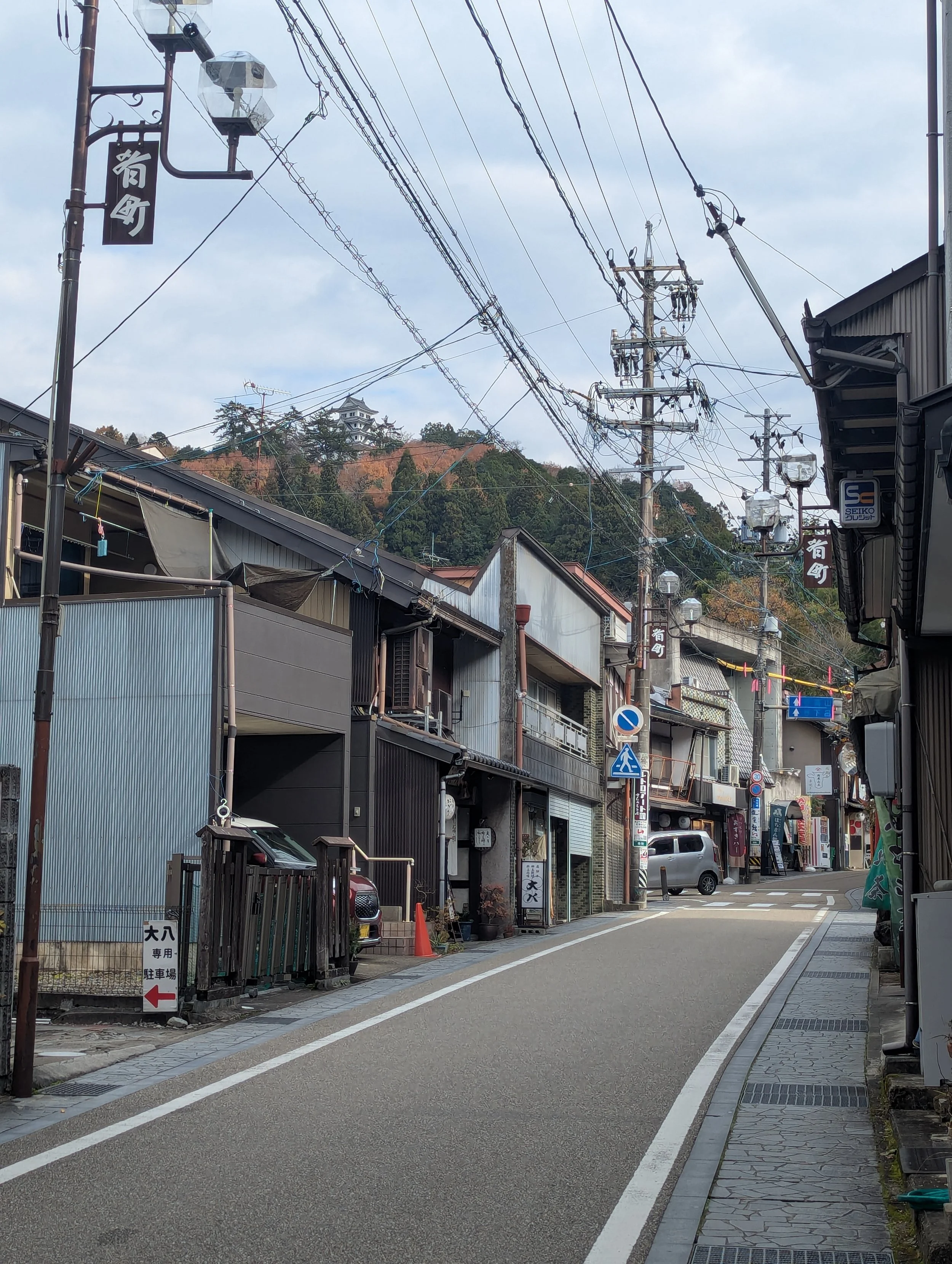
Our first stop was Gujo Hachiman. It is a very small, quiet town - an actual sleepy town, compared to Shirakawago - known for very clean water that runs through the town, and a castle. We parked at the Shiroyama parking lot for free at 9:10. It is a small lot but there were only two other cars when we go there. There are bathrooms, but they are old but fancy Toto holes in the ground, not western toilets.
We took our time going up to the castle. It is a very steep walk, there is a paved road of switchbacks, but also stairs built into the side of the mountain for pedestrians. We leapfrogged with several elderly individuals who were using the mountain for their morning exercise. We reach the top, the castle grounds, at 9:30. There are no bathrooms at the top and very little English. Entry to the castle costs 400 yen per person.
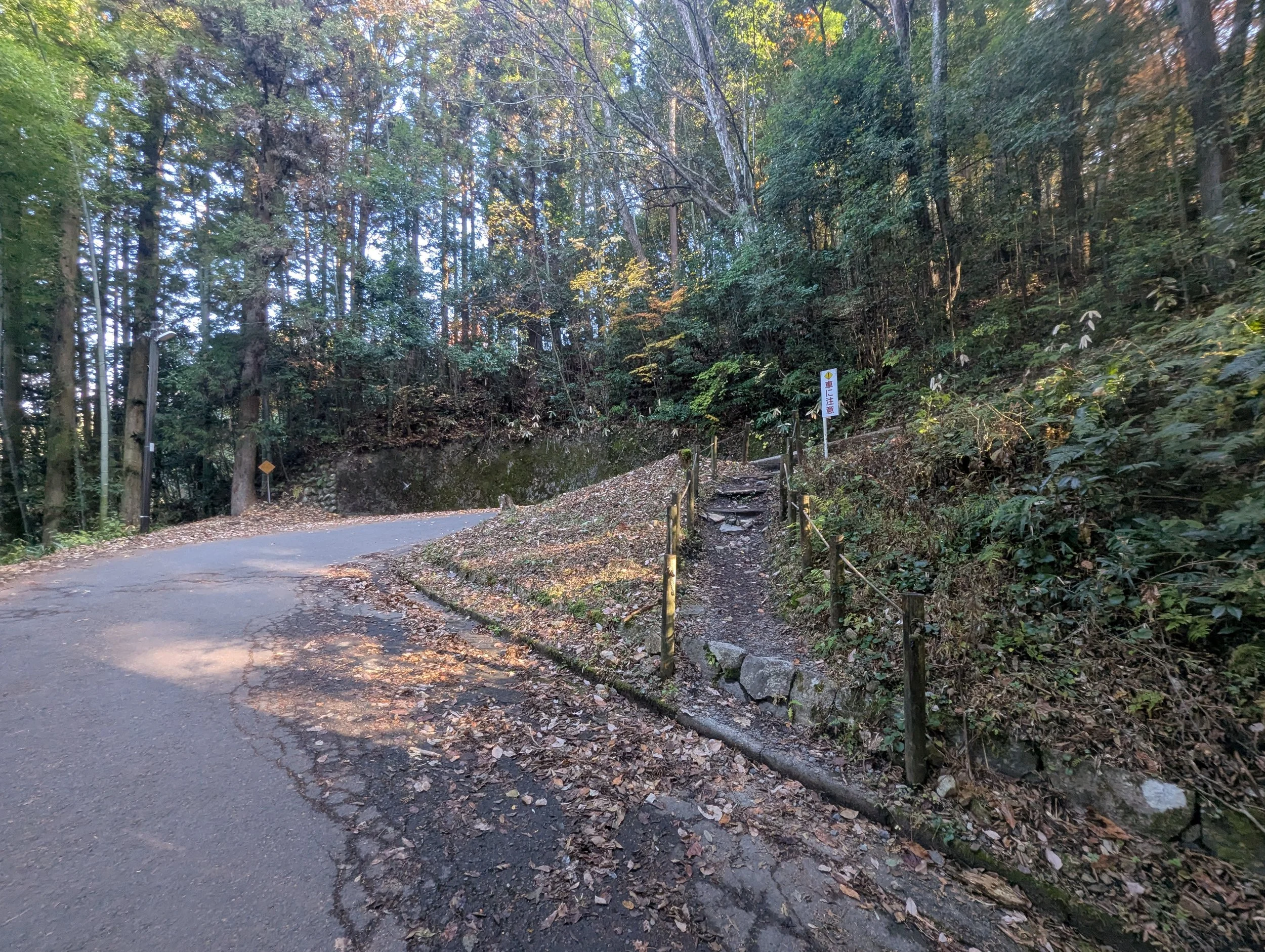
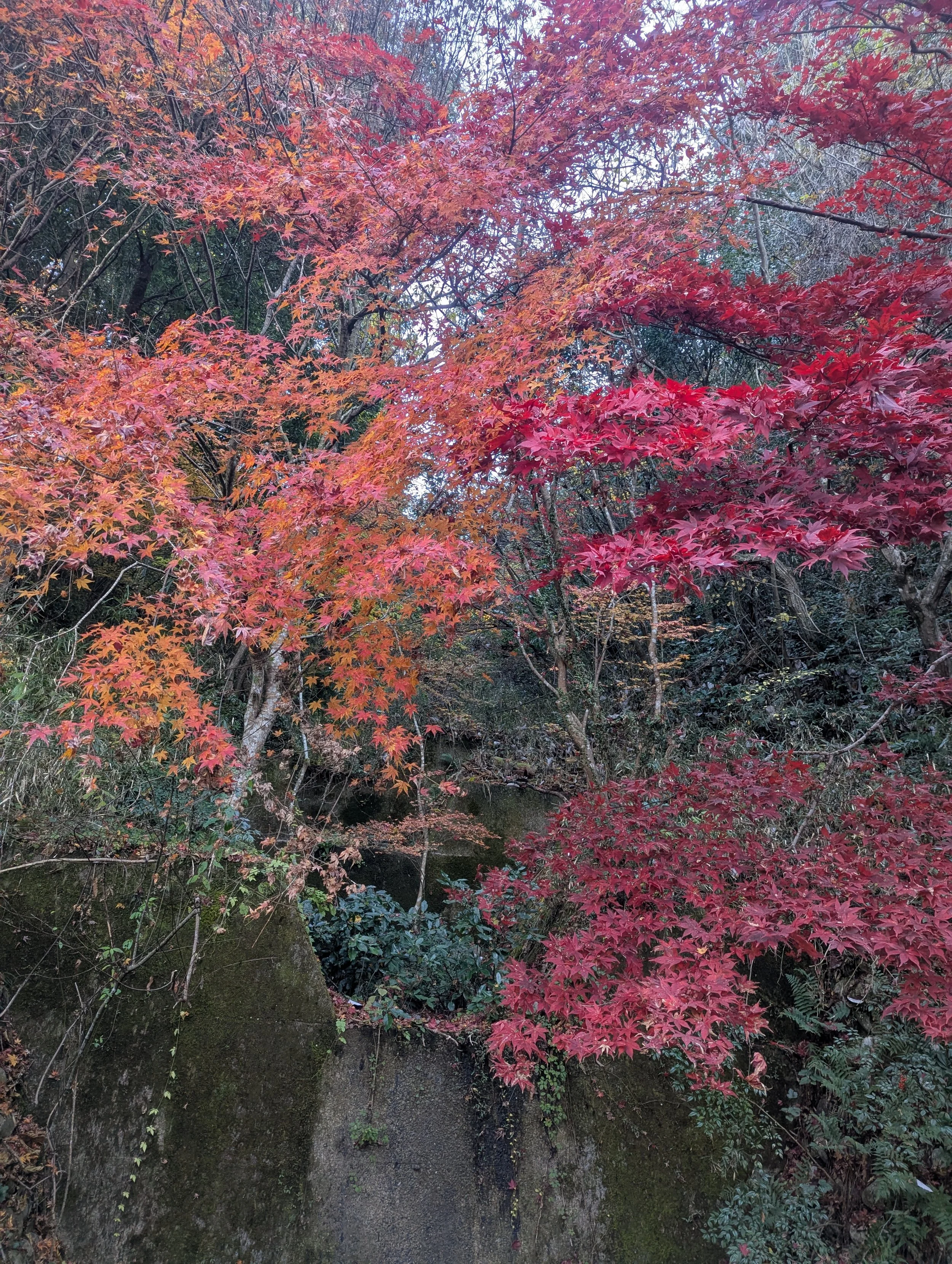
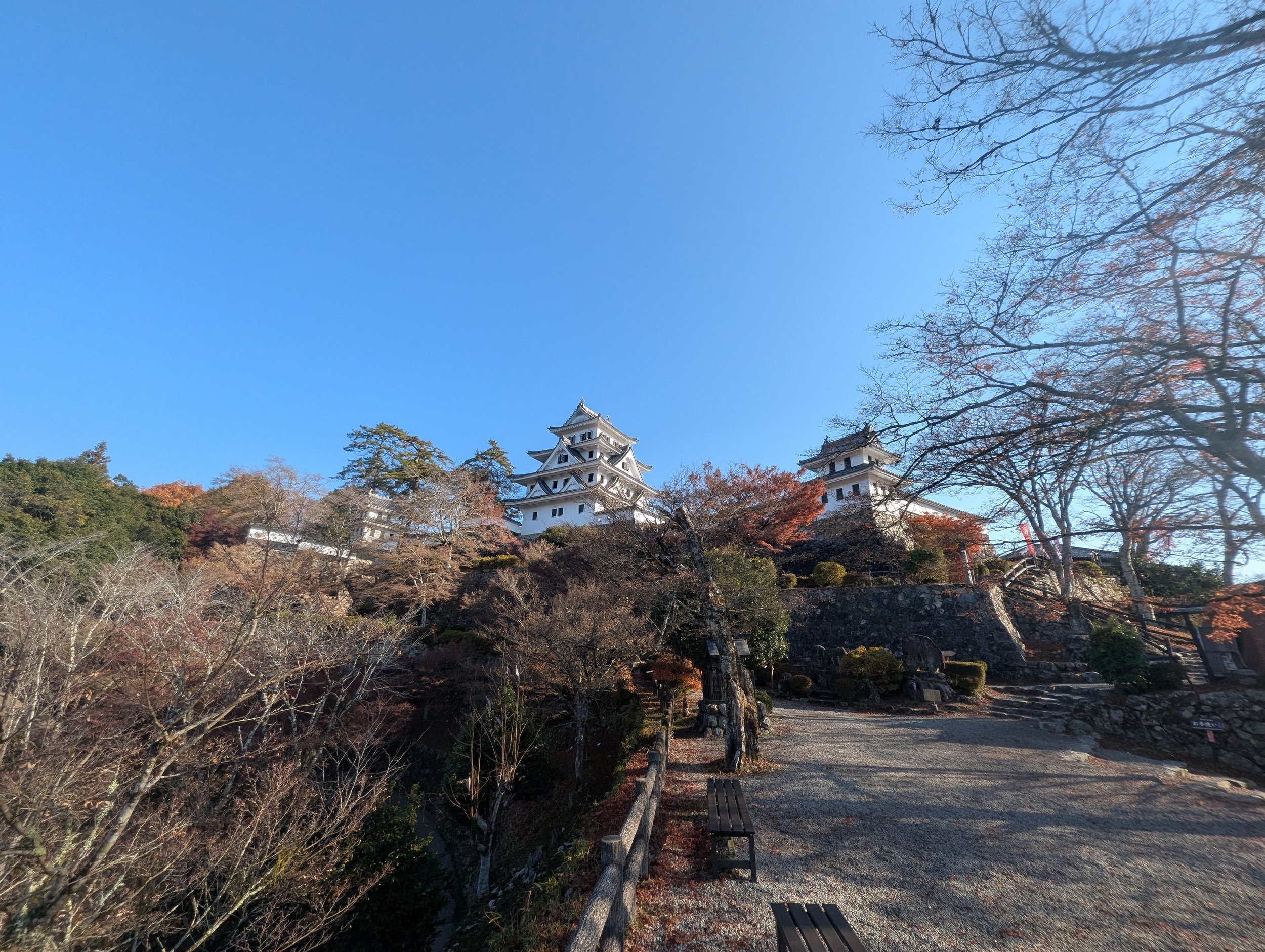
The current Gujo-Hachiman Castle is Japan’s oldest reconstructed wooden castle, built in 1933 after it had been deconstructed in 1870. Even though it has been reconstructed, it was built in the traditional manner of wooden construction. The castle was creaky but has been reinforced to not crumble in the event of an earthquake. The castle offered great views of the town in all directions.
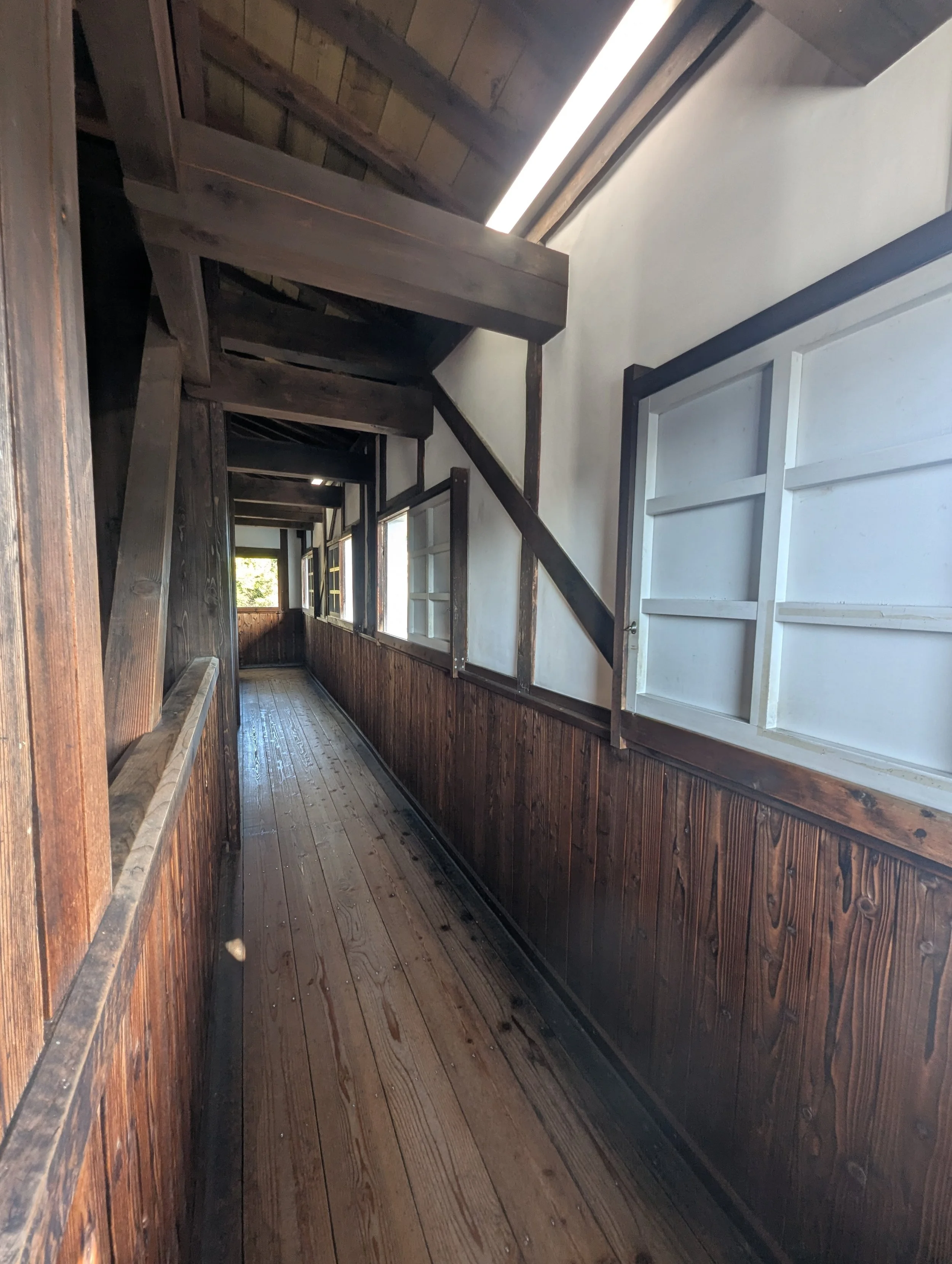
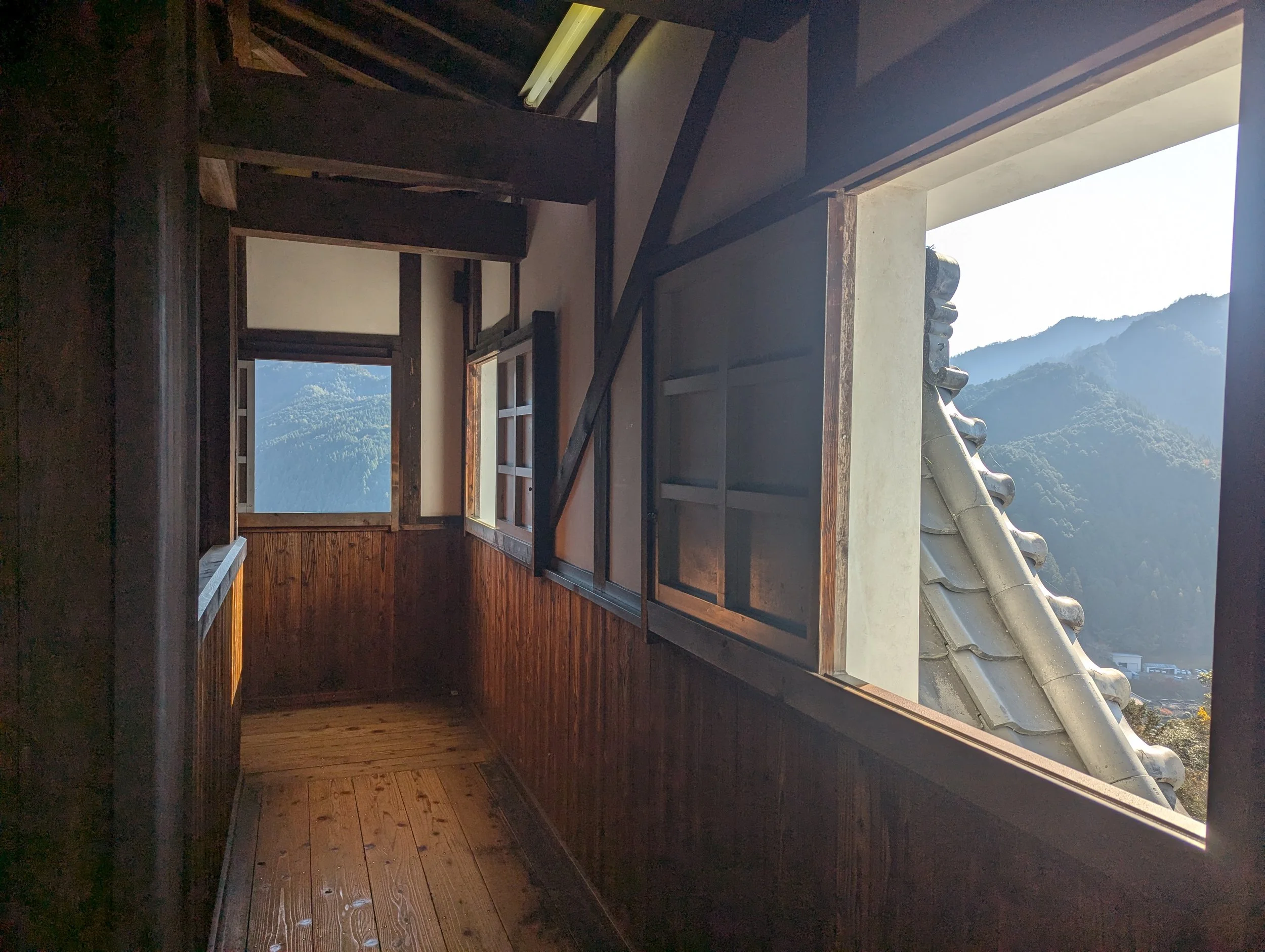
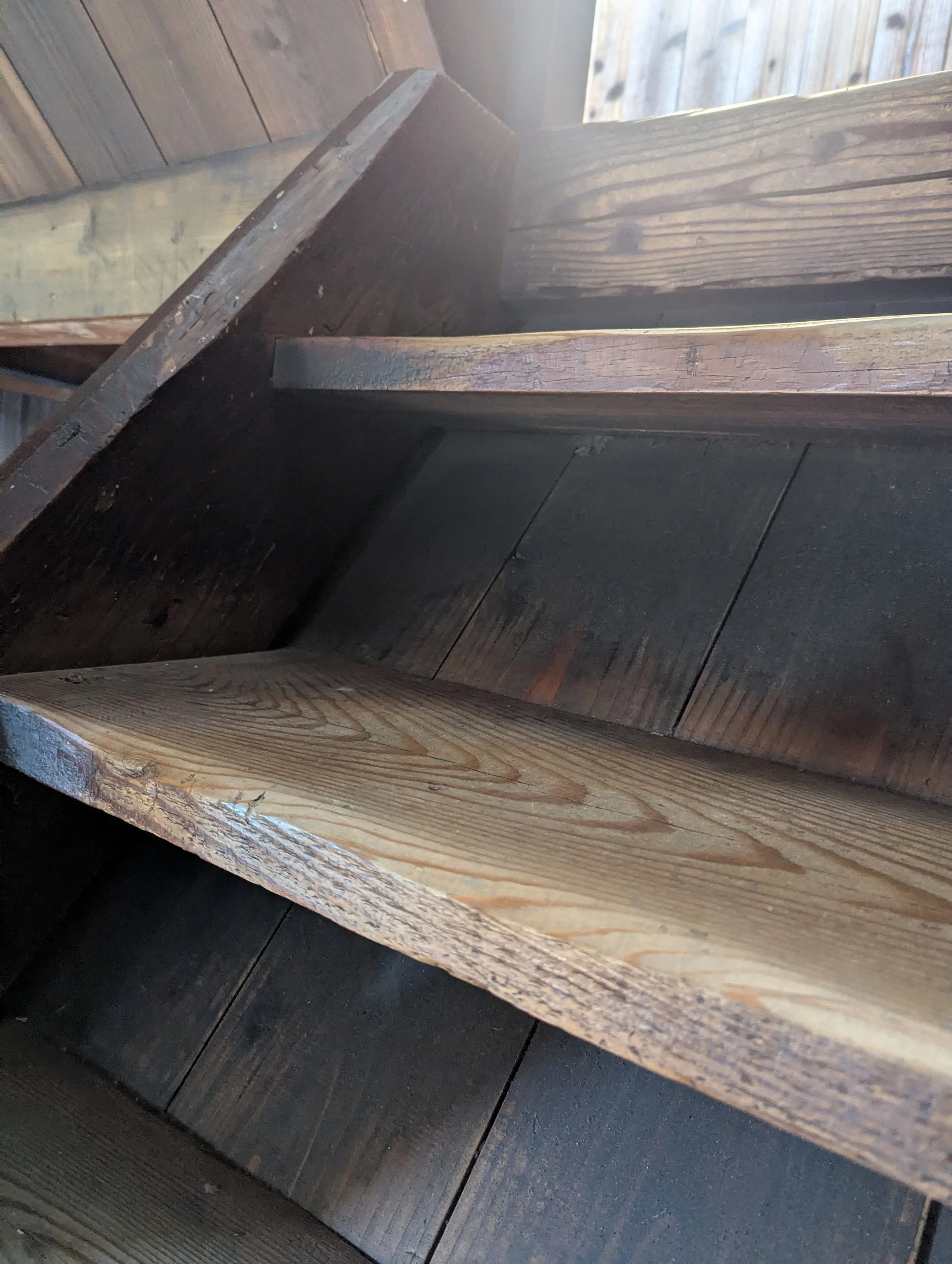
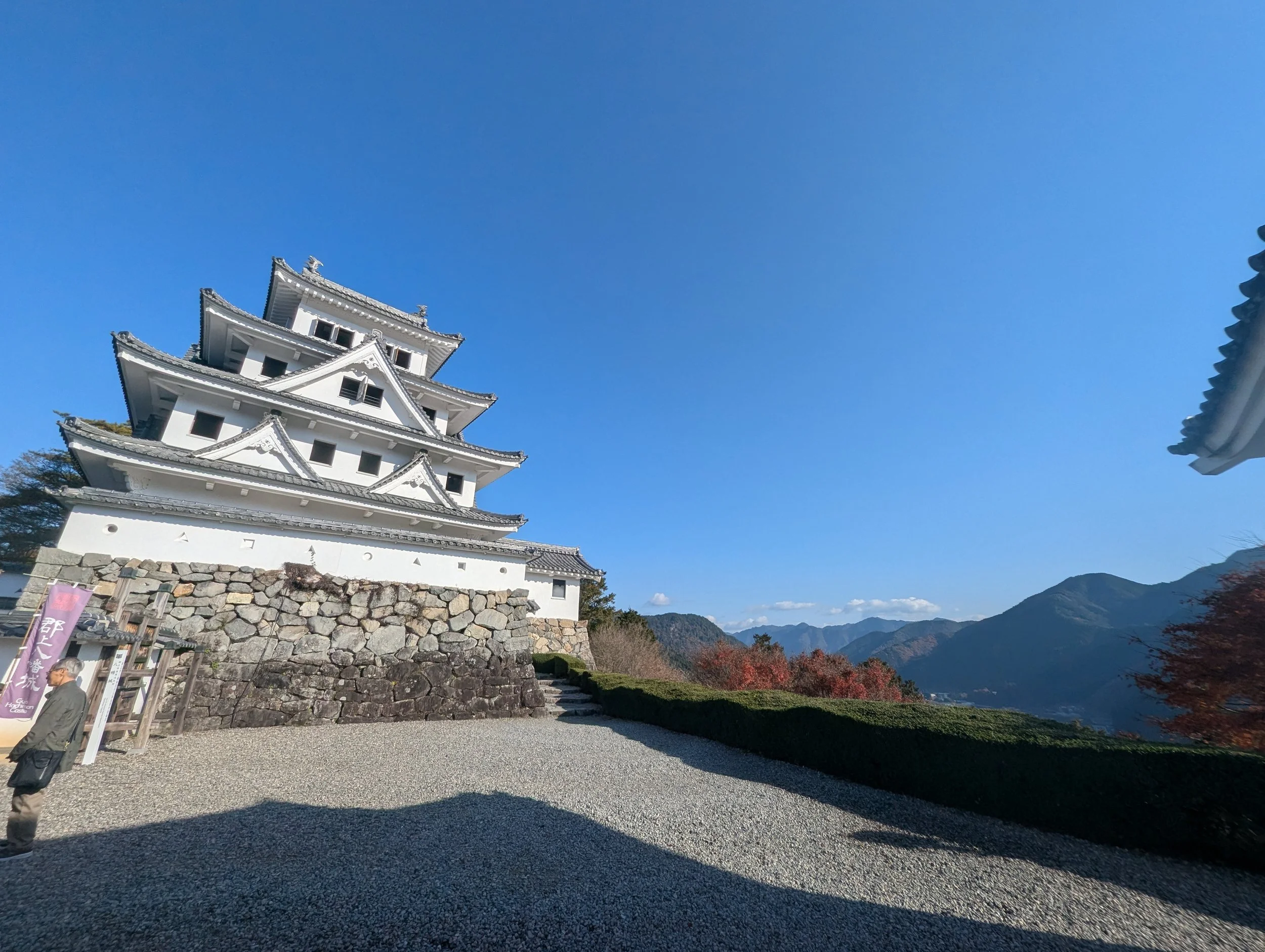
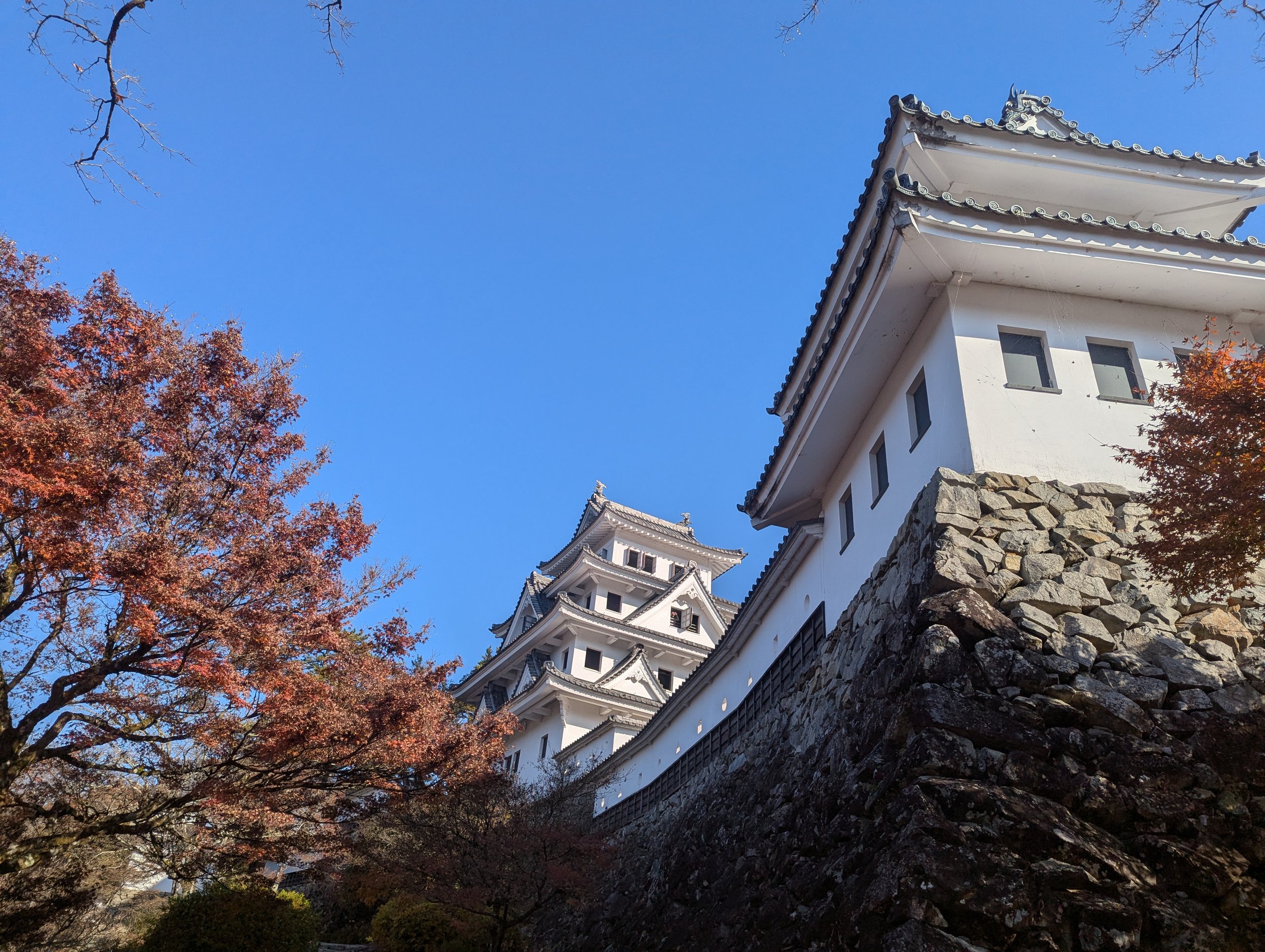
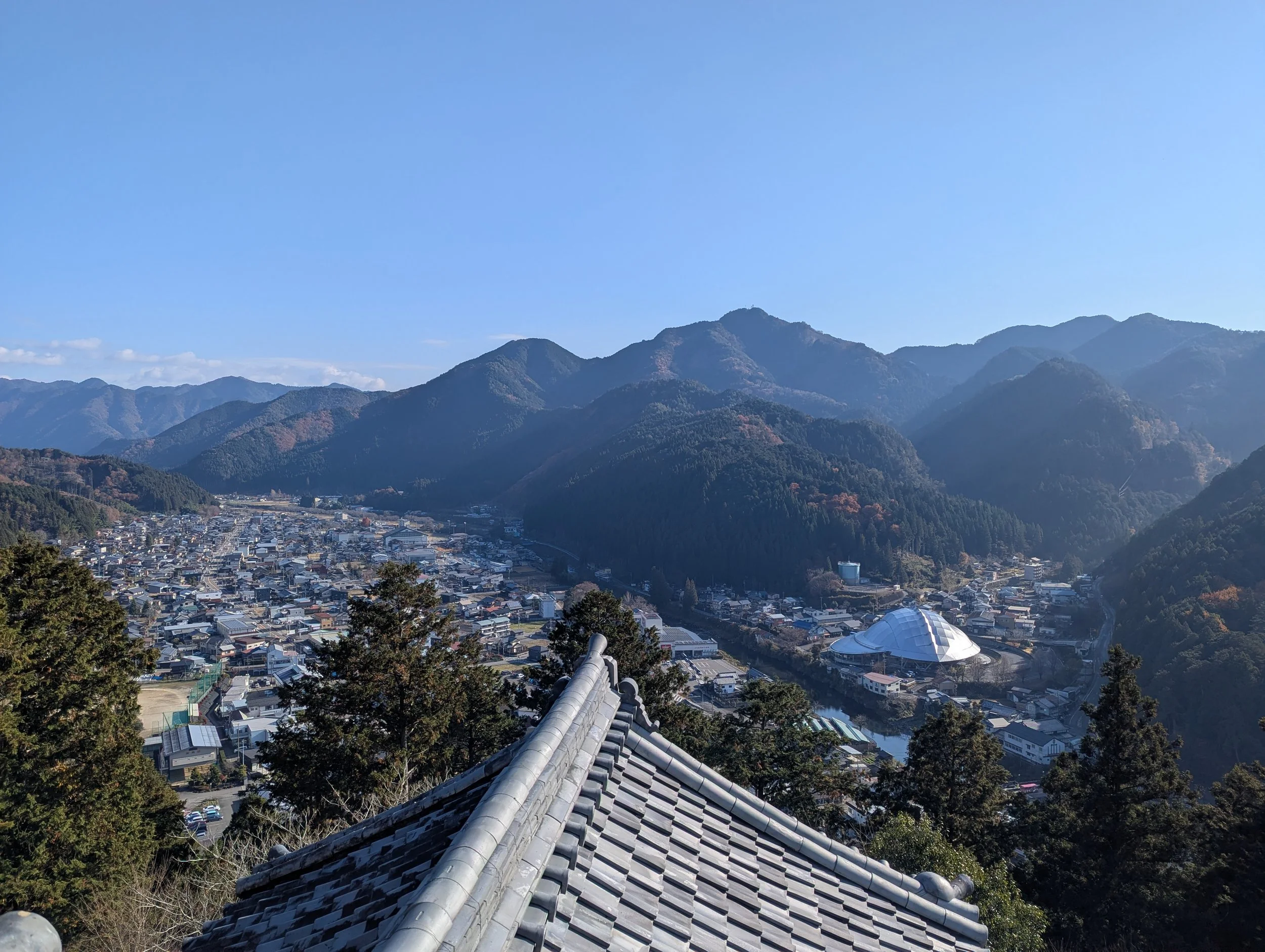
The castle is relatively small compared to others, We started our way back down the mountain at 10. We stopped at the car to have a snack (more of our FamilyMart food we had picked up that morning - I tried a tamago sando, because I had heard it is better than any other egg sandwich, but there was something tangy that I wasn’t a fan of) - and headed down the hill into town.
Our first stop in town was Sogi spring. There is a matcha café over looking the river that opens at 11. We were there at 10:30 but it would have been nice to enjoy a cup of tea if we had time. From there we visited Yanaka Lane, then stopped at Sanpuru Kobo for fake food. Gujo is known for making the fake food that restaurants use for samples. This particular shop offers workshops to make your own, but they were booked for the time that we would be there. The fake foods are made of wax and are very impressive.
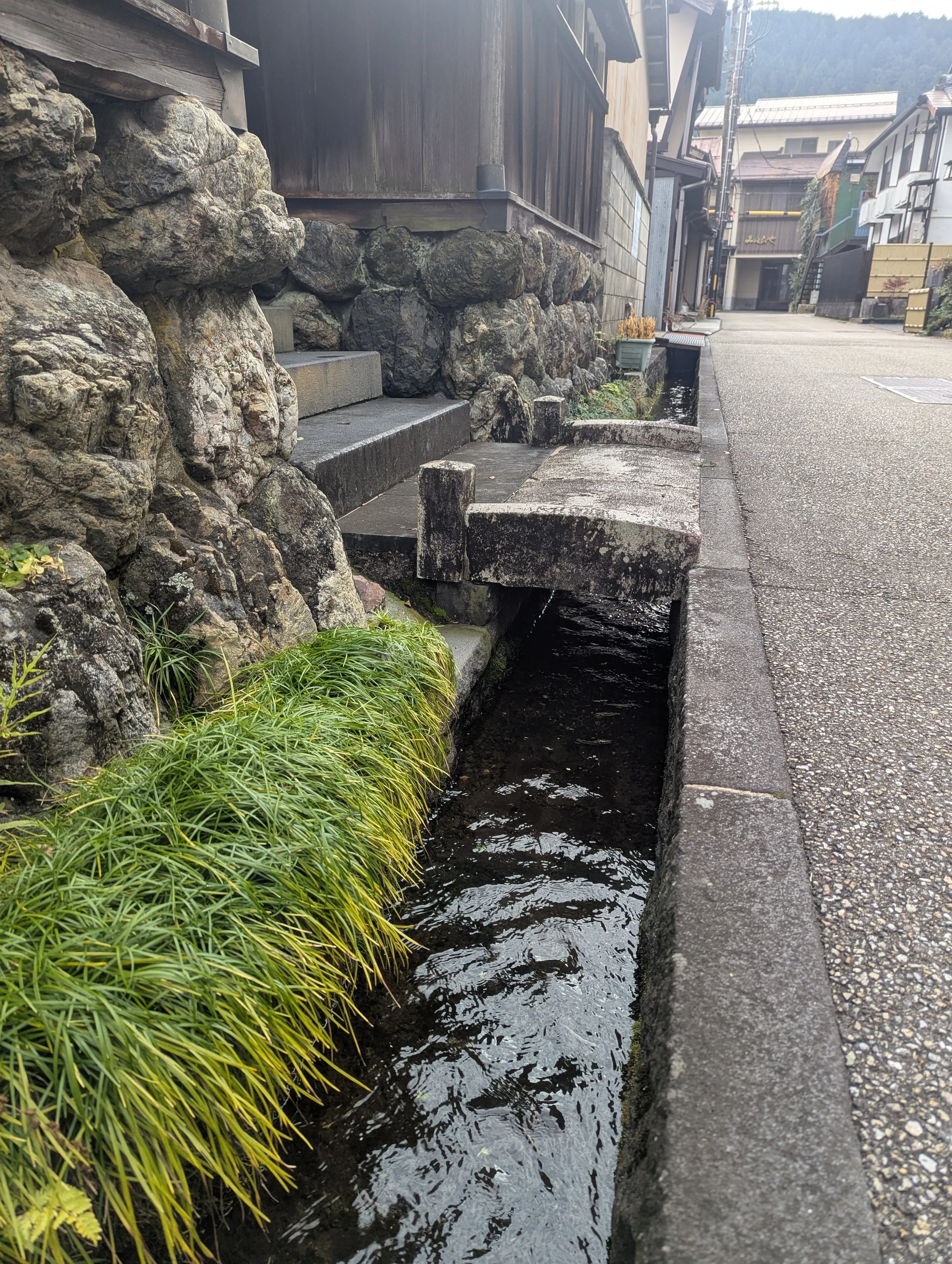
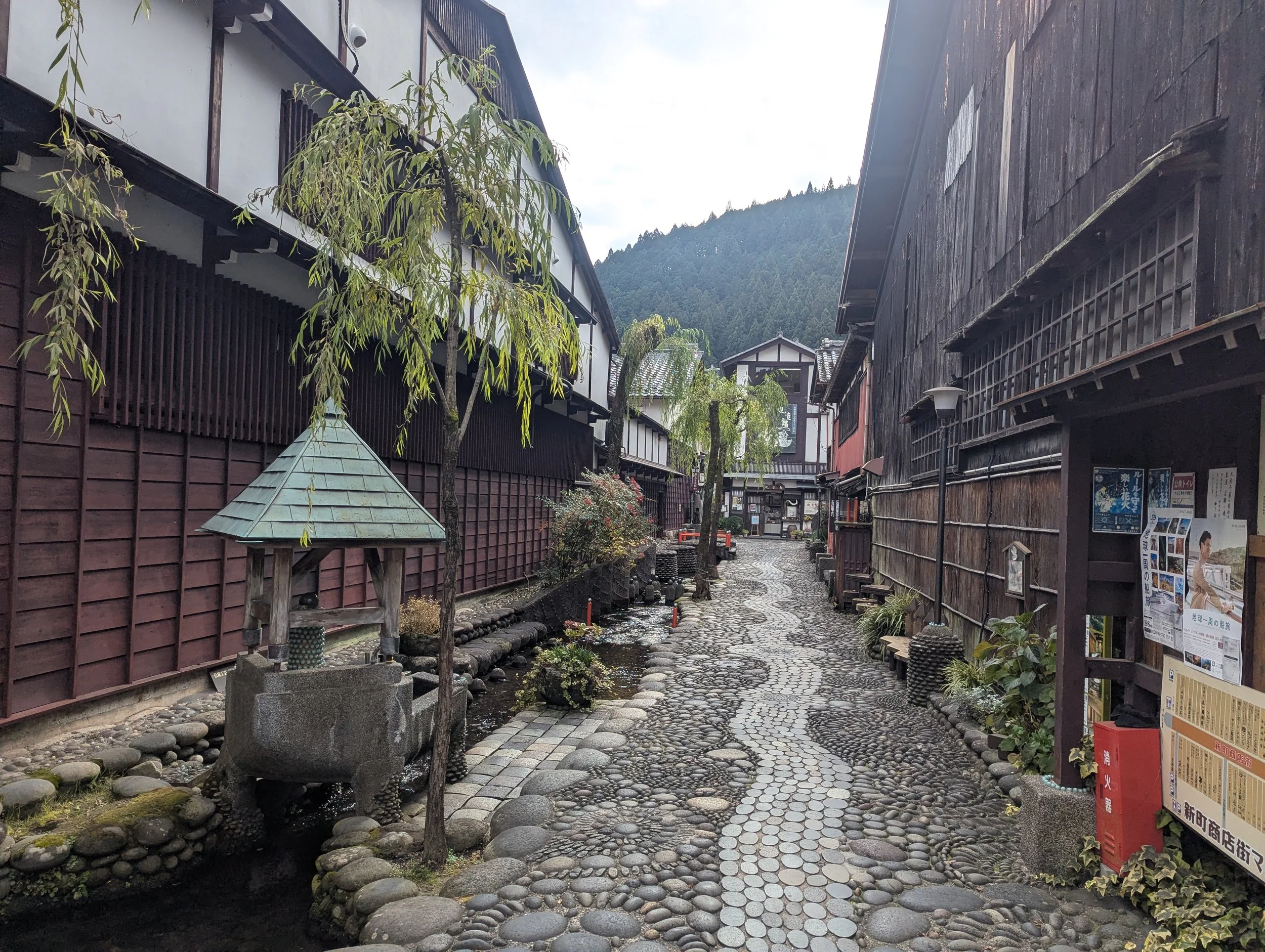
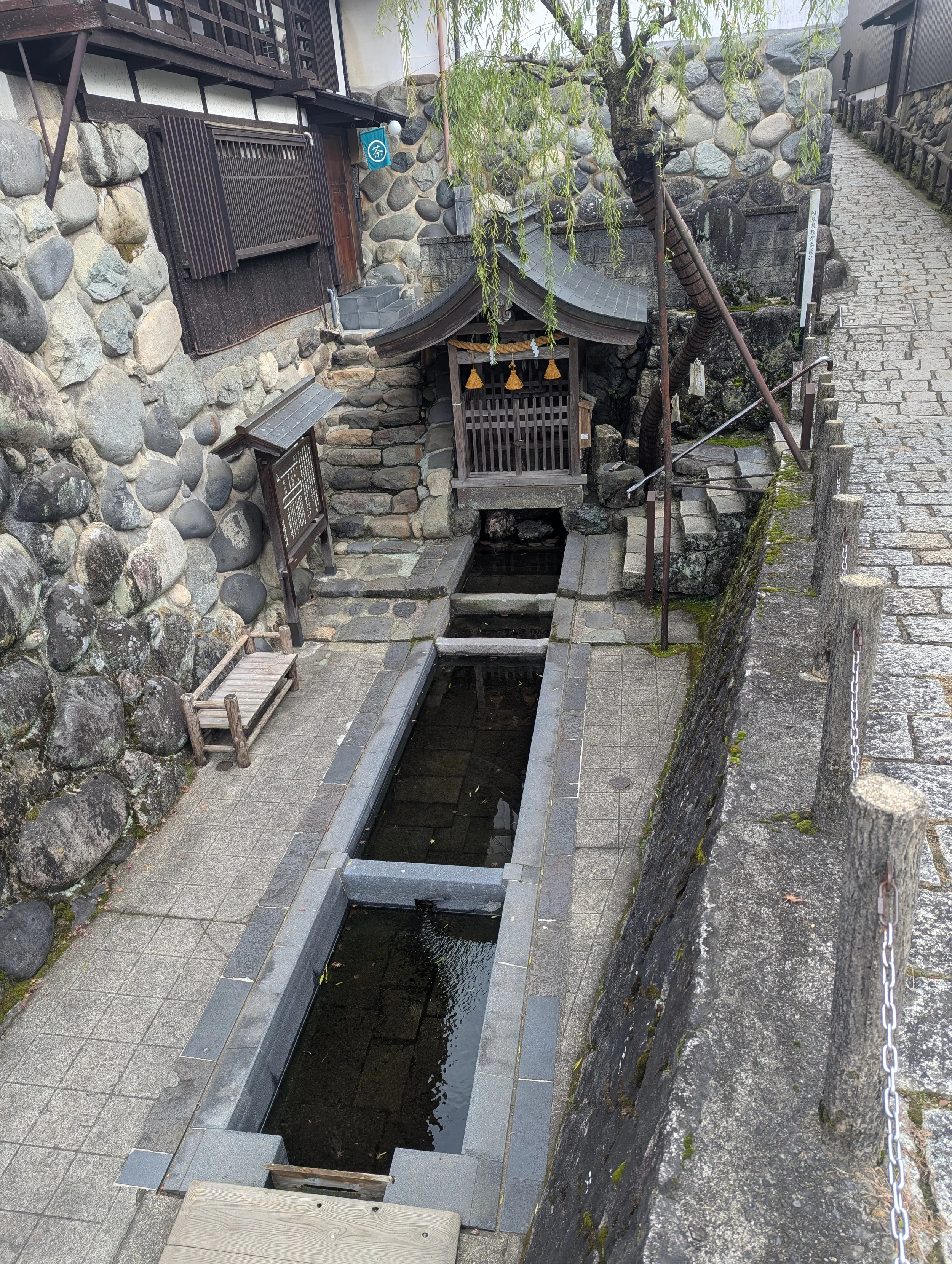
Our last stop was Igawa Lane. There is a small canal filled with koi. The water is said to be so clean in Gujo, that even the water in the gutters and sewers have koi.
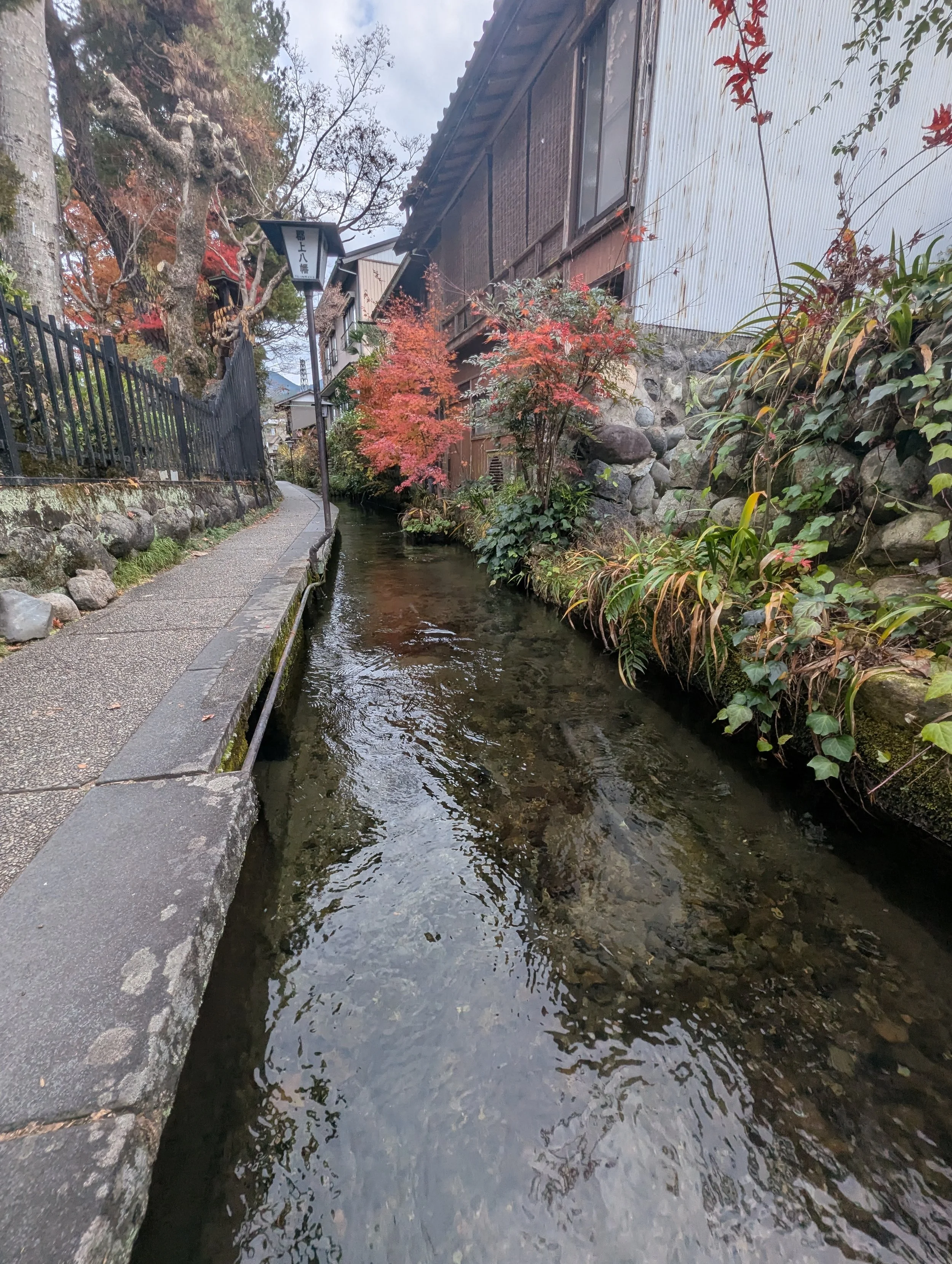
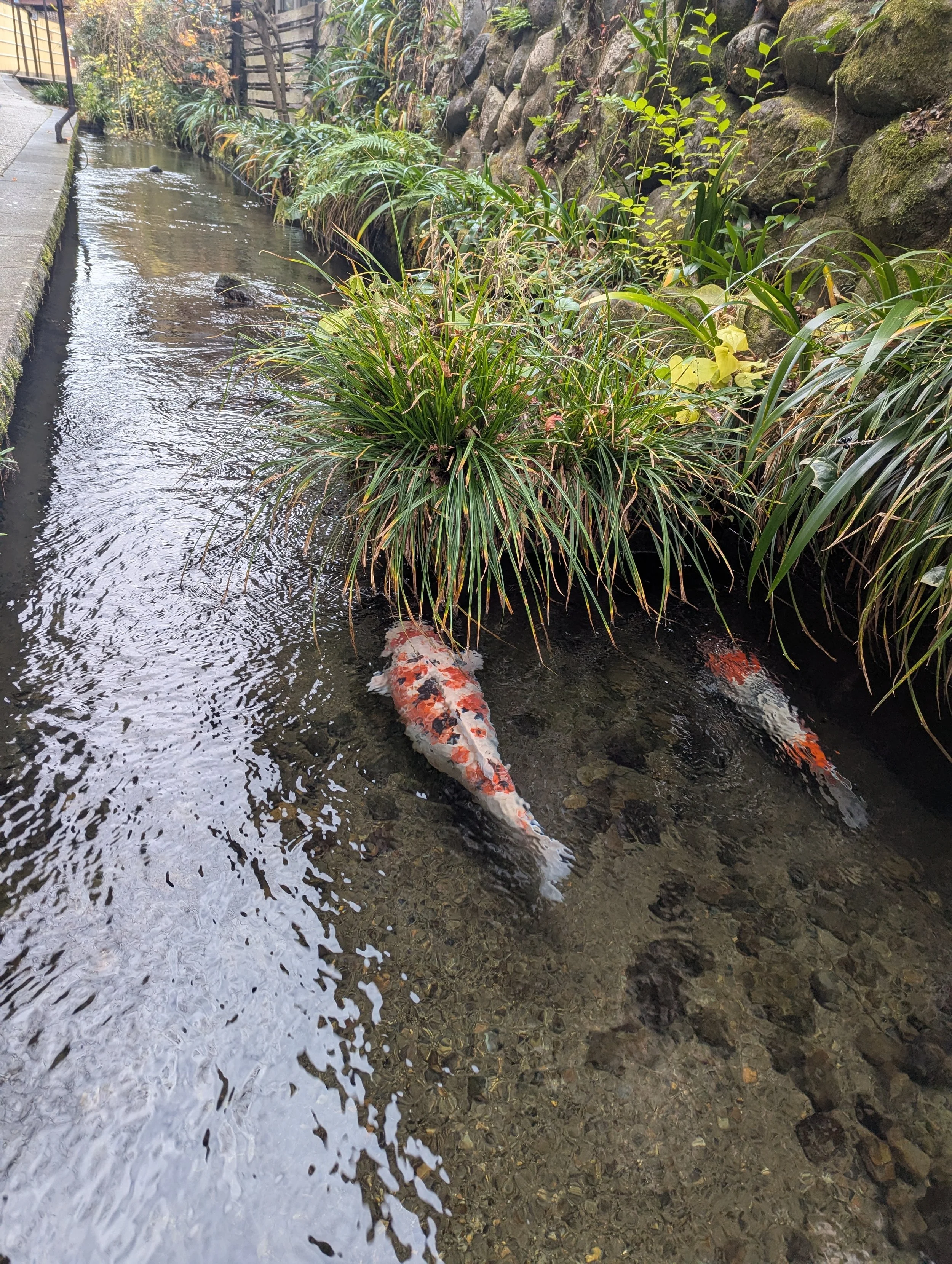
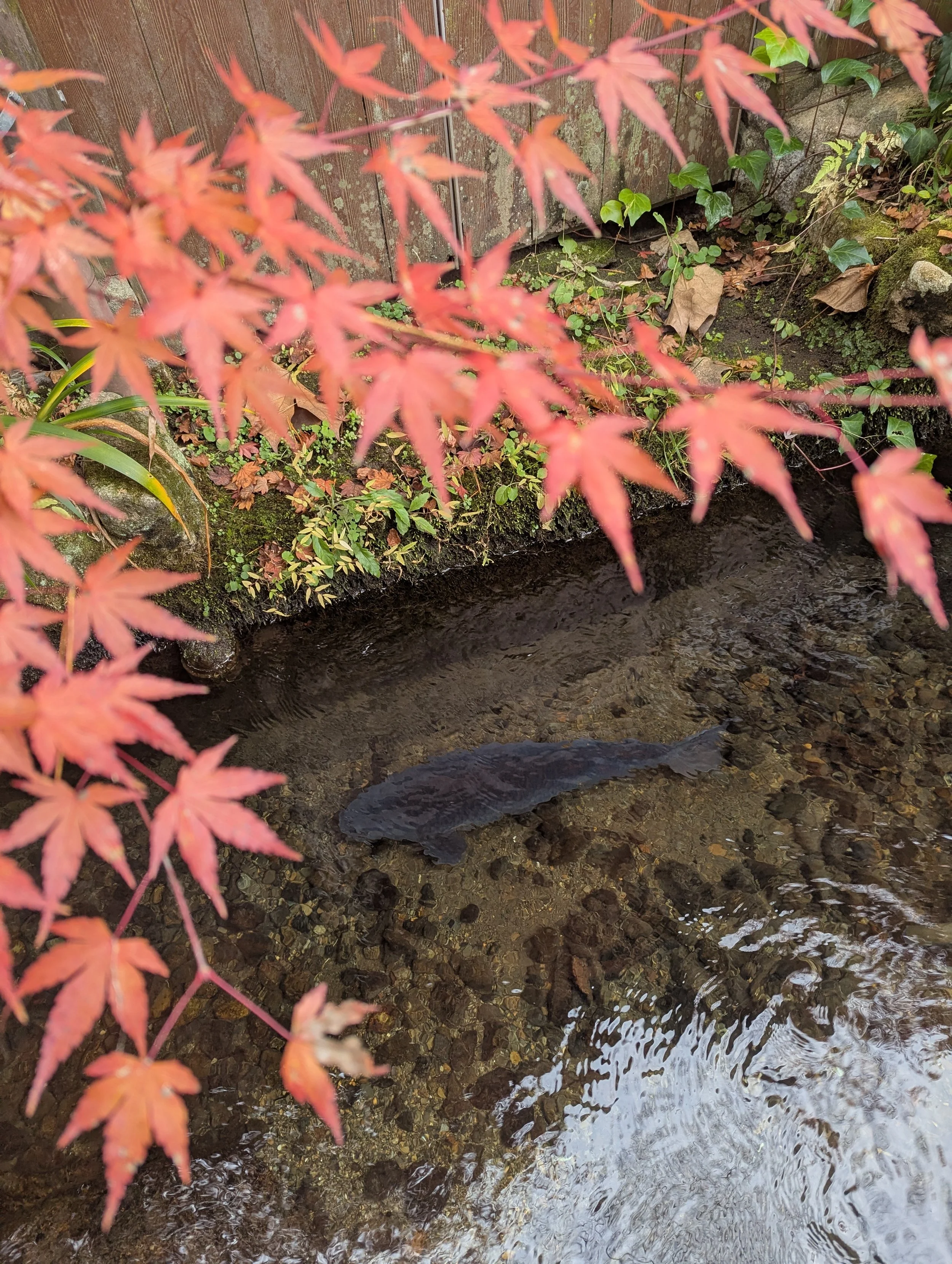
We knew Gujo was small and we wouldn't need a lot of time. We were torn between having lunch in Gujo or in Omi (yakiniku) and taking into consideration the break between meals. We opted to try to make it to Omi Hachiman for lunch, as my sister-in-law and brother-in-law said omi beef was the best wagyu they’ve ever had. We also needed to return the rental car in Kyoto by 8pm, and wanted to explore Omi Hachiman in daylight -The sun sets at 4:30 at the end of November.
We left Igawa Lane at 11. The town was so small that we had made our way through town and back on the hill to our car in less than fifteen minutes. There were more people out at this time, but still not very many. It was a gorgeous 50 degree day.
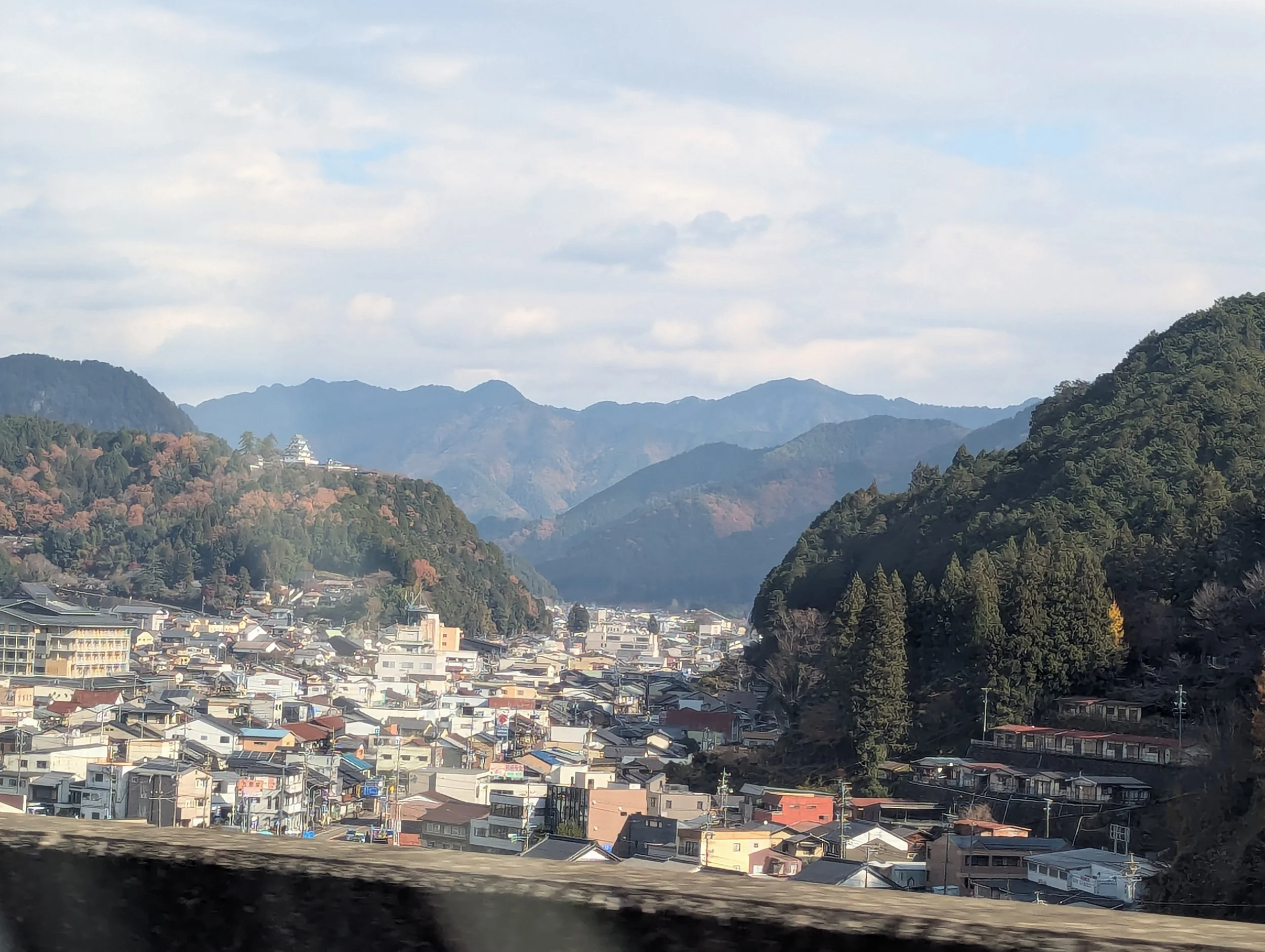
We were estimated to get to Omi Hachiman at 13:22, which was cutting it a little close before the mid-day break.
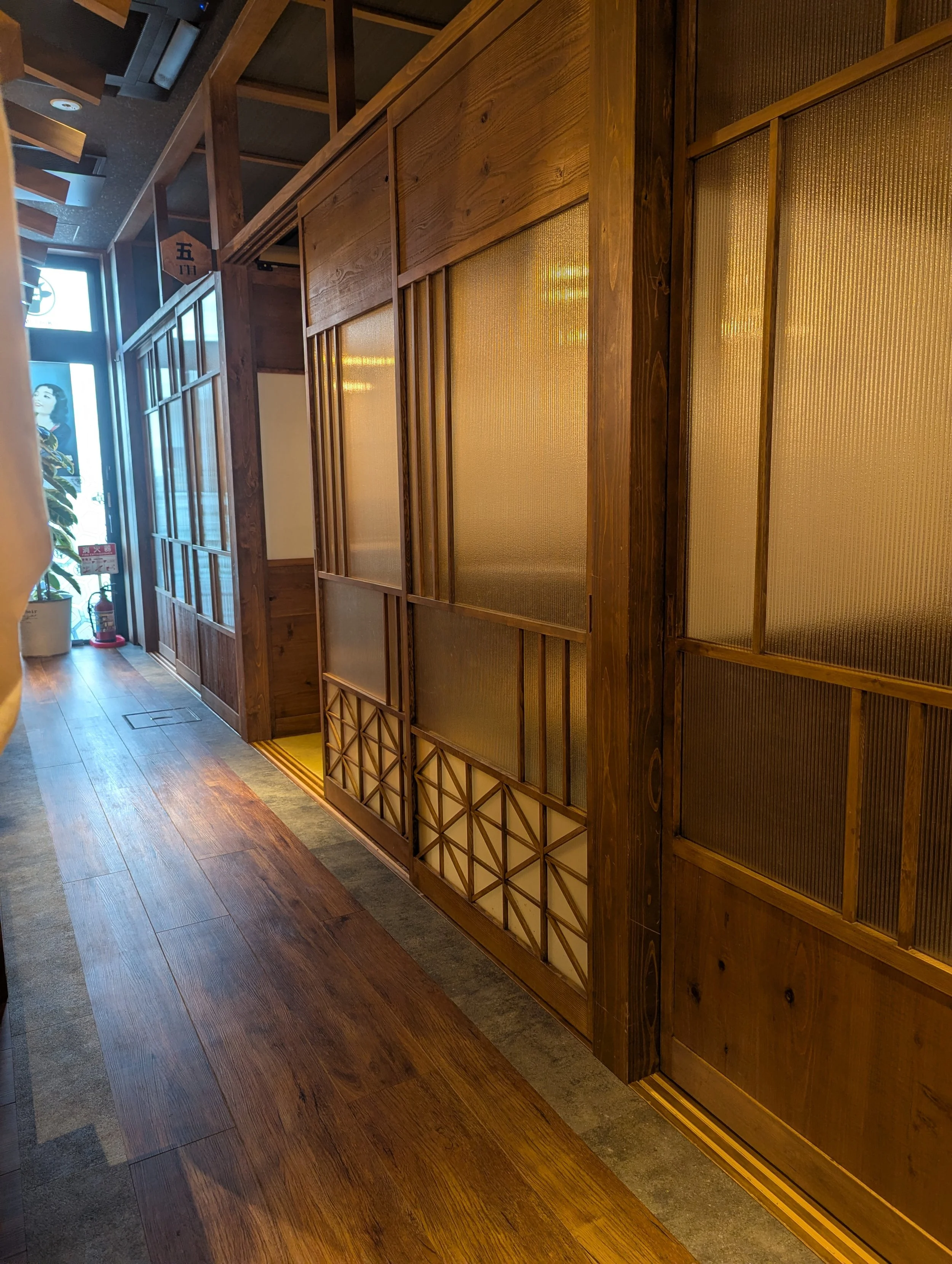
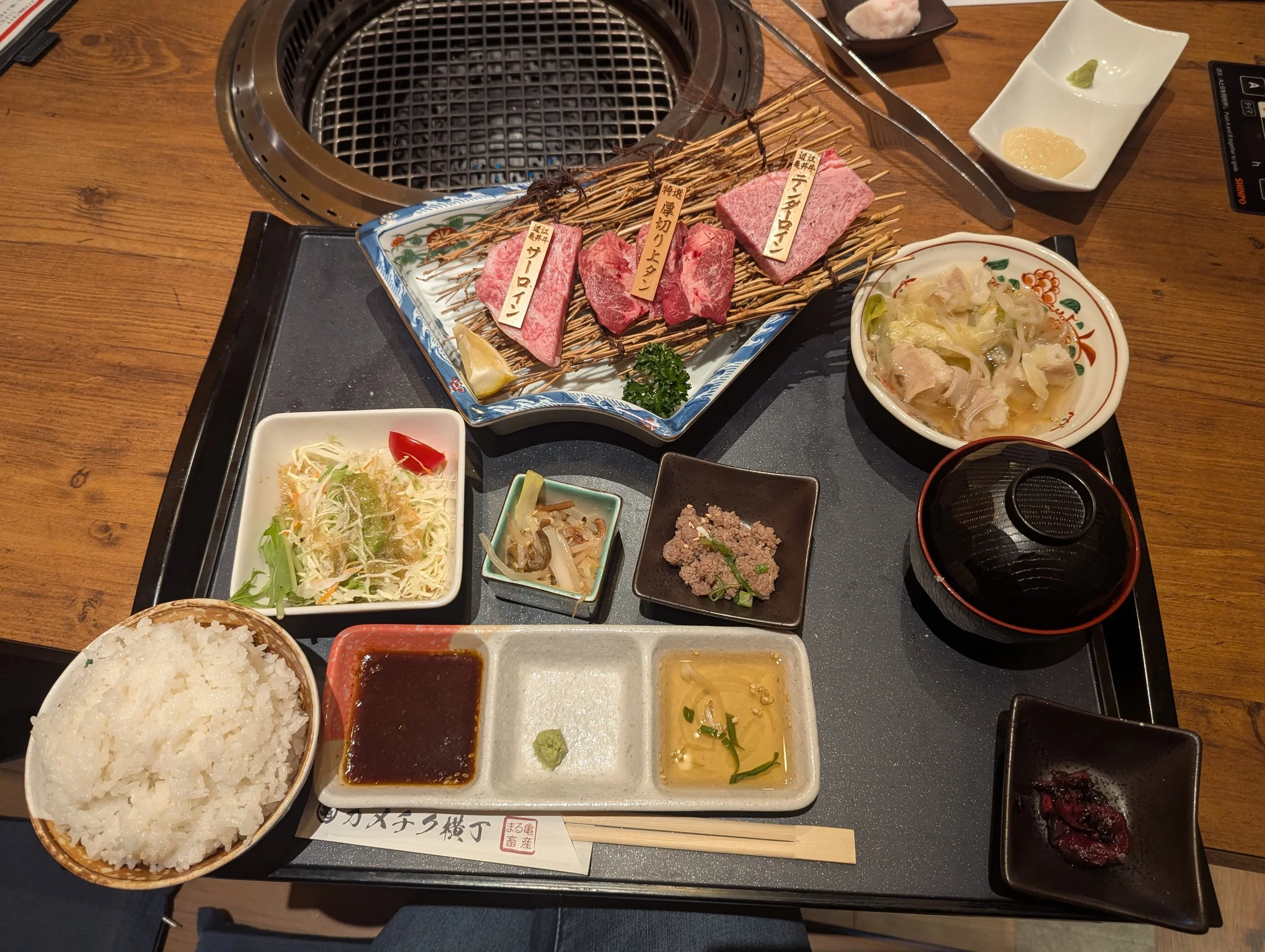
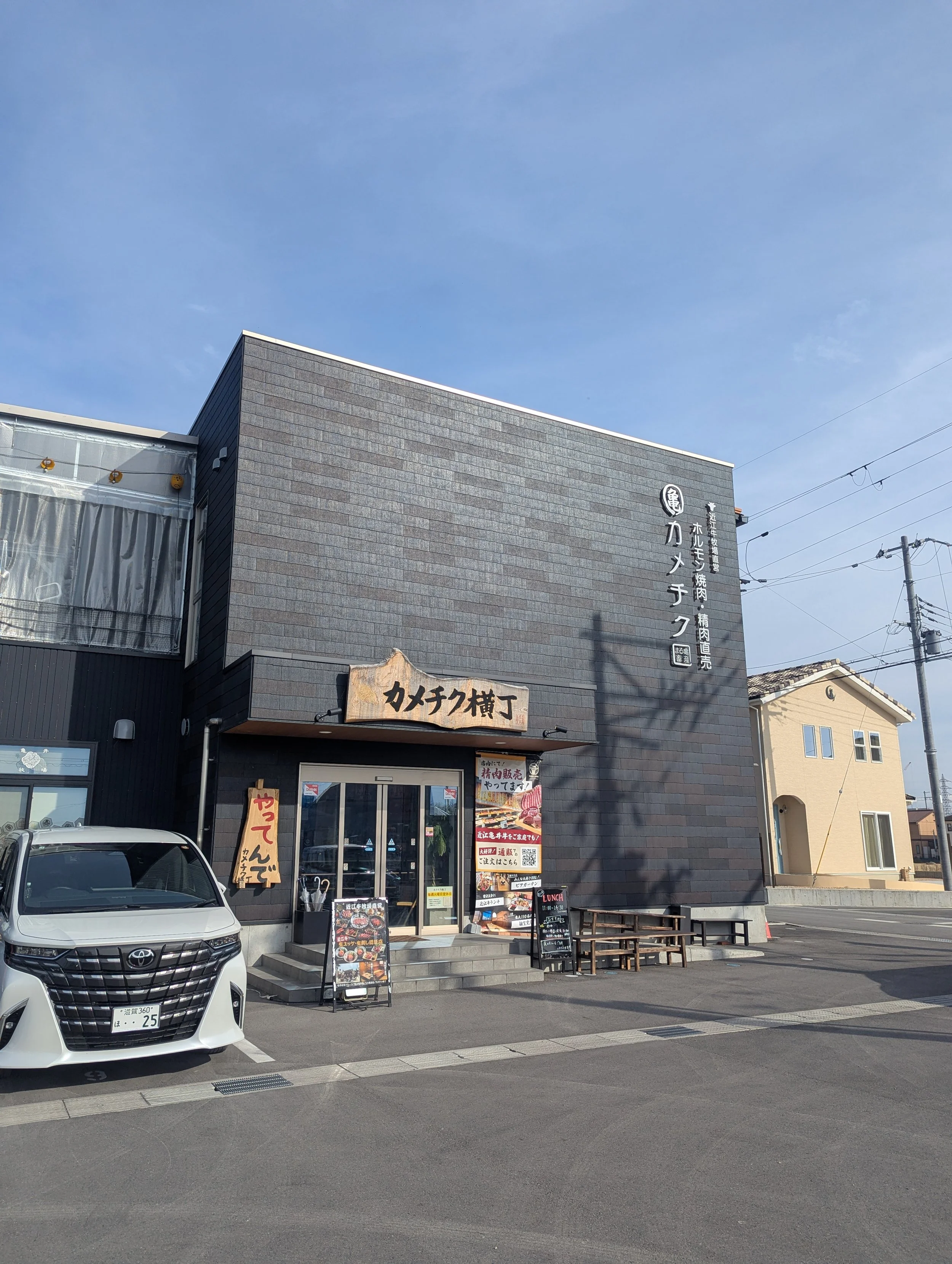
カメチク横丁 Kamechiku yakiniku restaurant closes at 2:30. The staff did not speak English. The front of the restaurant had shoe boxes to store your shoes. Orders are placed on an iPad with minimal English, even though there's an English setting. We don't know what we ordered. My lunch set turned out to have beef tongue, tenderloin and sirloin. The only thing that could be translated on Kevin's is rib roast. The grated garlic was really good and completed each bite. We finished lunch at 2:20, just as they were closing.
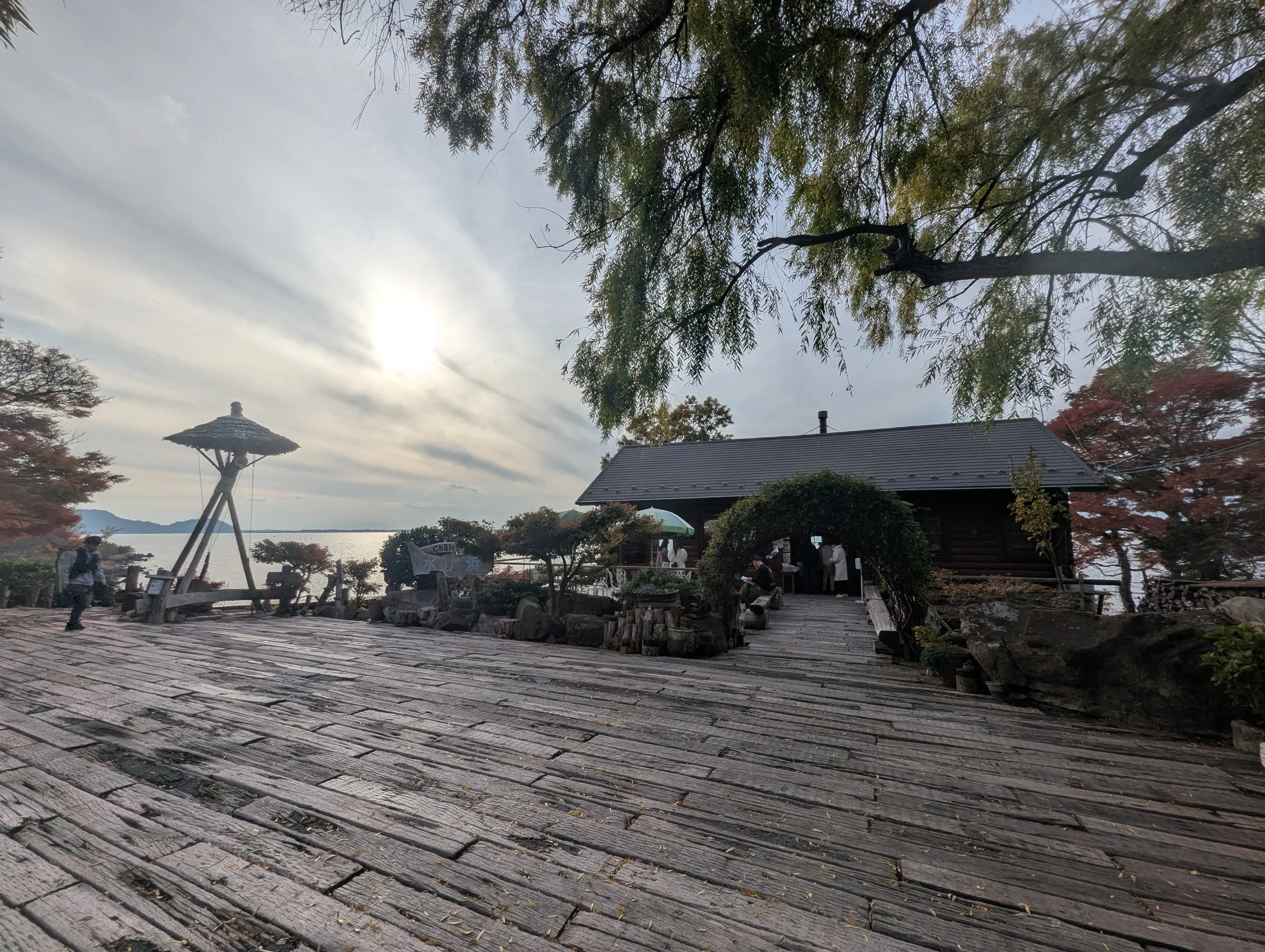
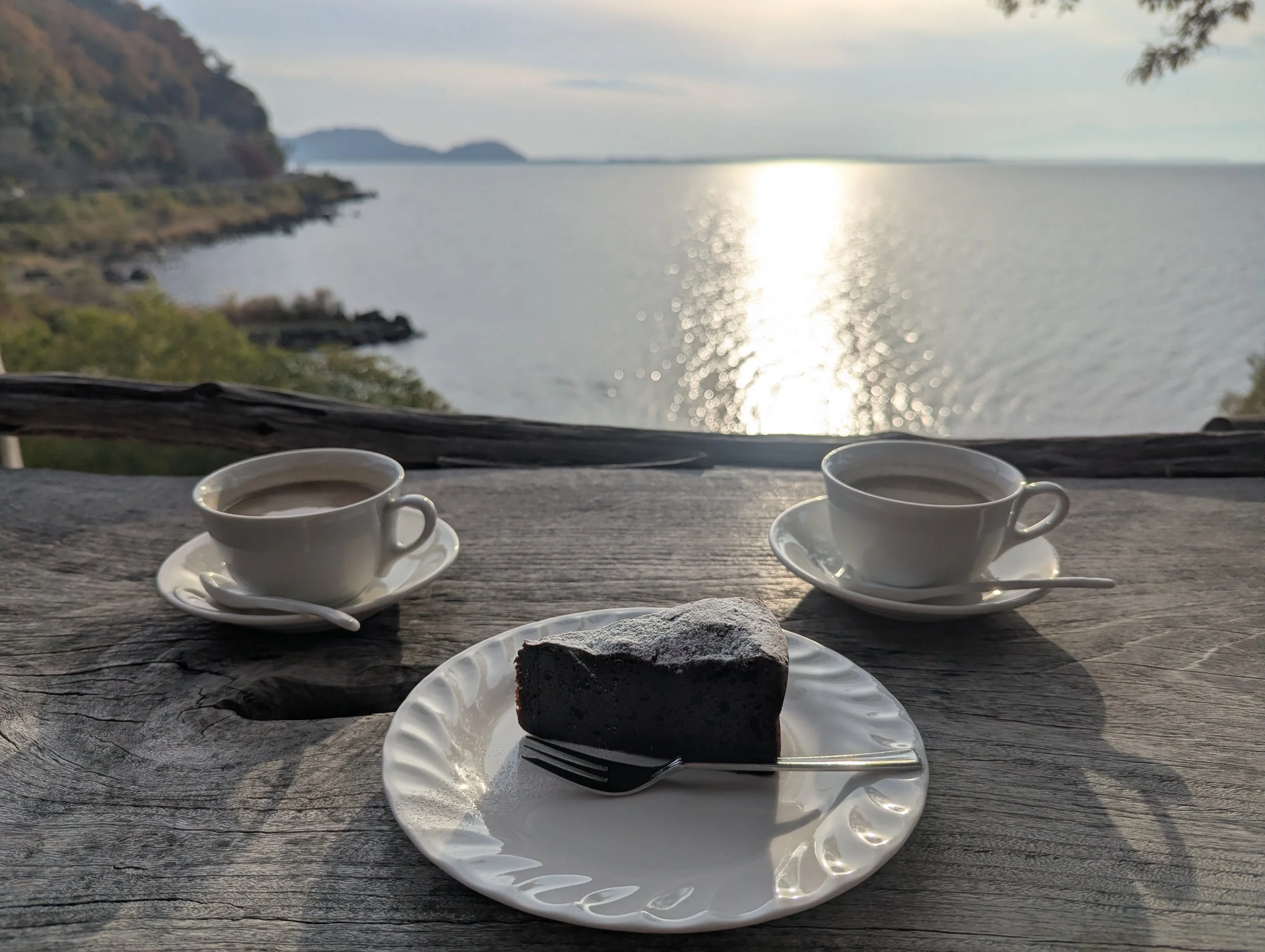
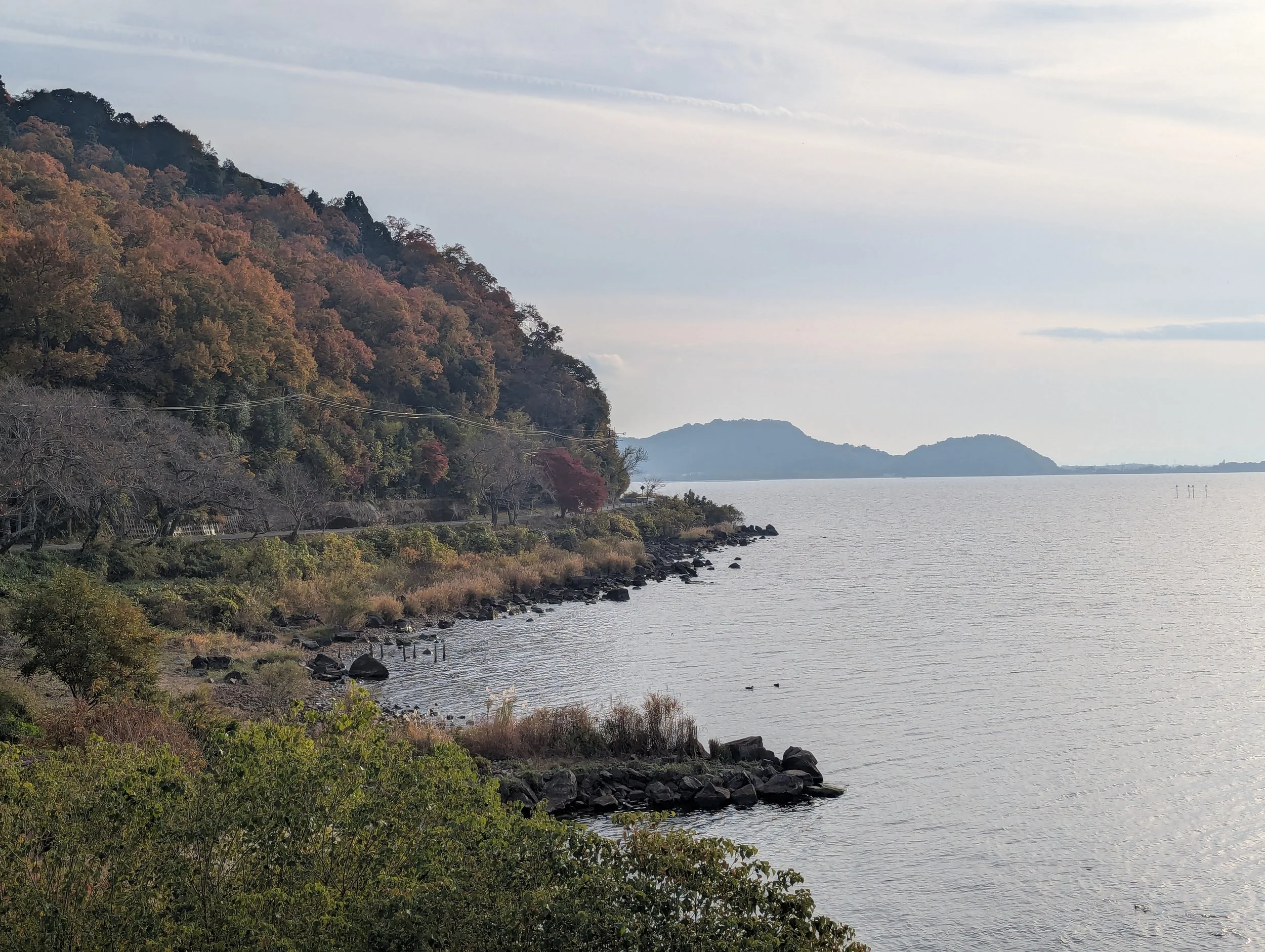
Of the things we wanted to do in Omi, we chose to go to Chalet Mizugahama first, even though we had just eaten, because it closes 16:30, before the other activities we hoped to do. The chalet was ten minutes away from the yakiniku restaurant, located right on Lake Biwa. There are plenty of parking spots, and driving is really the only way to get there, as it is quite far from the main road and accessible by the winding road along the lake. There was a bit of a wait to be seated even though seats were available. Again, there were no English-speaking staff, but the menu had some English and it was easy to order. We were seated at the counter overlooking the lake. It had a relaxing peaceful vibe. We each got almond cafe au lait that was delicious, tasted like a cookie. It is to this day one of the best coffees I have ever had, I still think about it. We shared a slice of gateau chocolat. It was really one of the best, most relaxing ways to spend an afternoon. The lake was stunning. We could hear the famous ducks on the beach and could see citrus trees down below us. It was incredibly peaceful.
The other activity we had planned for Omi was to visit La Collina, another ten minutes from the chalet. La Collina is a collection of confectionaries, but is built in a hill, kind of like a hobbit home, to reflect the relationship between us and nature, and the importance of sustainability. The most well-known confectionary is a baumkuchen. We had had the opportunity to have a first taste of baumkuchen at the little cafe in Shirakawago. We were hoping to get a baumkuchen to bring back for each of our Christmas celebrations, but they are so fresh and must not be made with preservatives; the latest expiration date was 12/9, merely at the end of the week. We opted for a mini fresh baumkuchen and a chocolate one for ourselves. In one of the buildings was a large window looking into the baukuchen factory. It was really cool to see how they are made. The cakes are on rotating spits as they bake. Humans man them, adding batter and ensuring the layers are even and the cakes are the proper diameter. We observed as they brought out measuring devices to be sure they are uniform.
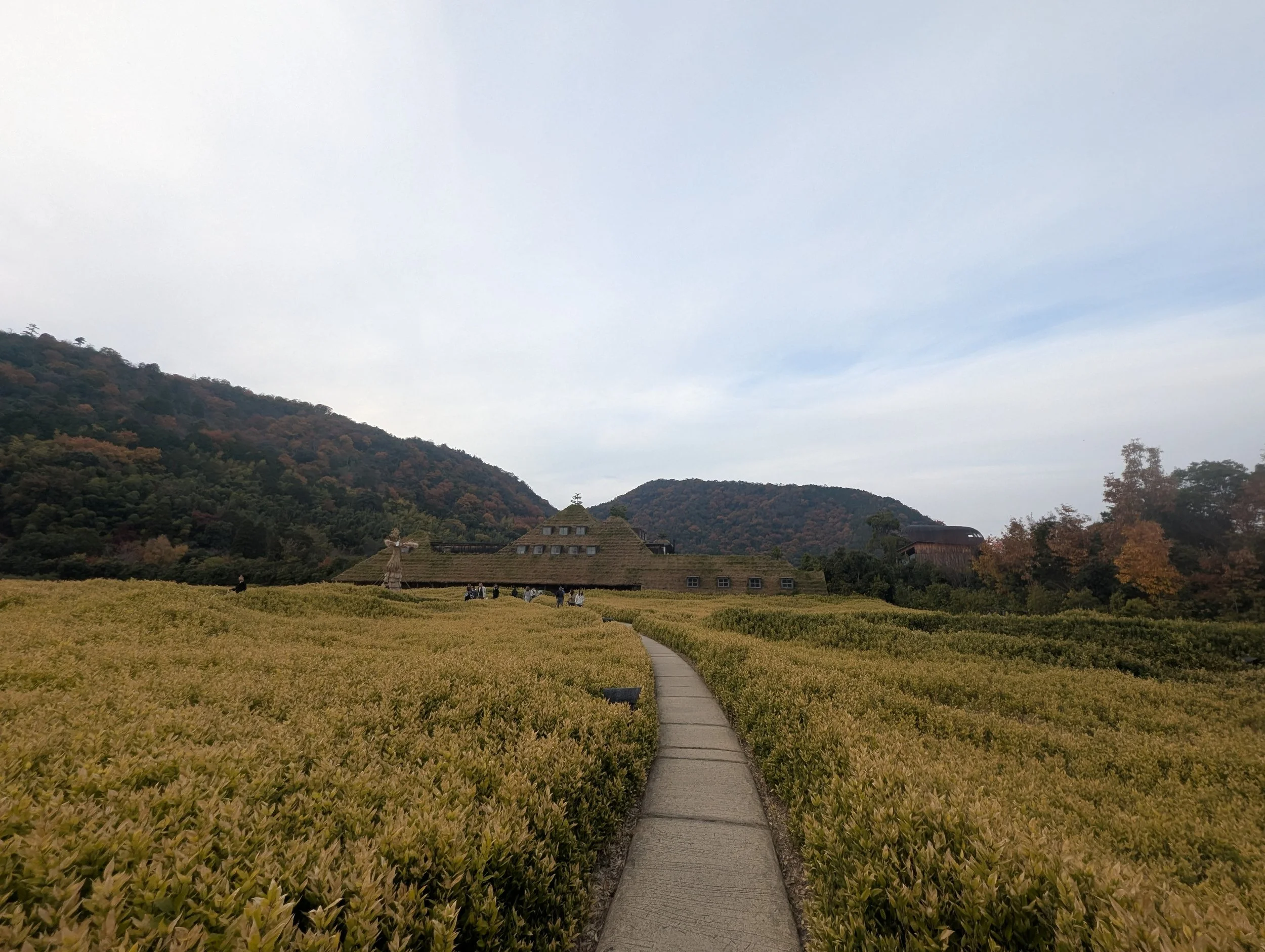
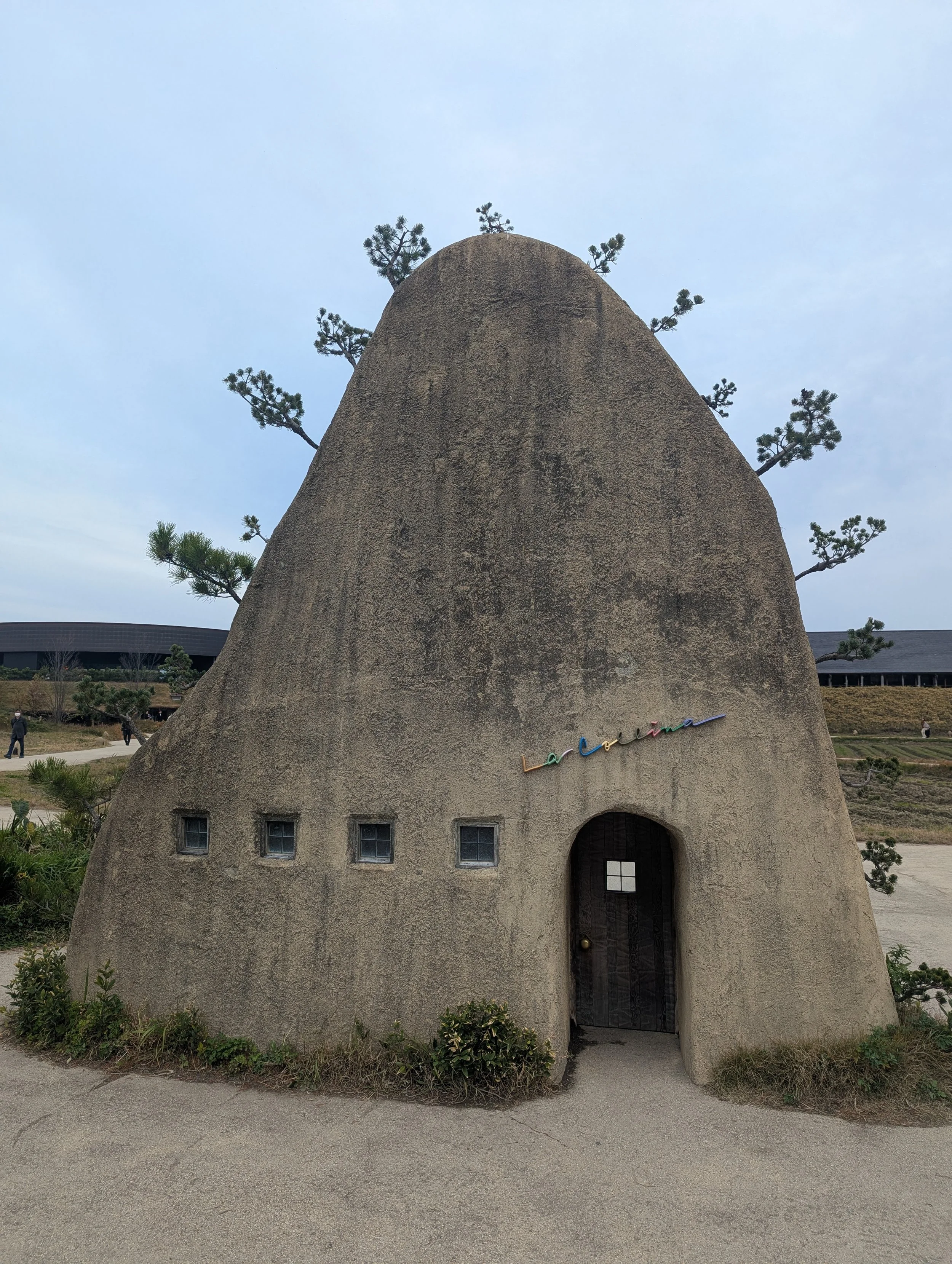
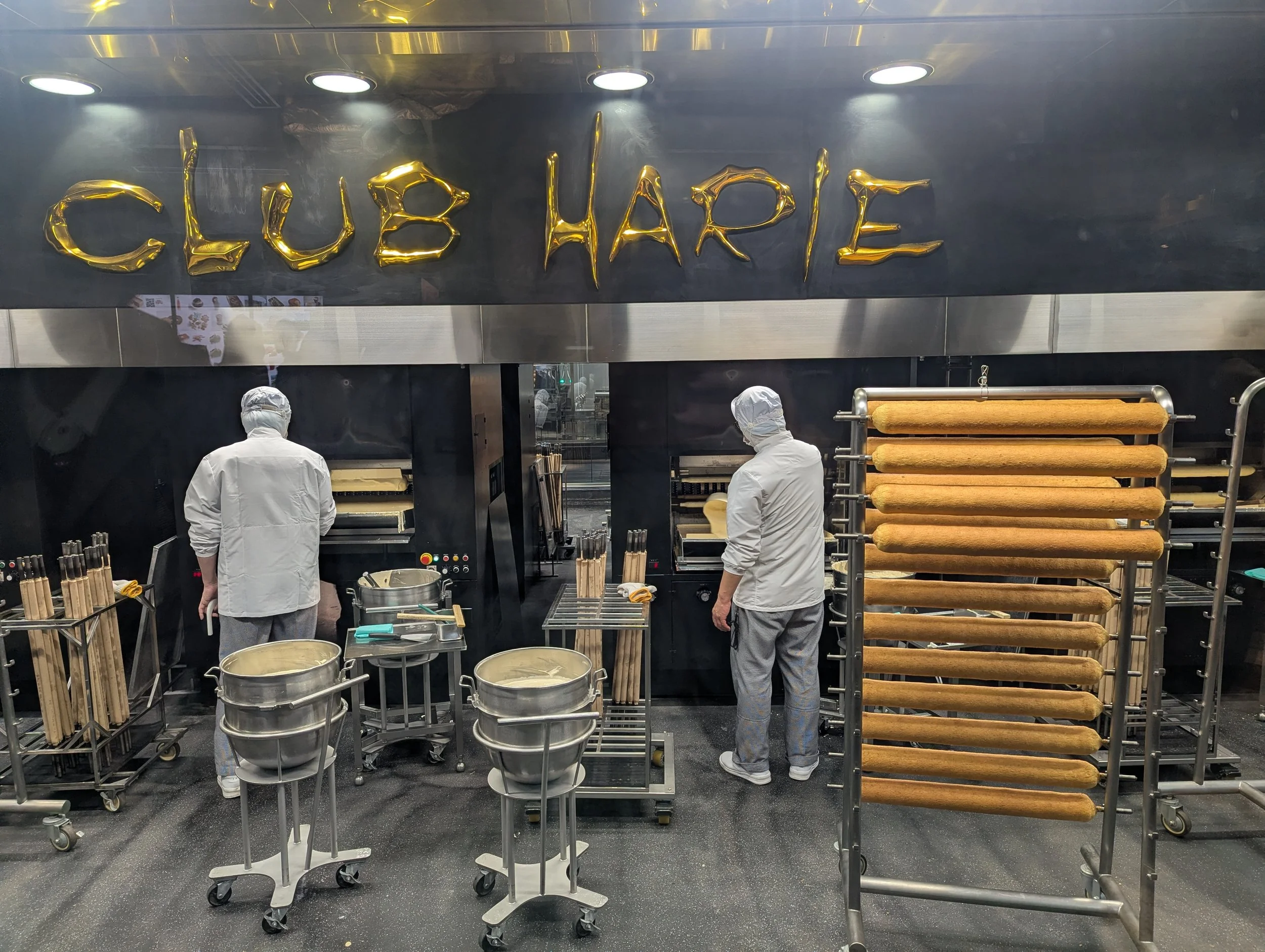
La Collina was a cool place to experience, but we didn’t feel we needed a lot of time there. We left at 16:11 for Kyoto to drop off car, estimated to arrive in Kyoto at 17:21. Omihachiman is very industrial and filled with farmland. We expected it to be more of a city, or a small town. It wasn't until we were driving to Kyoto that we drove through the city which is, in fact, more city like.
It was 63 degrees in Omi, such a contrast from the 31 degrees we started out with in Takayama that same morning.
We got to the car rental return at 17:30, and we were in our hotel room half an hour later.
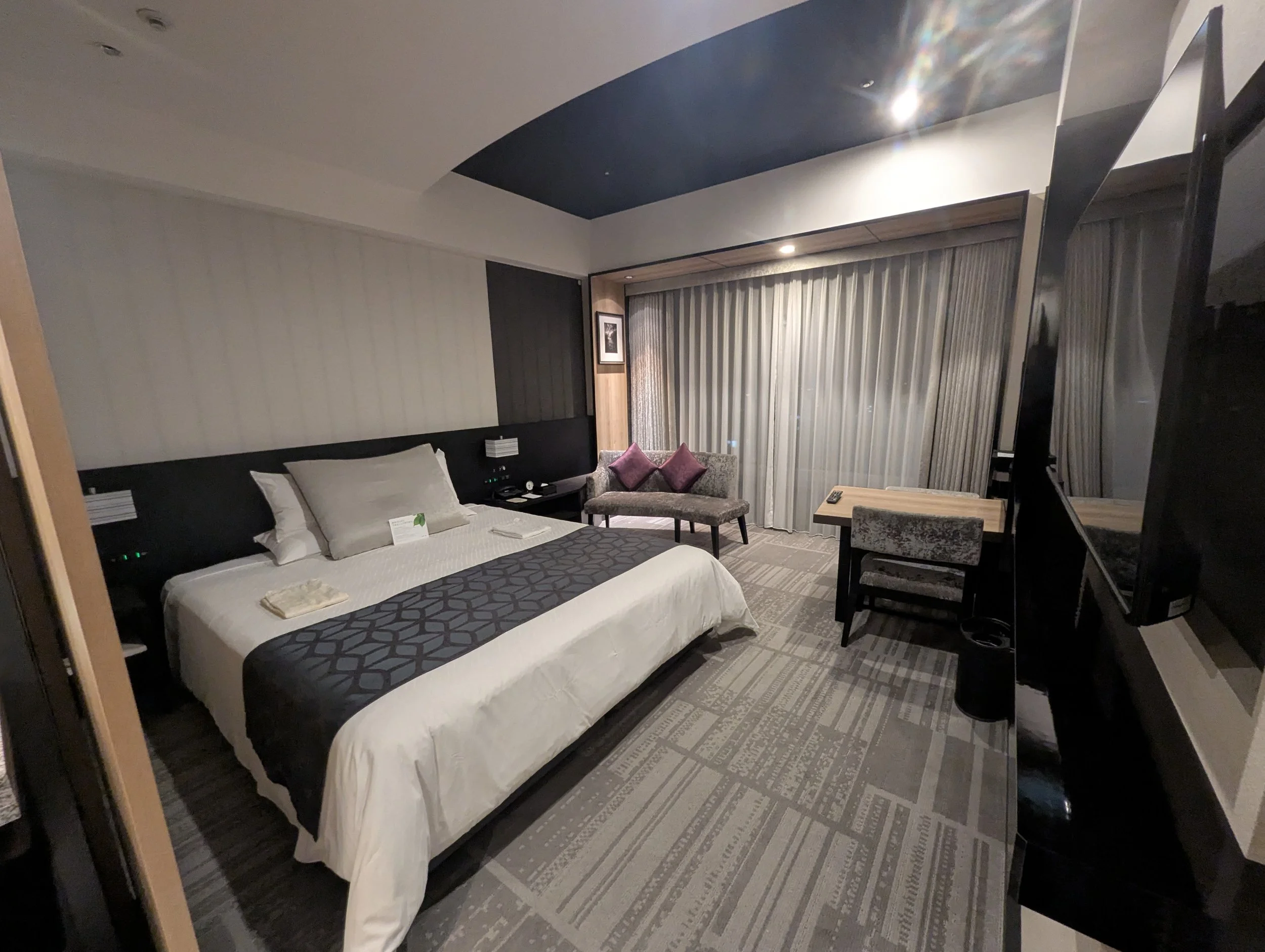
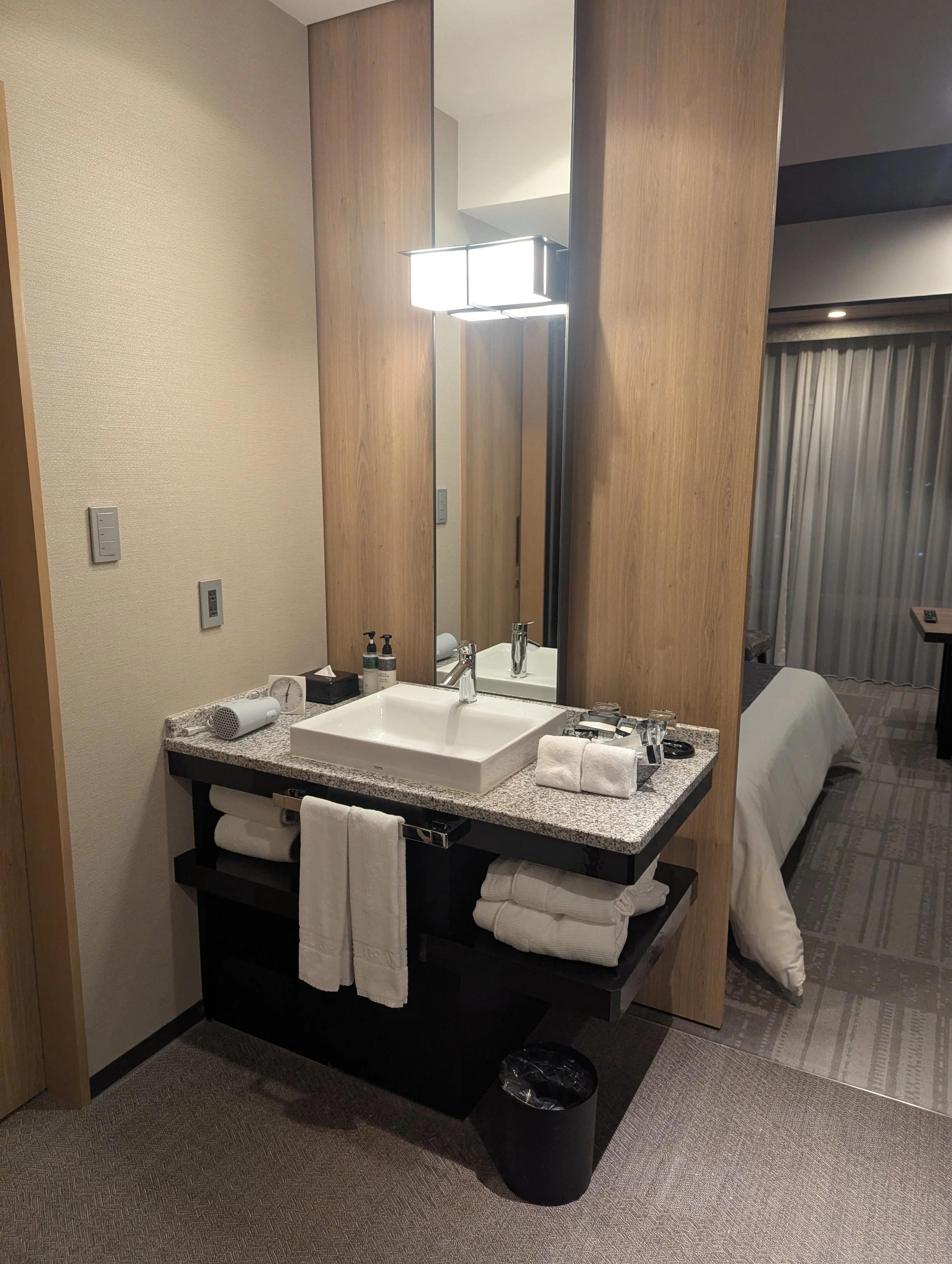
Kyoto Granvia has become our homebase in Kyoto. Last time, when we visited in 2023, we had taken the North Elevators and our room looked out firectly to the Kyoto Tower. This time, we were in Kyoto for just one night this stay, and we took the South Elevator. Our room was at the very end of the hall, facing east, overlooking the tracks and the mountains.
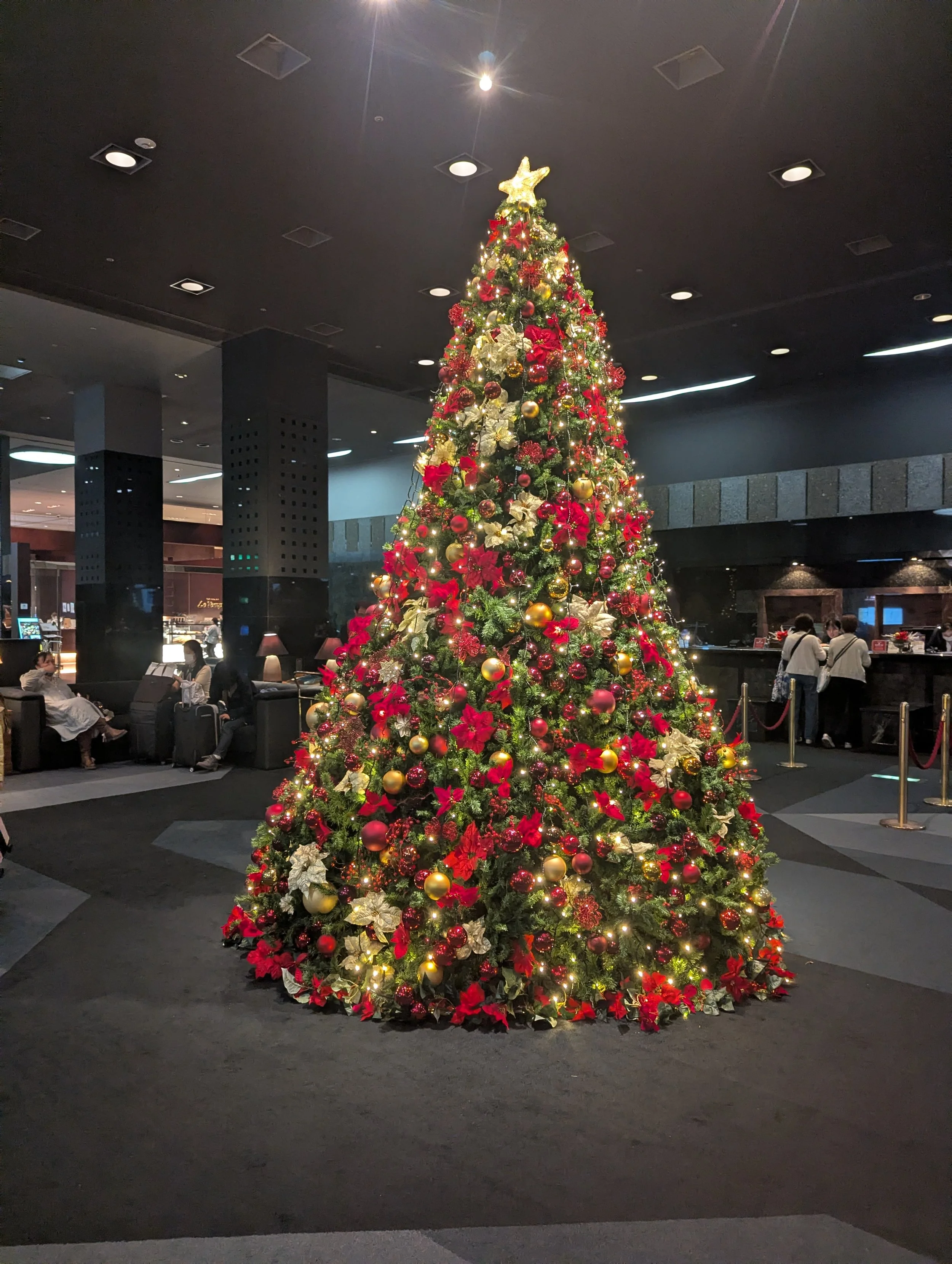
When we were at JINS in Tokyo, Kevin was considering getting a pair of glasses that have a flipping lens of sunglasses. But he didn’t get them and regretted it. So, we went to JINS again, this time in Kyoto Station, nestled among the many shops on the basement level. Since he already knew what he wanted, the visit was quick. He had placed his order at 18:45 and they would be ready at 19:30. We got ourselves dinner while we waited.
There are plenty of places to eat in Kyoto Station. We are more familiar with the upper floors. We hadn’t ever thoroughly spent time on the basement levels of Kyoto Station, if ever, it was just a way to pass from one point to another conveniently. I had udon with sukiyaki beef and Kevin had curry udon with beef, we shared assorted tempura - two shrimp, oyster mushroom, maitake, eggplant - I was disappointed with the tempura, it was not crispy and had thick batter, and was not very Japanese.
After dinner, we stopped back at JINS shortly after 730 to pick up his glasses. It is so streamlined and so easy to get glasses - and affordable!
On our way back to our hotel room, we stopped at the ticket kiosks to print our train tickets. We book our tickets online and have to have the tickets printed to get through the gate. Now, sometimes you can use a QR code, but we like to have physical tickets. In order to retrieve your tickets, you need to insert the credit card you booked with - this was an issue for one of our reservations because we didn’t have the physical credit card with us.
We were only in Kyoto for one night, as a resting place before we head out again. But, we would be returning back to Kyoto and Granvia in a couple days. When we checked in, we arranged for Granvia to hold our luggage. We reorganized and repacked our bags, so that we could take only what we needed on our short adventure.
We requested extra blankets because the comforter felt thin. We were in bed at 9, excited for the day ahead - the town we were most looking forward to!
Day 6: Tuesday, December 2nd - Himeji and Kinosaki Onsen
I woke at 6AM, a few min before my alarm. We had pre-booked our train, which was scheduled for 8:01. We’d depart Kyoto for Himeji, spend the day there, then continue on to Kinosaki Onsen. A few days later, we’d return to Kyoto for the remainder of the trip. The Granvia is attached to the station and extremely convenient, which is why it is our go-to hotel when we are in Kyoto. We arranged for the hotel to hold our luggage until we returned, and they were happy to do so, and at no charge! We checked out of the hotel at 7:40 and stopped in to 7-Eleven by the Central Exit of Kyoto Station, which was just down the stairs from Granvia. We had some time to kill, so we walked around some of the shops in the station and found Royce chocolate (very popular in Sapporo) and Kyoto Veneto matcha chocolate.
It was 50 degrees that morning, quite pleasant out, perhaps just a tad chilly. We were on the platform at 7:30 - we usually try to arrive early, knowing that the stations can sometimes be a little confusing and trains always run on time. Kyoto is a stop on the Hikari, not the origin station. We were seated in car 6, which had a bathroom (not all cars do).
During the journey, we ate our nanachiki (the 7-Eleven fried chicken), which had since gotten cold since we purchased it an hour prior, and salmon onigiri. Kevin tried a salmon and ikura onigiri, and trout and ikura roll, and spicy nanachiki. The Boss black coffee is good hot (compared to the Boss latte I had the day prior that tasted like diluted sugar water; the Georgia brand was better for latte but still really sweet.)
Our Hikari 533 departed Kyoto at 8:01 and arrived in Himeji at 8:49. The trains tell you which side of the train the doors will open, which is helpful. When you leave the station on the castle side, you are immediately greeted with a view of the castle. It was about a fifteen minute walk straight down the road, you really can’t miss it.
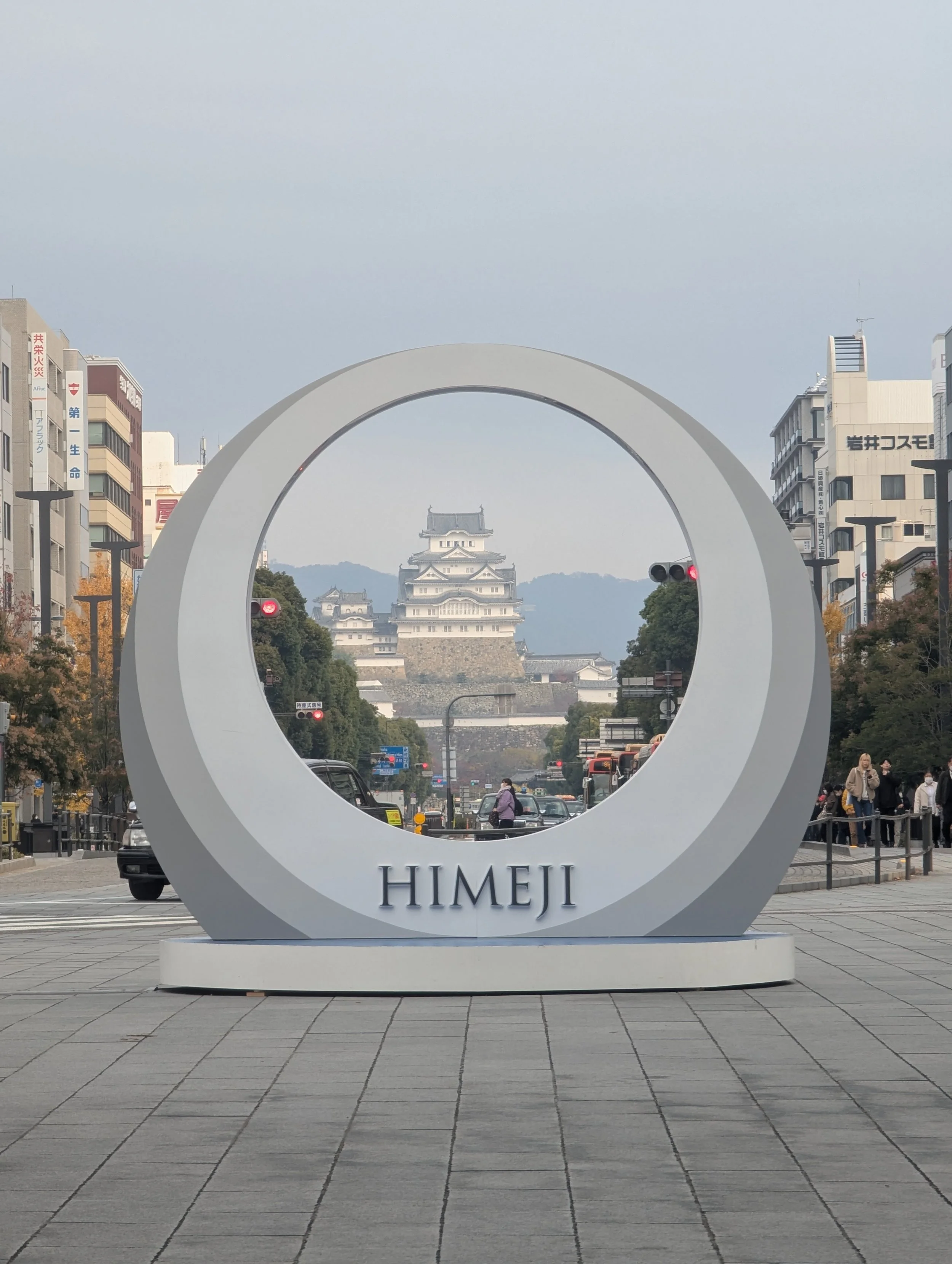
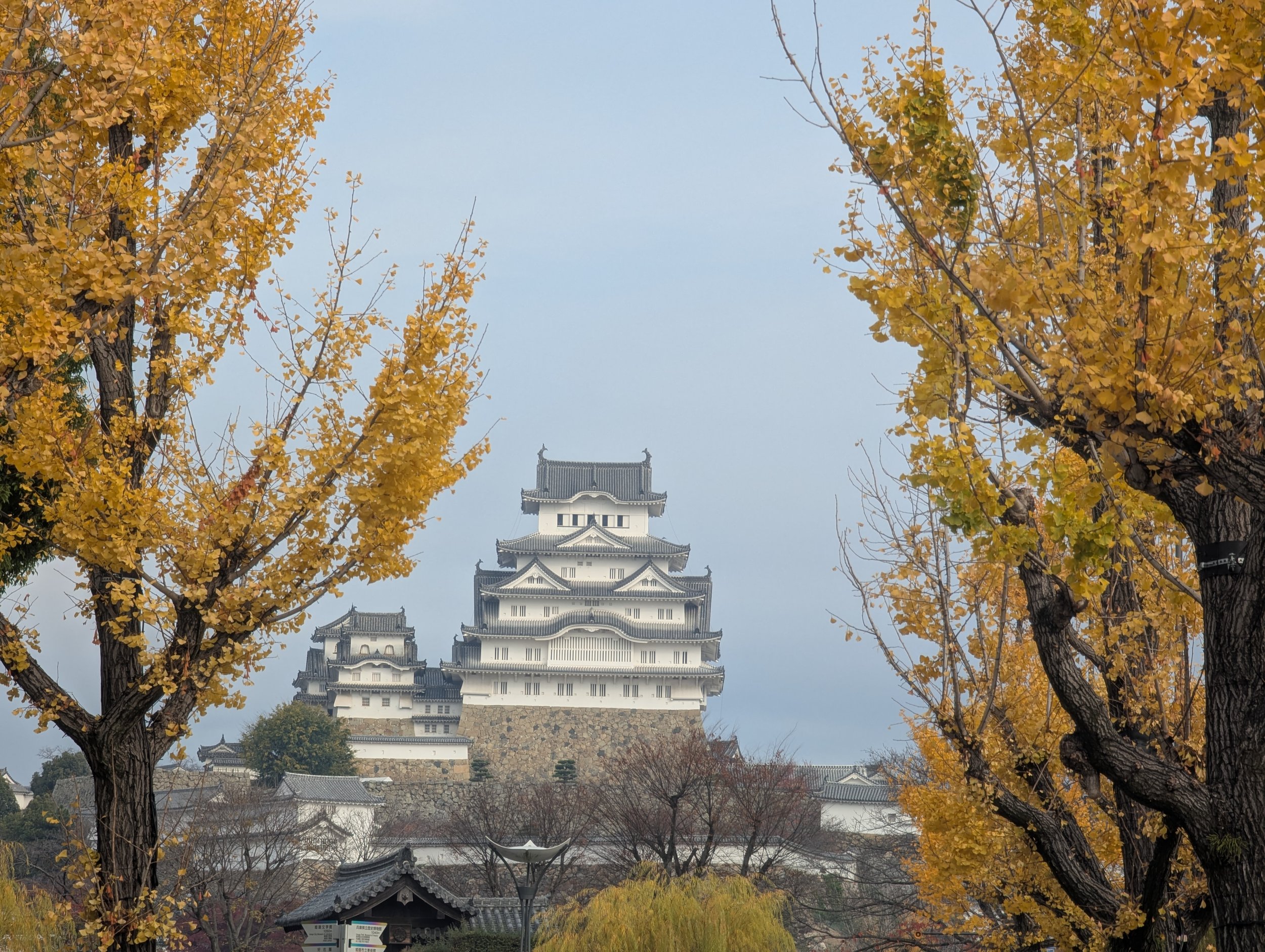
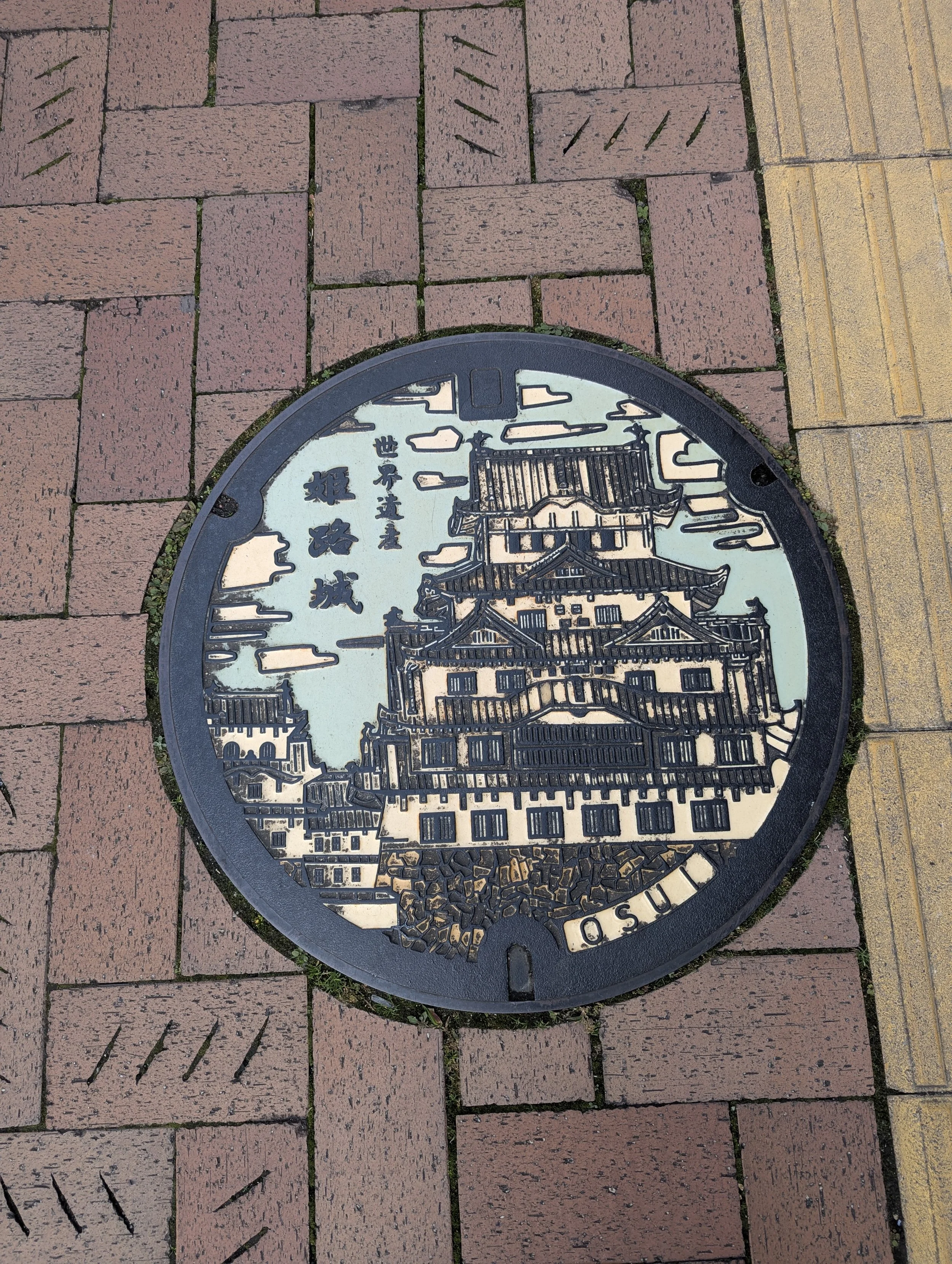
Himeji Castle is one of Japan’s most famous castles, and is known as the White Heron Castle. The lime-based plaster covering the castle not only gives it its magnificent appearance, but is also fire resistant and helps to seal against wet rot. It is one of twelve original castles that have not been destroyed by war, earthquake or fire, though it has been restored. The crown is situated on top of a rock wall; stone masons cut the stones to fit precisely, and the spaces between the stones allow for drainage.
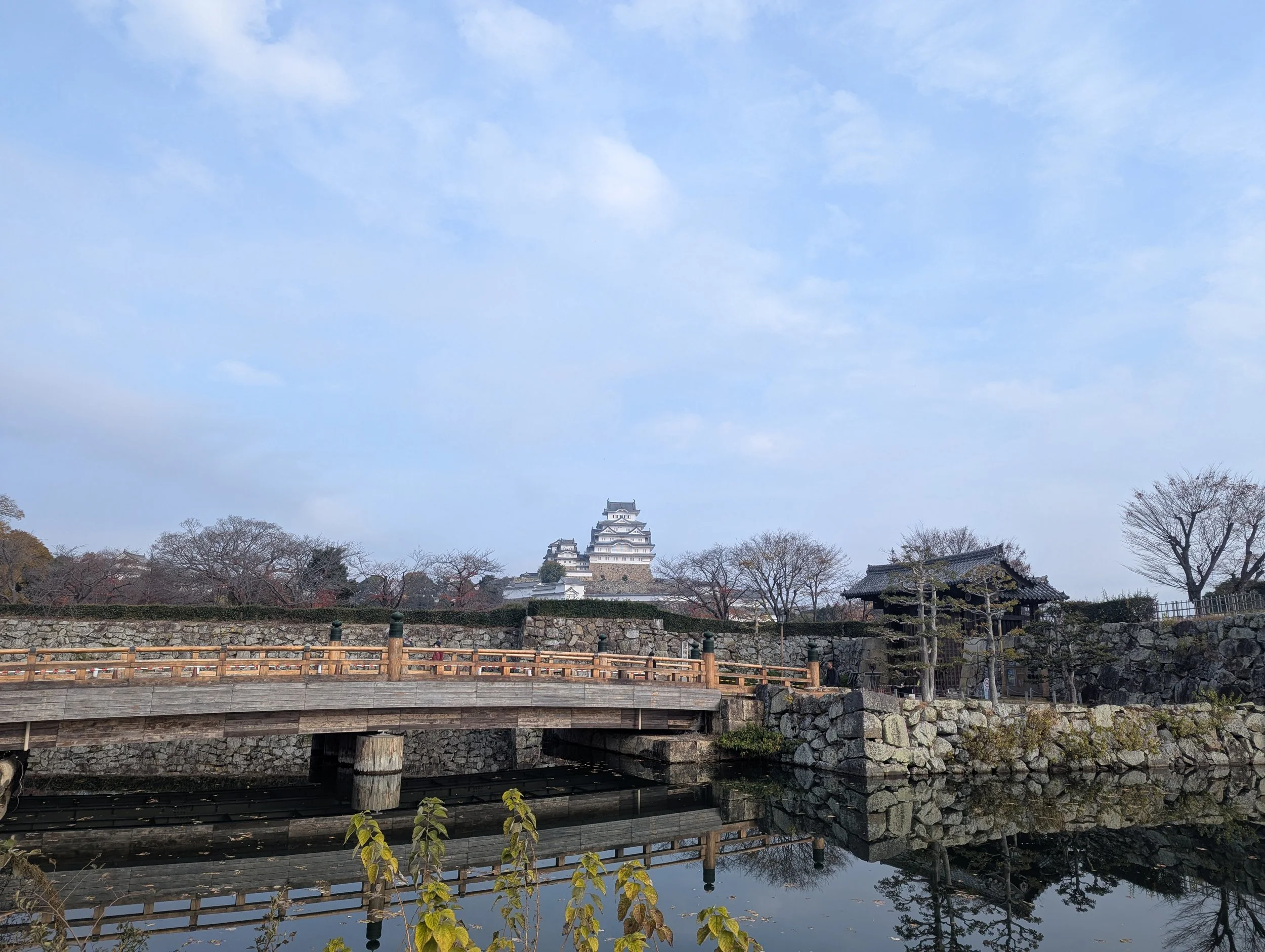
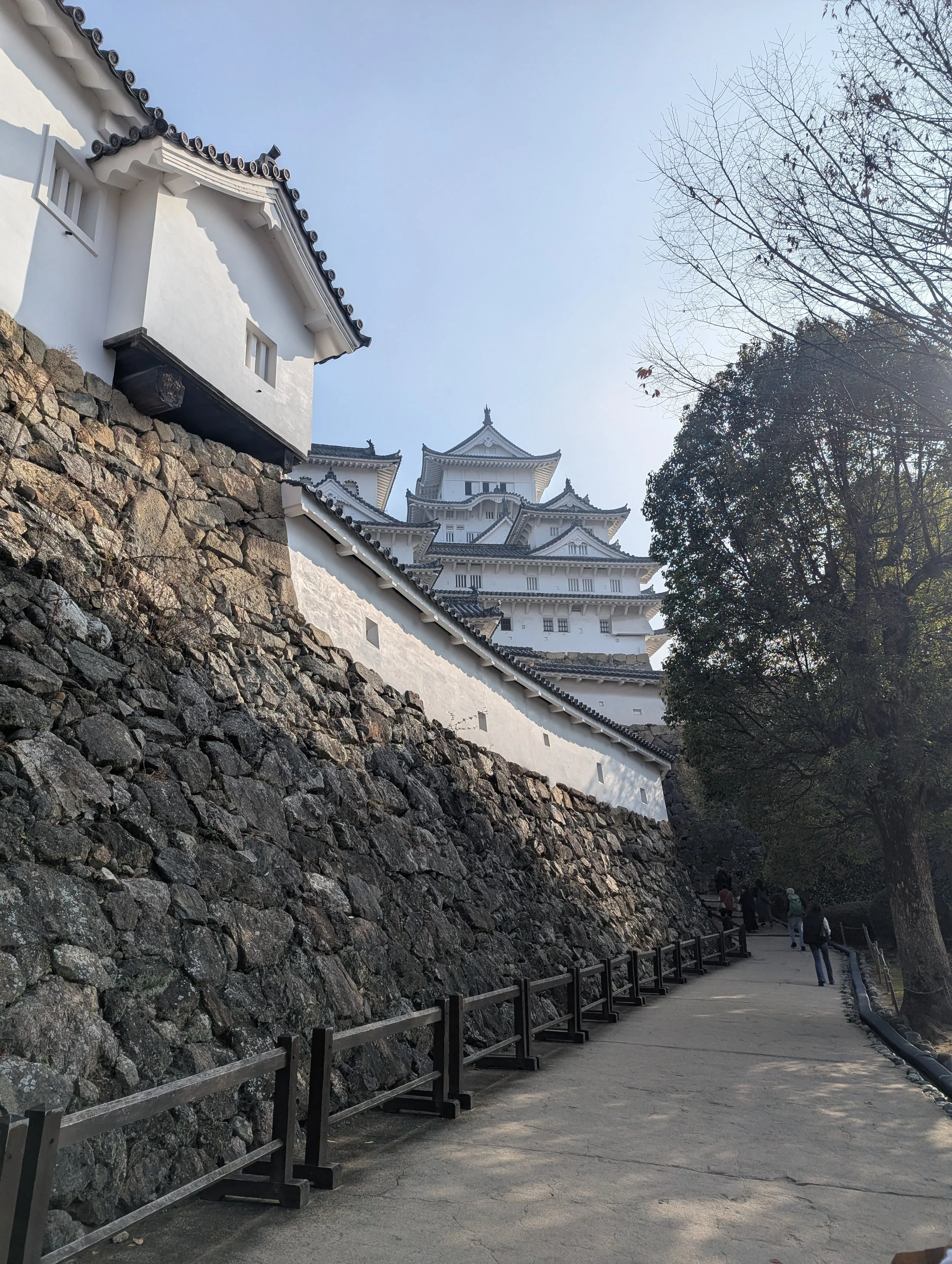
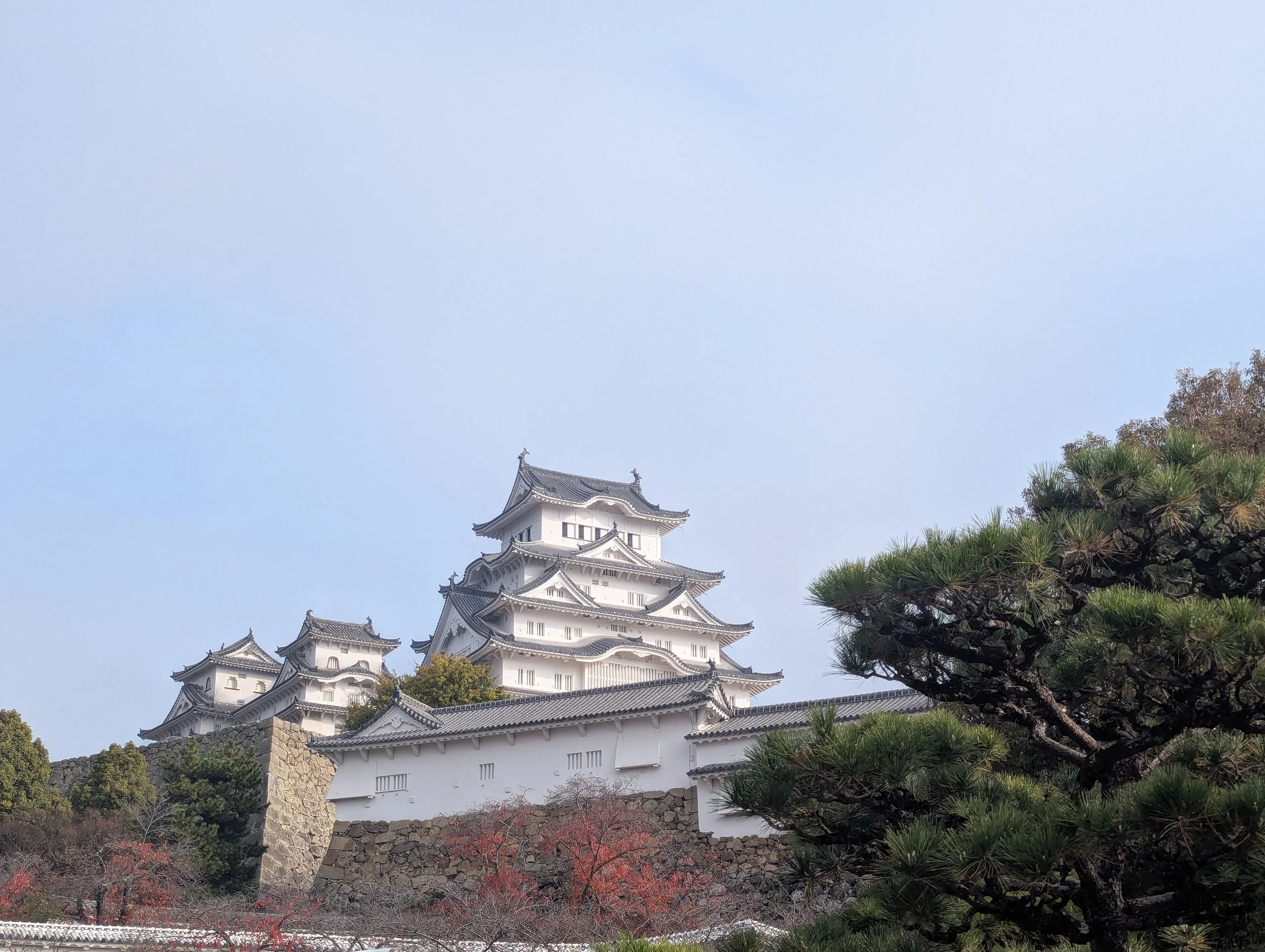
We entered the castle grounds at 9:42. It was much larger than that of Matsumoto or Gujo castles. I found Himeji stamps at the tourist info center at station and more at castle.
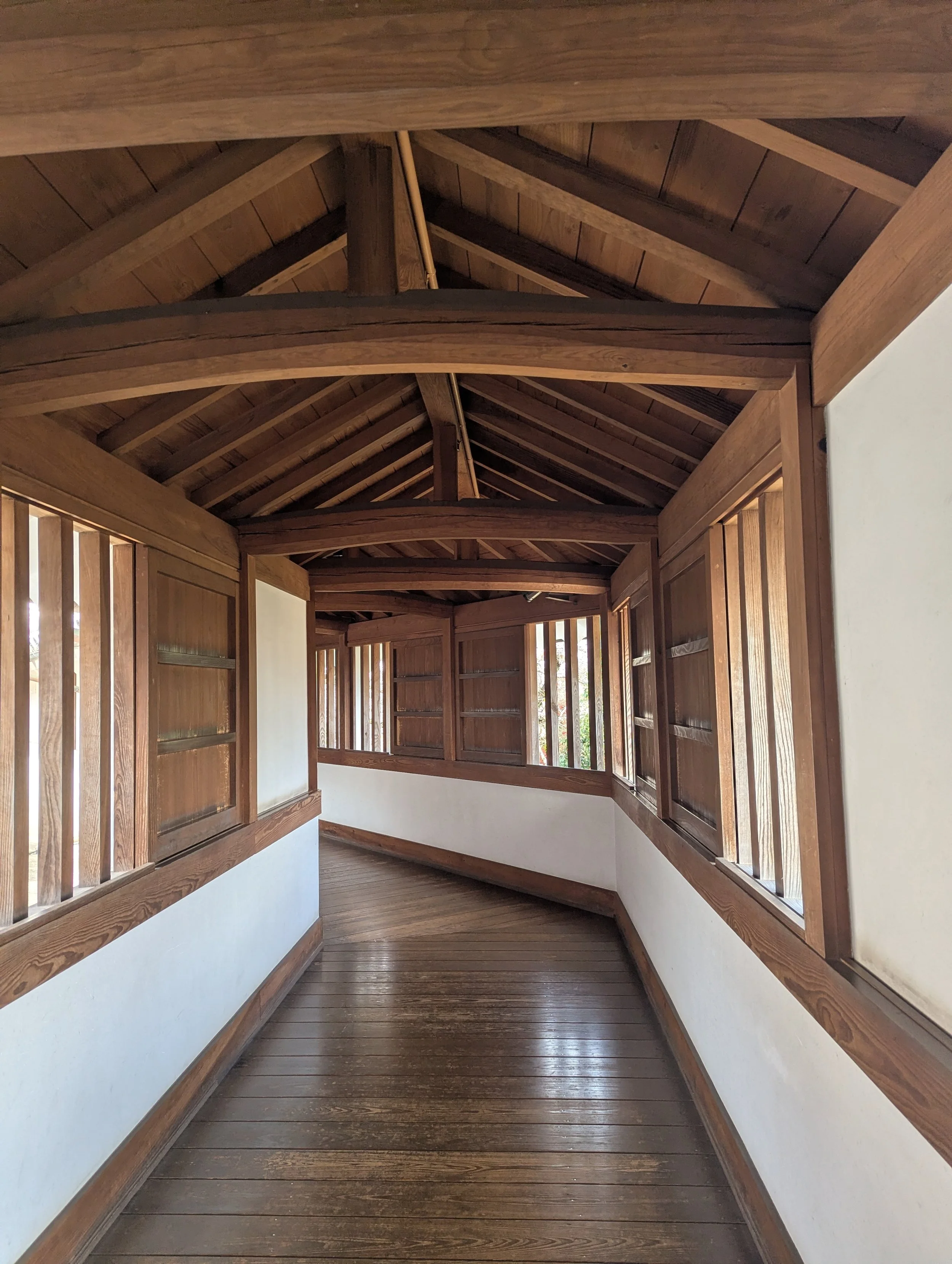
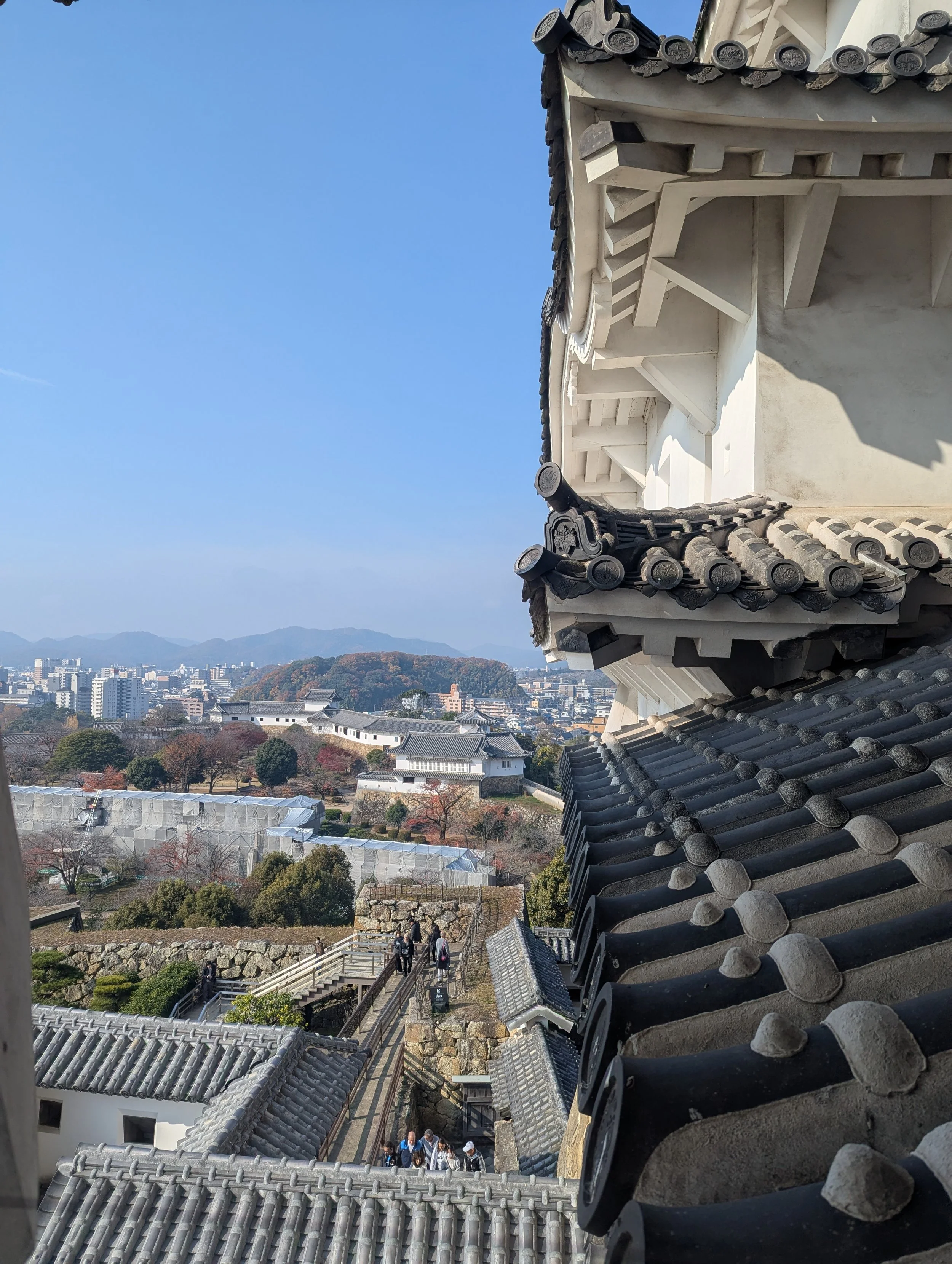
We visited the Western Bailey first, where we learned about Princess Sen. This part of the castle housed the female living quarters, and was home to Princess Sen. Princess Sen was the granddaughter of Tokugawa Ieyasu. She was married when she was seven years old to Toyotomi Hideyori in attempts to stop the conflict between her family and his. Her husband died during the Summer Siege of Osaka Castle, but she escaped. It was during her second marriage that she spent at Himeji Castle, where she had her daughter, Katsu, and son, Kochi.
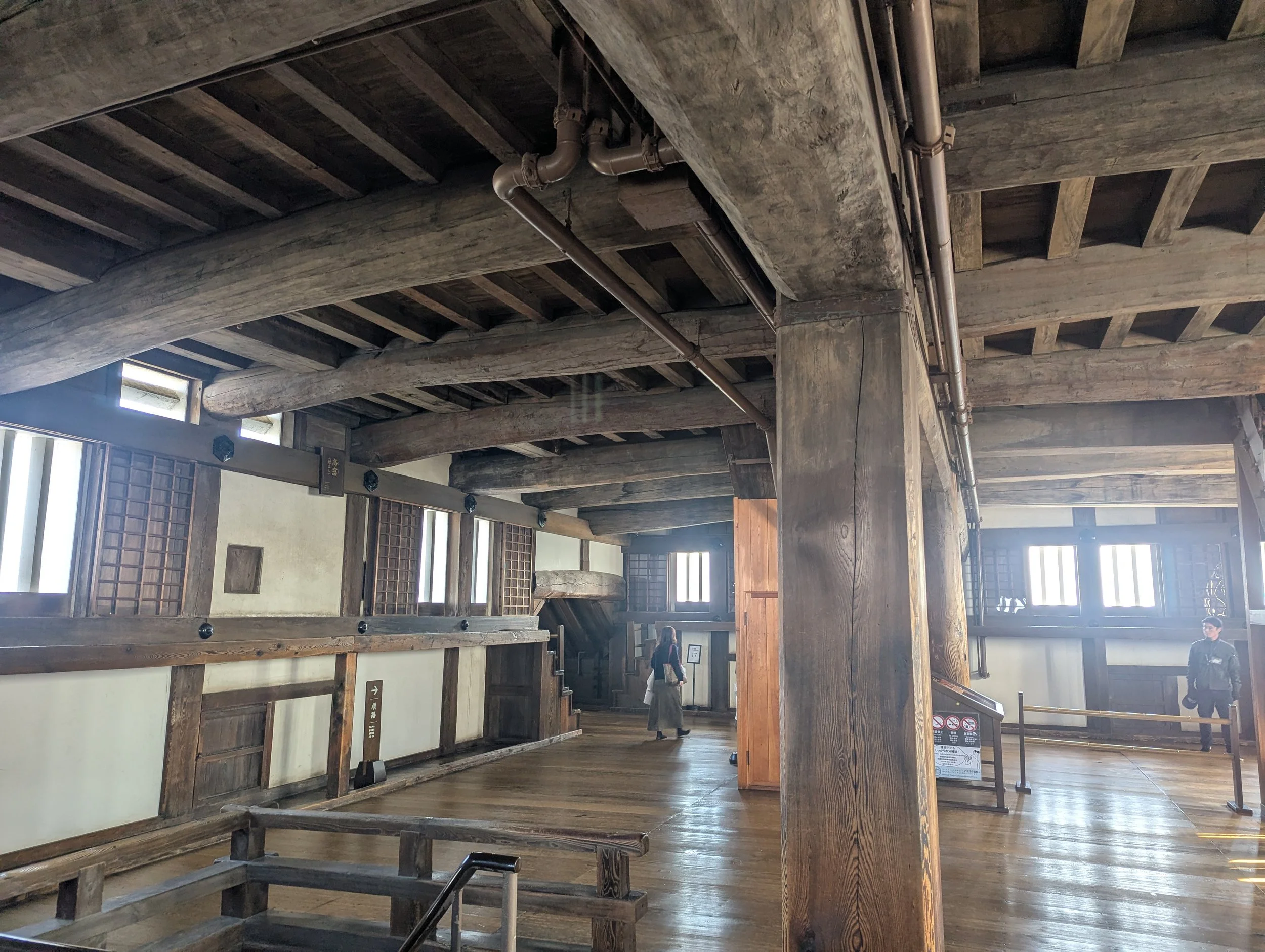
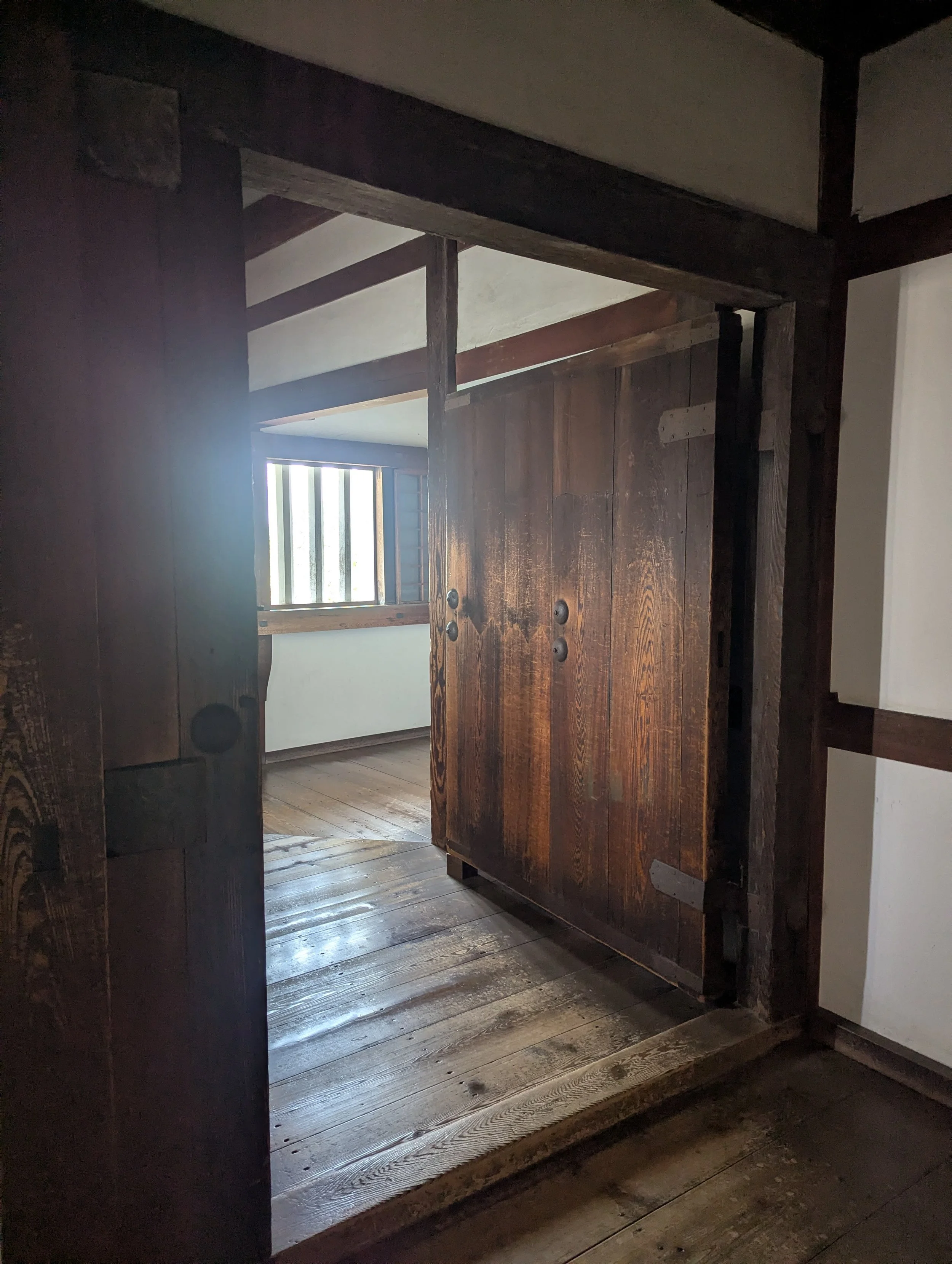
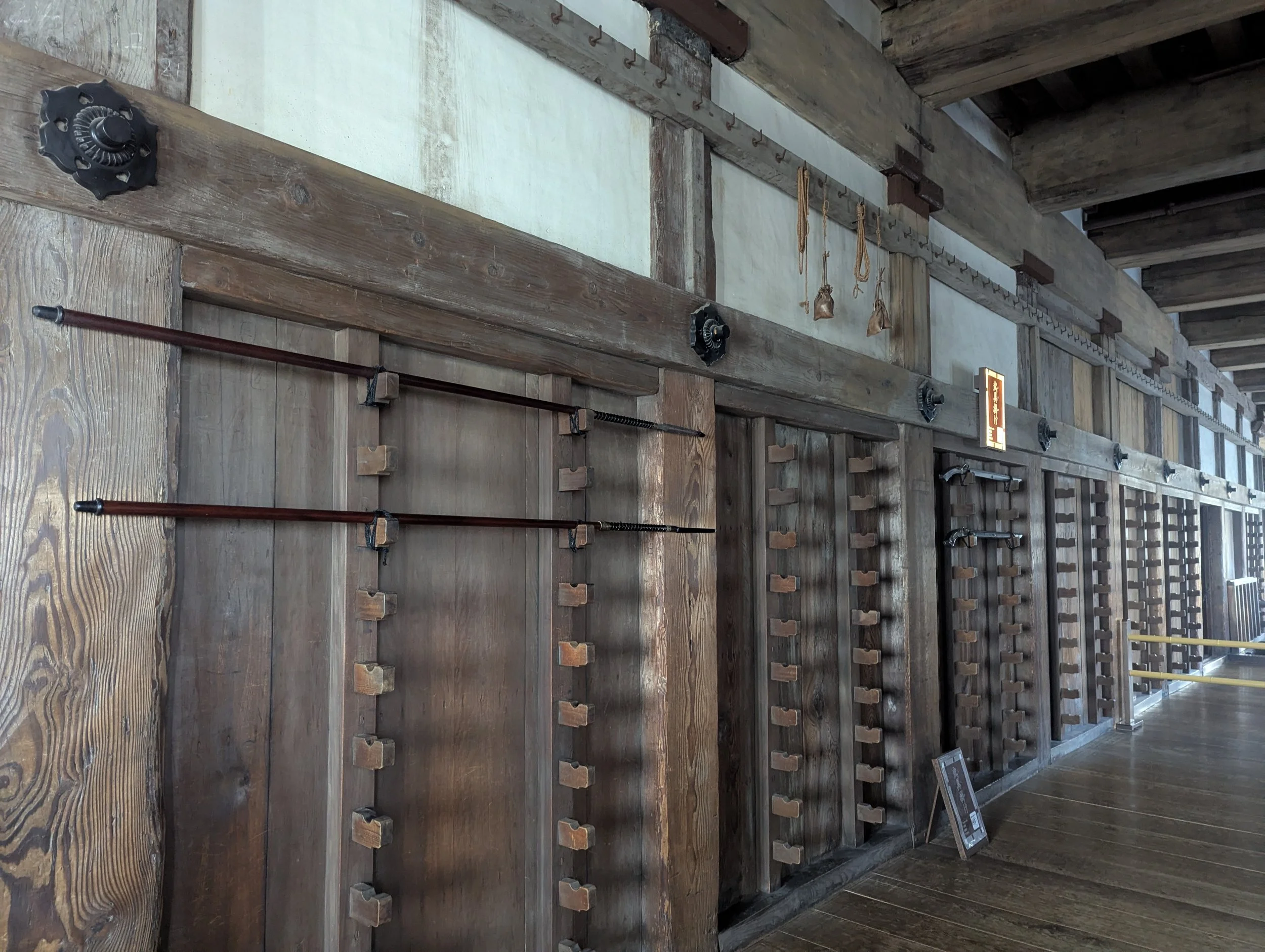
From the Western Bailey, we made our way to the Main Keep, which is a six story wooden building. As you make your way through the castle, you take wooden staircases up to subsequent floors, each floor smaller than the last. The stairs are steep and narrow, and the floors are slippery. You must remove your shoes to walk around the castle, I recommend wearing barre socks or hospital socks - something with the grippies on the bottom for extra traction. I would not recommend wearing a long skirt in the castle, simply for all of the stairs
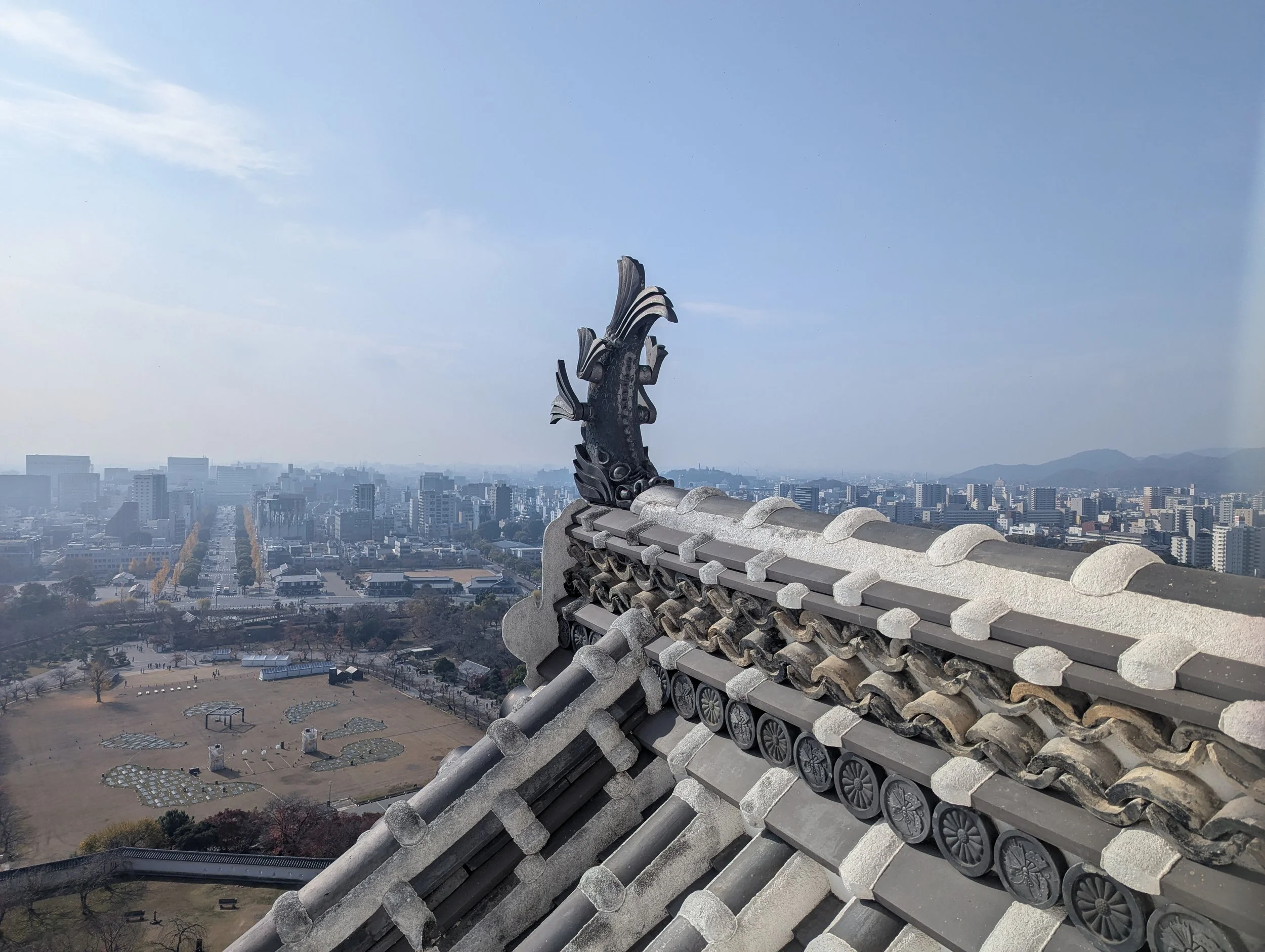
Throughout the castle are plaques indicating architectural features and how features were built into the castle for defenses. The top floor features a shrine and windows that overlook the city in all directions. One of my favorite aspects of Japanese castles are the fish that adorn the exterior, known as shachi. They are mythical creatures that actually have dragon faces and carp bodies, placed on the rooves to protect against fire. The males have open mouths, and are usually on the north or east, and the females have closed mouths and are usually on the south or west.
We finished exploring Himeji Castle at 11:30. We had purchased the combination ticket that included Himeji Castle and Koko-en Gardens. On our walk to the castle, we had popped into a kimono t-shirt shop, and the local shopkeeper recommended Koko-en Gardens. It was just down the block from the castle.
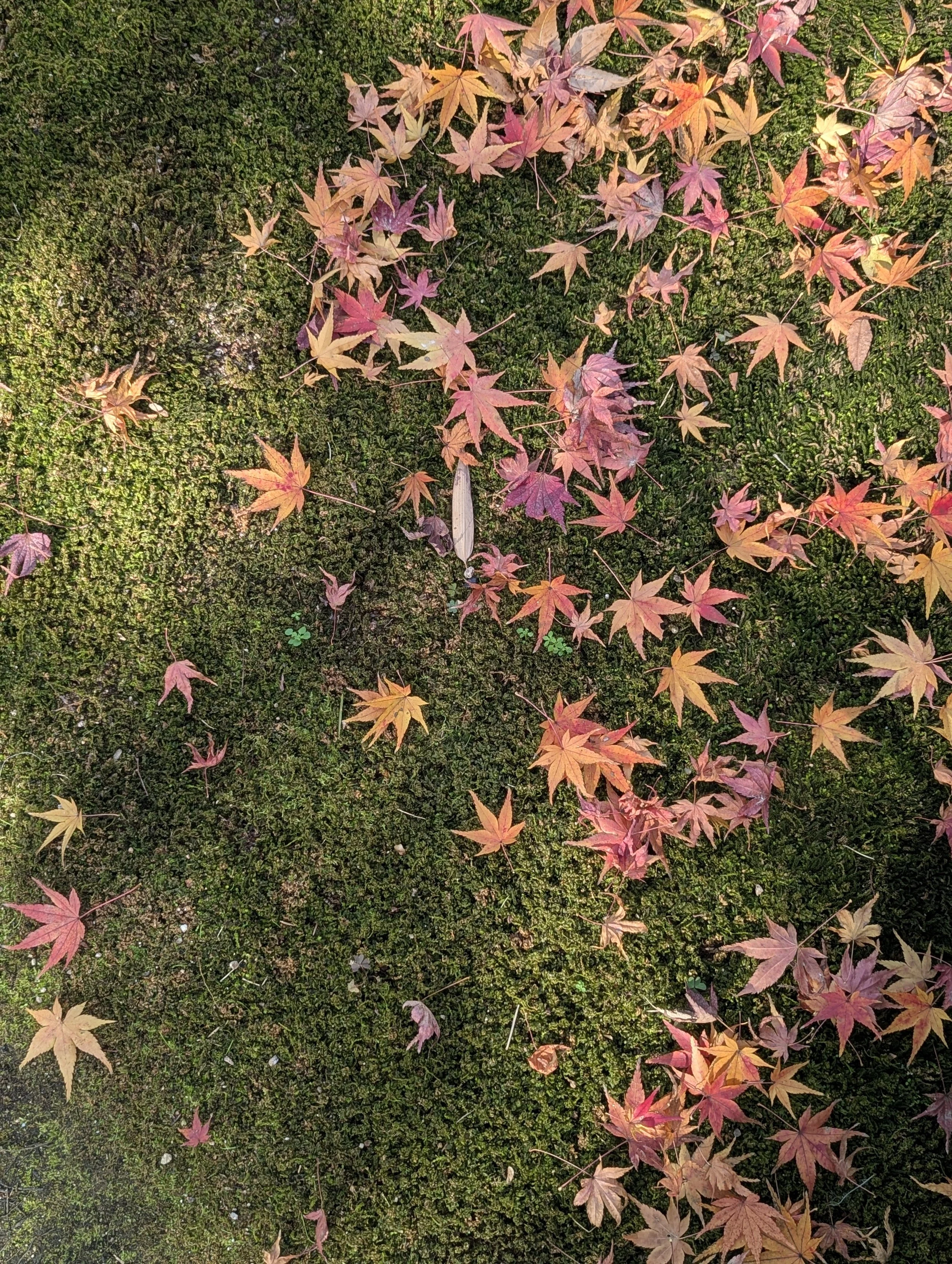
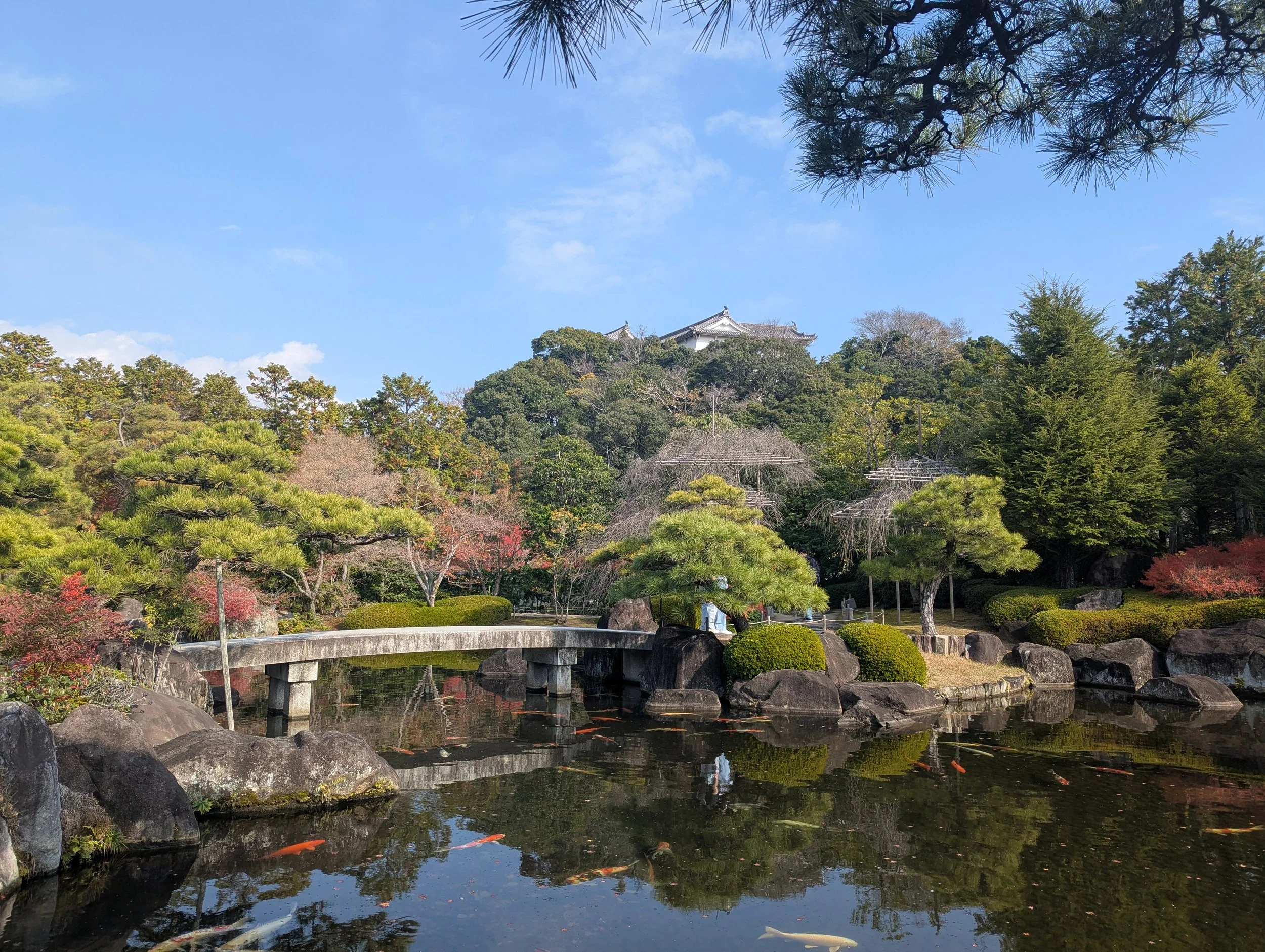
The garden was definitely worth it. It is everything you can imagine from a Japanese garden. There is a tea house and restaurant, that had a long line since it was lunch time. There are different sections of the garden, each with their own appeal. Because we were there in autumn, the foliage was absolutely stunning.
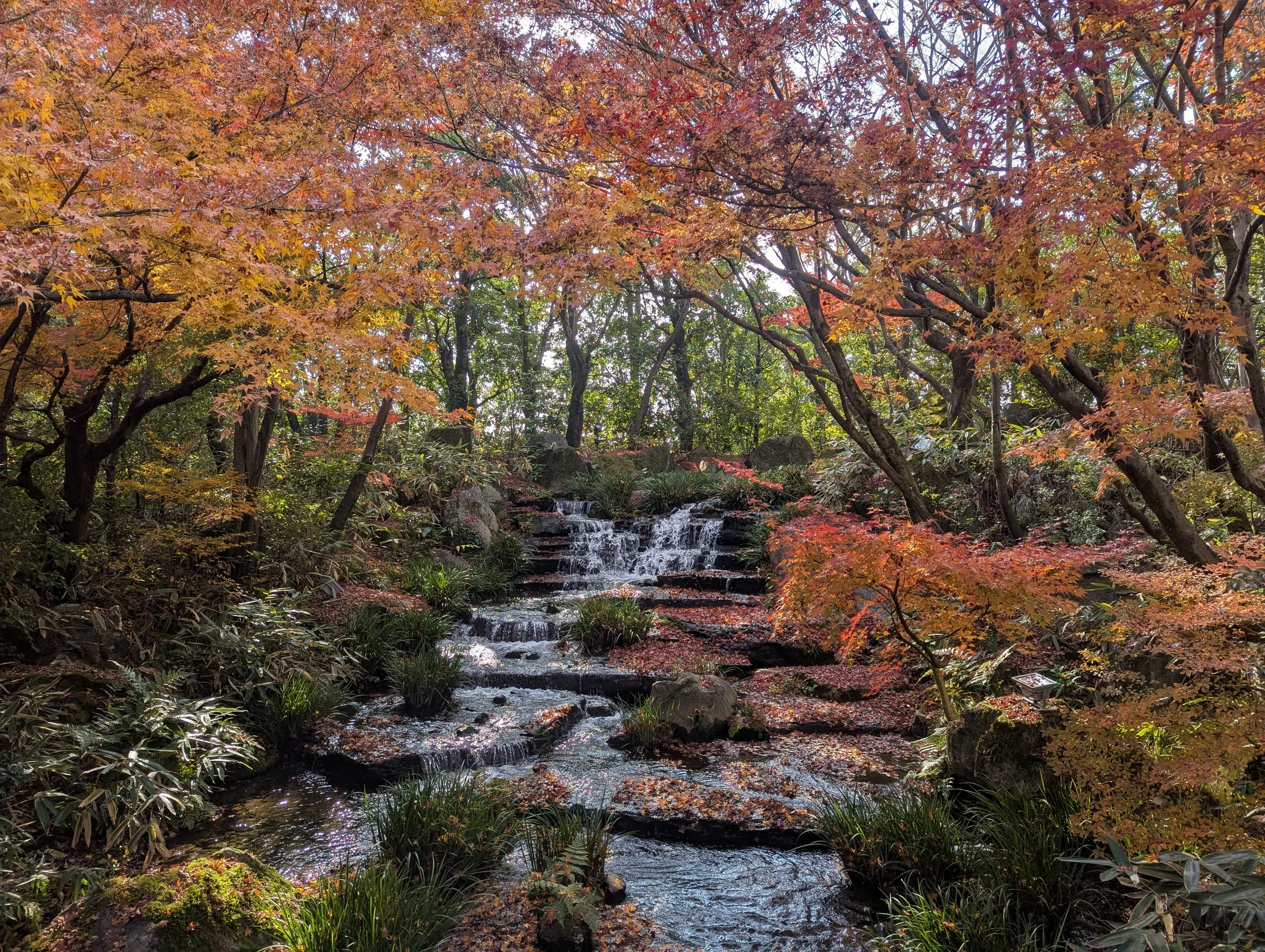
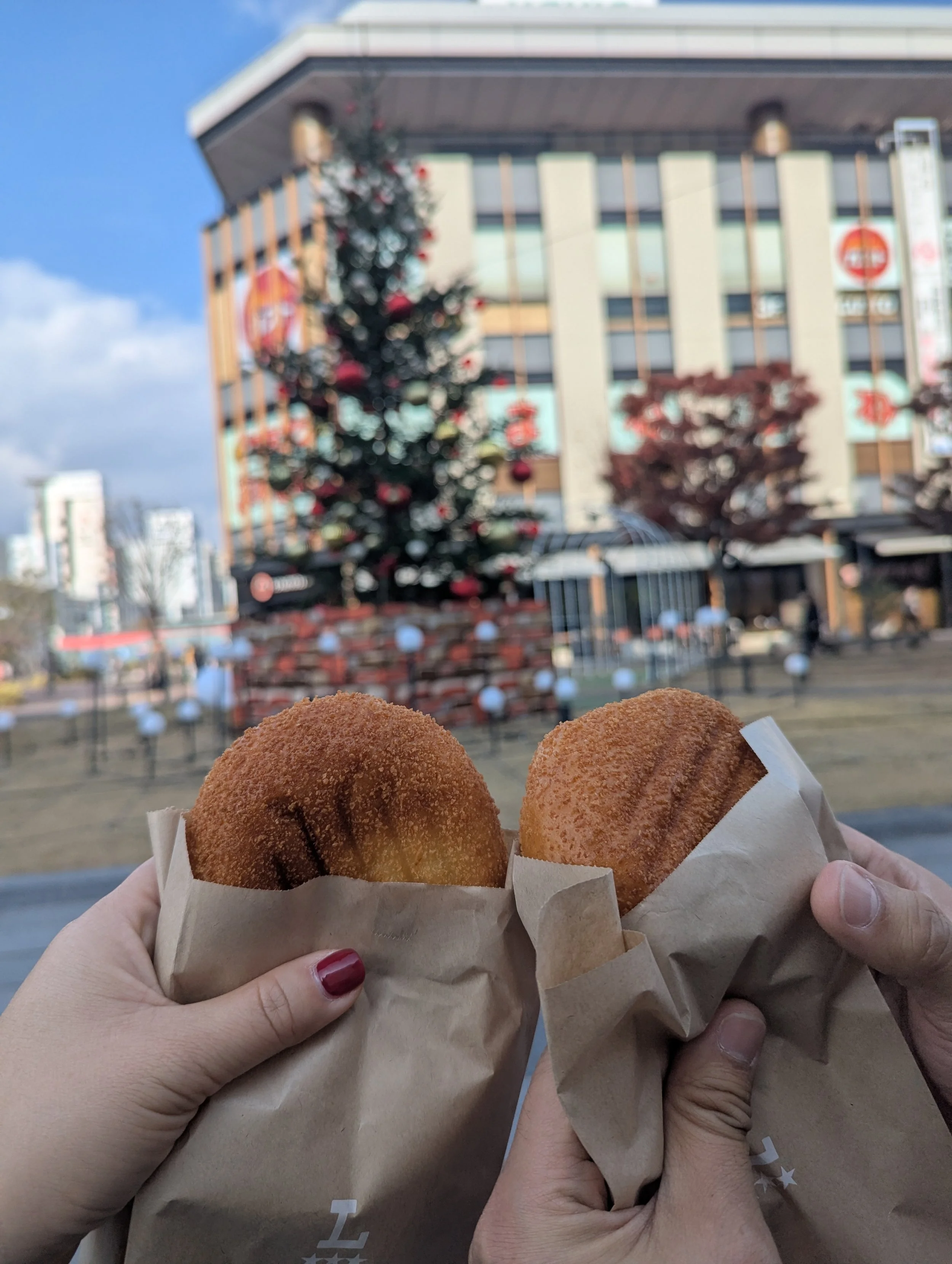
We left Koko-en Garden at 12:15 and began to walk back to the station to catch our next train at 1:25. We picked up curry pan and eruchiki from Lawson and ate them by a large Christmas tree just outside of the station. We rate eruchiki and FamiChiki higher than nanachiki. The curry pan was also the best that Kevin has had so far (vs the ones from bakeries, which were baked and not fried).
We retrieved our backpacks from the coin locker and went in search of ekiben for lunch. It was surprisingly really hard to find, there were not many options, especially considering it’s a fairly major station. It was also difficult to find which track we are on, I had to ask.
We had only four hours in Himeji. We got to do what we wanted (the castle) and then some (the garden) but we had to be conscientious of the time. If we had another hour, it would have been perfect. We didn't feel the need to rush through anything. There was a teahouse in the garden that would have been nice to chill and enjoy, opens at noon, if we had more time.
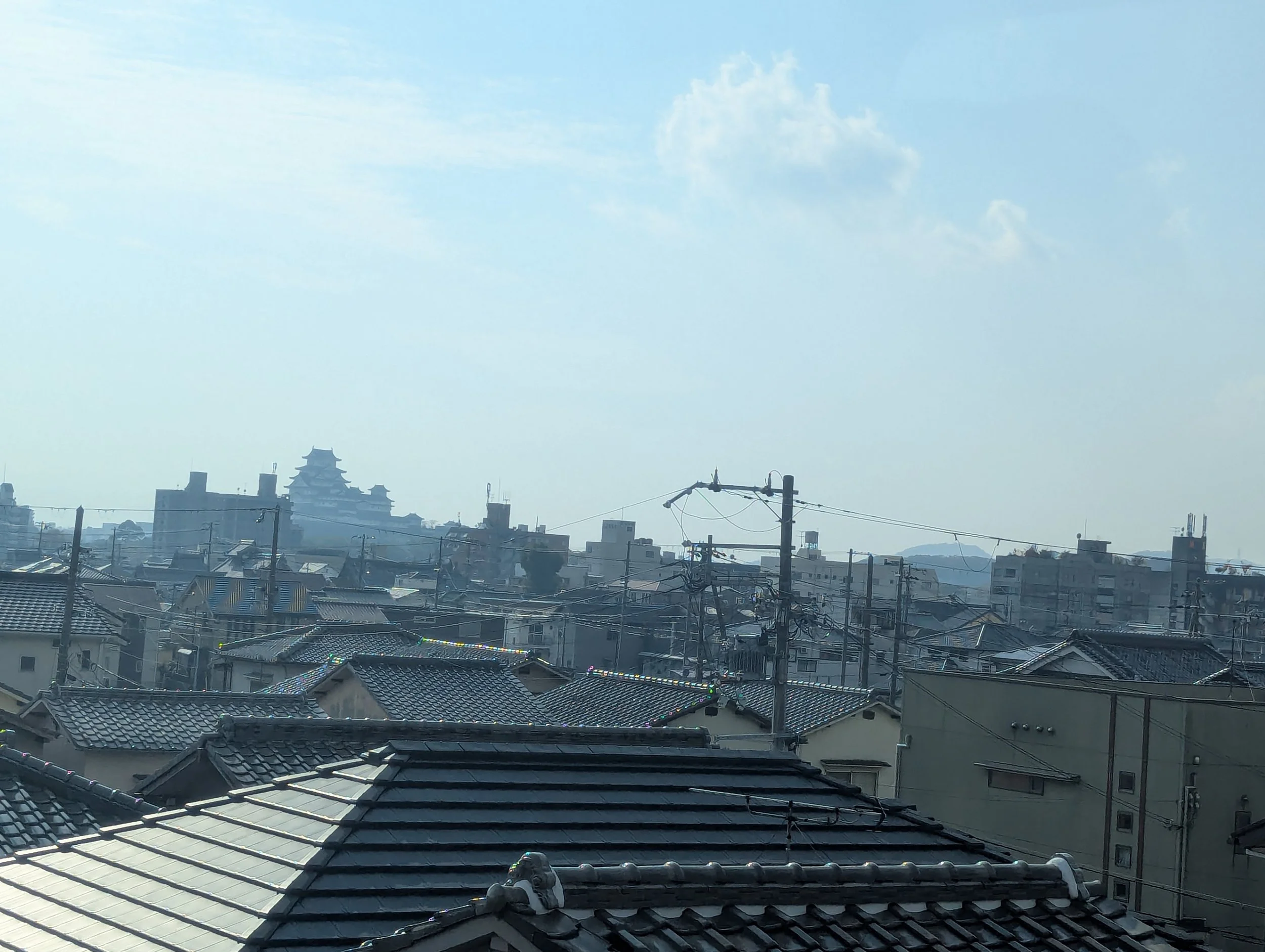
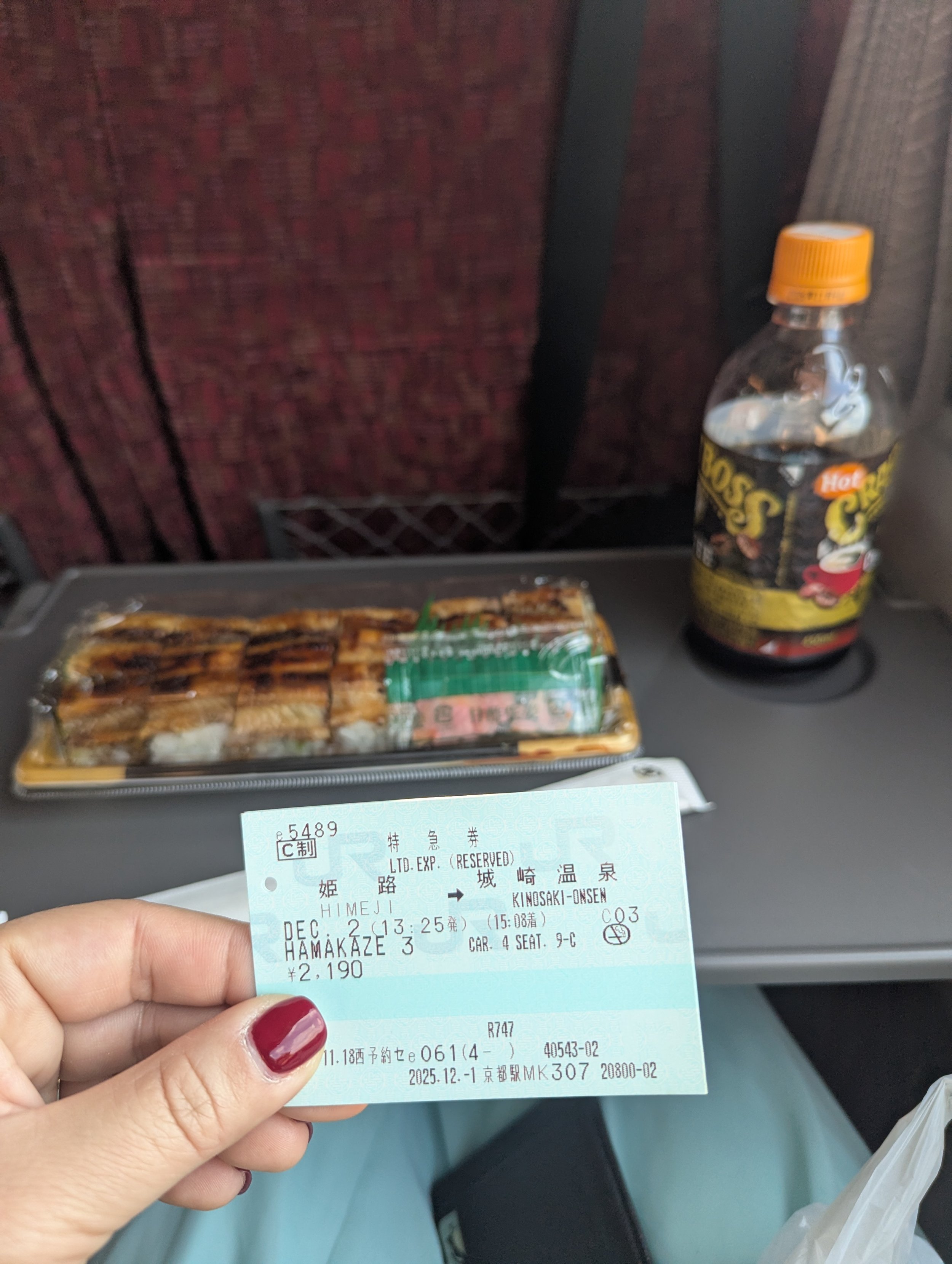
Our train arrived at Kinosaki Onsen at 15:08. We walked to our ryokan, Shinzan, it was about a 20 minute walk. The town is very walkable. The roads are more narrow that we are used to at home, but there isn’t a tremendous amount of vehicular traffic, and plenty of people walk. We didn’t pay much attention to the town as we were walking to the hotel; really, we were just focused on getting to our destination, knowing we would have plenty of time to explore and enjoy the town.
Kinosaki is known for its onsen and charm. People walk town in yukata and geta, stay in ryokan.
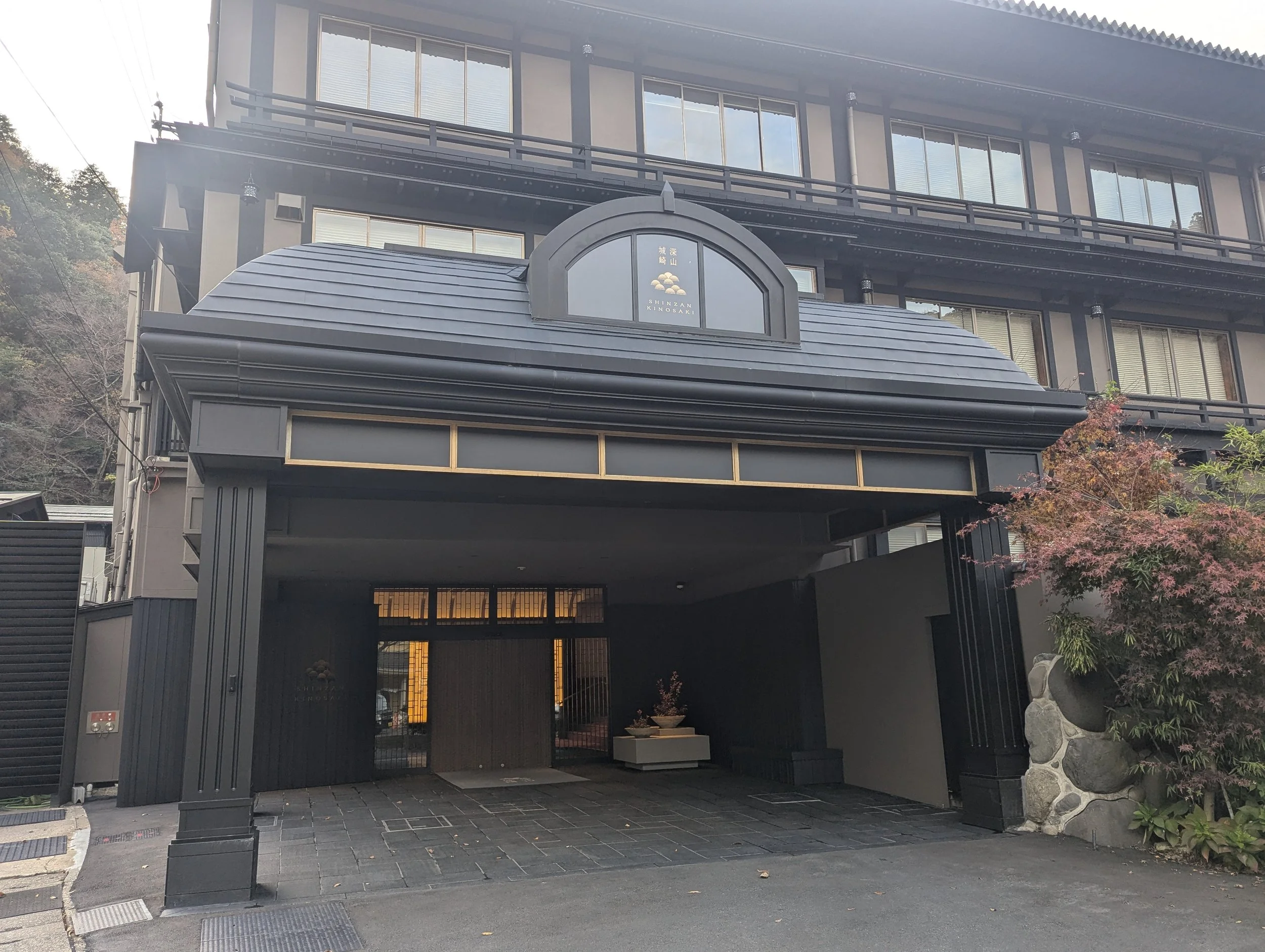
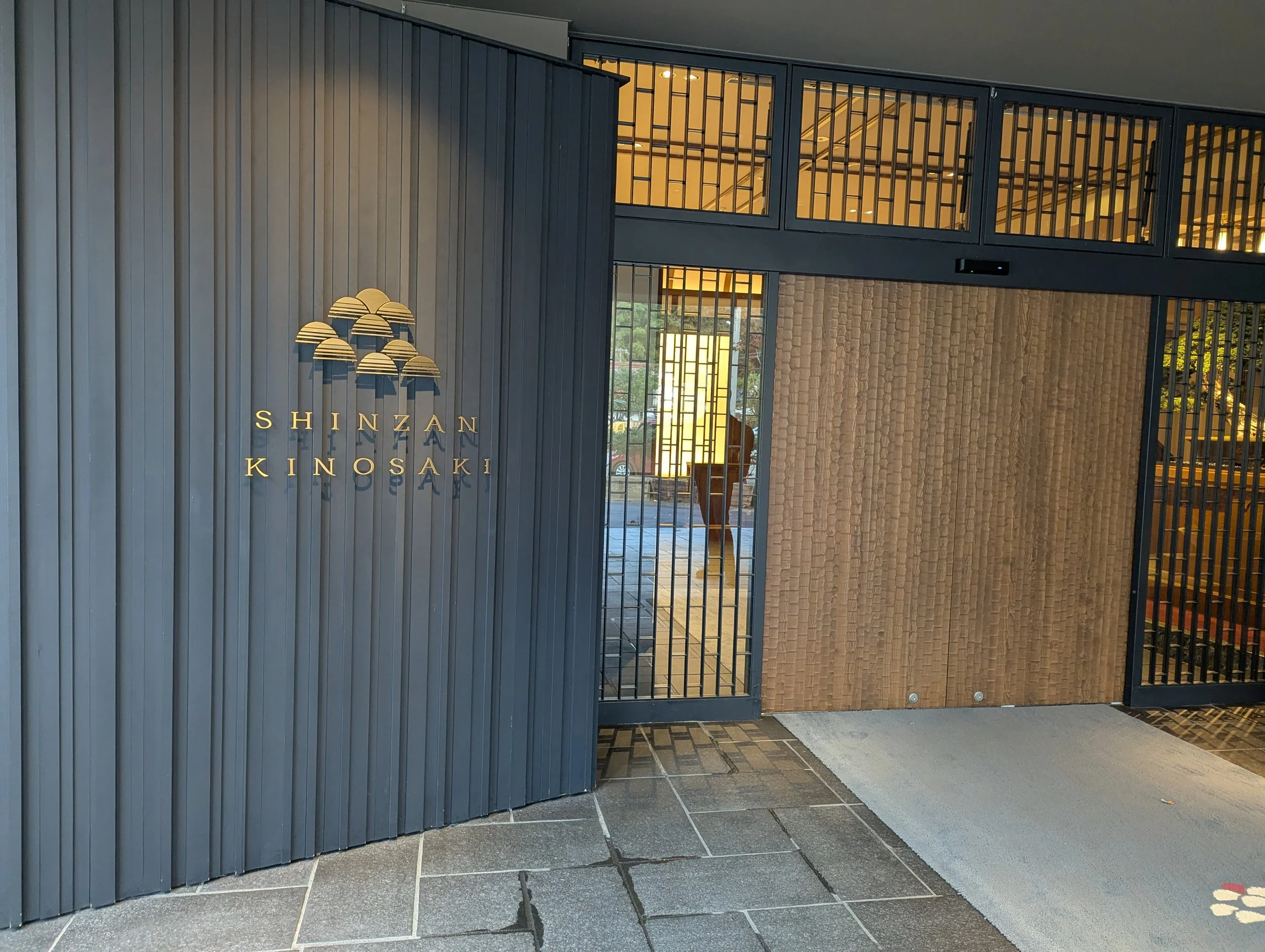
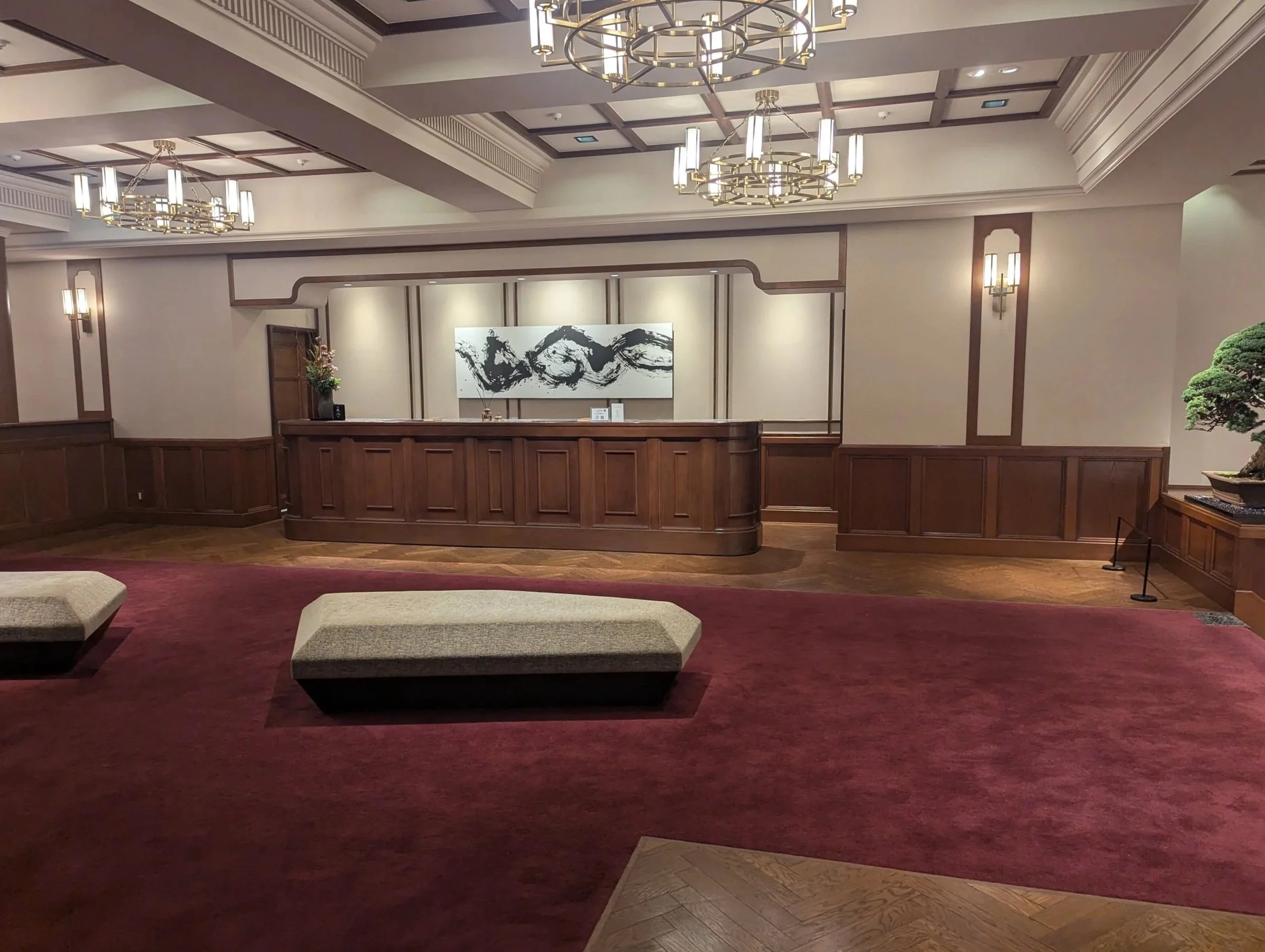
Shinzan was set back off the main road of town, which we knew. It was a little out of the way, past the ropeway station. We had chosen it because we were able to use Chase points to reserve. The building is quite unassuming - set back from the road, and had almost a small residential feel. One the doors open, though, we were welcomed with a sense of grandeur - clean, warm woods around the large foyer lounge area. Upon checking in, we scheduled our dinner for 6PM, giving us a little time to explore.
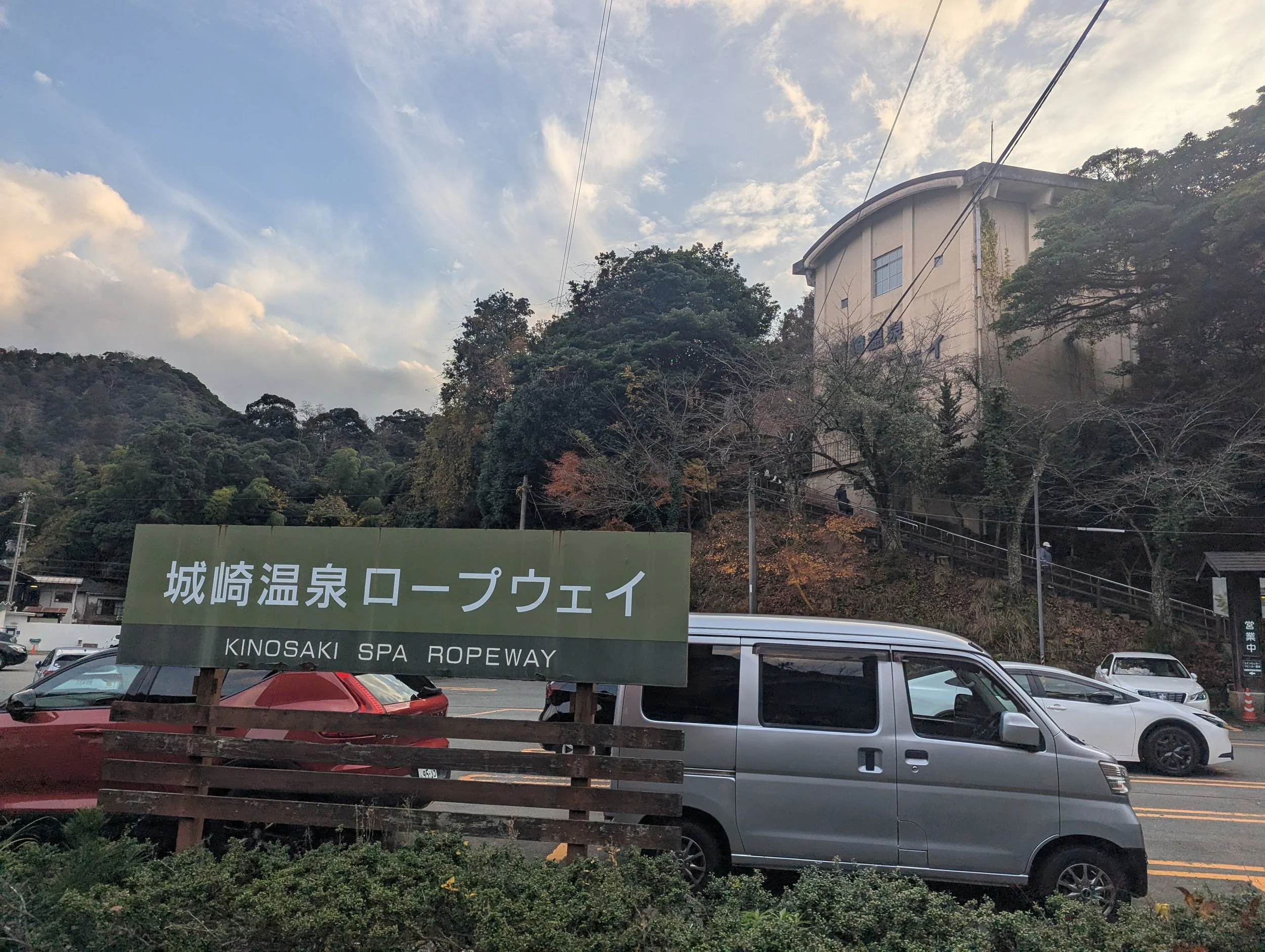
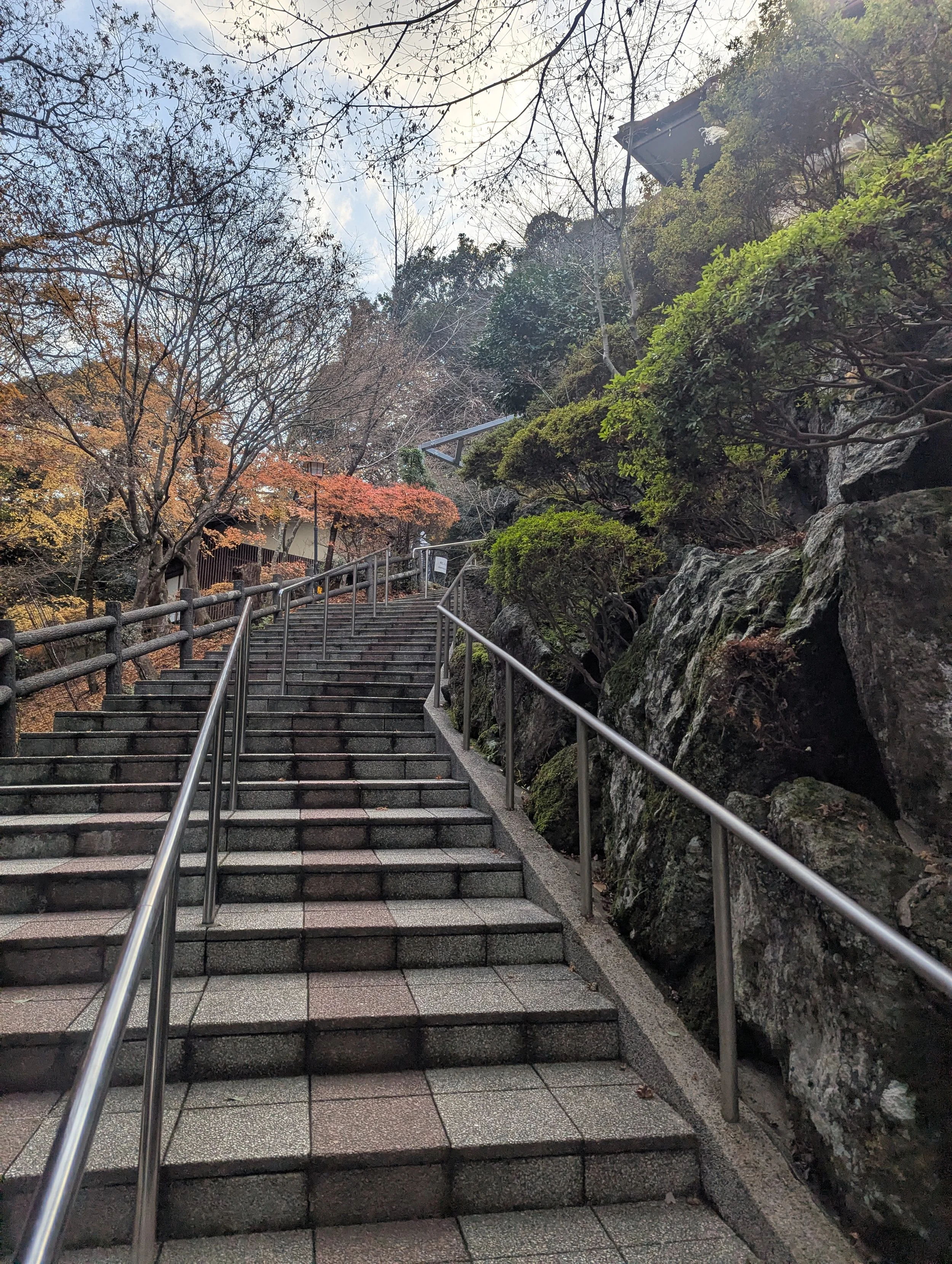
After having dropped our bags and freshening up, we walked the short walk to the ropeway. At the base of the ropeway stairs is a parking lot and there is a public footbath there too. It was 4PM, we took the stairs and purchased our tickets. Tickets for ropeway for both of us to the top cost 2400 yen - there was an option to take it halfway, to the temple as well. The roundtrip tickets to the top allowed us to get off at the temple and continue riding. Our ropeway car left at 4:10. We rode all the way to the top. We knew we wouldn’t have too much time, because the ropeway closes at 5PM. There wasn’t too much to see at the top anyway - there was a cafe that was closed, a little park-like area with a great view, there was a hiking path that we didn’t explore but I believe is the walking path down the mountain.
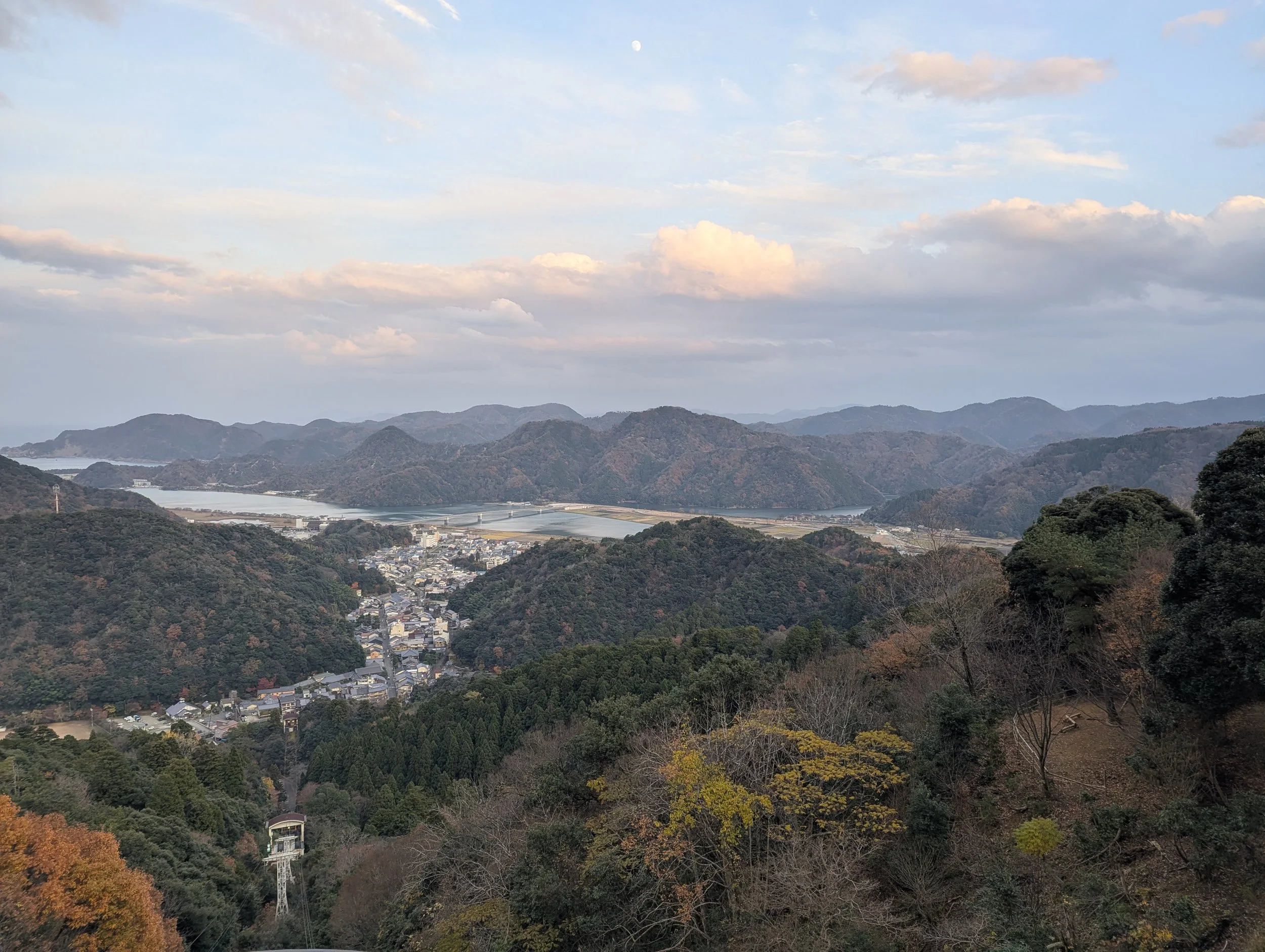
We caught the 16:30 down to Onsen-ji. It costs 300 yen per person to enter the temple. You must remove your shoes while in the temple. We were so fortunate in that it was just the two of us and one other couple, so we had almost a private tour led by a Buddhist monk. It was all in Japanese, but they had handouts in English and French that summarized what the monk was explaining. It was a really cool experience. The monk spoke English, so I feel like if the other couple weren’t there, we could have had a tour in English.
Legend has it that Dochi Shonin, a Buddhist monk, arrived in Kinosaki in 717AD and prayed for 1000 days to end suffering; his prayers were answered with gushing hot spring waters. In one of the main sanctuary rooms houses juichimen kanzeon bosatsu (Eleven-Headed Bodhisattva of Compassion and Mercy), which is hidden away in an alter and is only visible to the public for three consecutive years every 33 years. The last time it was presented was 2018-2021, and therefore will not available to the public again until 2054.
In the old days, people would first make a pilgrimage to visit Onsen-ji and pray to the onsen guardian to be healed by the waters, before being able to visit any of the baths. They would then receive a “yu-shaku” onsenl adle, that served as their “ticket” for entry to the baths. Today, the ladle is not needed but can still be purchased at the temple. This was something that interested us, but the ladle was larger than we expected and also more expensive than we were willing to pay. We did not intentionally visit Onsen-ji before any of the baths for this reason either; simply because it made sense for us logistically.
The tour ended promptly for us to catch the last ropeway. They time it perfectly. In fact, our Buddhist monk tour guide and employees were on our ropeway car down with us. This last car left the Temple stop at 16:50 to the bottom.
We walked around town a bit, but most shops were closed. It started raining so we headed back at 17:15. Back at hotel at 17:25. Planned our onsen route - which onsen we planned to visit when - this required a little bit of strategy because each bath is closed one day a week for maintenance, and even on days they are open, they aren’t open all day long. We wanted to be sure we made the most of our time, and that we would be able to visit each bath at least one. There was one bath that was closed long term for renovations, which we were not able to visit at all.
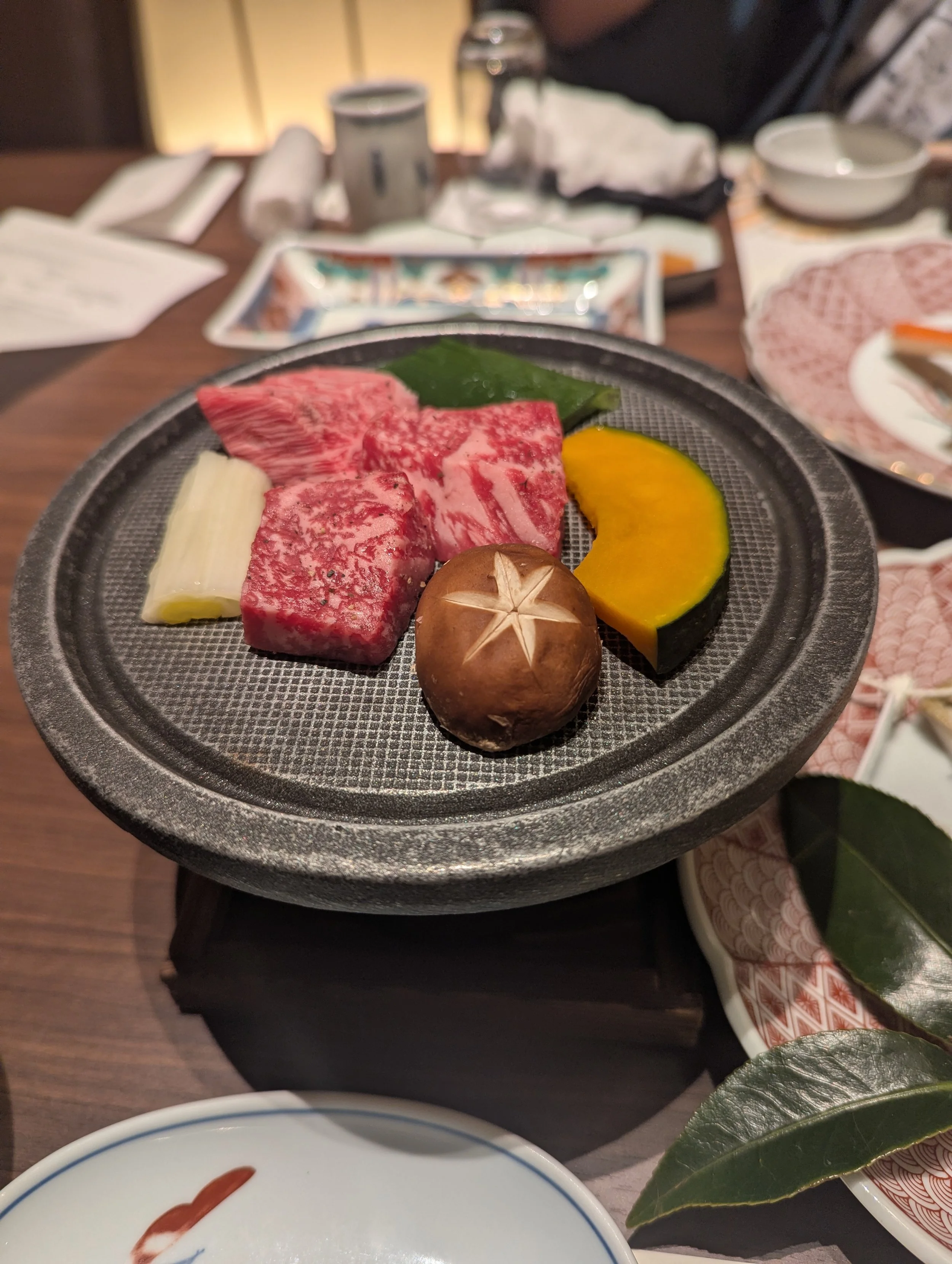
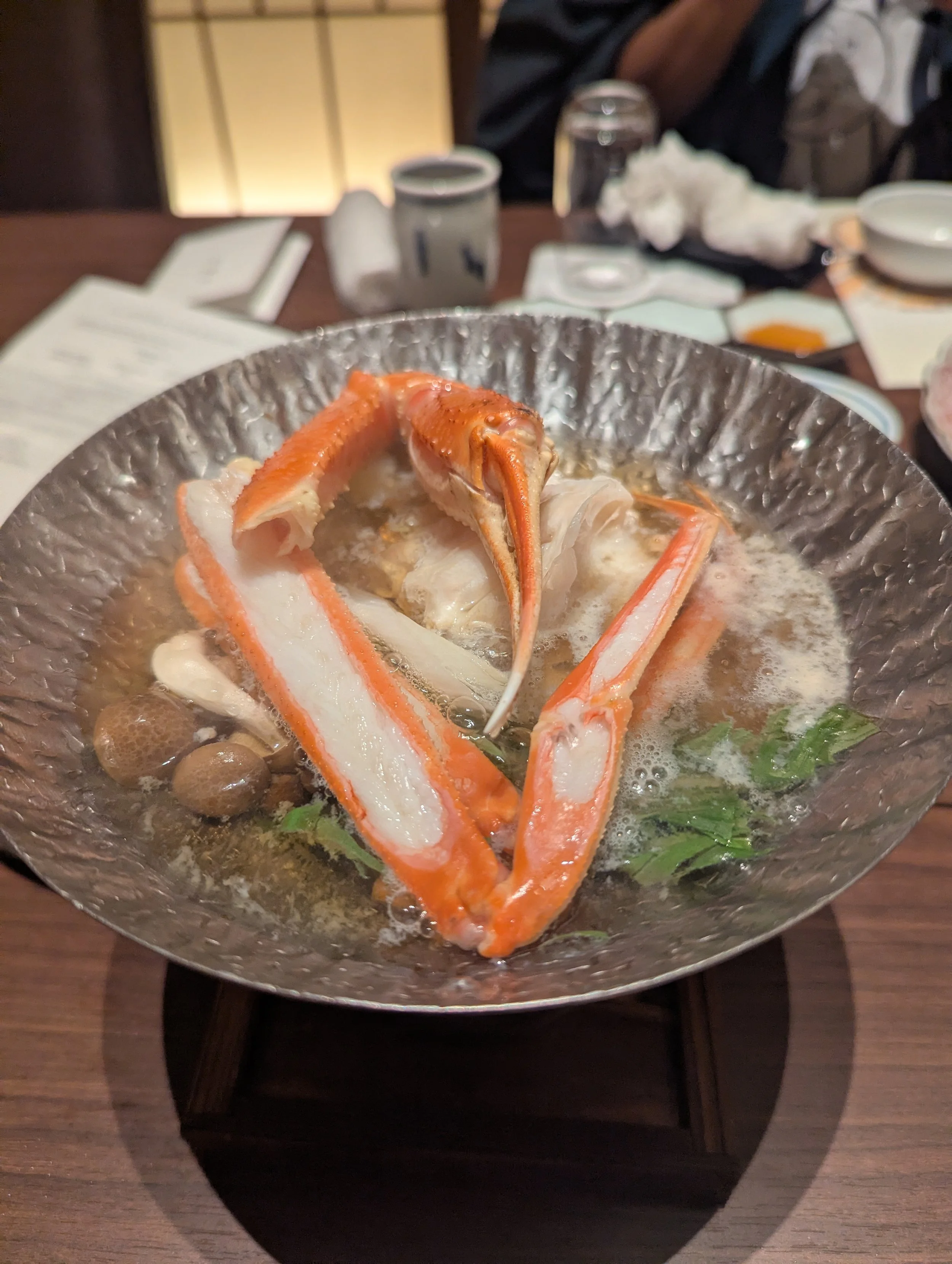
We changed into our yukata for dinner and headed down to the Momiji and Sakura rooms. When we reserved our stay online, there were several dinner options. We knew for sure we wanted to try matsuba crab, the local specialty that is only available seasonally. We also wanted to try Tajima beef, the local wagyu. The option we chose read: “Large pot with four colors of boiled crab, marbled crab, grilled crab, crab sticks).” The translation was not the best, but we liked that it gave us the variety in the way the crab would be prepared. Little did we know…
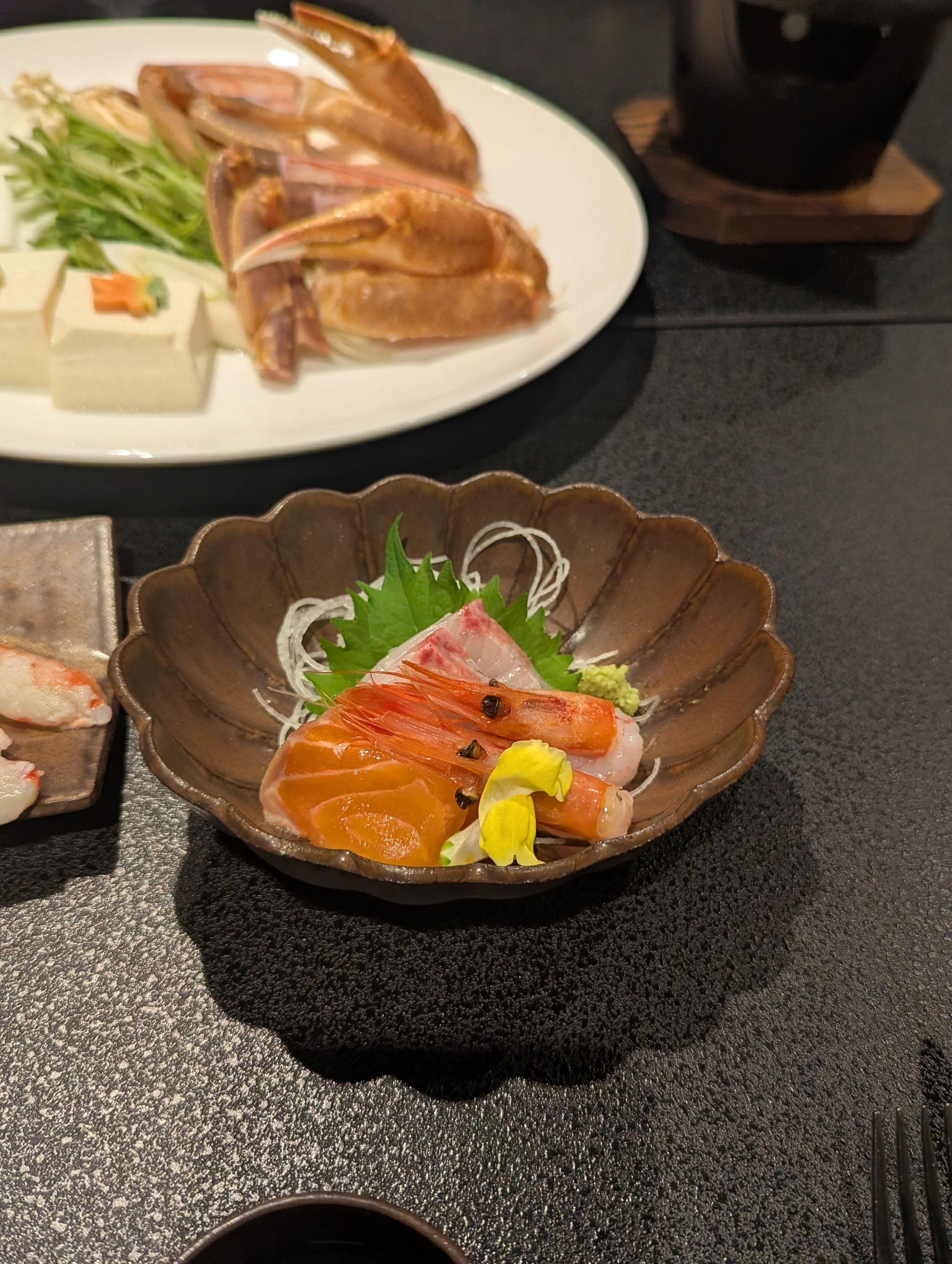
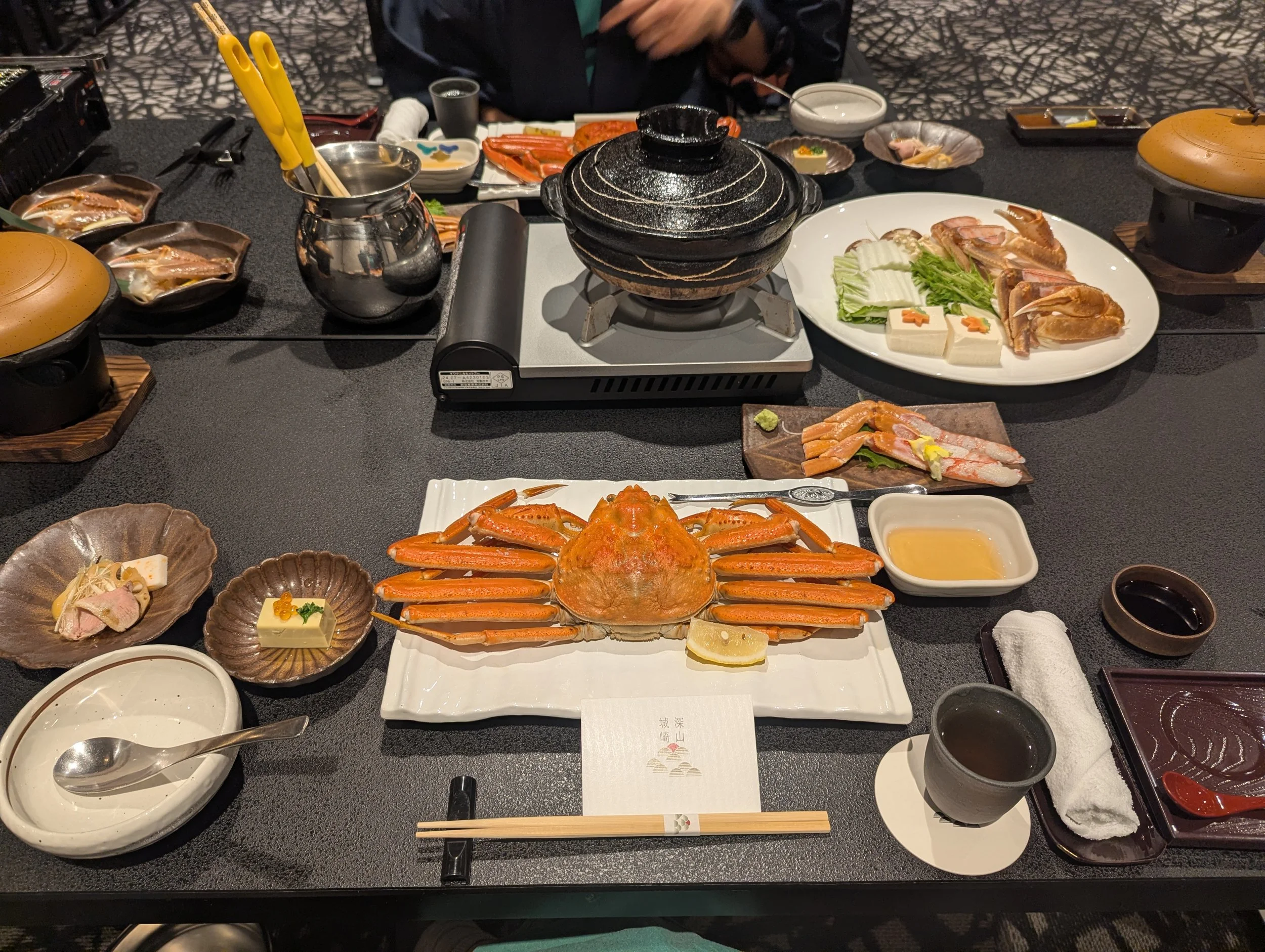
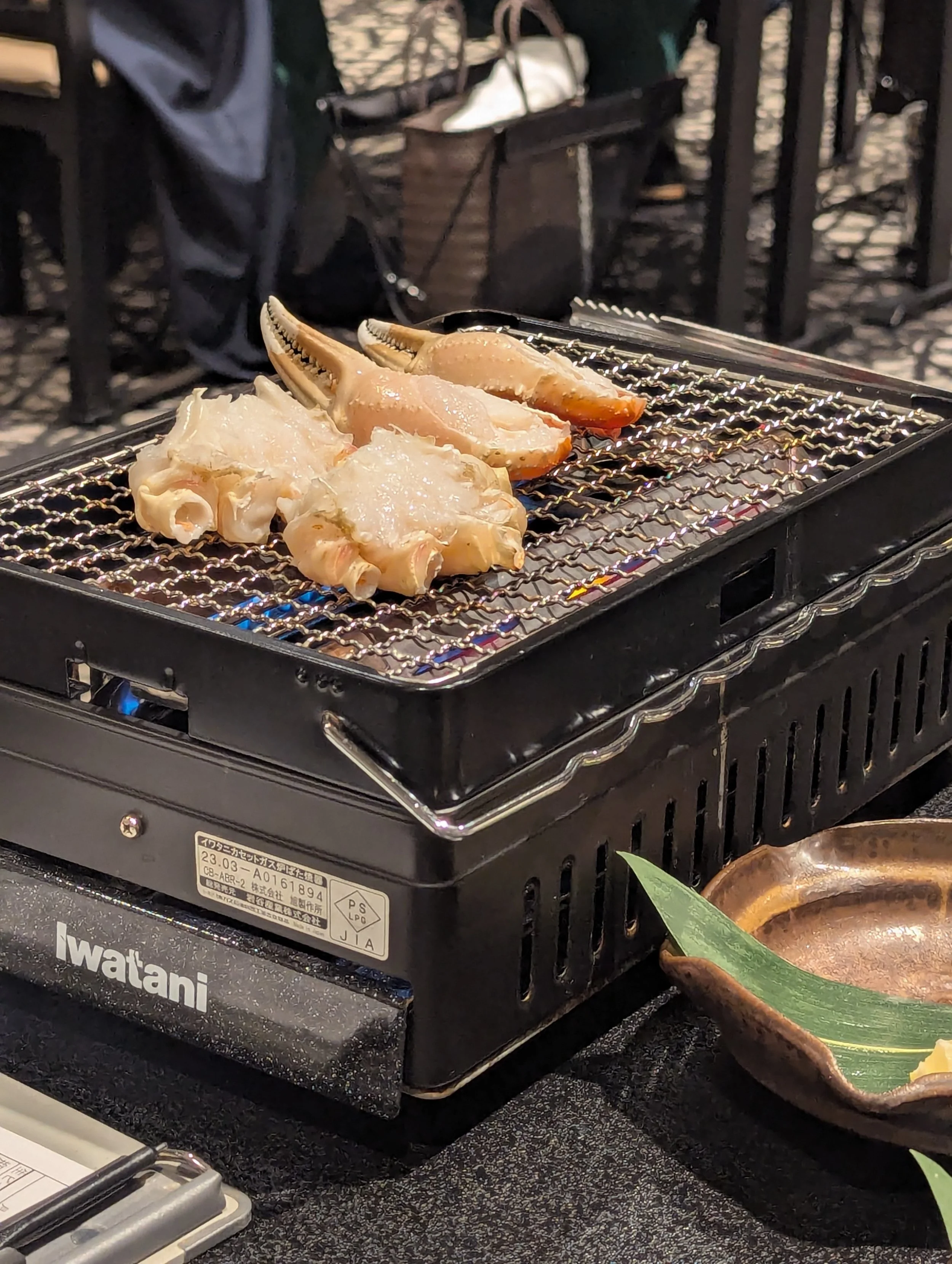
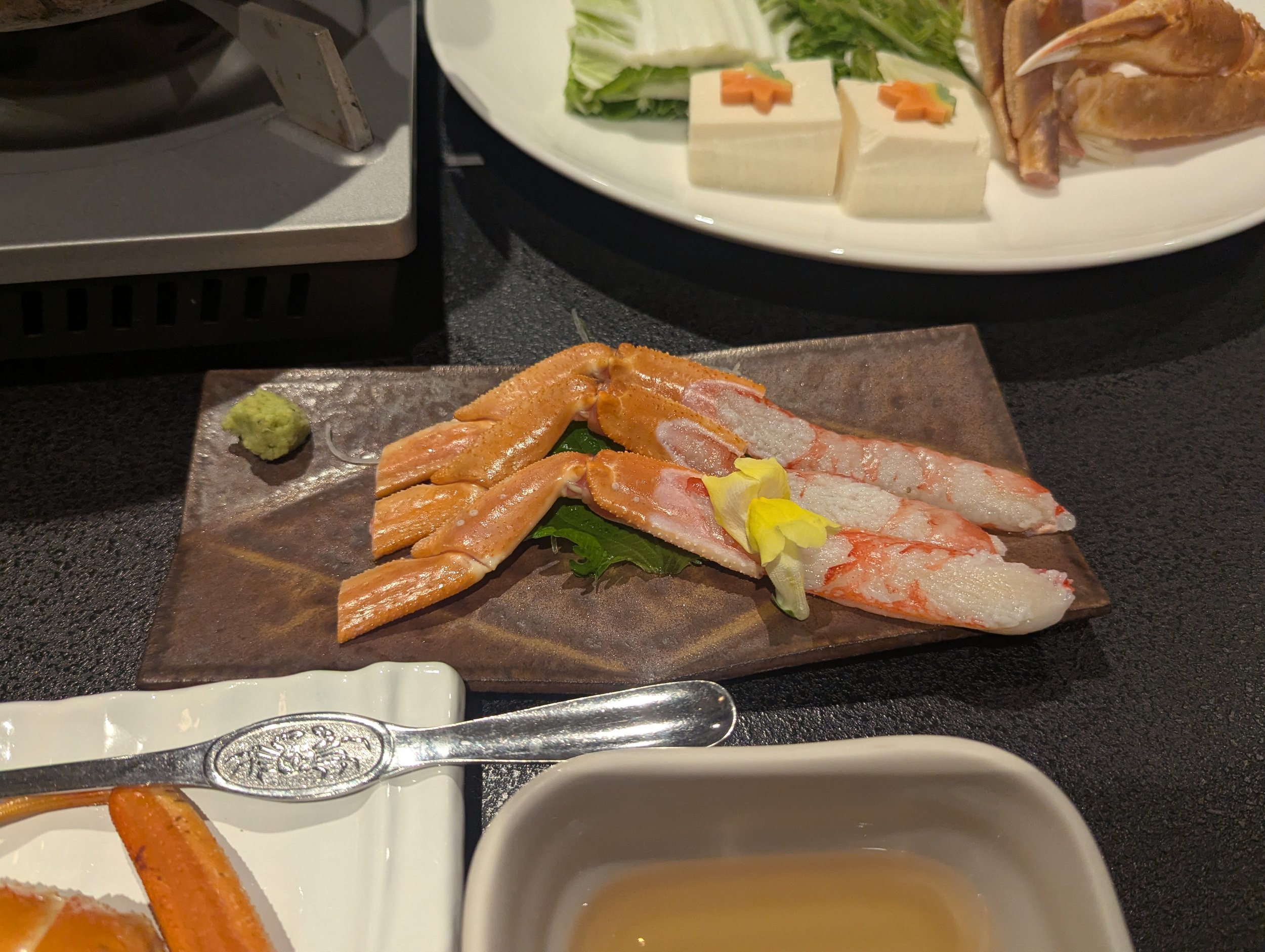
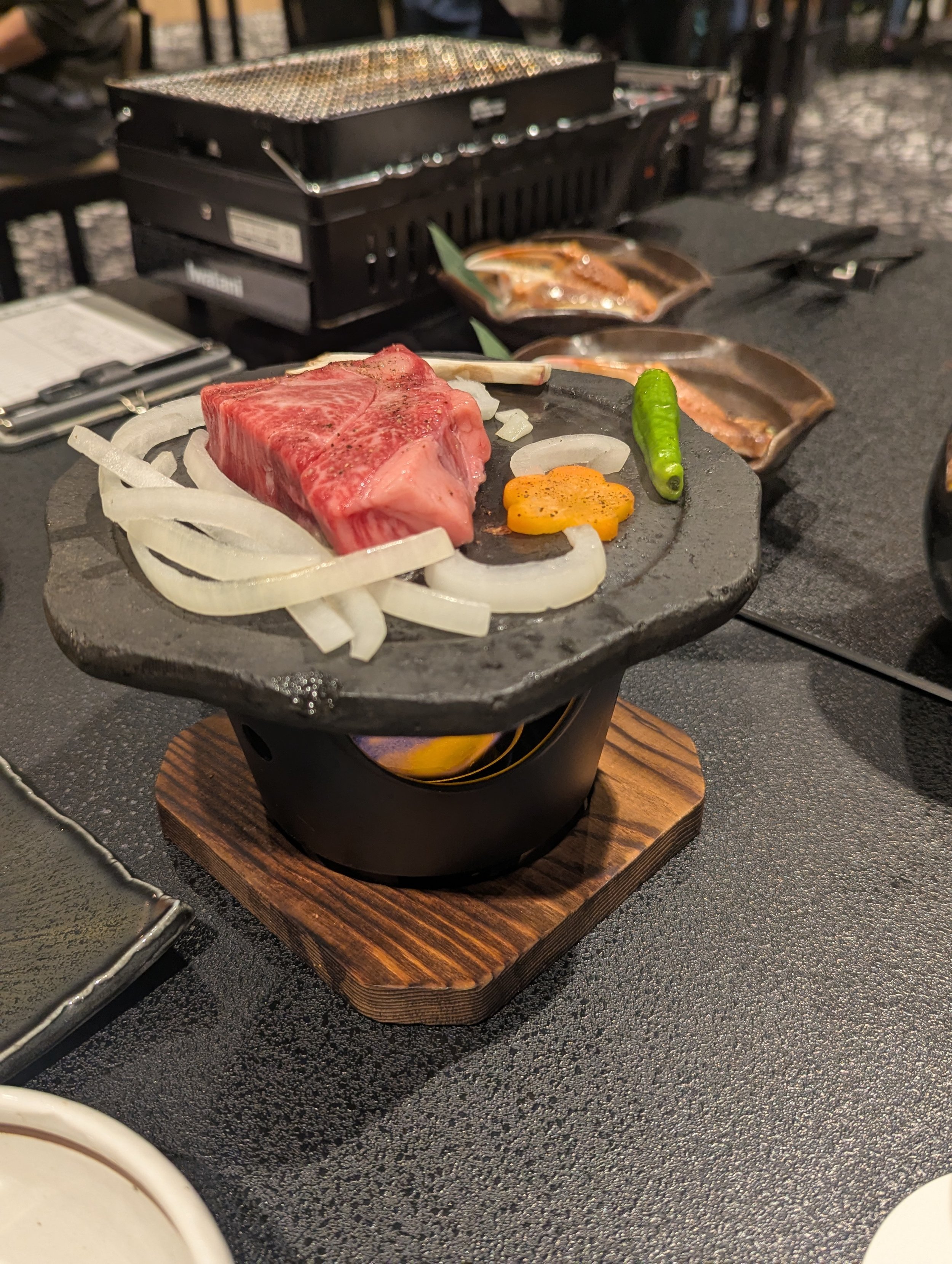
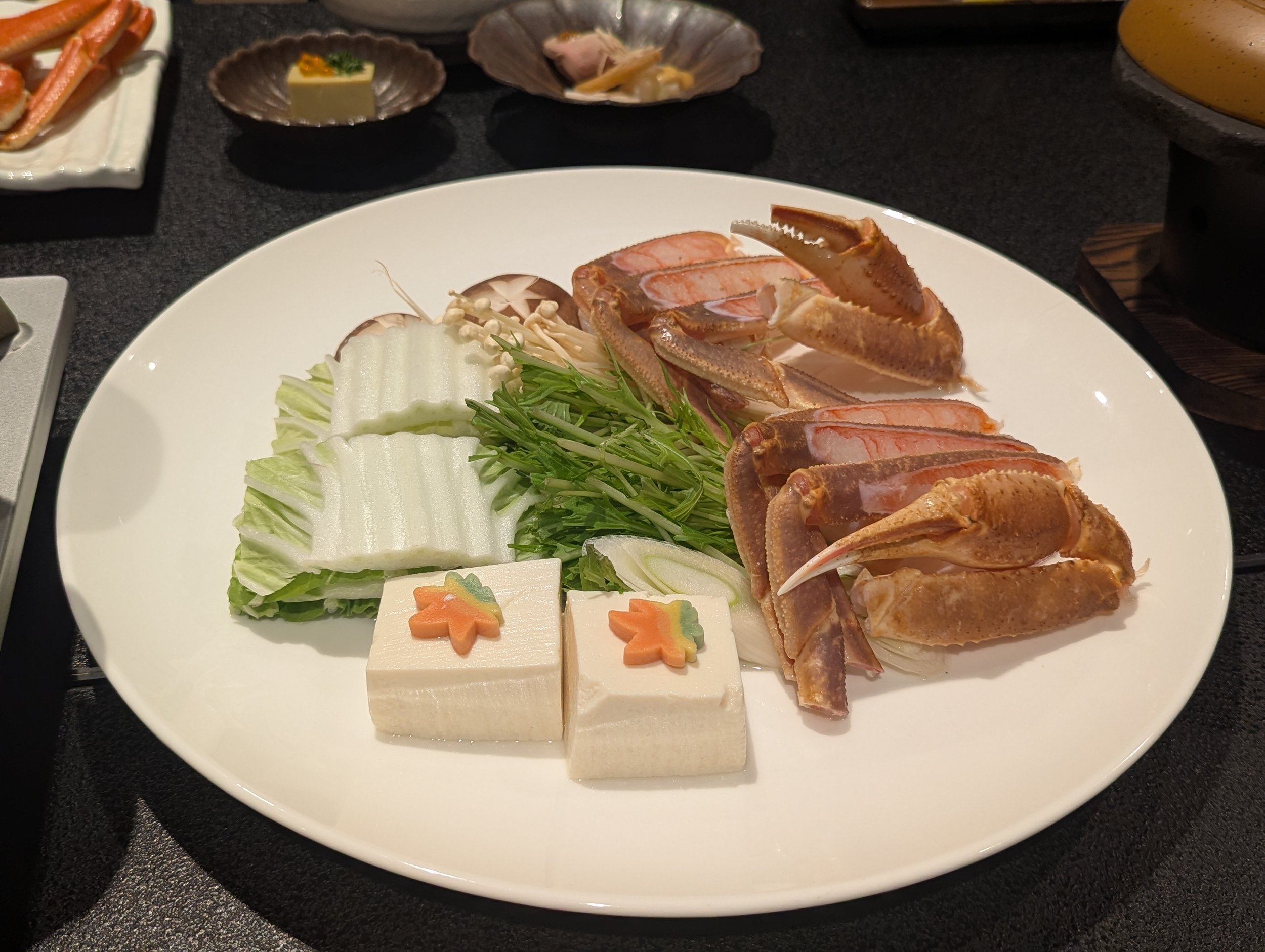
This meant two full crabs per person. And these crabs were NOT small. We each had one full boiled crab, half a crab for shabu shabu, half a body and one claw grilled, three legs as sashimi, plus regular sashimi (two pieces of a white fish that was maybe sea bream, two pieces of salmon and two shrimp), chawanmushi, and Tajima beef.
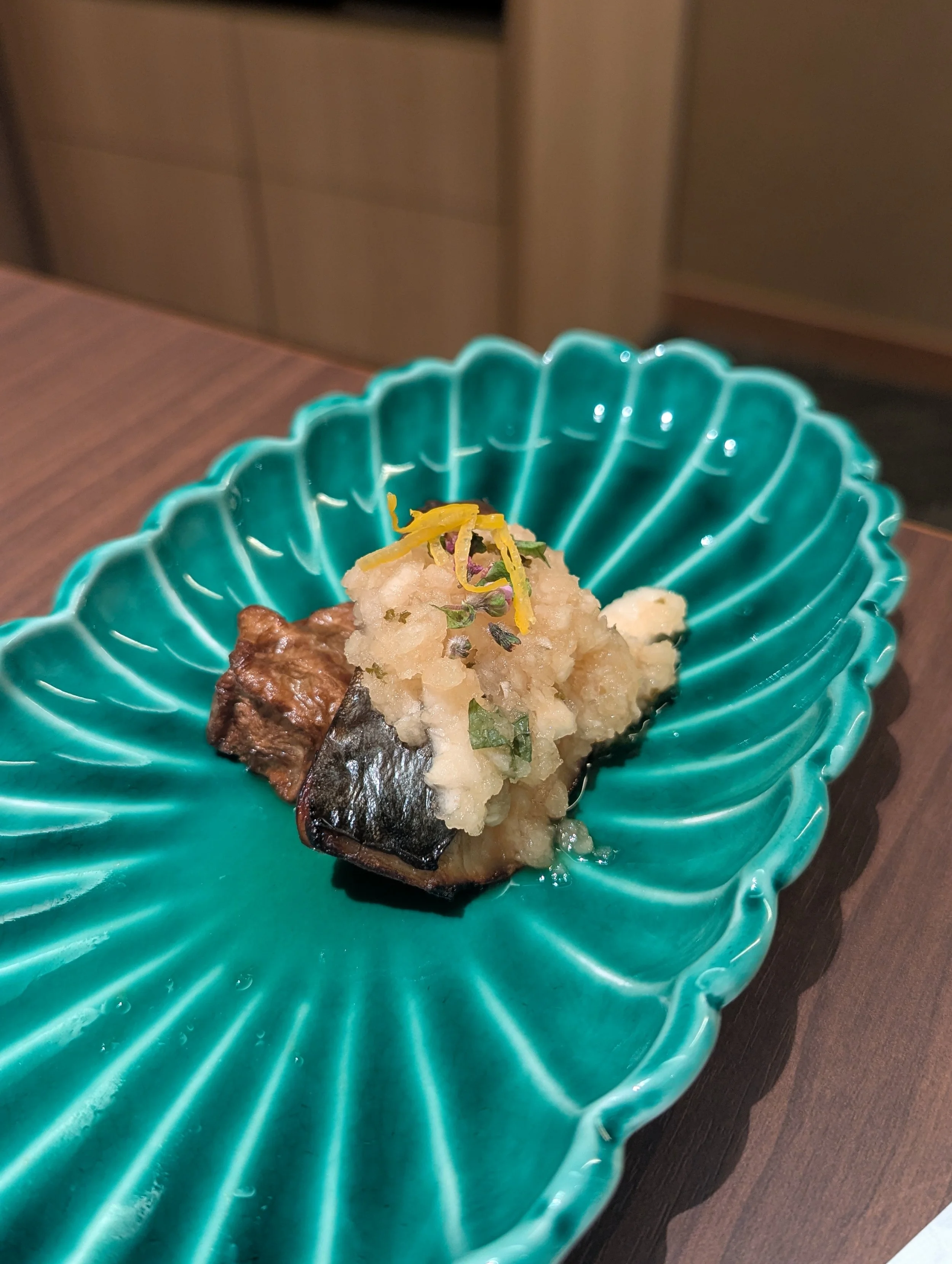
The special winter appetizer was duck, turnip, lotus root, crab paste, crab fish cake. There was a side of crab miso tofu that was really delicious.
They offer hand towels and refresh it halfway through the meal. Each person has a bucket on the floor for shells. The vinegar they provided to dip crab in was really good - vinegar is not normally my thing but it was perfectly complimentary. I had the black bean tea and Kevin had roasted green tea - it comes in small cups but you can ask for refills. The sukiyaki broth was so good, even the cabbage that was cooked in it. In my opinion, the wagyu didn’t have as much of the richness and beefy flavor as other types of wagyu we’ve had in the past. Dessert was an orange slice and two slices pineapple, which doesn't sound like much but was the perfect way to end the feast.
At the end, the staff asked, “Would you like the next one?“ referring to the next dish, when they add rice into the soup to make porridge. My no-filter, first response was “no” not realizing it may have come off rude. We were so stuffed. SO STUFFED. When he walked away, Kevin said we demolished, ironically, just as I pointed to my remaining half crab body that I hadn't eaten and couldn’t eat. Kevin said they shouldn't offer this menu option because it's too much, even as someone who loves crab. The first time we suffered to finish a meal. It was delicious, but just so much food.
There was no way we could've eaten the rice. We finished dinner shortly after 8PM…meaning we were eating for over two hours straight! In total I had one crab body, Kevin had three full crab bodies (his boiled crab, the shabu shabu crab, half for grilled that was his portion and half my boiled crab body that I couldn’t finish). He certainly looked pregnant with triplet crab babies when we were done!
Matsuba crab is a type of snow crab, which is low in calories and fat, and high in protein. A 100-gram serving of cooked crab meat containing approximately 80–90 calories, 1 gram of fat, and about 18g protein. During this trip, I was using a Stelo CGM; this meal “peaked” at 121mg/dL glucose, which was really good.
After dinner, we wanted to visit at least two baths, the ones that would be closed the next day, Wednesday: Mandara-yu (open 3PM-11PM) and Ichino-yu (open 7AM-11PM). We rolled our crab-filled bodies down the road, first to Mandara-yu, which was closer to our hotel. The women's side was very crowded and very very hot. As I was undressing, a white girl came into the changing area from the bath and her body was so red. I should have taken that as a sign as to how hot the water would be. I only stayed in for a few minutes because it was all I could handle. I attempted to go in the outside bath but there were only two single baths and they were taken. I was inside for 15 minutes total (undressing and dressing included). Kevin got to go in the outdoor single pot bath. It seems like a really cool concept and experience. Mandara-yu, the Water of Prayer, is known as Kinosaki’s first onsen and the beginning of the town. Mandara means the enlightened mind - which reflects back on the history of Kinosaki town and how it came to be after Dochi Shonin prayed for a thousand days.
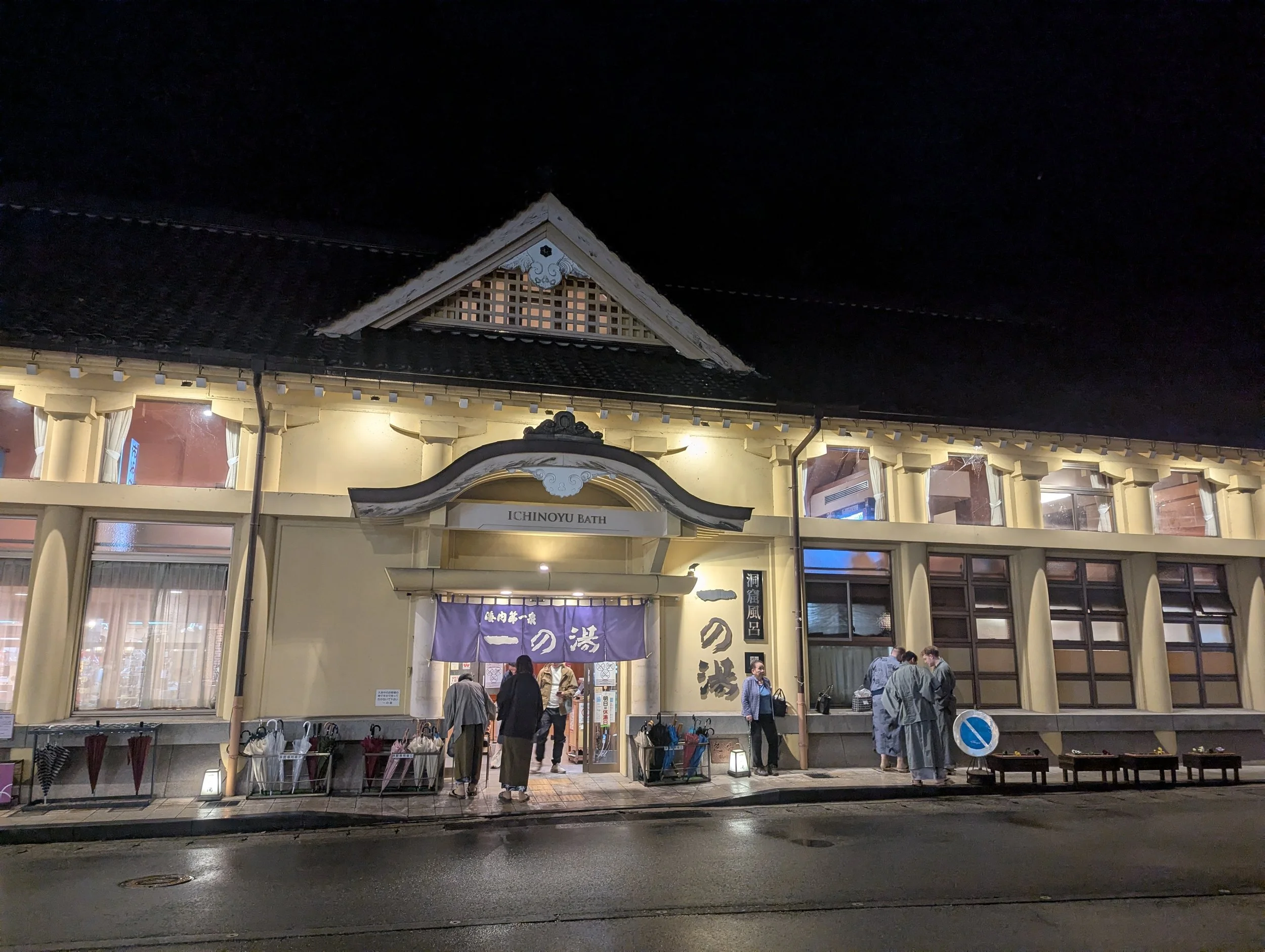
We went down the road to Ichino-yu, which resembles a kabuki theater. The outdoor bath was the cave bath, made of natural stone boulders. Both the indoor and outdoor baths were not as hot as the indoor bath at Mandara-yu. There is a second floor lounge with vending machines of milk, ice cream and drinks. We were here from 20:55-21:15. Ichino-yu is the Water of Luck. Its name translates to “number one bath.”
Each bathhouse has at least one stamp. All of the bathhouses had locker rooms to store your clothing. As with all onsen, you must be completely naked, and shower before entering the bath. You may bring a towel into the bathing area, but it must not touch the water. Hair, too, must be tied up so it doesn’t touch the water. Some bath houses, I don’t think all but I may be wrong, have lounge areas.
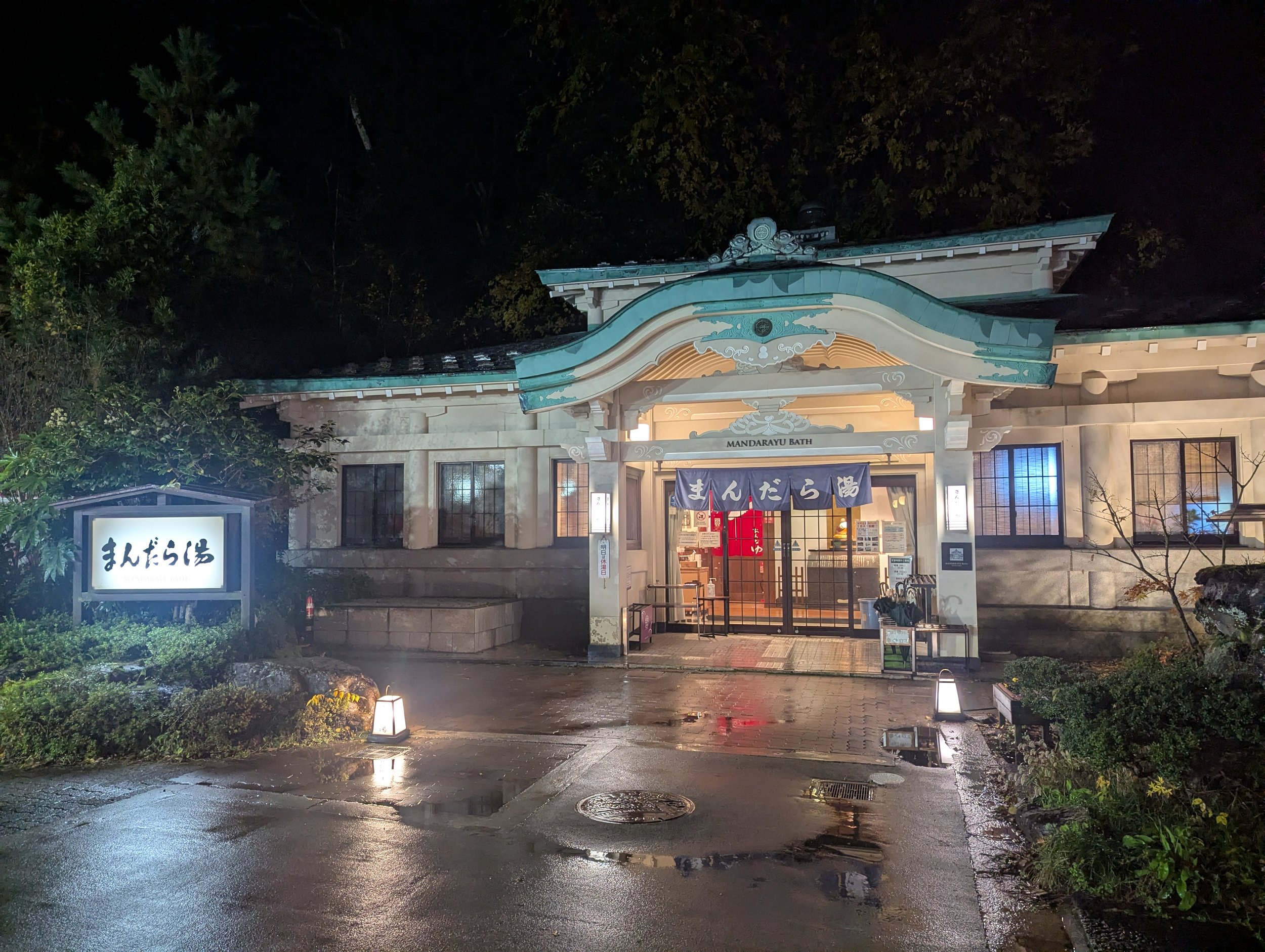
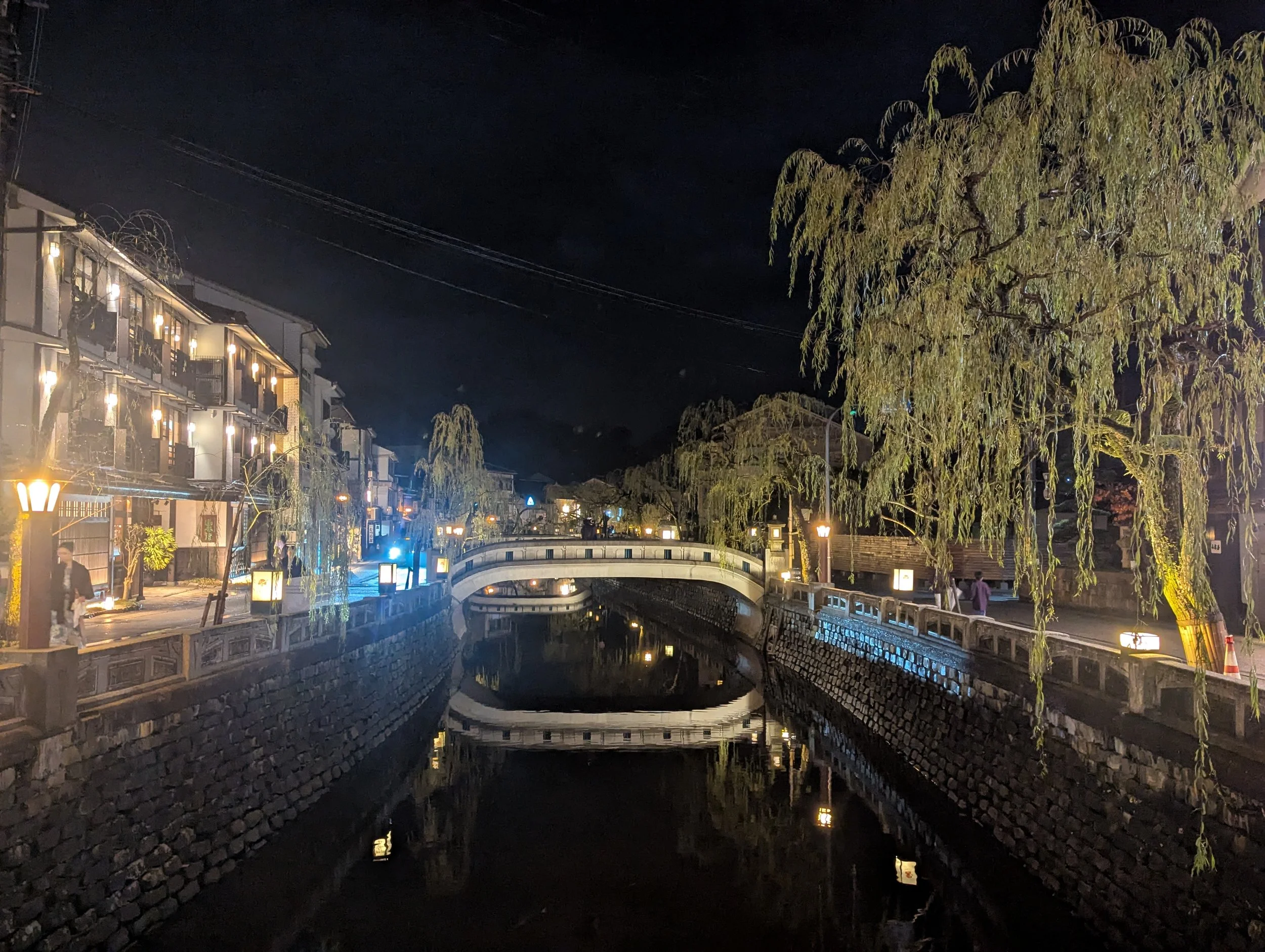
We got matcha ice cream down the road from one of the few shops that was still open, and walked around a bit. It had been raining when we first left the hotel, but by this time, the rain had stopped and the cool night air felt refreshing on our healed hot spring bodies. The way the lights reflect off the canal is beautiful. Made it back to the hotel around 21:45. Tried on the hotel pajamas but thy were very small for us. Ready for bed at 22:20.
Day 7: Wednesday, December 3rd - Kinosaki Onsen
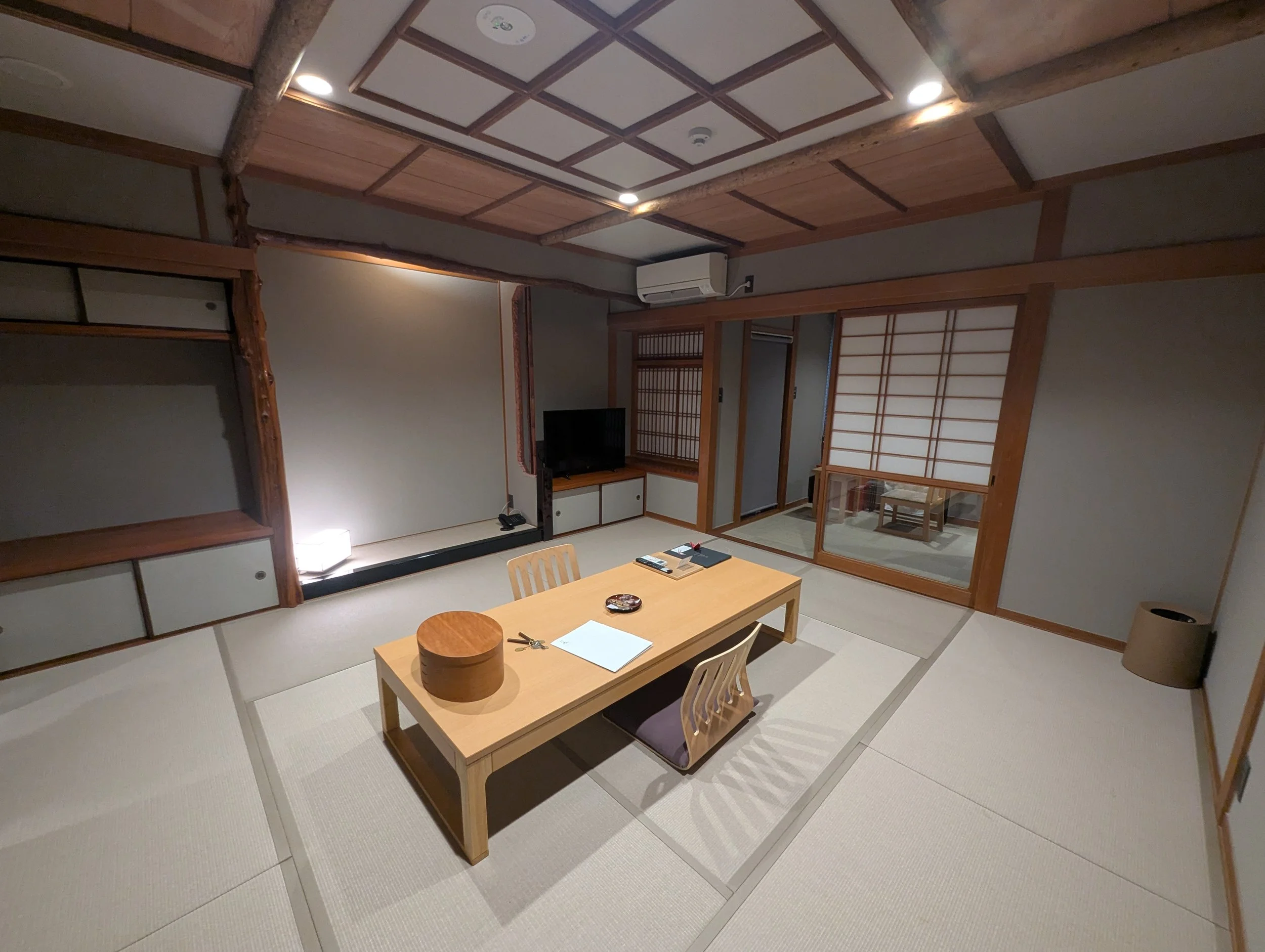
There’s nothing quite like a futon for a good night’s rest. I woke at 6 just before my alarm. Our plan was to go to the onsen in the hotel as early as possible after it opened at 6, in efforts to have it as much to wourelves as we could. Our breakfast was pre-scheduled for 7:30. We got ready and enjoyed the onsen from 6:30-7. I had it all to myself. There was an indoor bath and a small open air bath with beautiful stonework and stone lanterns on the far end. It wasn’t a true open air bath in that you were truly outdoors - there were walls and a ceiling, but space between the two, which allowed air in. It felt like open air, but couldn't visualize the sky to be sure.
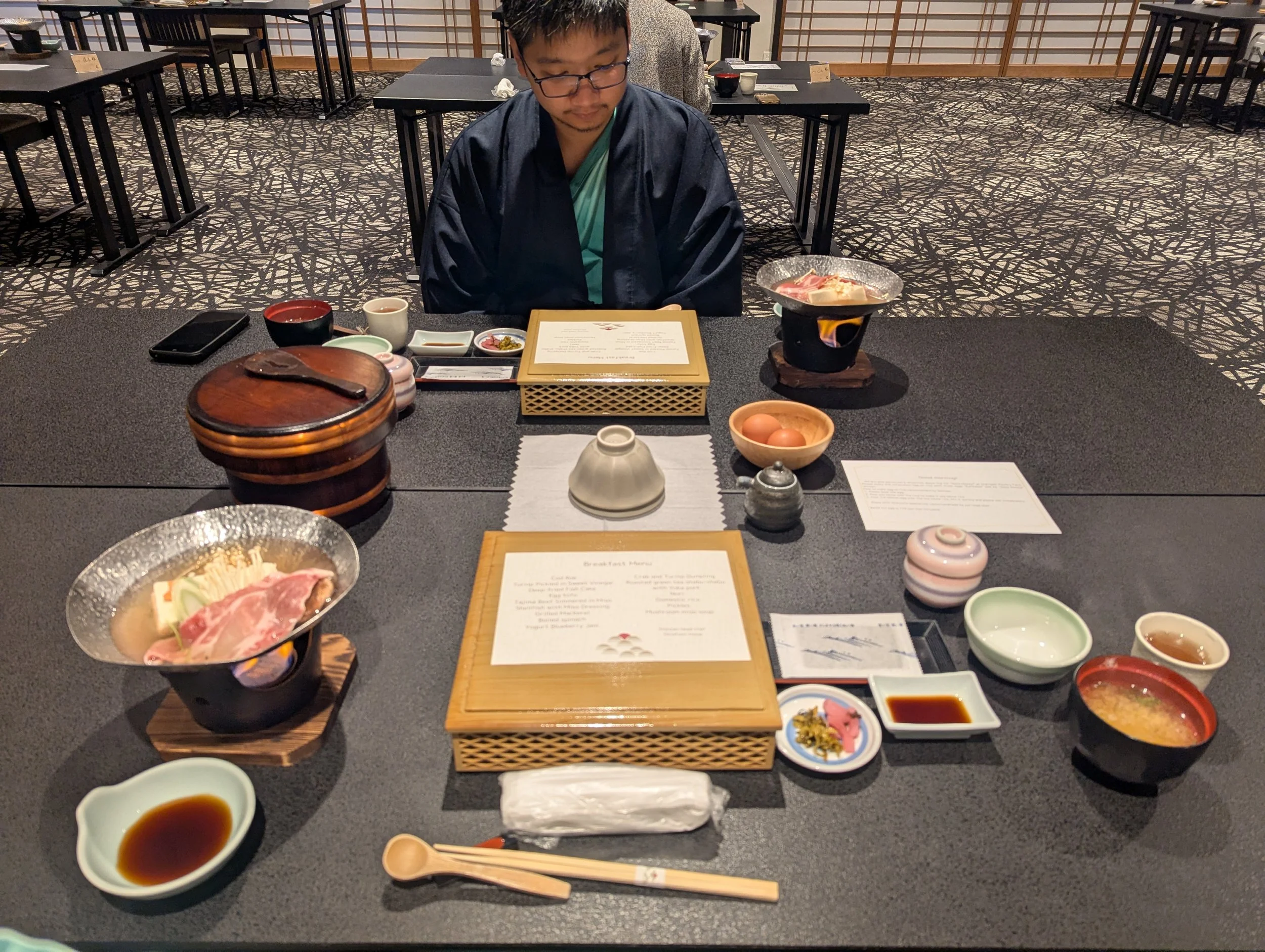
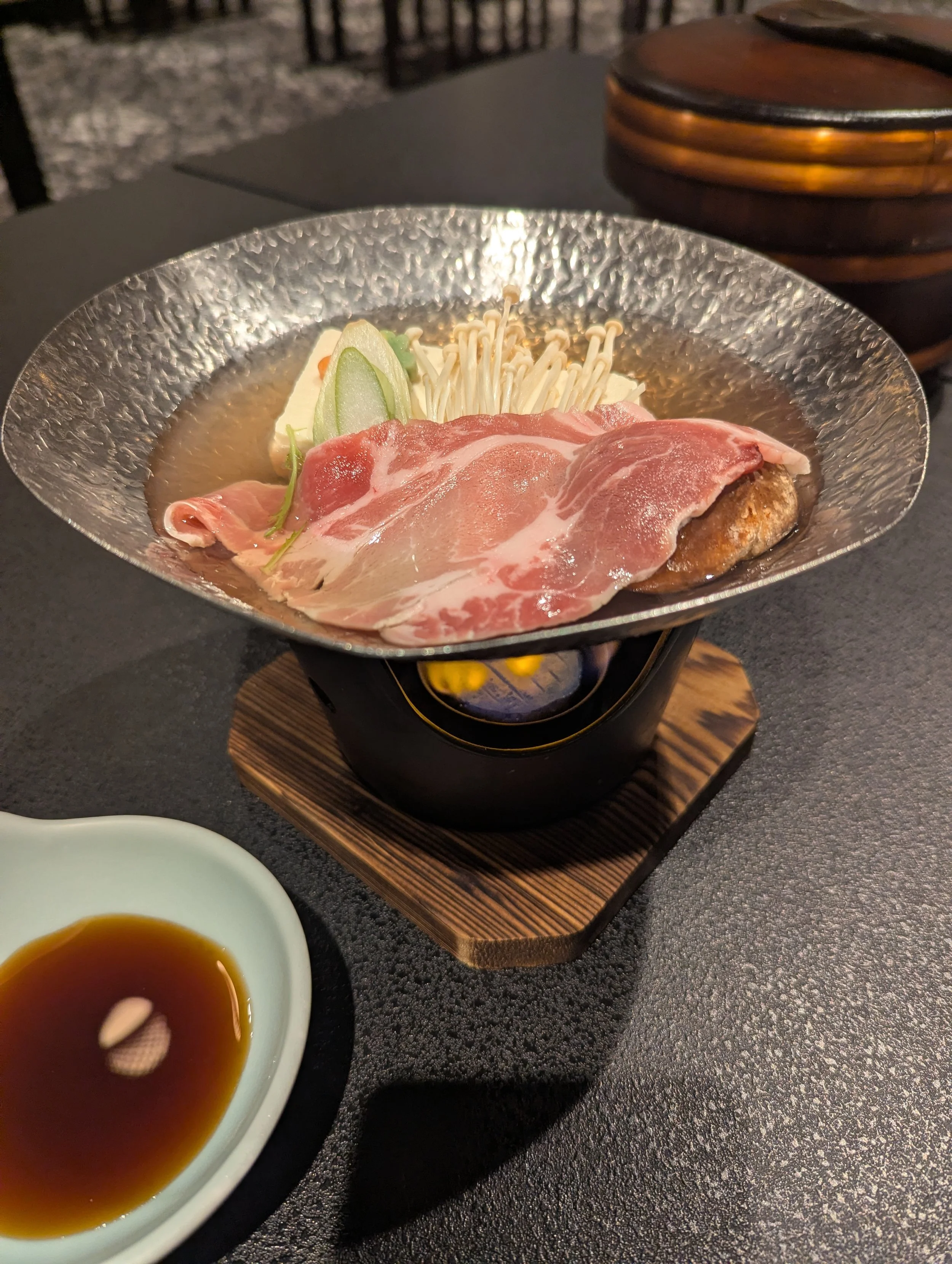
We returned to the Momiji and Sakura rooms for breakfast shortly past 7:30. In addition to the assortment of little dishes, we had miso soup, shabu shabu in green tea and nori to dip in soy sauce. There was also a bowl with an egg for each of us. They get eggs from a local poultry farm called Goto Momiji and one dish is to beat an egg and pour it over soy sauce rice. This simple dish was surprisingly delicious and may be one of my favorites. Japanese rice also just hits differently. You could feel each individual grain of rice, and adding the saltiness of the soy sauce and the creaminess of the egg was just divine.
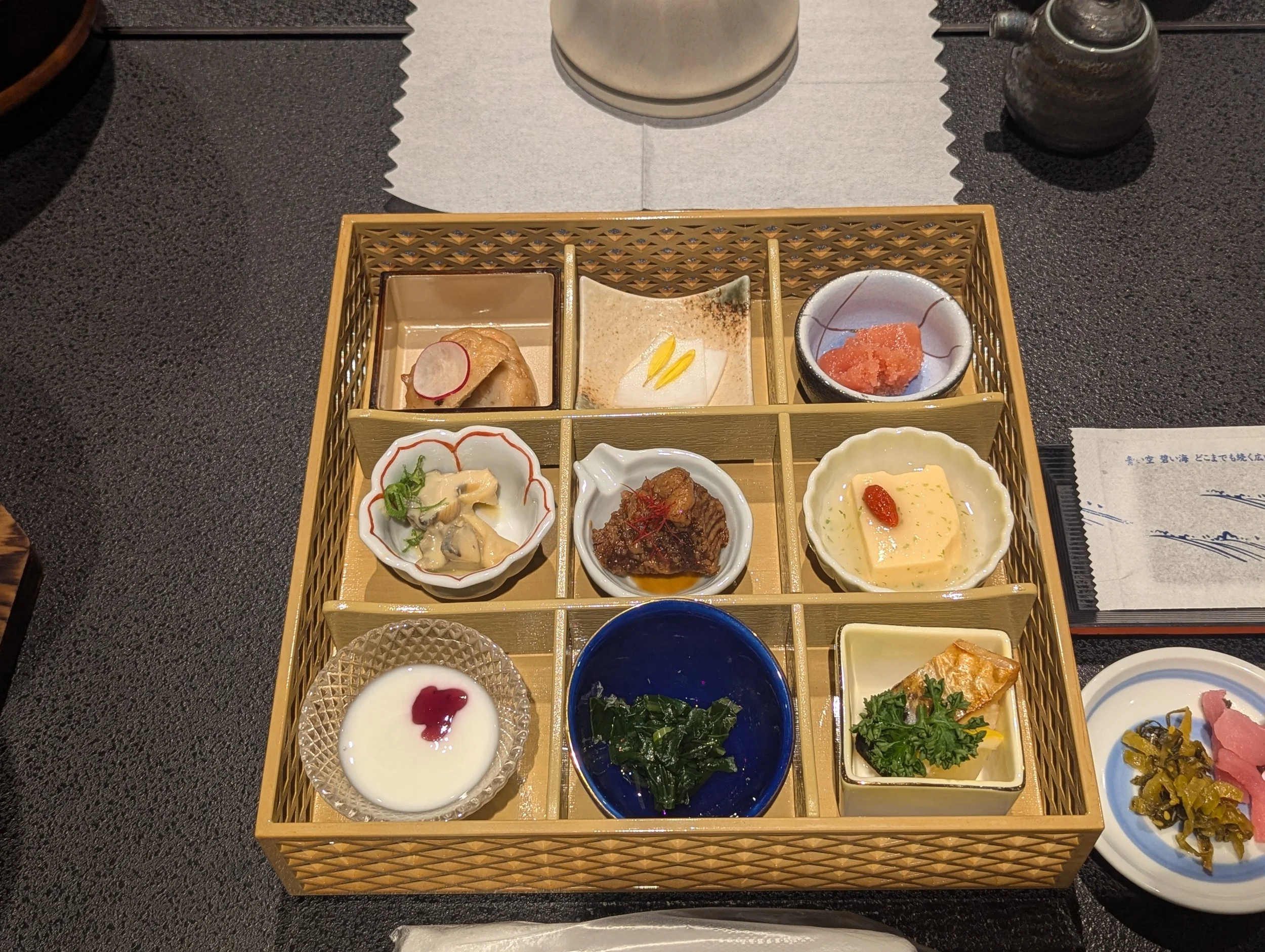
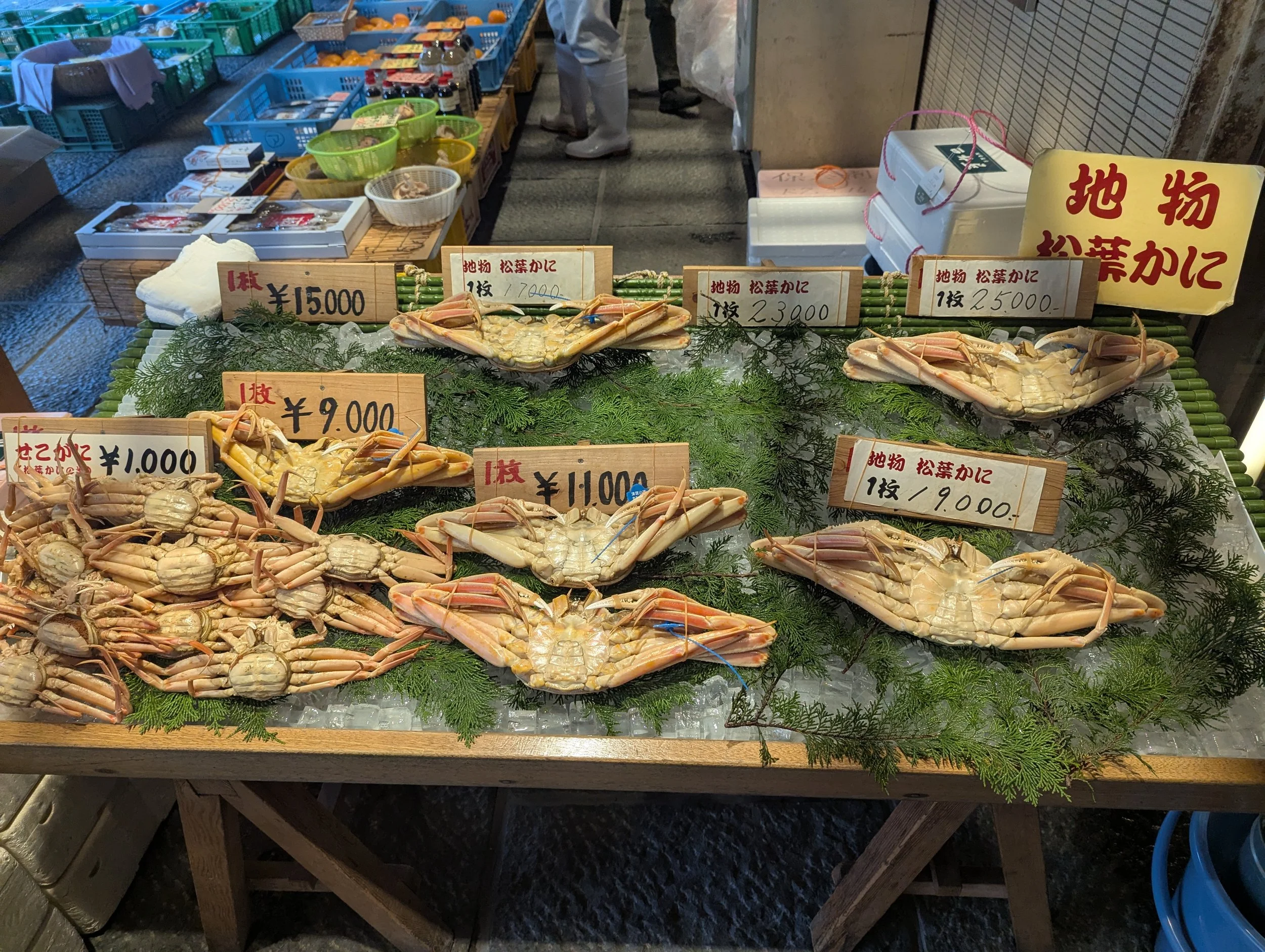
We finished breakfast at 8:30 and returned to our room to pack up and get ready to check out. We checked out of Shinzan at 9AM and dropped off our luggage at our next hotel, Nishimuraya Hotel Shogetsutei, which was just a few minutes further down the road. There was a market just outside the entrance to the hotel, which sold local produce as well as matsuba crab. We knew that our room wouldn’t be ready so early, as check in time isn’t until 2PM in the afternoon, but they were happy to hold our luggage. Our bath passes from Shinzan were valid until 1PM, and Nishimuraya provided us with towels to bring with us to visit the public baths.
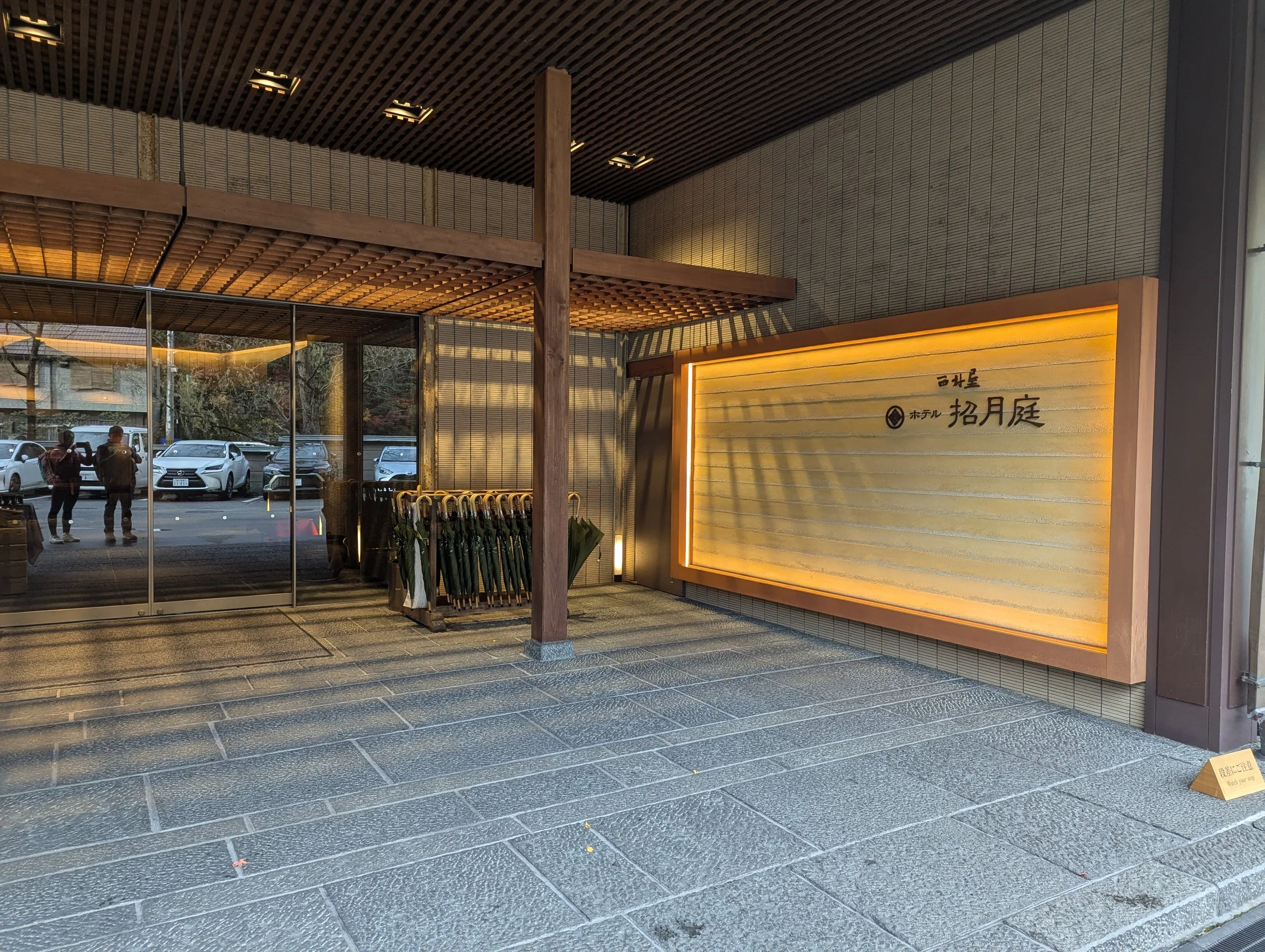
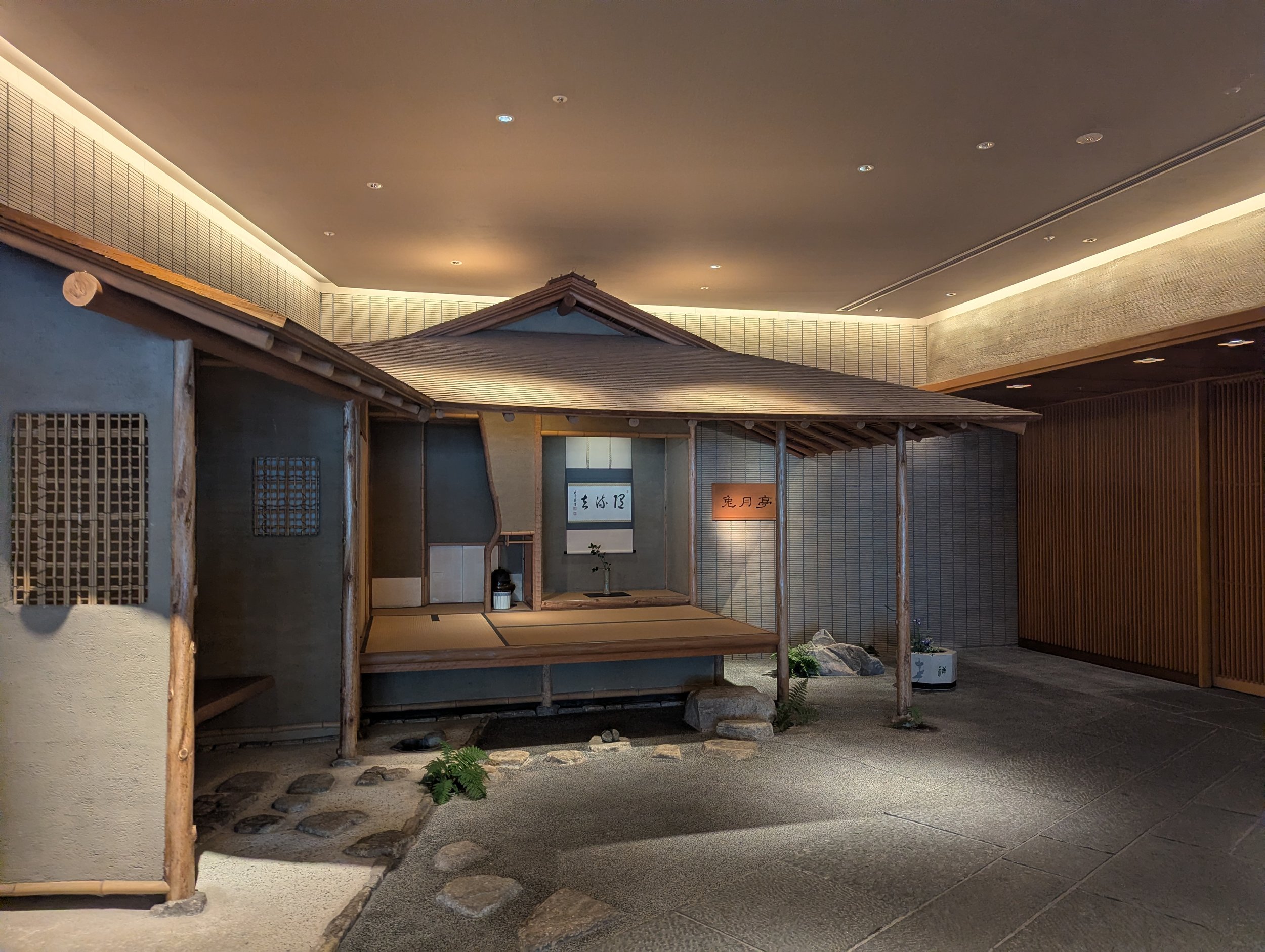
Our first bath was Goshono-yu, along the main road, not far from Ichino-yu. We arrived at 9:30. Goshono-yu was a large open air bath. Part of the bath was covered by an extended ceiling, the rest open to the sky. It got progressively deeper and hotter toward the raised garden with waterfall and red maple leaves, as well as hotter, and there were a couple smaller baths that were at the base of the waterfall. Off to the side was a smaller area that had standing jets for a back massage. We stayed for forty minutes - and this bath would turn out to be my favorite. In the lobby was a tatami mat area to lounge and enjoy cold drinks after bathing.
We popped into shops on our way to the main strip of town, which also gave us respite from the rain. We stopped in a cafe at 11, called Tokiwa Garden and got cappuccino (700 yen each, or the equivalent of $9 for both). We sat at bar seats looking out the window at the canal and a stone bridge. The day was 45 degrees and raining all day - not the best weather, but it certainly made us all the more grateful for the onsen to warm us and heal our souls.
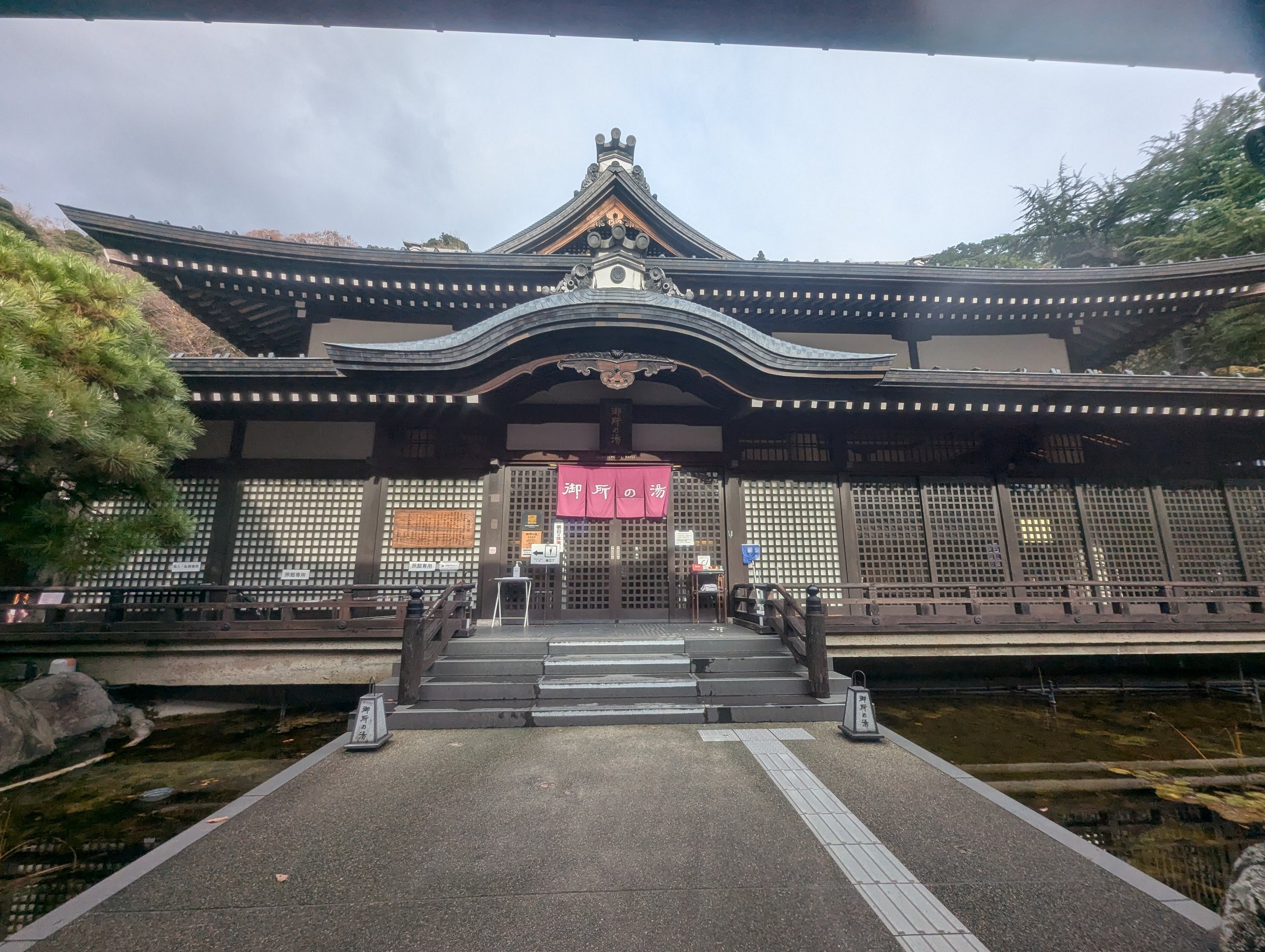
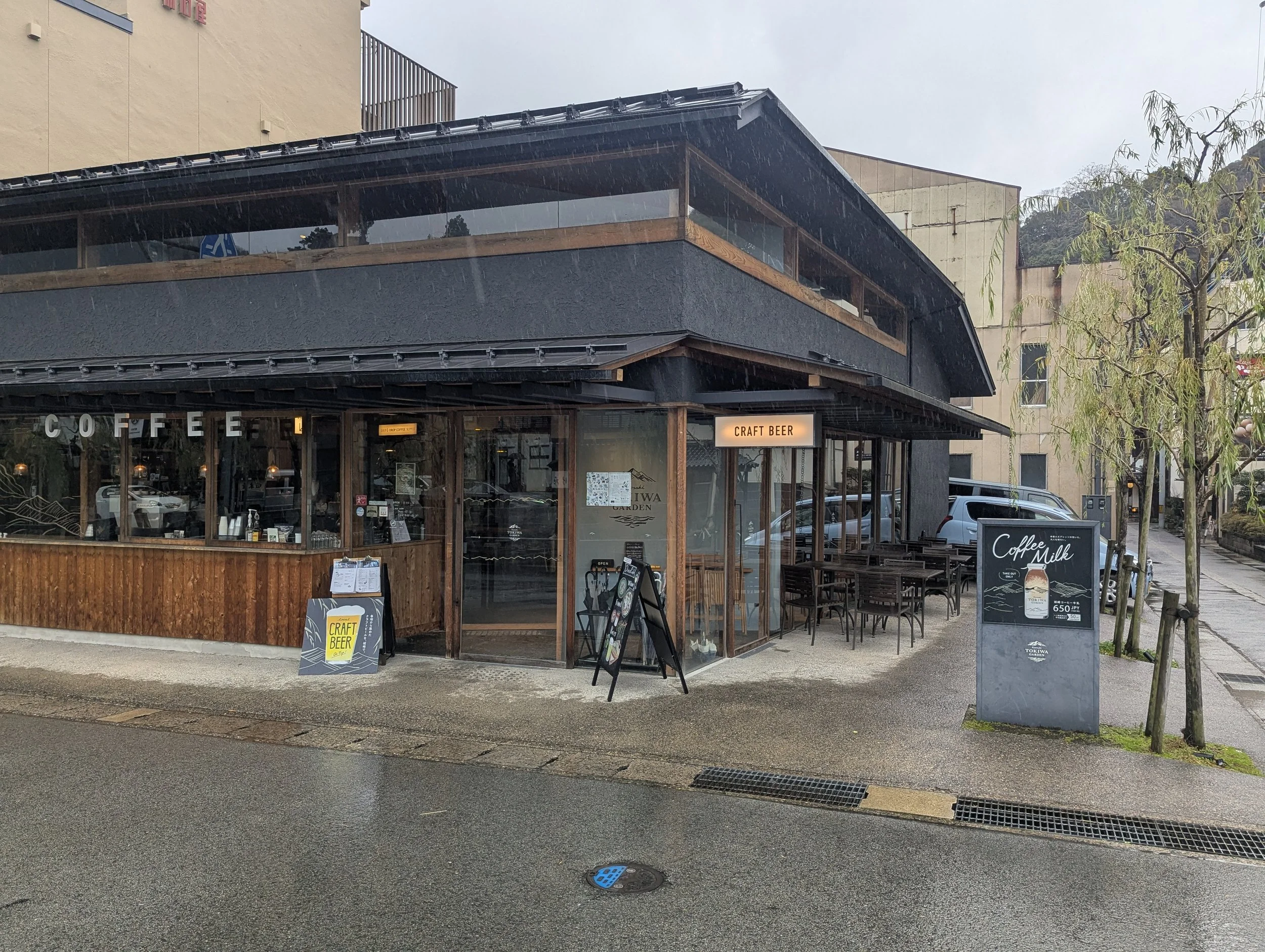
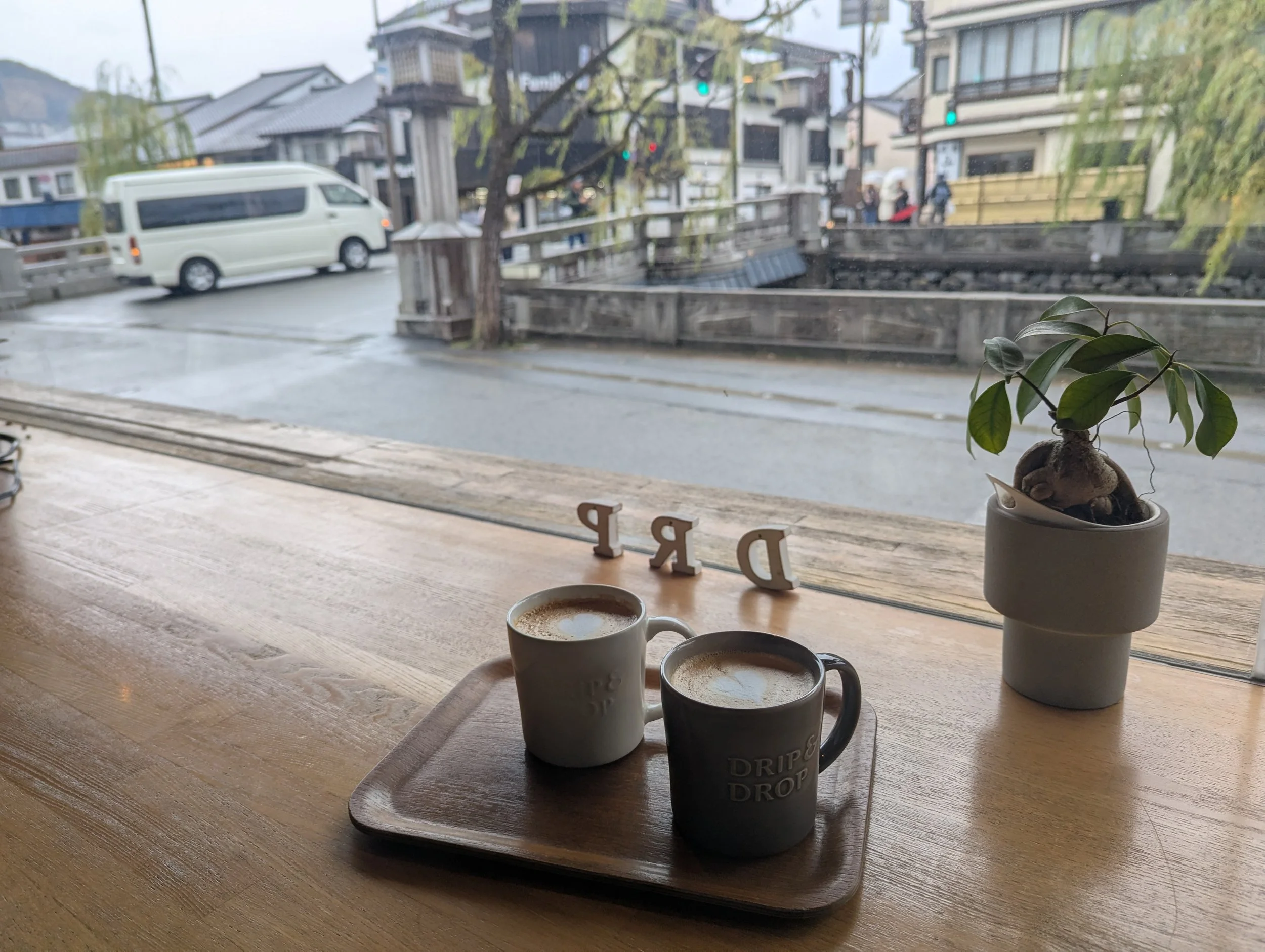
After we finished our cappuccinos, we soaked in Jizo-yu for half an hour, which was right across the street from the cafe. Jizo-yu, with its hexagonal patterns is reminiscent of the nearby basalt rock formations of Genbudo Park, was inspired by a Japanese lantern. Jizo-yu is the Water of Safety.
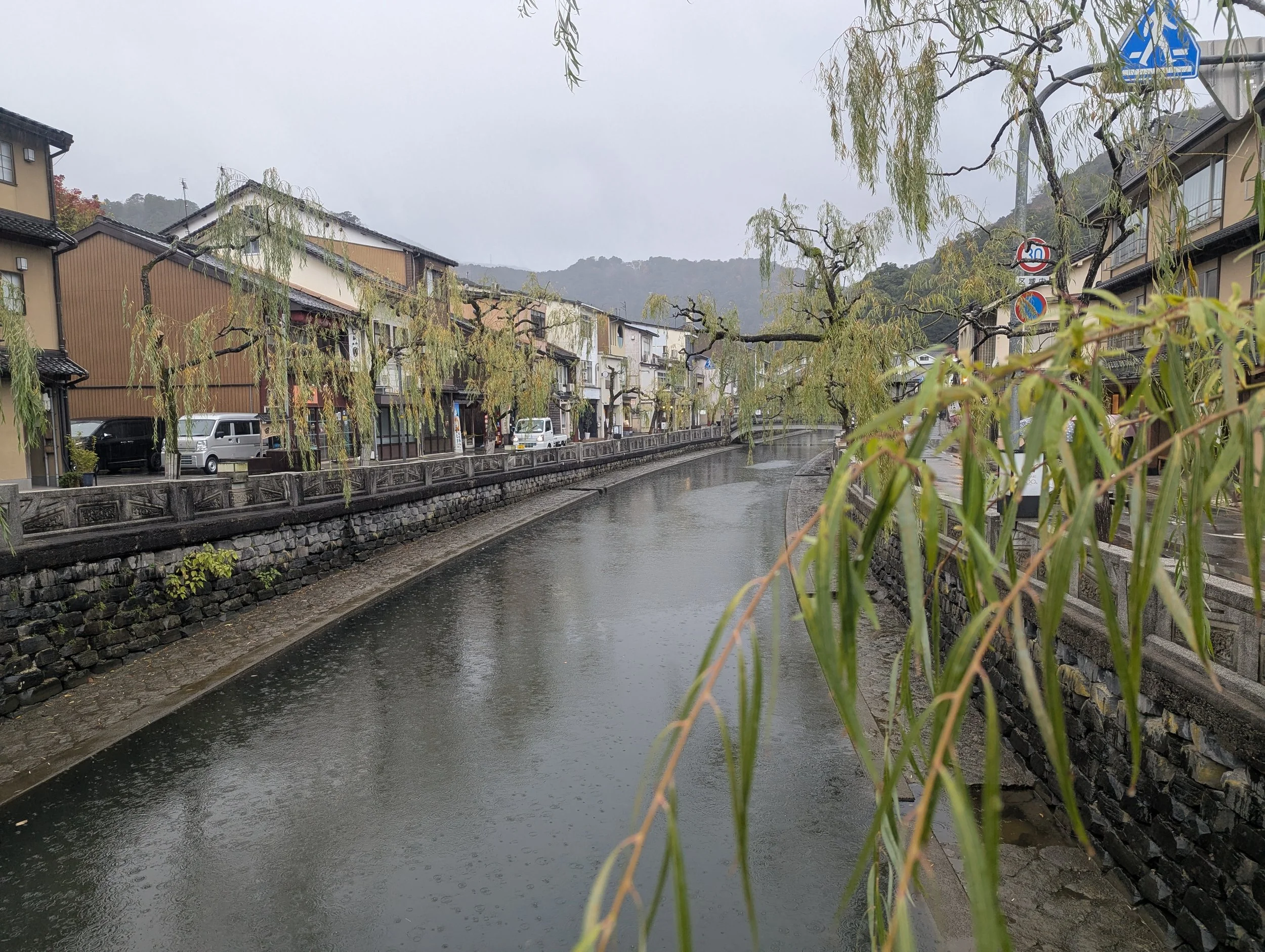
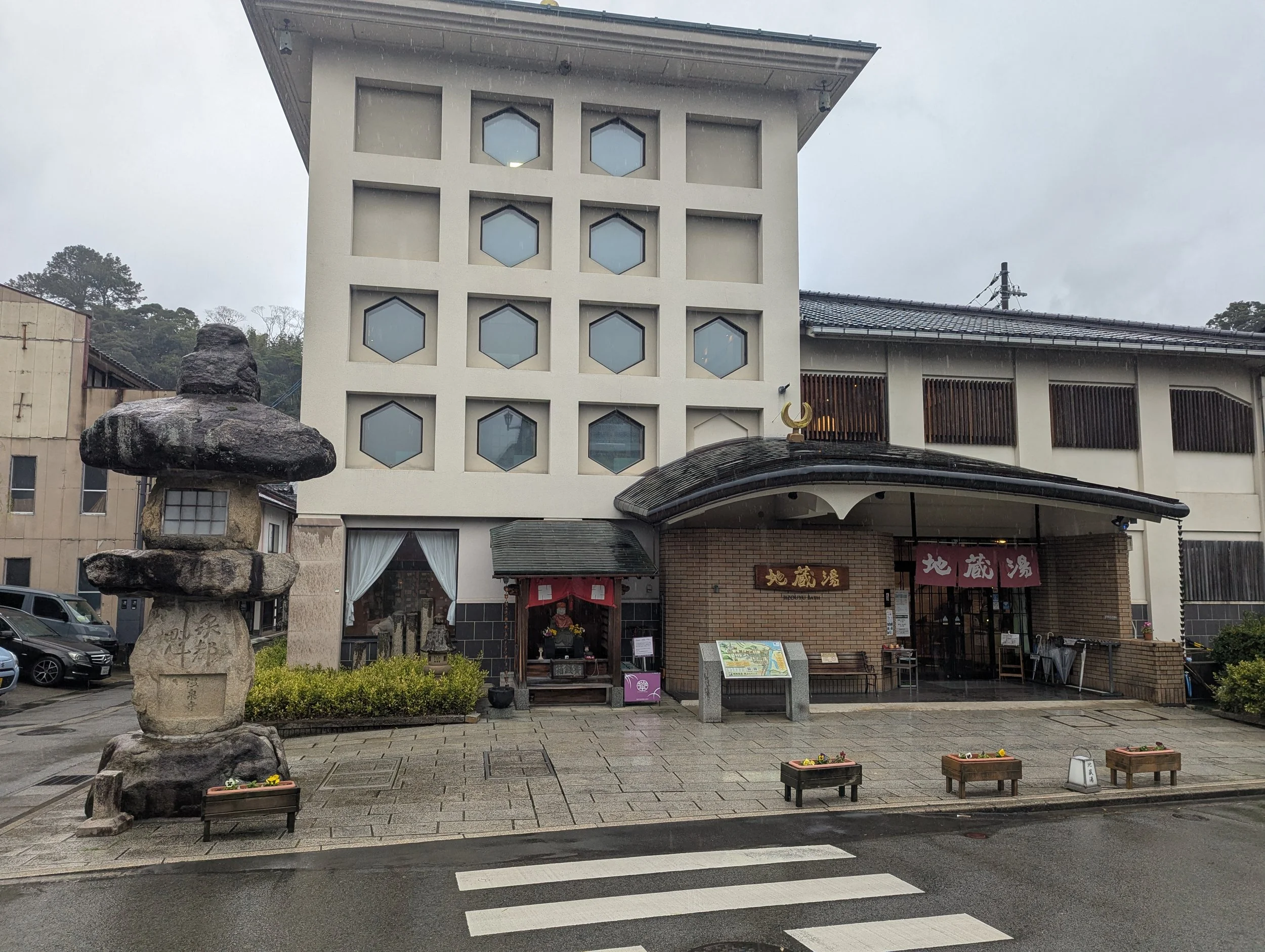
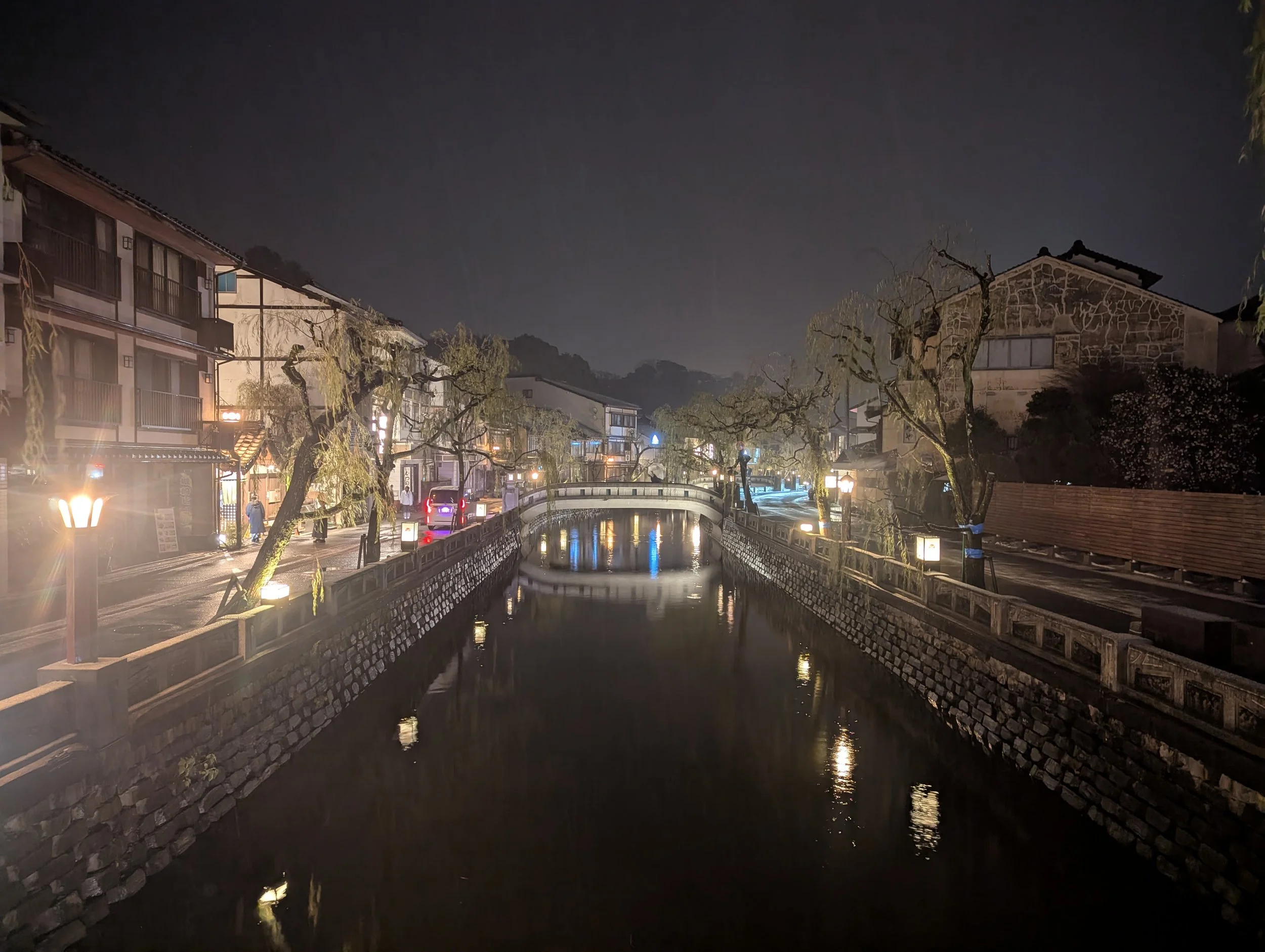
We continued walking the main streets of town. There are plenty of souvenir shops and it was just so nice to stroll the town, despite the rain.
When doing our research, we learned of little shops that specialized in different snacks and treats. One of these treats was dorayaki. There was a shop I had remembered passing the day prior when we were on our way to the ryokan, and we were headed that way. It turns out, it is a small souvenir shop in front, and opens up to quite a large cafe and book store in the rear.
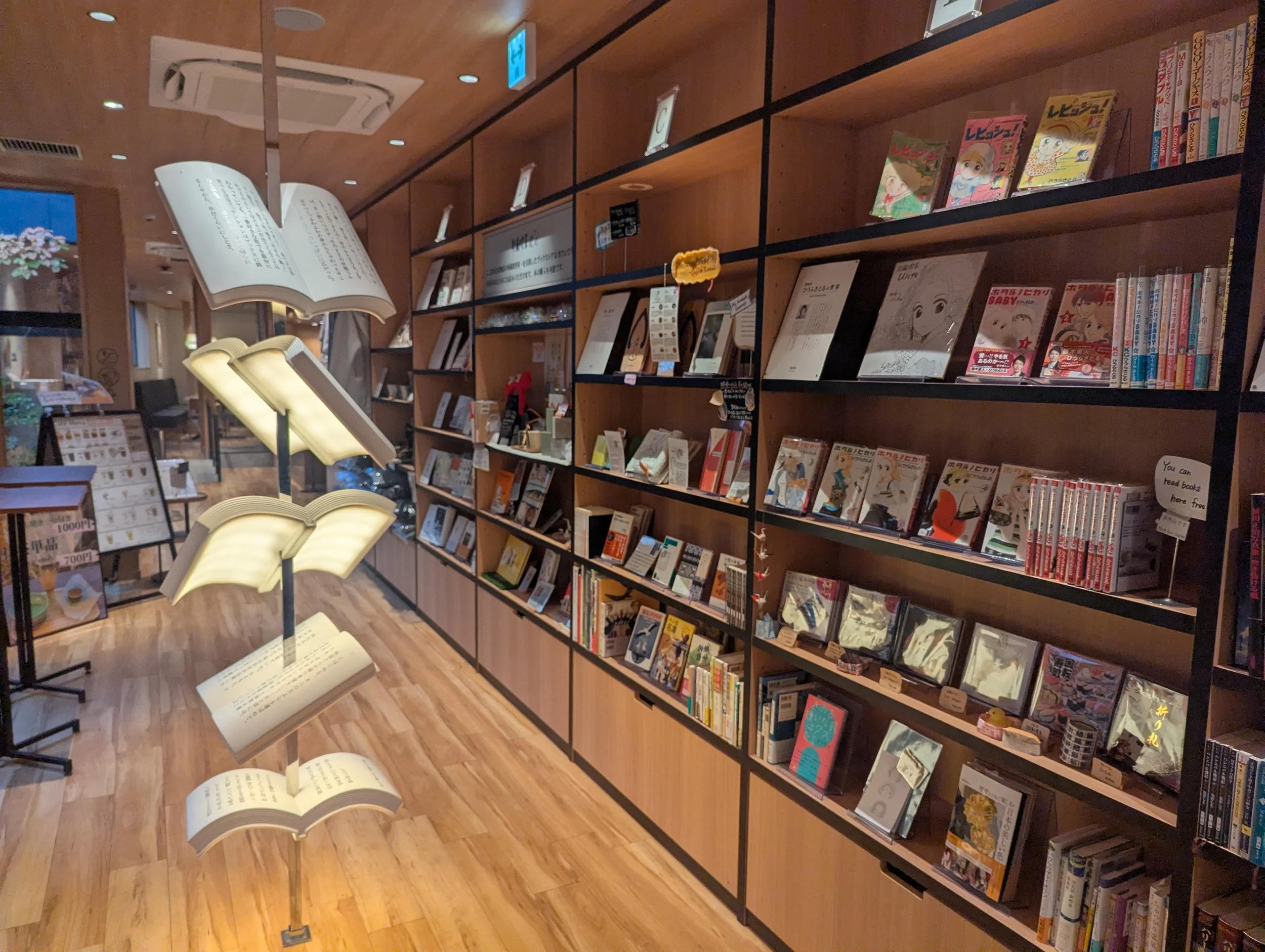
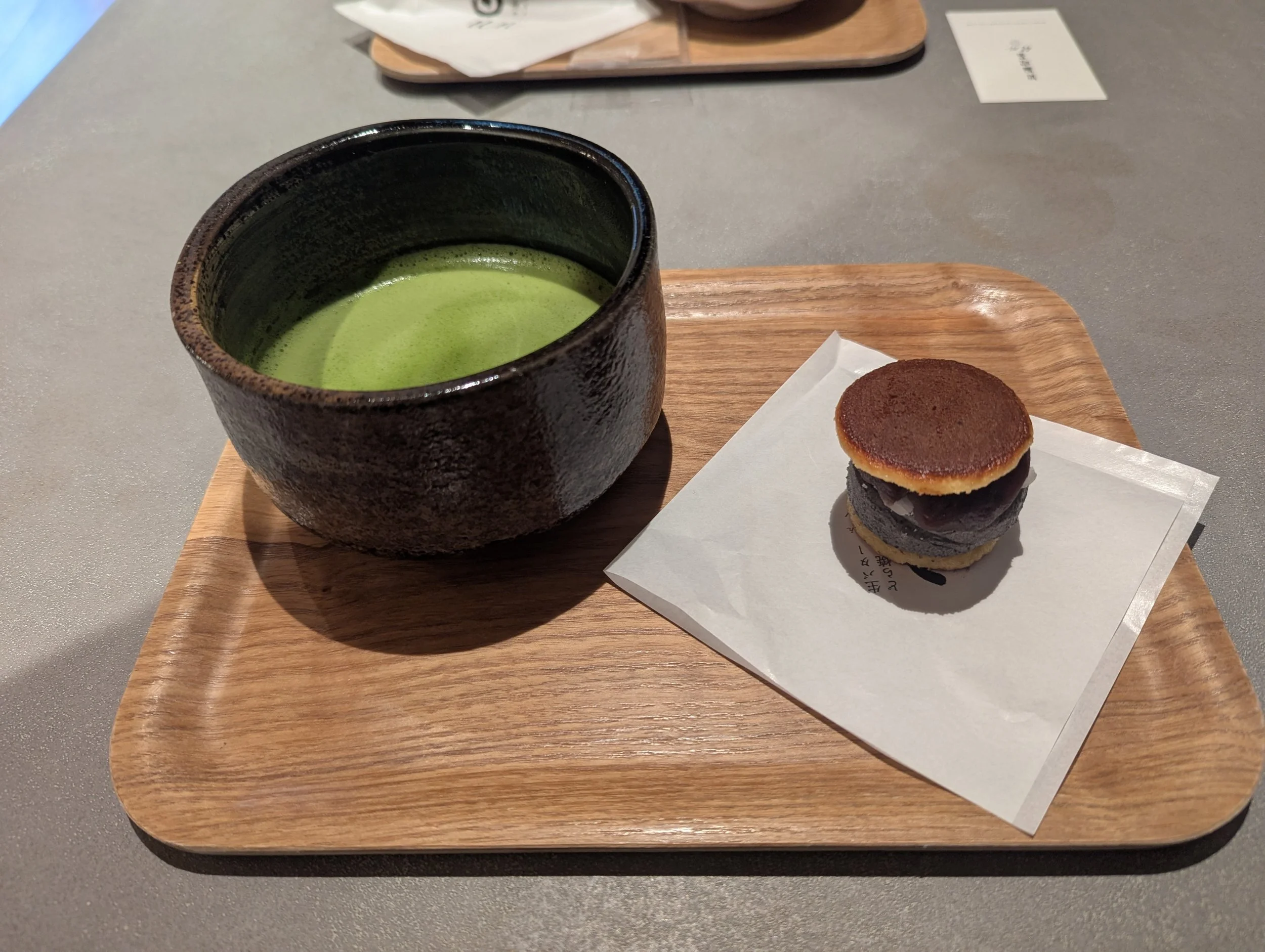
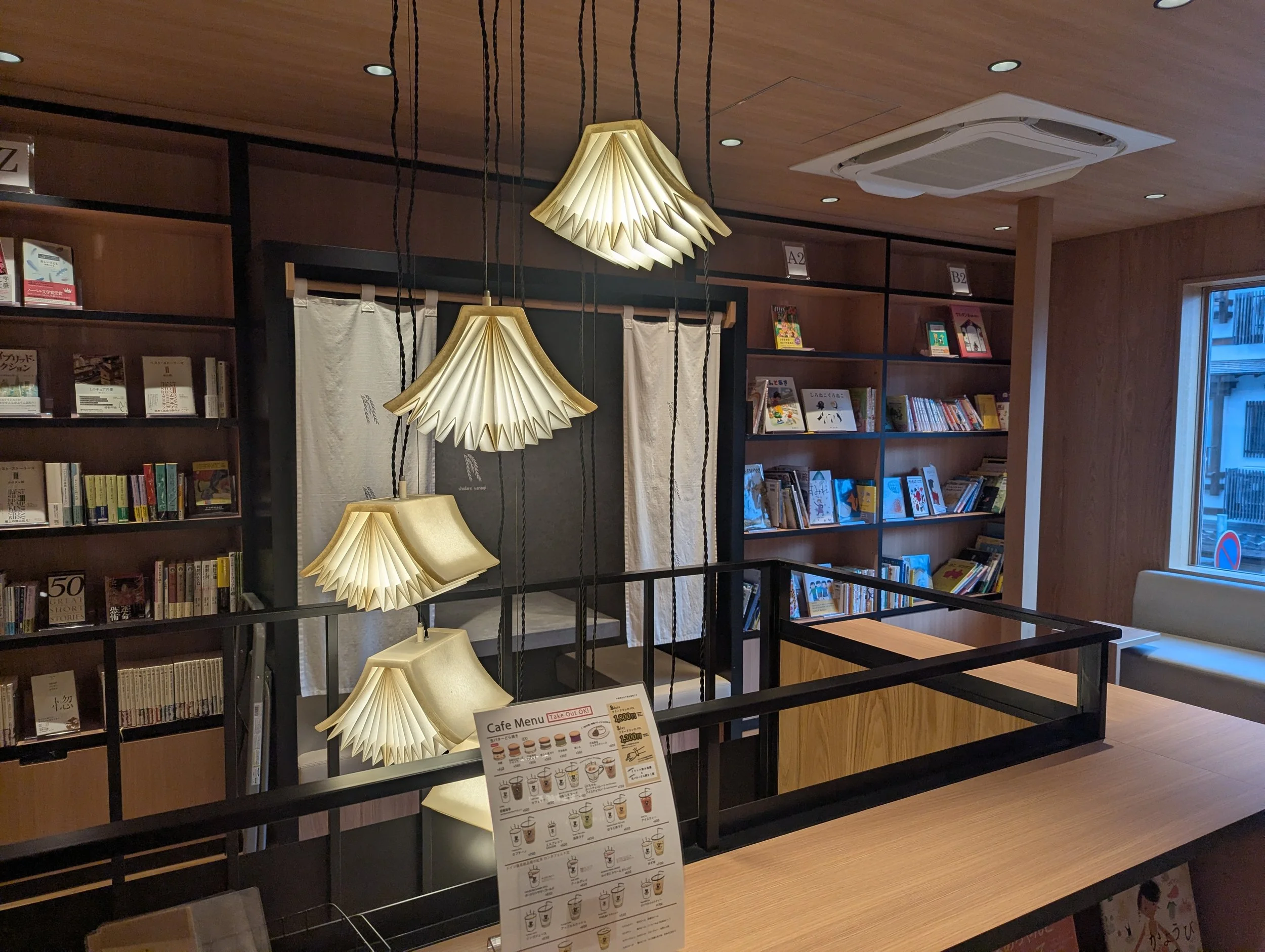
We placed our order at the counter of Kinosaki Un Cafe, the cutest book themed cafe. I ordered a black sesame dorayaki and my husband had a matcha dorayaki, both with a bowl of matcha. There a small seating area on the first floor, but the entire second floor is filled with books and cute seating areas. There’s bar-like seating by windows, and little booths, as well as other tables. We spent a leisurely 45 minutes here, enjoying our treats - this was the start of what would be our mini food tour.
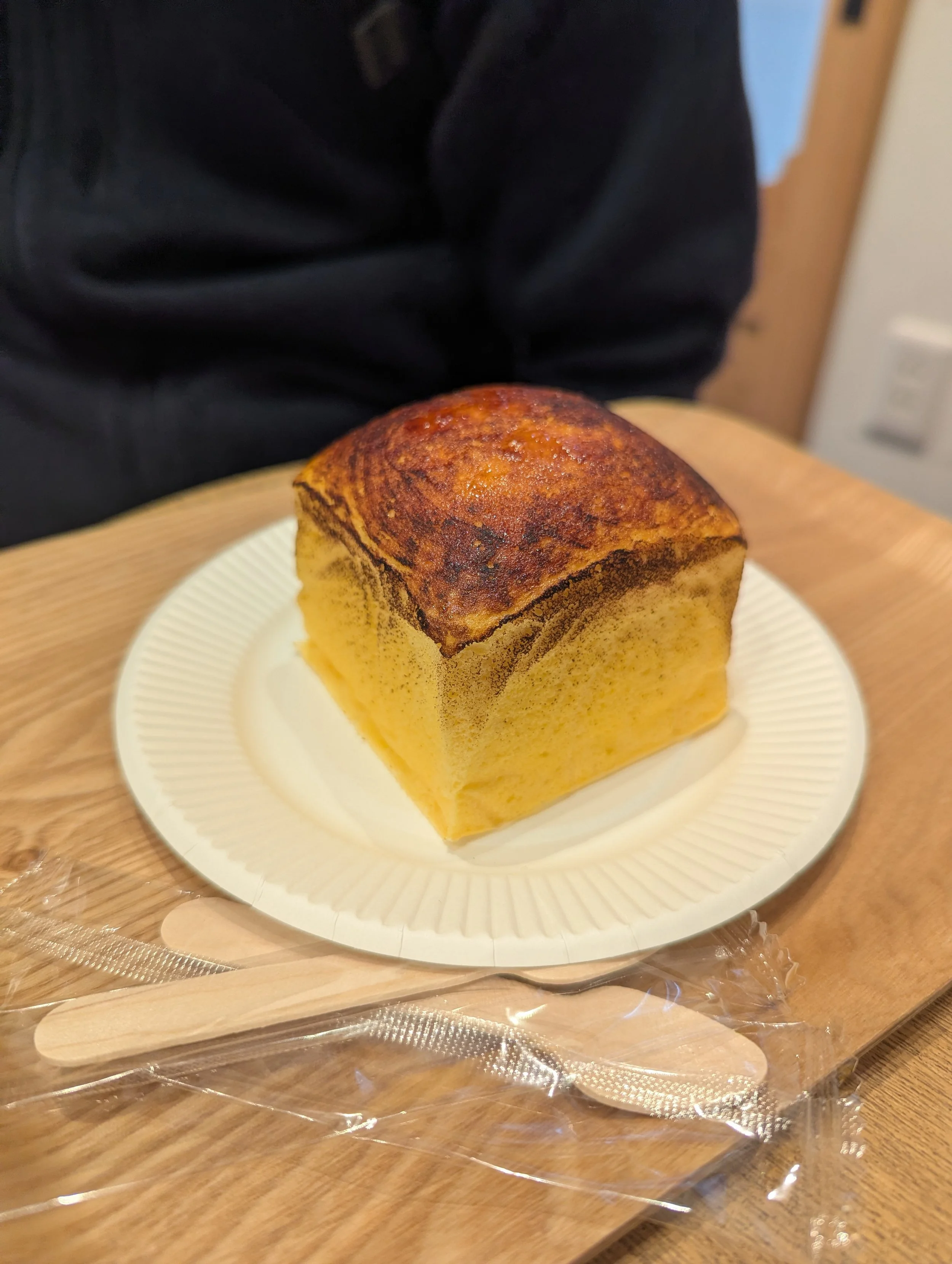
We continued browsing shops as we made our way toward the station. Our next stop on the food tour was Motosue Kinosaki Sohonke, which is across the street from the station. It’s a small shop with just two tables. We’ve read that typically there is quite a line to order, but given the weather it was just us and one other couple. This shop is known for fluffy egg sponge cakes with a caramelized top.
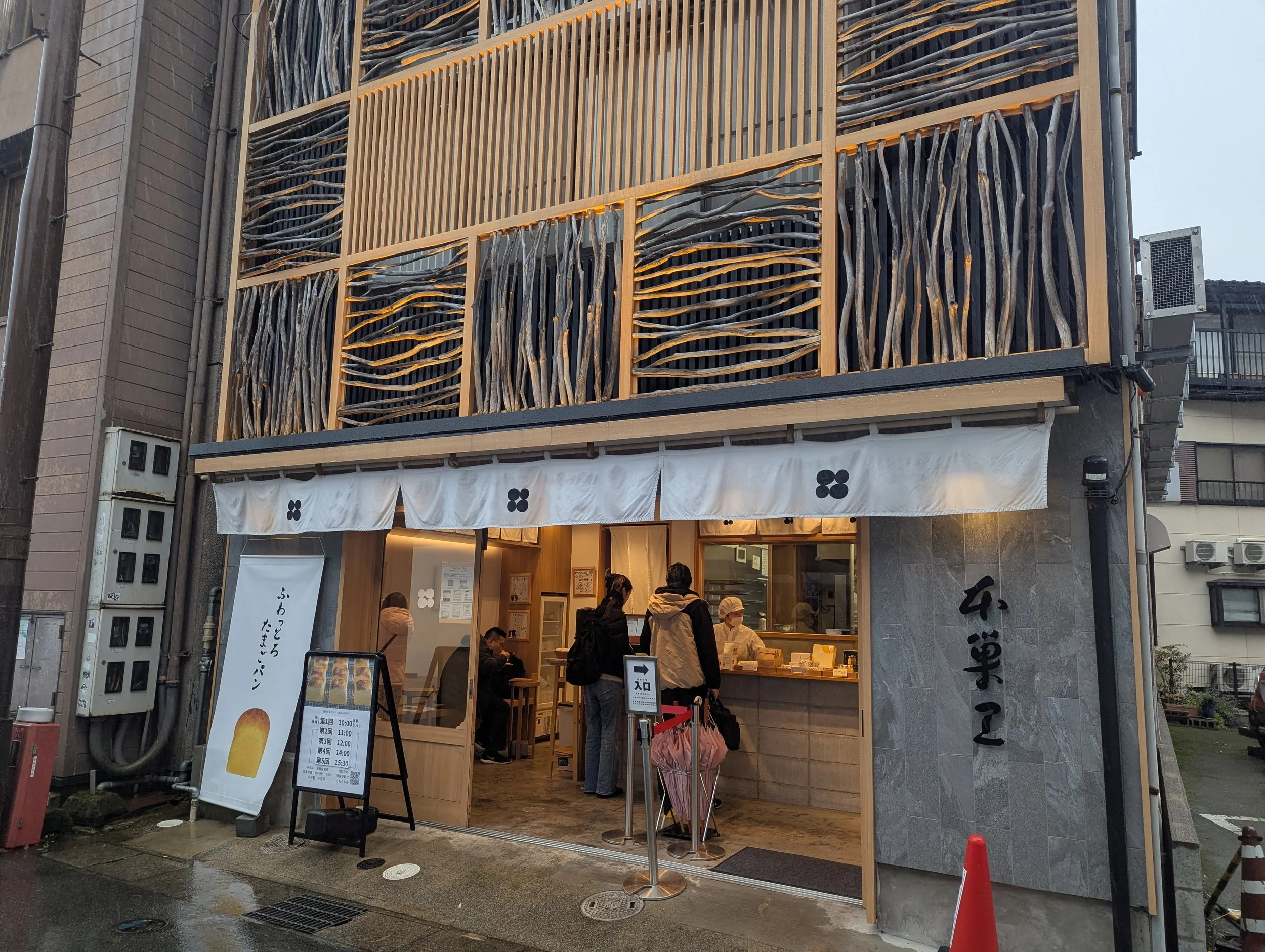
Since we had reached the end of the road, we turned back around. By this time it was 1:45 and made one last stop on our food tour before heading back to Nishimuraya to officially check in. At Tajima Beef Delicatessen, we had delicate beef croquettes and a beef bun. We both thought the beef bun here was better than those we had in Takayama - it had more beefiness and more flavor. The croquette is where it's at though. The thin breading was perfectly light and crispy, and the beef wonderfully seasoned.
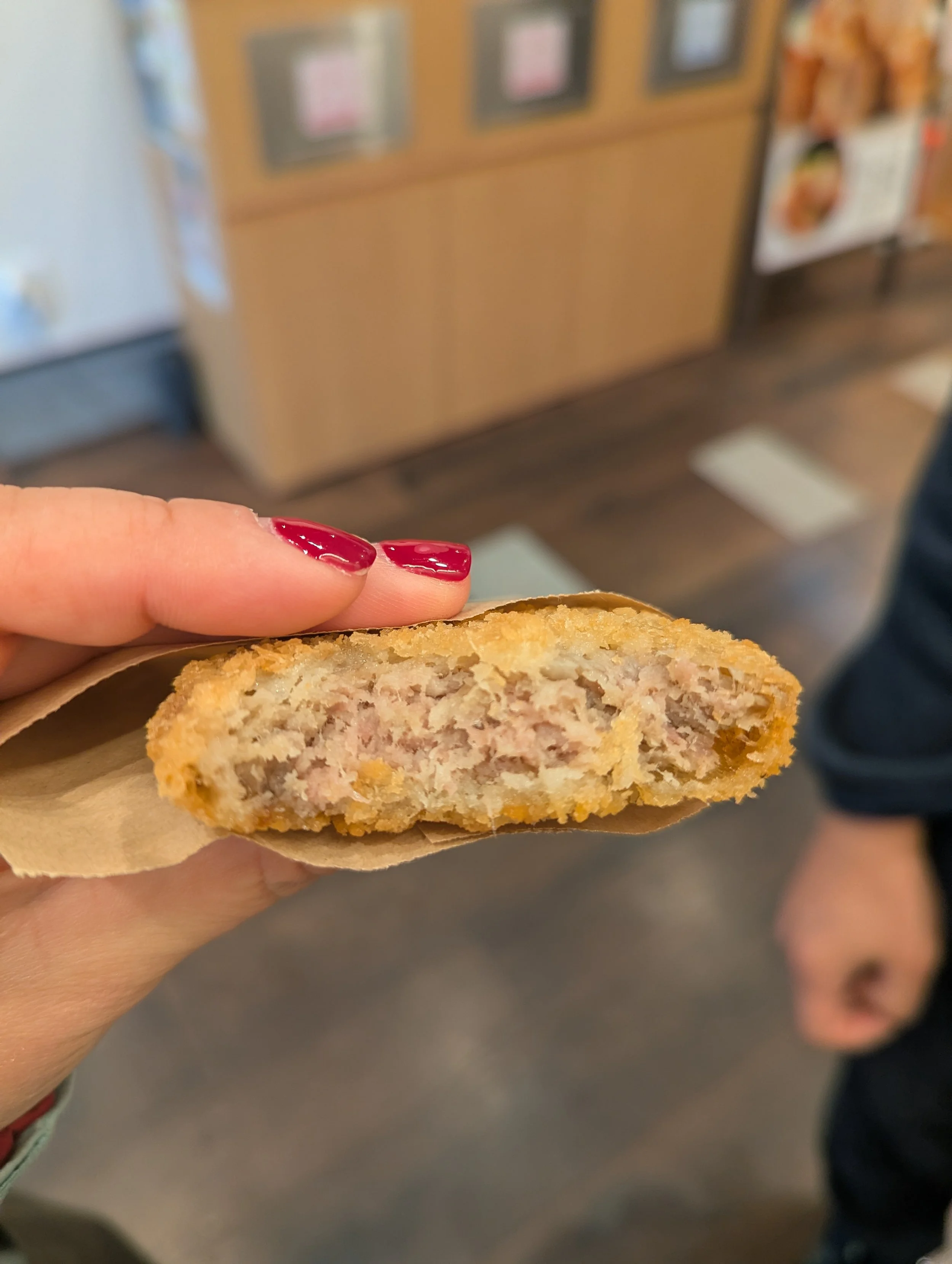
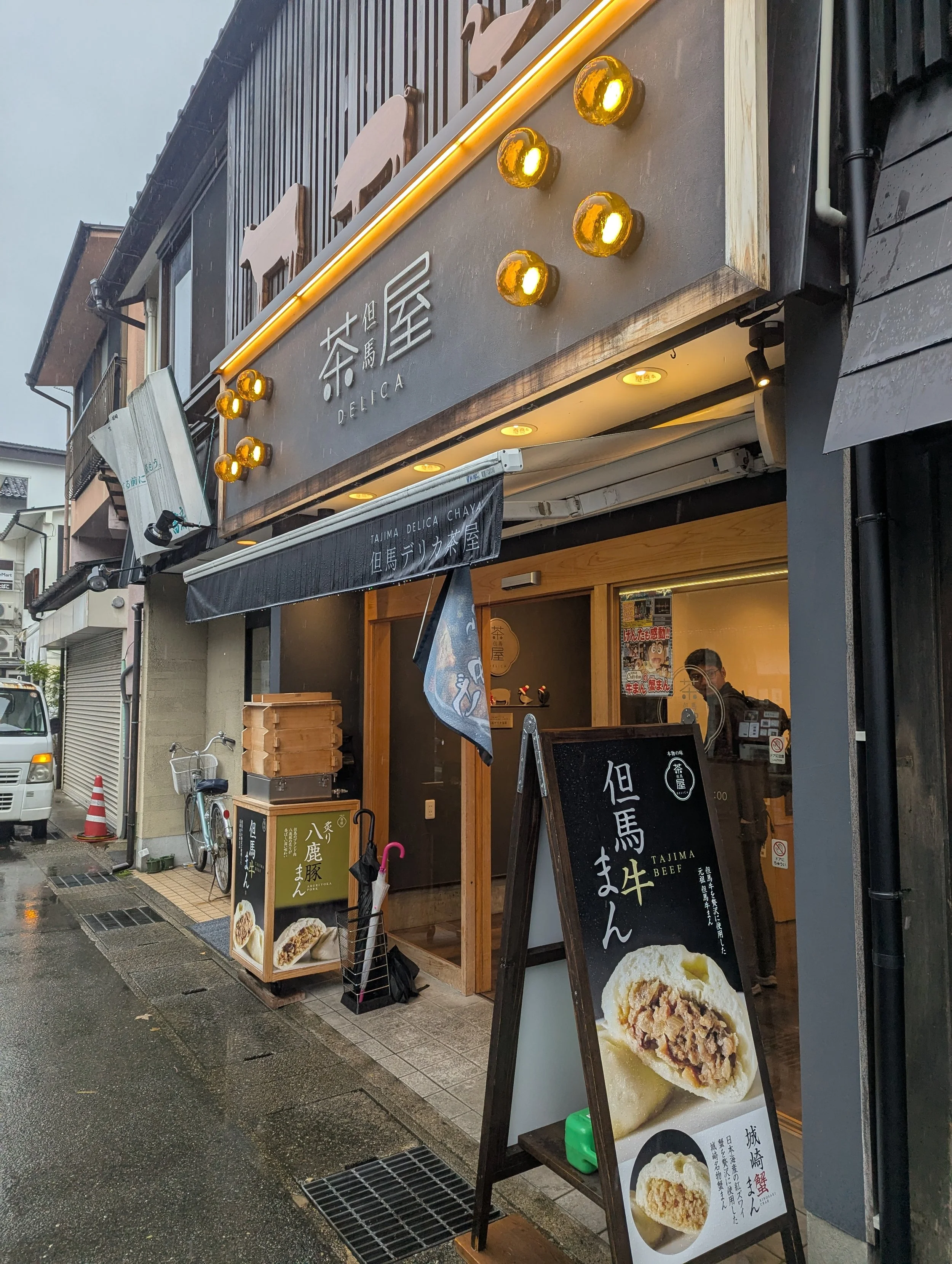
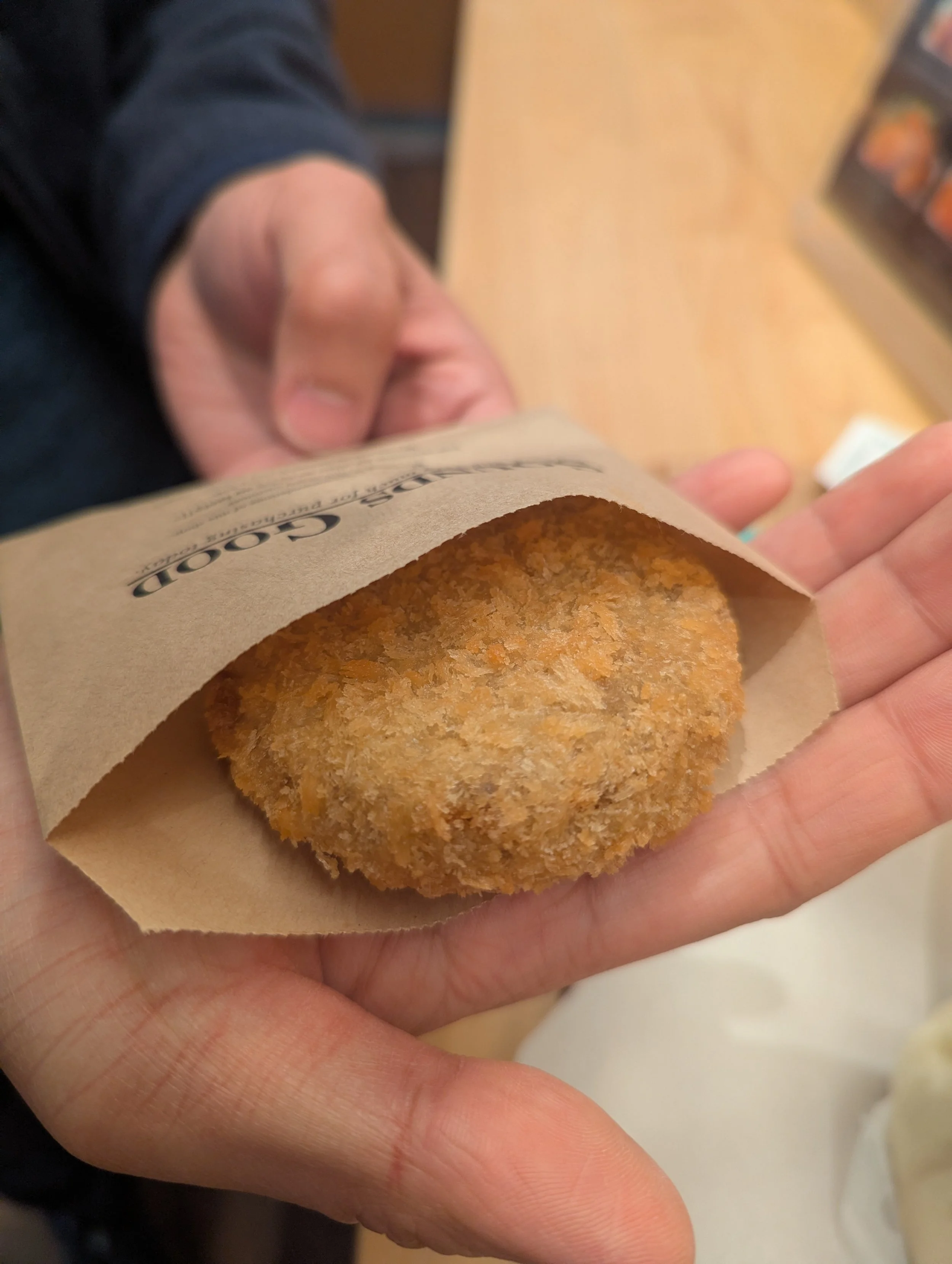
We continued onward through the familiar streets back to the ryokan, and were welcomed by classical music playing in lobby of hotel. By the time we had checked in, it was 14:20. The staff member showed us to our room on the top floor, all the way at the end of the hall. She even put our shoes away and took out geta for us before she left. The Nishimuraya brand has a sister hotel, Nishimuraya Honten, which was the first ryokan in Kinosaki. Both ryokan offer to hold luggage after check out, and they will drop it off at the station luggage hold, for you to collect before departing Kinosaki. We did not opt for this amenity, as we had an early train back to Kyoto, and it was easy enough for us to take our backpacks with us. This ryokan had rabbit decor everywhere, including in our room, and on the elevator doors.
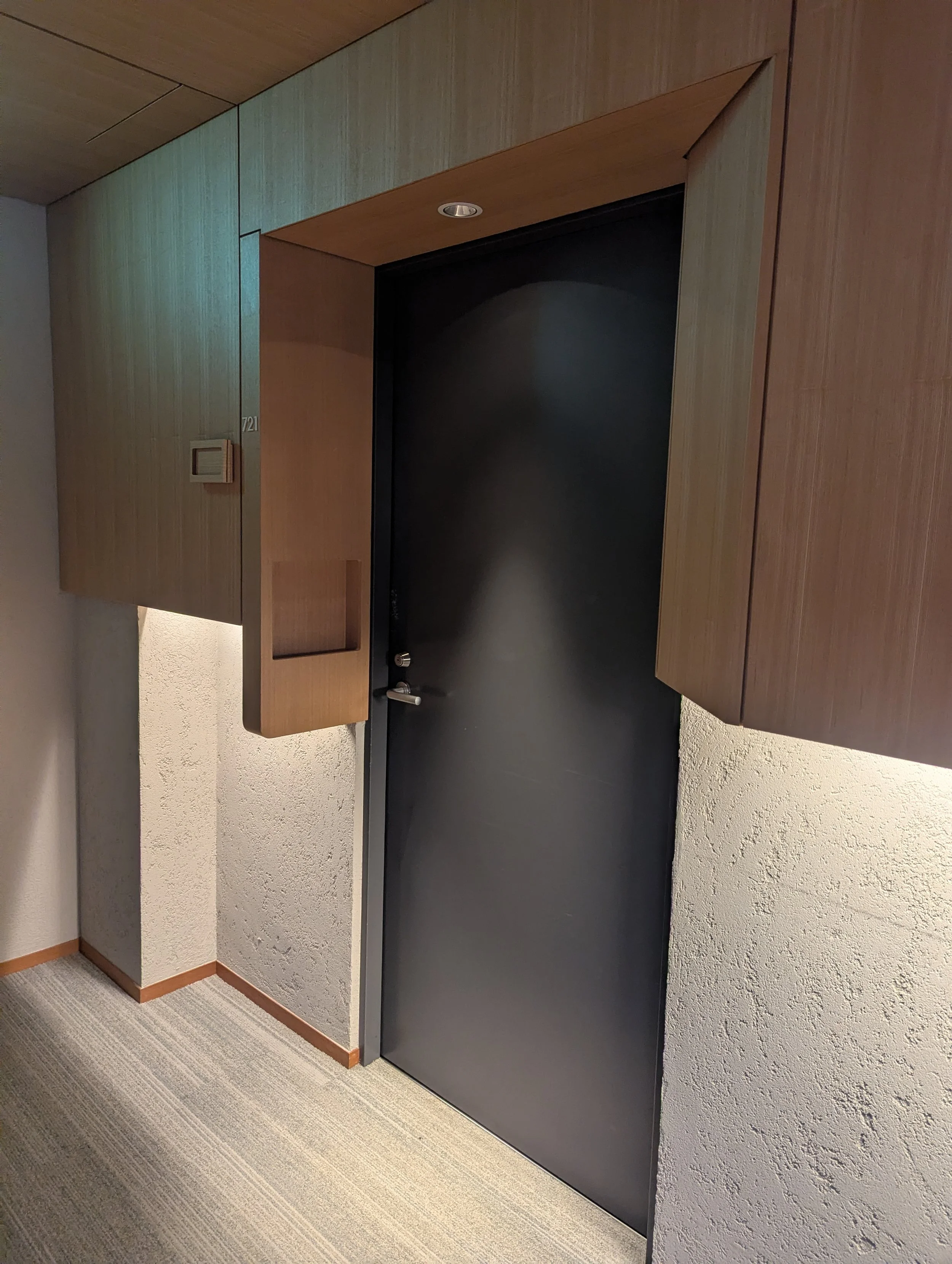
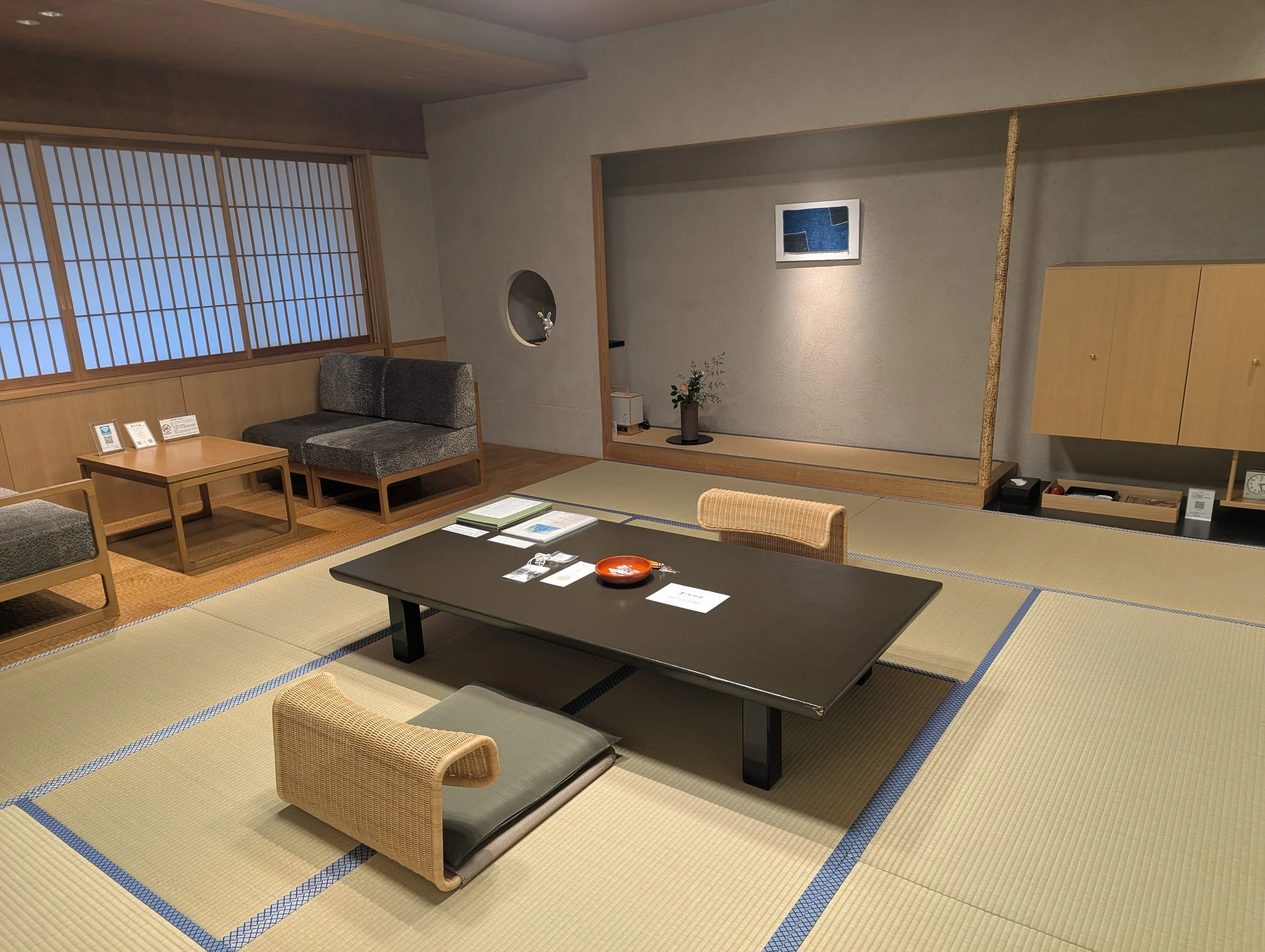
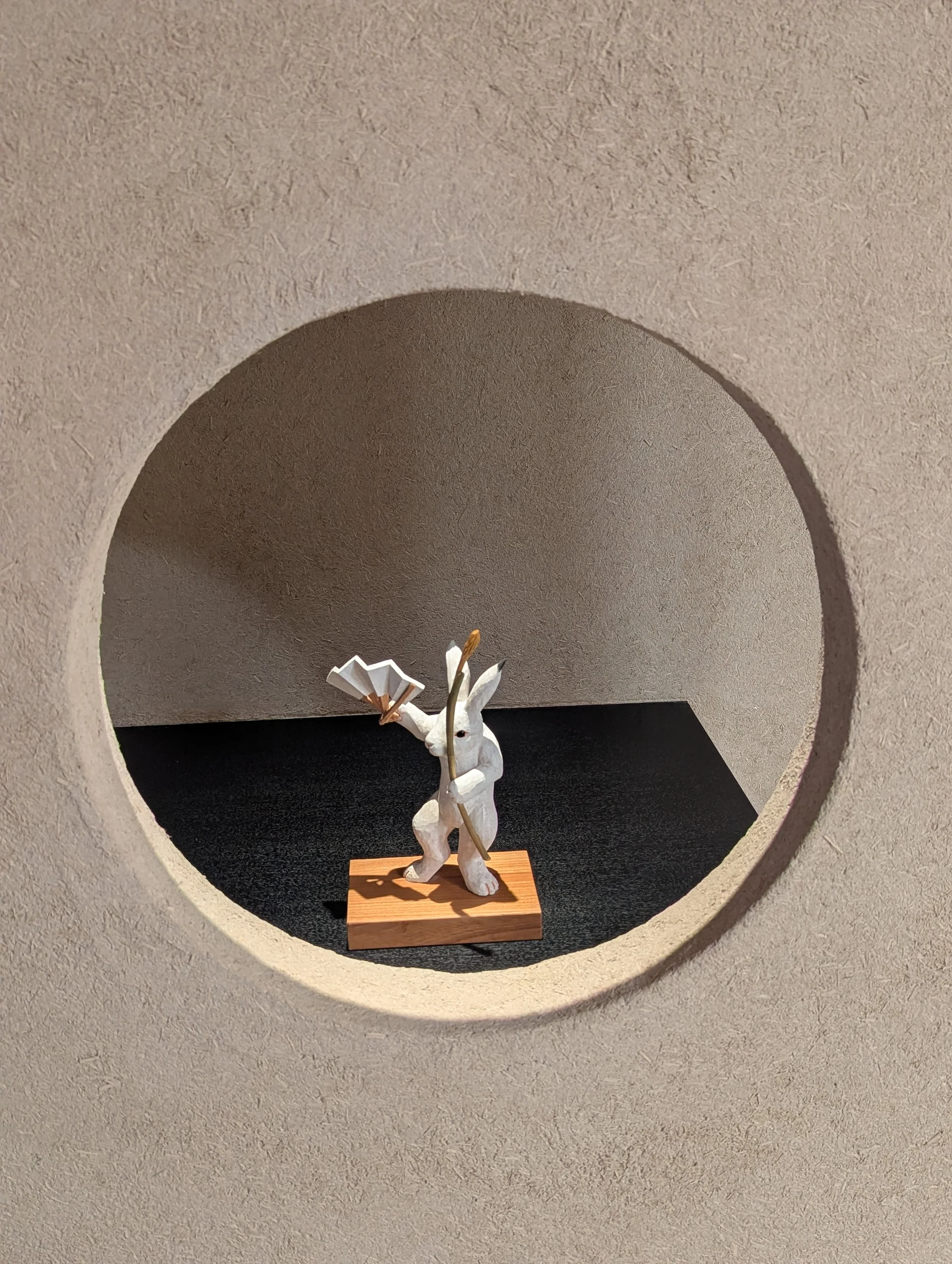
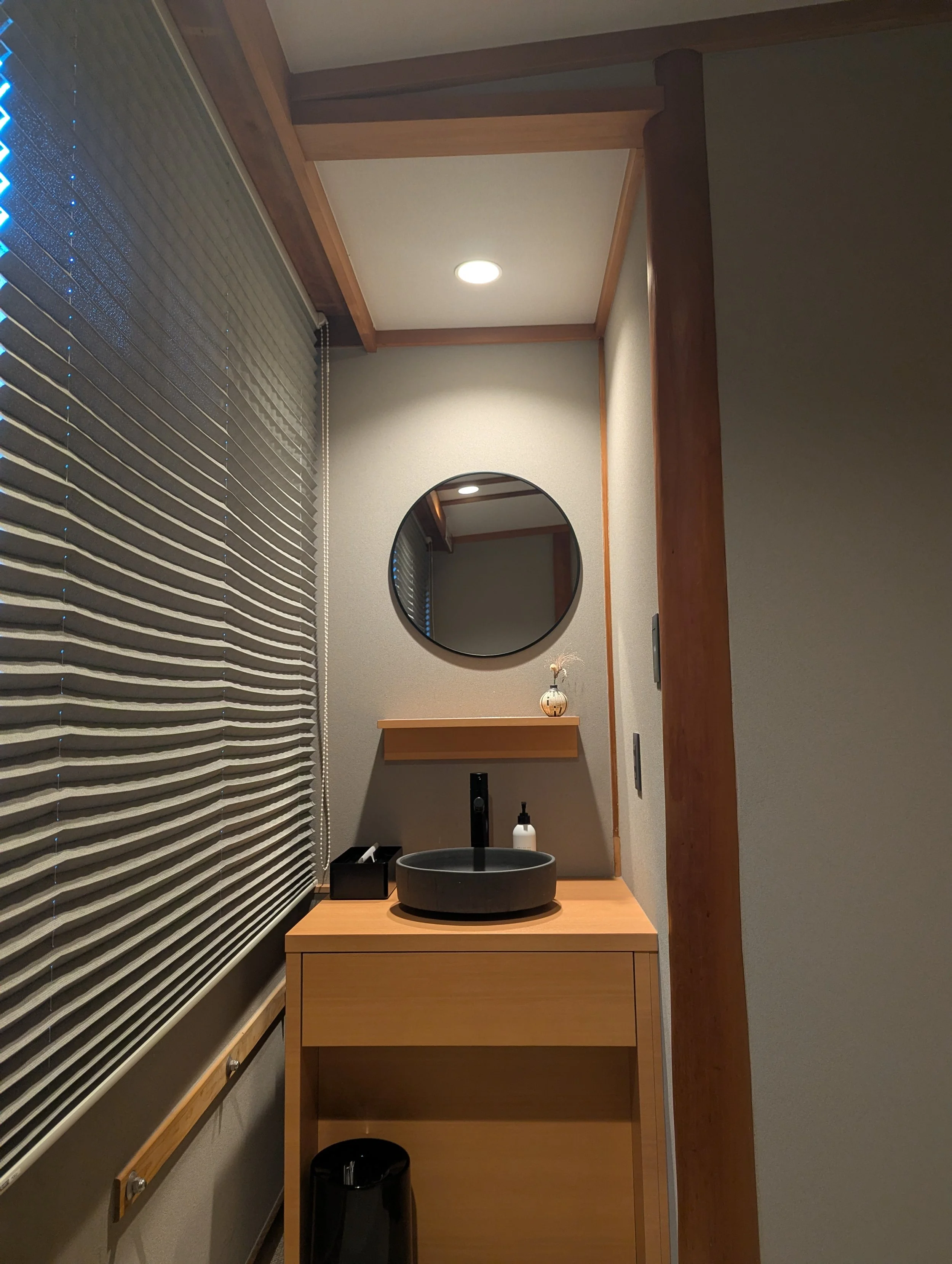
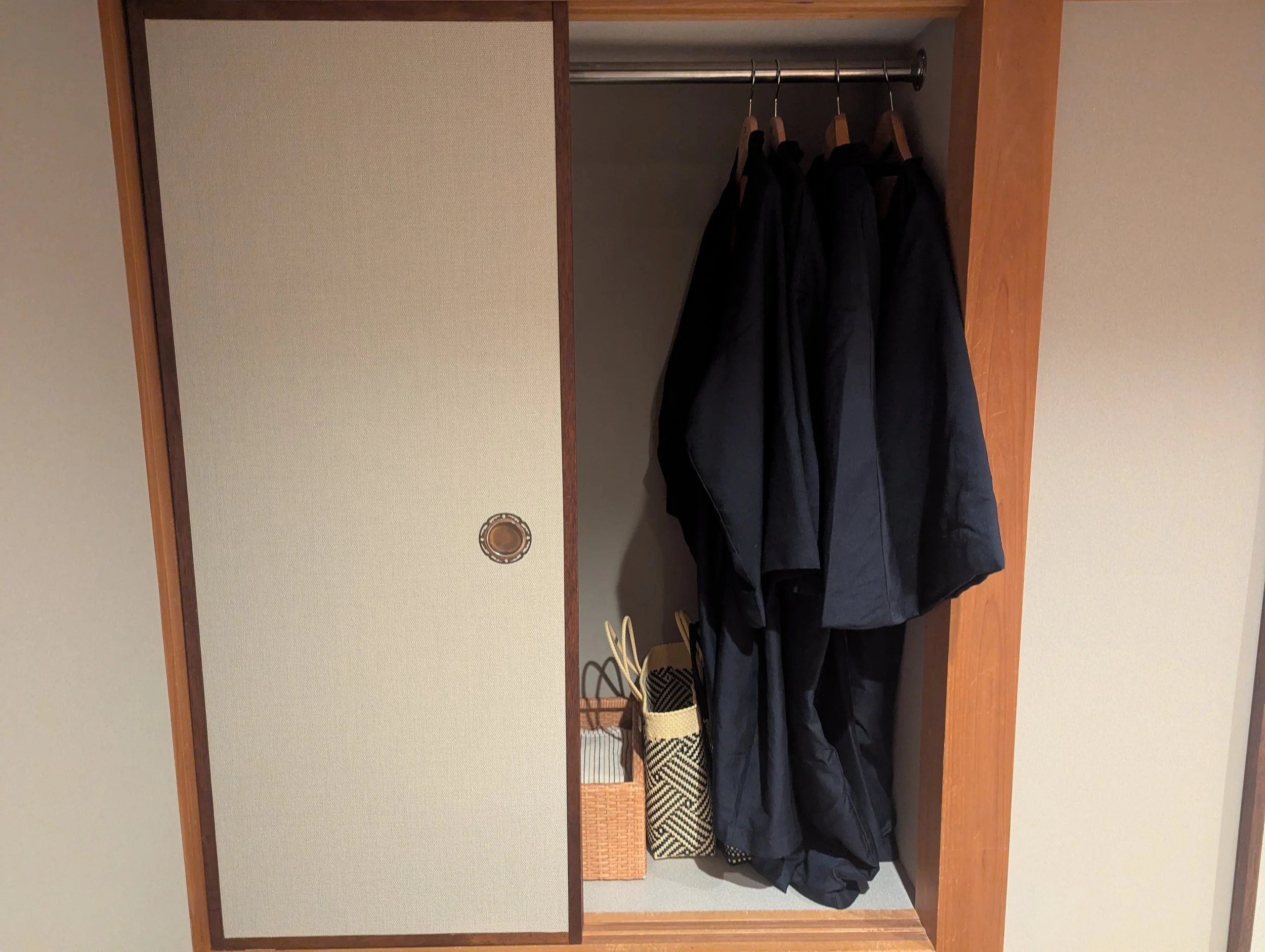
We changed into our yukata- all sizes, including the outer coats were organized in the closet - and headed downstairs to the lounge at 3PM. The ryokan offers a welcome drink from 2-6pm. We each got sake, sitting in front of a beautiful waterfall scene in the garden.
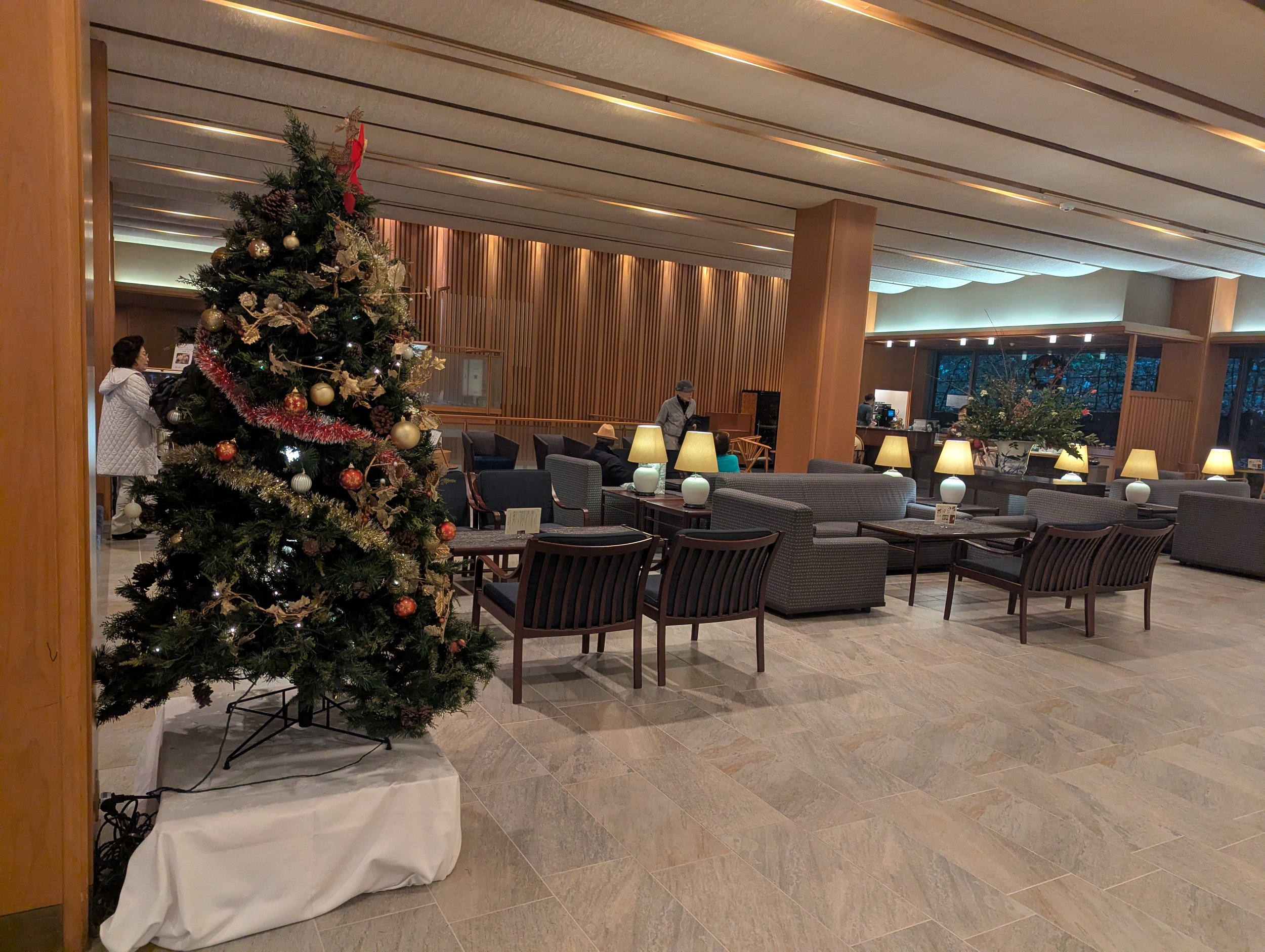
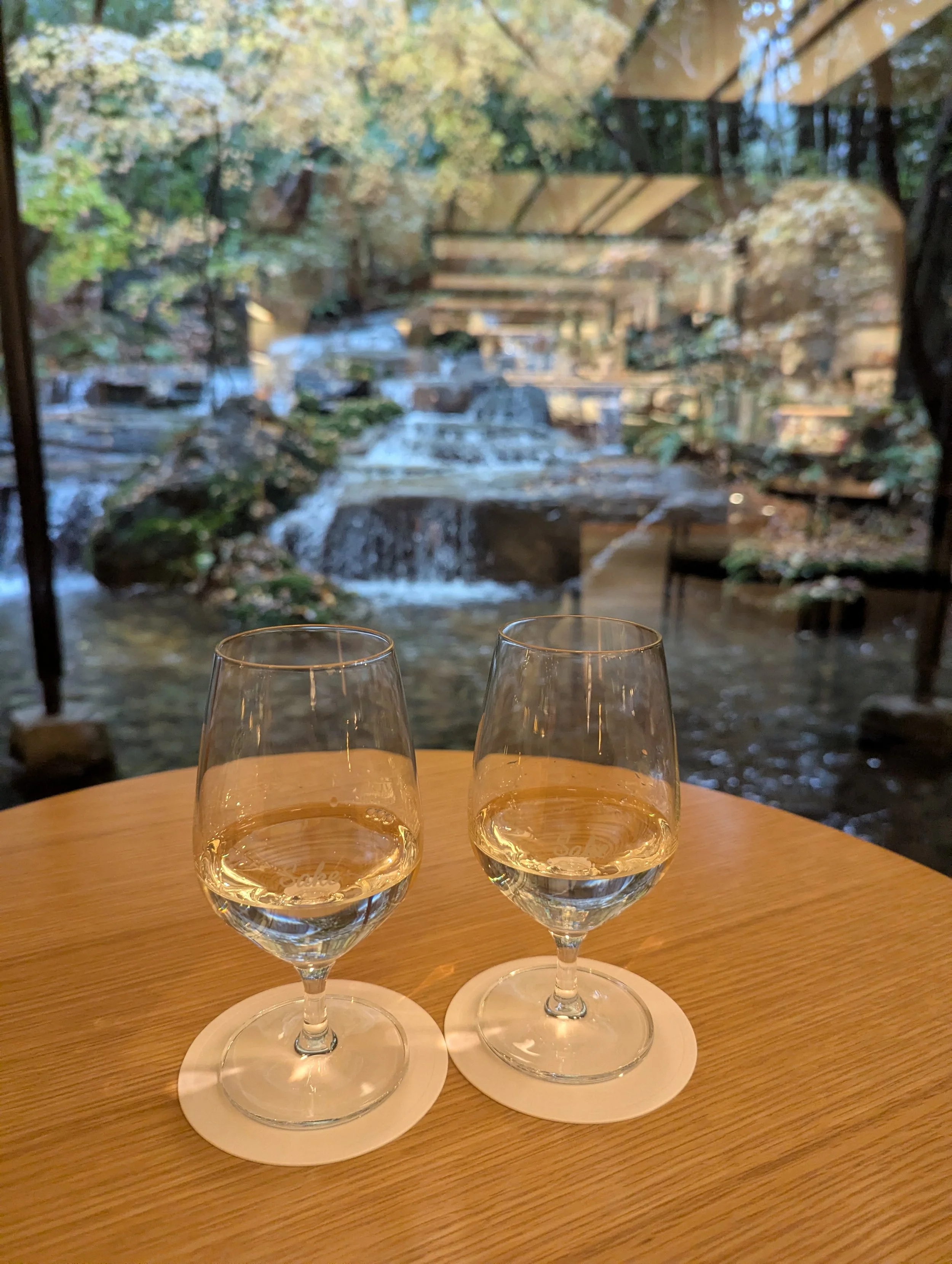
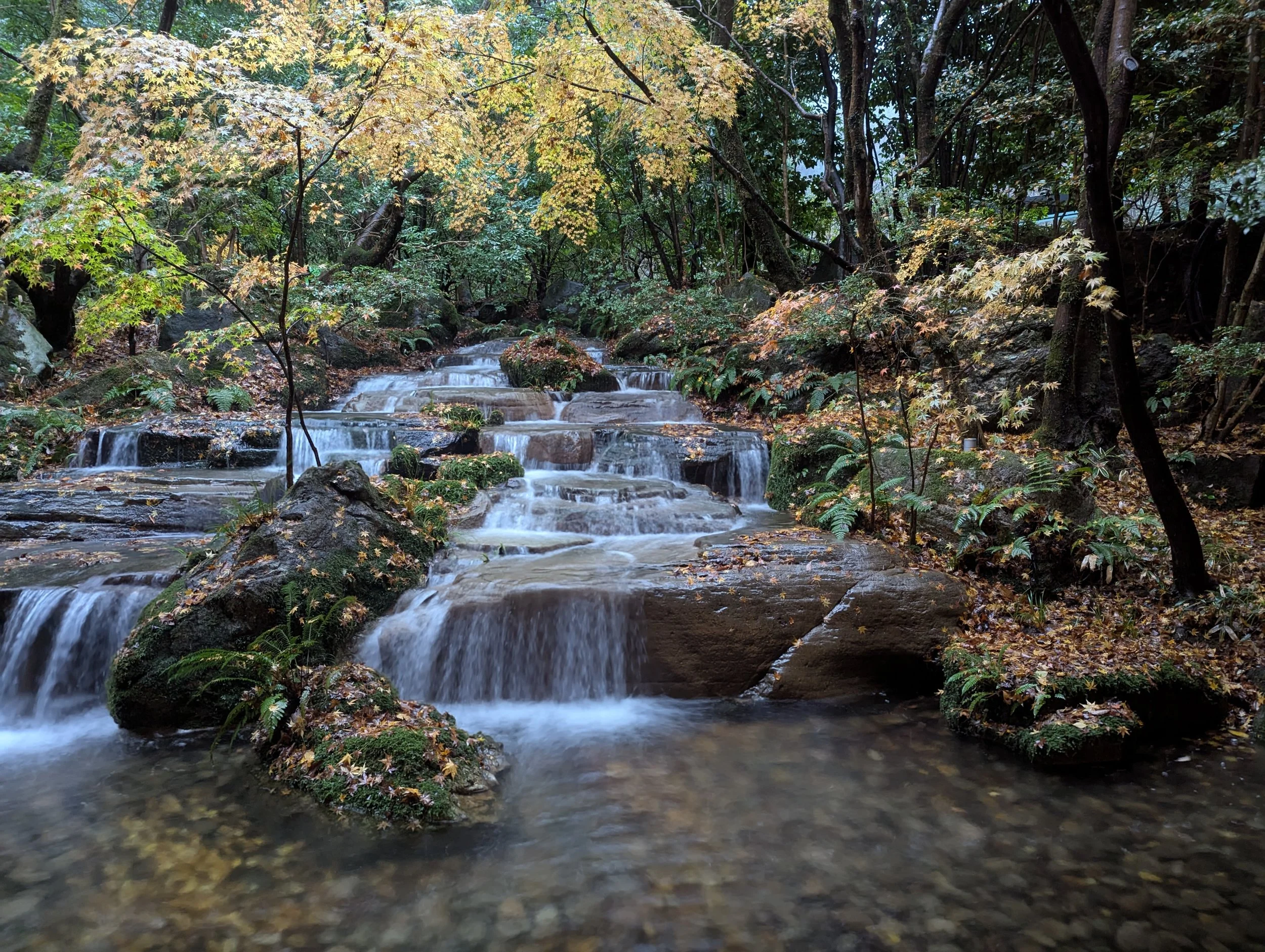
After we relaxed and enjoyed our sake and the tranquil scenery, we explored the public onsen. There's an indoor bath, outdoor bath, cold bath and sauna. Kevin says this was his favorite bath because the outdoor bath was the perfect temperature and it was snowing, which just added to the ambiance. The outdoor bath was small but large enough to accommodate several people, and was covered by a gazebo-like roof. I did not try the cold plunge, but I did sit in the sauna for a few minutes after being in both the indoor and outdoor onsen baths. Outside of the locker rooms was a sitting area, and they served cold juice and cold hojicha, both of which were delicious.
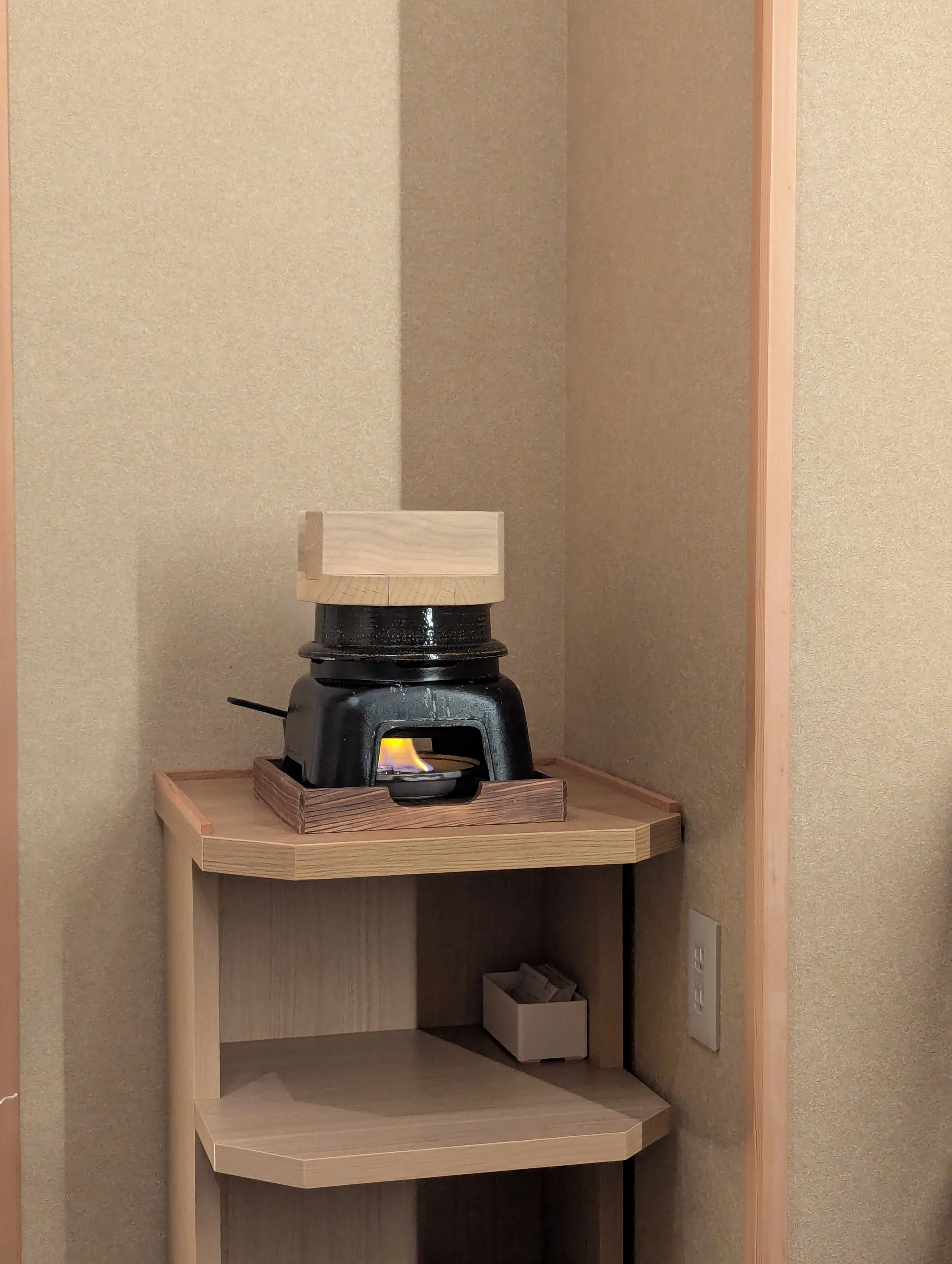
We went to dinner at 5:30PM and were seated in a private room. As we were led to our table, all of the staff stopped what they were doing and bowed to greet us as we walked past. This crab was fantastic, perfectly cooked and came right off the shell. This beef was much better too compared to the previous night - not chewy at all, and more flavorful and tender. The amber jack and shrimp were highlights of the sashimi dish for me. Chestnut rice, an autumn specialty, was prepared in the room and left to steam. The pear wine aperitif was so good, our server told us it was made especially for the restaurant. I wondered if we could buy it at the gift shop; there was a pear wine or sake, but we couldn’t tell if it was the same. Dessert was simple, just slices of persimmon and Asian pear with some sort of jelly.
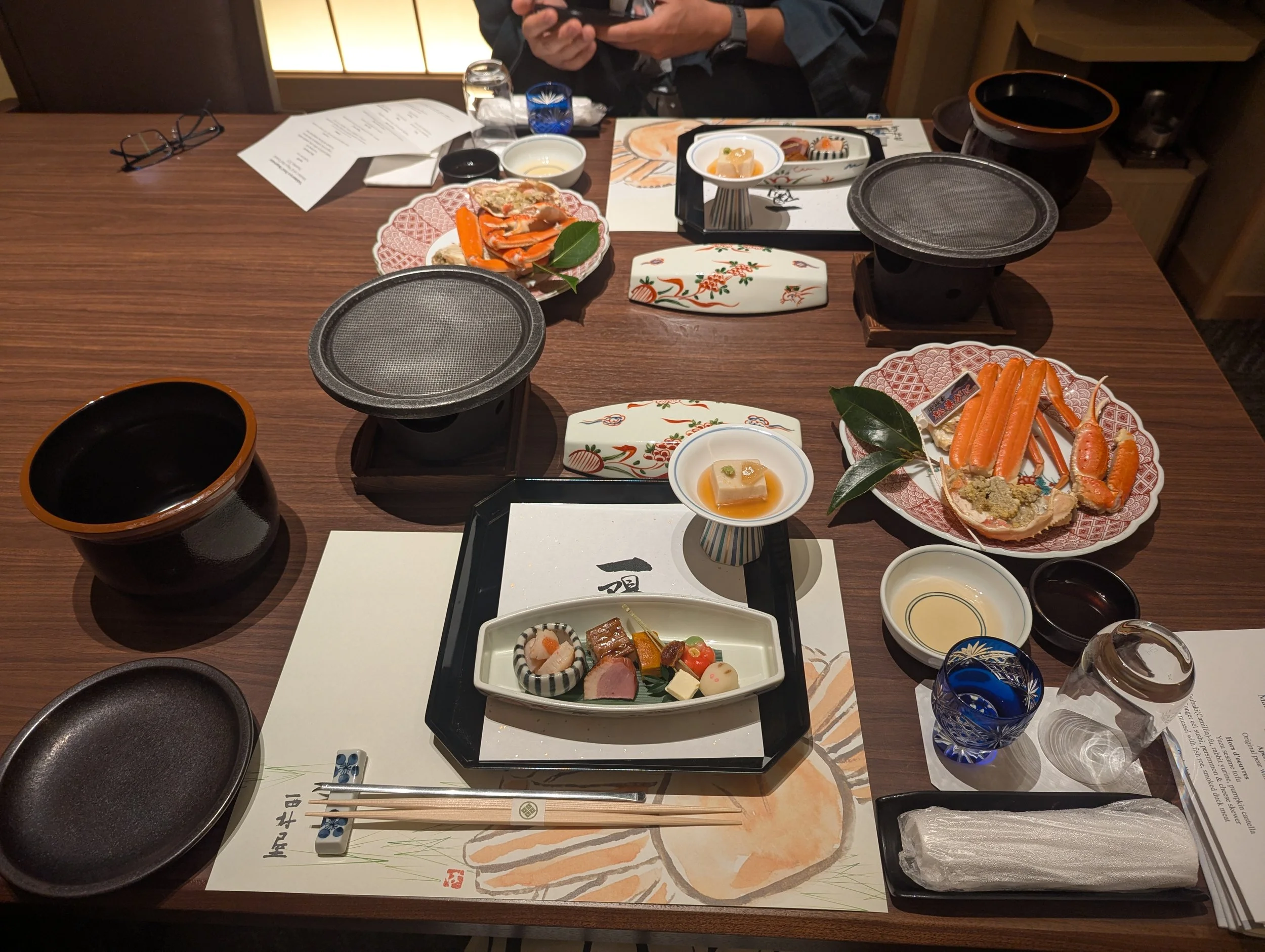
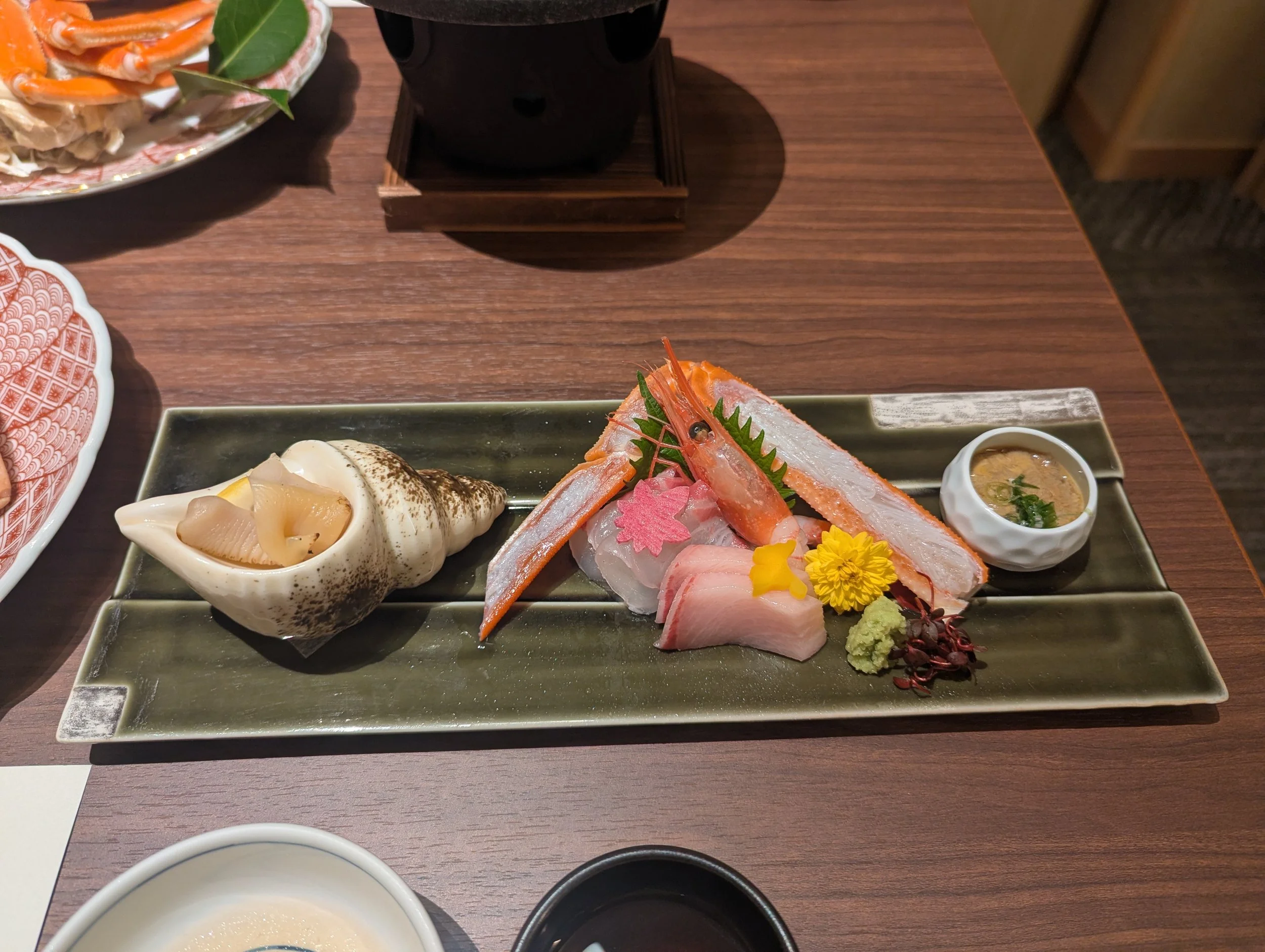
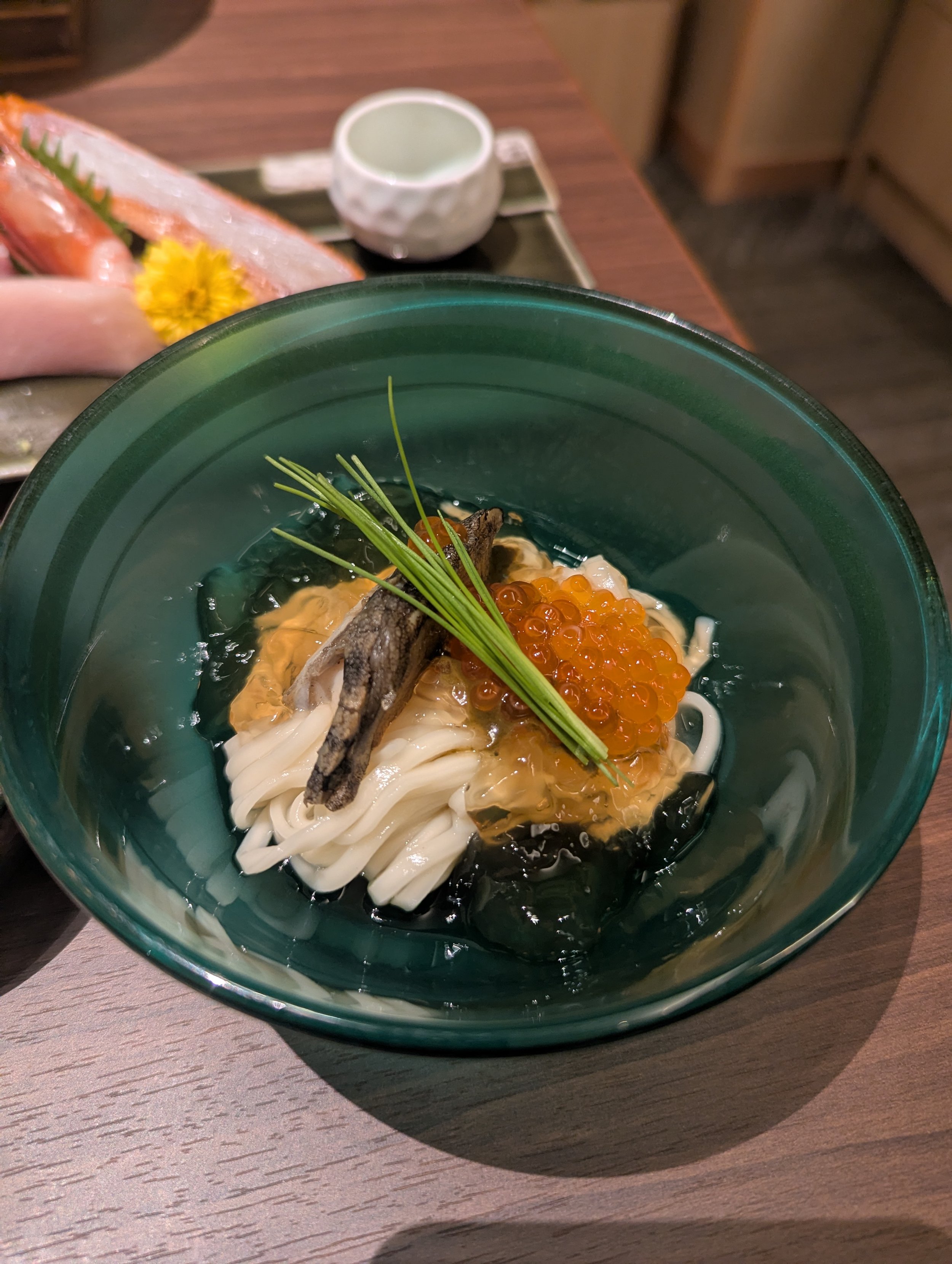
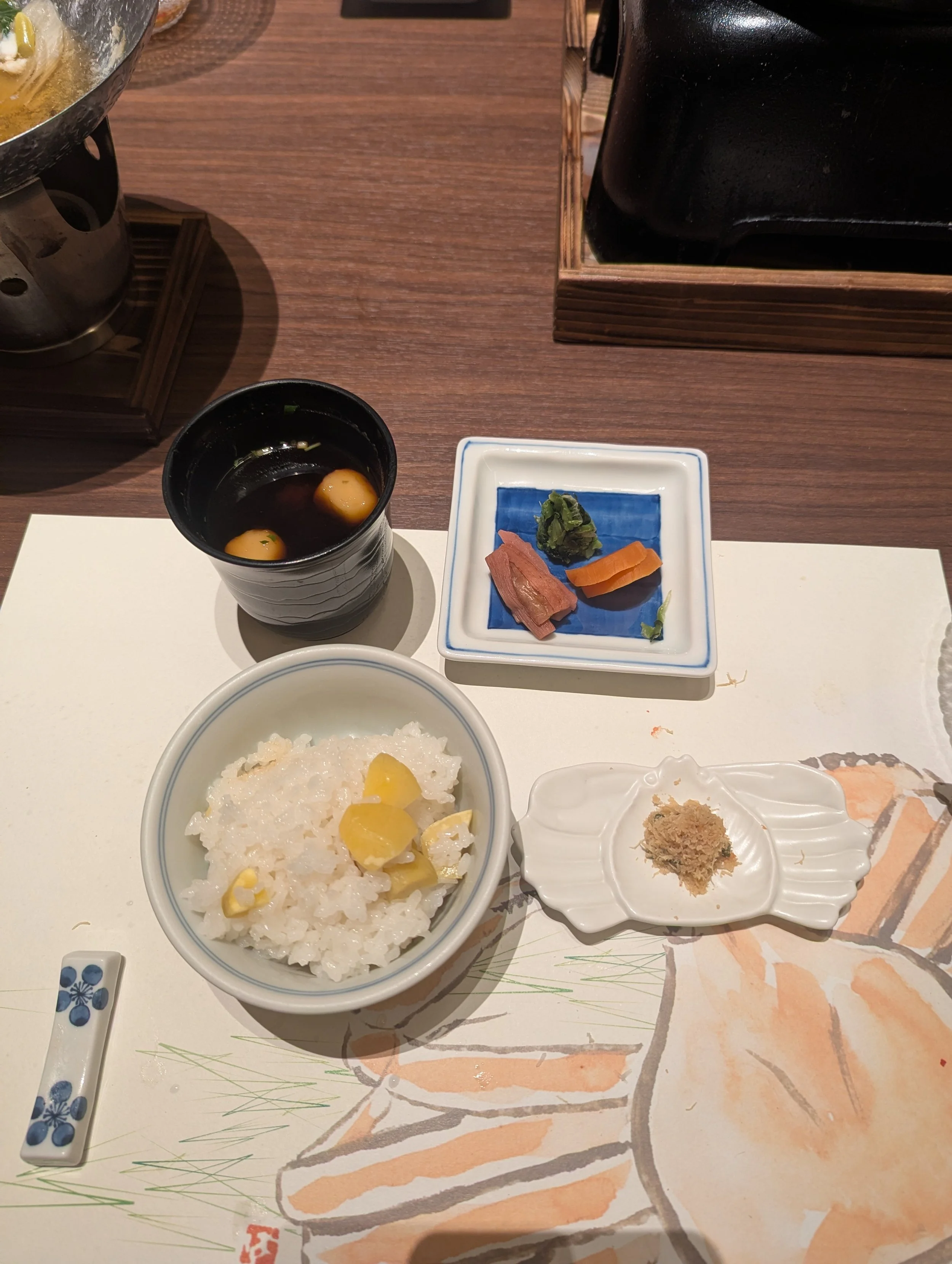
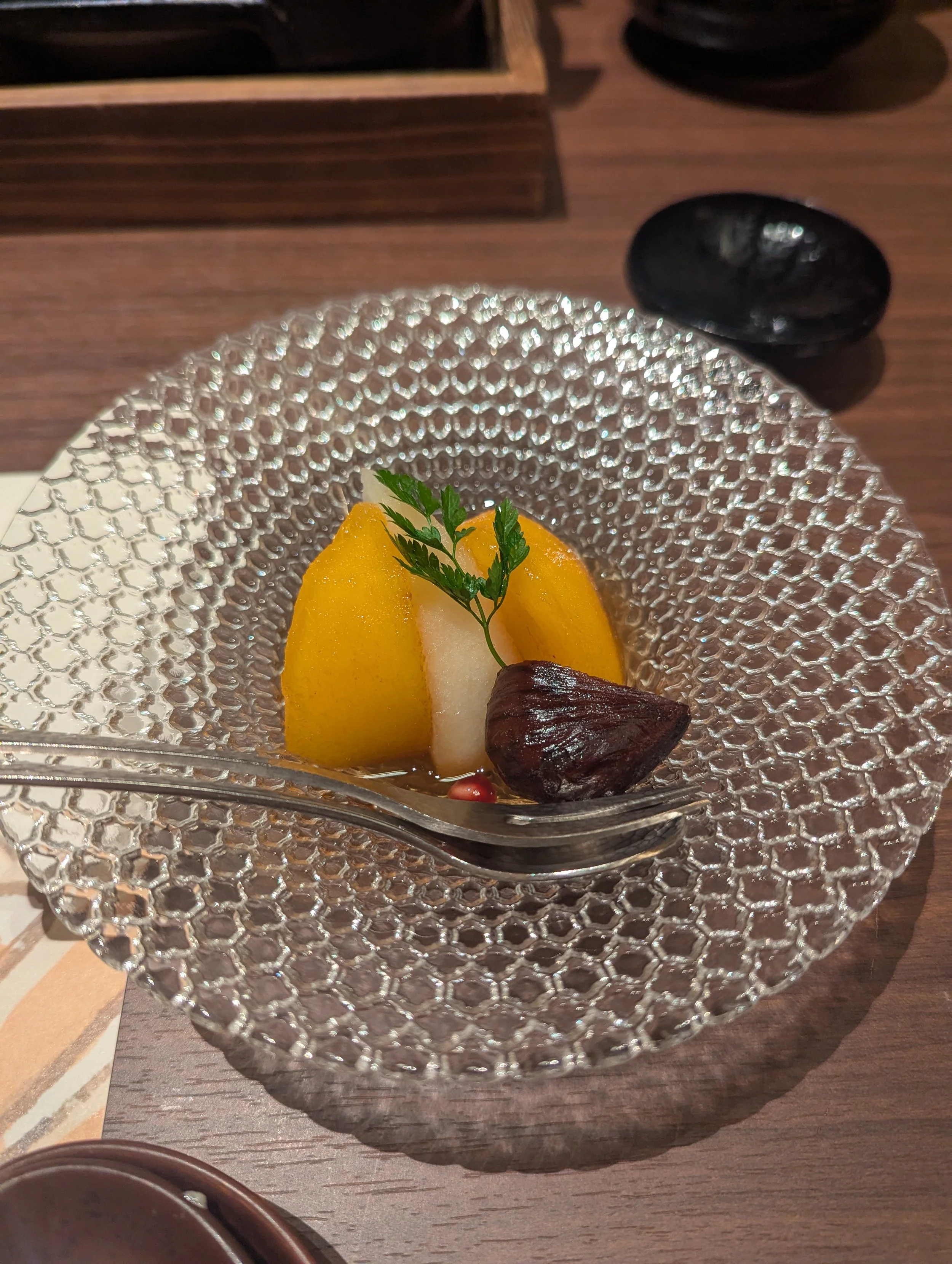
We finished dinner shortly after 19:30, and took the 20:00 shuttle into town, to stop #3 by Jizo-yu. It was 34 degrees and had been snowing on and off with rain. During dinner, we saw/heard lightning and thunder once, but couldn't see if it was raining or snowing, as the windows in our private room were too high up. It was not currently snowing but there was slush on the ground as we walked to our first onsen of the evening.
At first we weren’t sure if Yanagi-yu was open - the door was closed, but I saw the stamp table out so we tried the door and it slid open. I was the only one in the women’s bath - both the locker room and the onsen itself. I thought, how fortunate! It is so rare to have a public bath to yourself! Especially such a small bath like this one, that was approximately the size of a large dining room table. The moment my skin touched the water, I understood why. It was scalding hot! I couldn’t bring myself to submerge my entire body. I think I only got knee deep, and decided it was too hot for me. I got dressed and waited in the lobby for Kevin. As I was waiting, I noticed a sign that described Yanagi-yu was the deepest, smallest and hottest of the Kinosaki onsen. They’re not lying!
A short while later, Kevin emerged, skin red and sweat dripping from his hair. He said there was one Japanese man sitting on the edge of the bath when he entered the bath, which he thought was a little odd. Kevin jumped into the water (supposedly, as he normally does), before realizing how hot the water was. He says, he didn’t want the Japanese man to think he was a wimp, so he suffered through a few minutes with his entire body submerged, all the while, realizing that perhaps the Japanese man knew something he didn’t.
Yanagi-yu is Kinosaki’s smallest bath, for the Water of Fertility. It is said to ensure fertility and safe childbirth. Yanagi means willow, as it is aptly named for the willow-lined street on which it stands.
Next, we decided to return to Goshono-yu. We had thoroughly enjoyed it in the morning, and wanted to spend more time there, now at night. It was quite crowded, but still plenty of space to spread out. While we were soaking, it began to snow! It was really magical to be in the onsen with the snow falling, and a brilliantly red momiji in front of a waterfall, other momiji in a gradient from green to red. The snow turned to sleet, but no one left. When I got out, there were so many women in the shallow pool (covered by the roof), whereas I was in the snowfall the whole time to soak up the magic.
The last onsenon our list was Kono-yu, and was actually nearest our ryokan. On the streets of Kinosaki, spouts had come up in the middle of the road and had running water, to prevent the roads from freezing. Kono-yu is tucked behind a parking lot, and feels secluded. It is the oldest bathhouse building in Kinosaki. Kono-yu is the Water of Happiness, for happiness in marriage and longevity. It has an indoor bath and an outdoor bath, which was small. There were three other women in the outdoor bath when I was there. We finished our soak at about 21:30 and relaxed in our hotel room the rest of the evening. We went to bed at 22:45, another restful futon sleep.
Day 8: Thursday, December 4th - Kinosaki Onsen to Kyoto
We started the day, again at 6AM, so that we could enjoy an early morning onsen soak in the ryokan onsen. After our refreshing and rejuvenating start to the day, we packed and got ourselves ready for breakfast. Breakfast was open from 7:30-9:30AM. We got there at 7:40. It was busy, but there were tables available. It is a large room, where staff greet you and seat you. The food is buffet-style. We tried a little bit of everything - from the rice and miso soup which must be included in any traditional Japanese breakfast - to eggplant with ground chicken, which turned out to be my favorite dish. There were Japanese mustard greens and chestnuts and dried sardines marinated in mirin. There was also dried flounder, which I thought I would enjoy, but it was difficult to eat because of the bones.
Our stay included vouchers that could be used at the gift shop, 1000 yen per person. In my opinion, it’s good marketing - the gift shop was packed. Free money for us, but costs them nothing and makes them money because we feel the need to use it. We got three chopstick rests since we were creating a collection for our table setting.
We chilled and enjoyed the room until 9:40 before heading down to check out. We took the 10AM shuttle from the hotel, got to station 10:10. Our train to Kyoto was scheduled to depart at 10:34 from track 3 - it’s a good thing I asked, instead of just waiting on the platform by the turnstiles, because we had to get our tickets stamped, enter, then cross the pedestrian pass over the tracks to track 3 (&1, 2). The platform by the turnstiles is track 4, when you enter directly from the station. Our train originates at Kinosaki back to Kyoto, so it was already there waiting for us, but our train coming from Himeji to Kinosaki kept going past Kinosaki- Kinosaki was not the last station. It was still snowing, wet snow and lightly, but it was a very pleasant vibe in the town. When I checked the weather app, it was apparently was snowing in Kyoto that morning too.
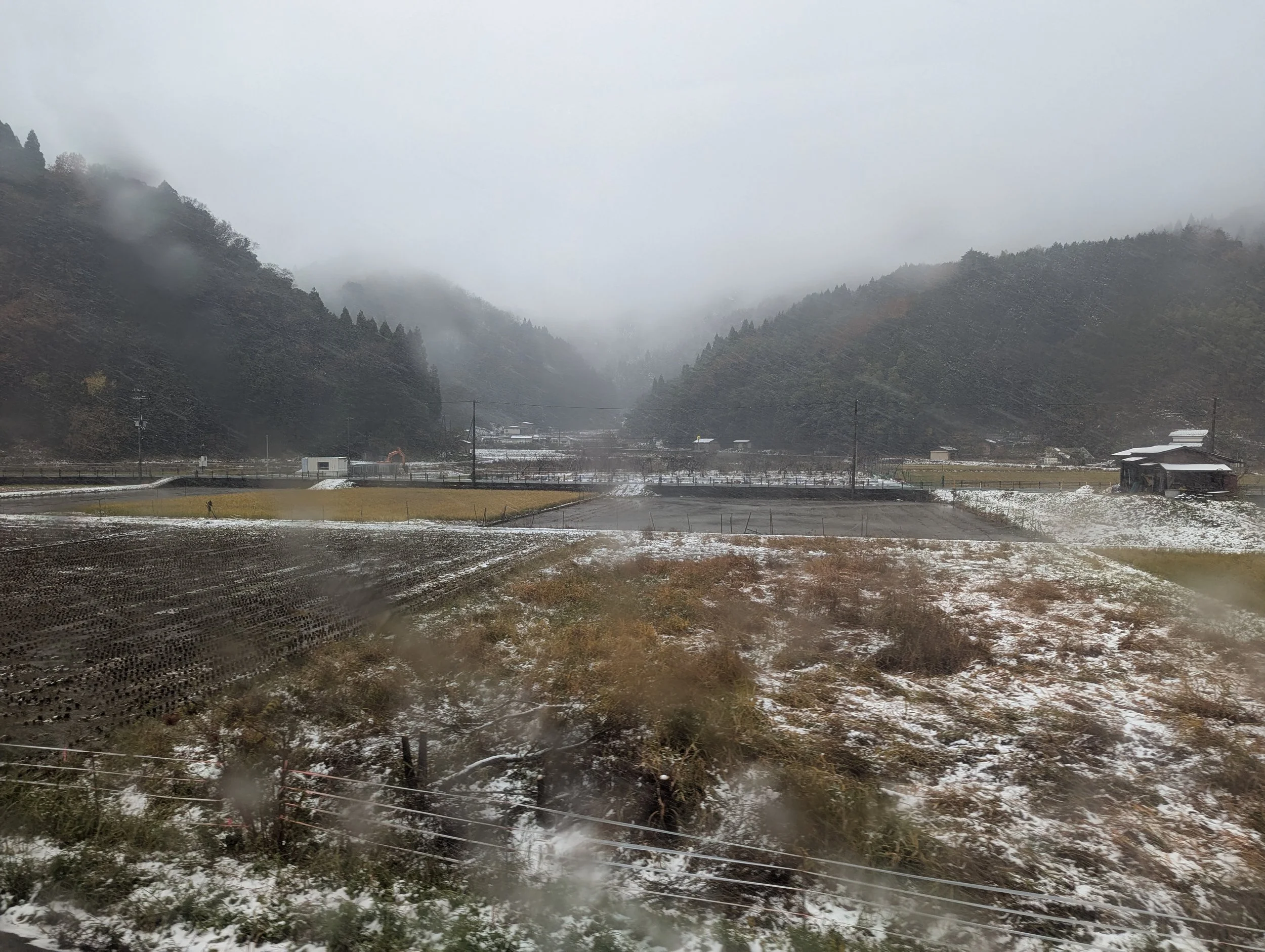
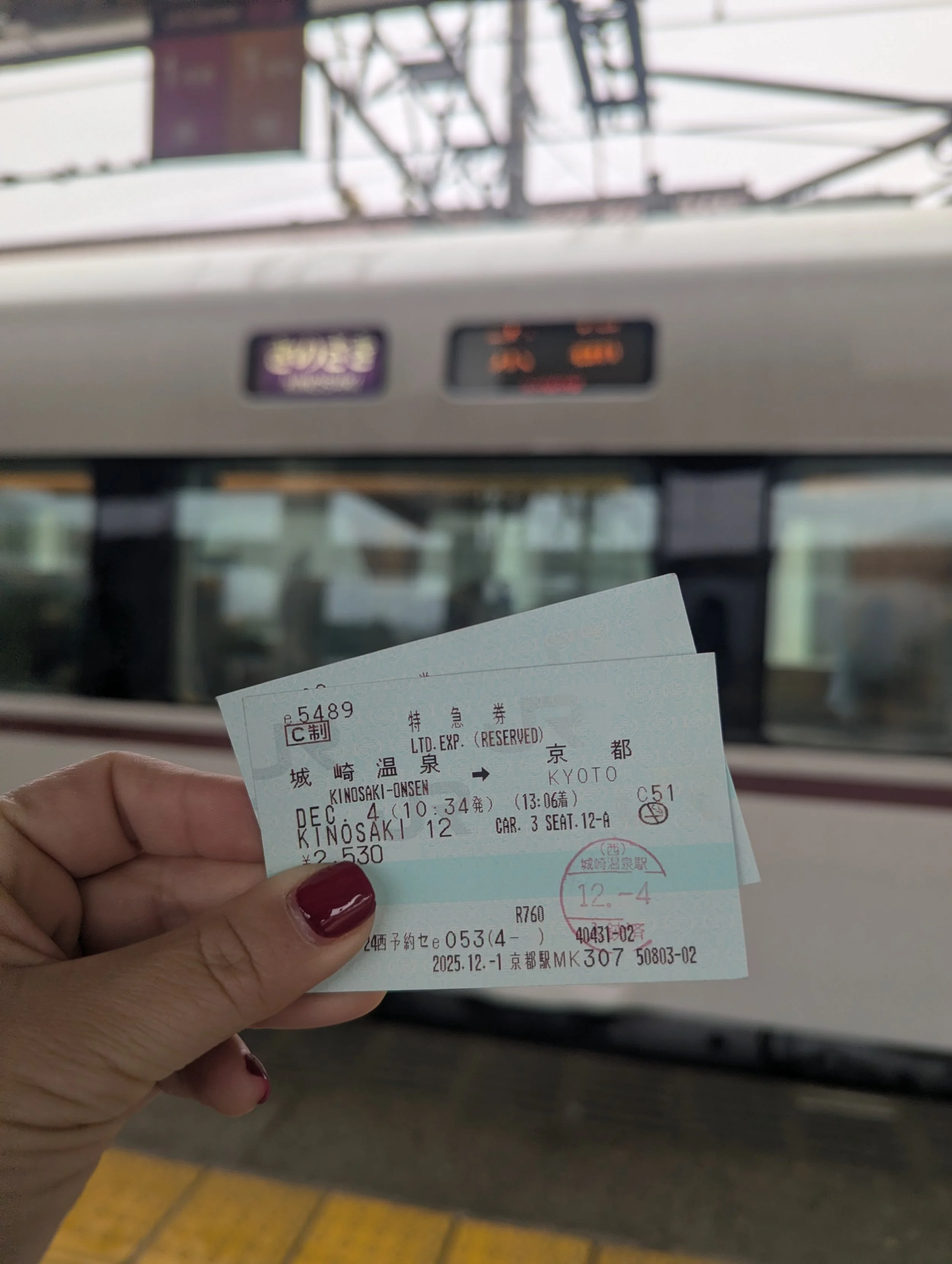
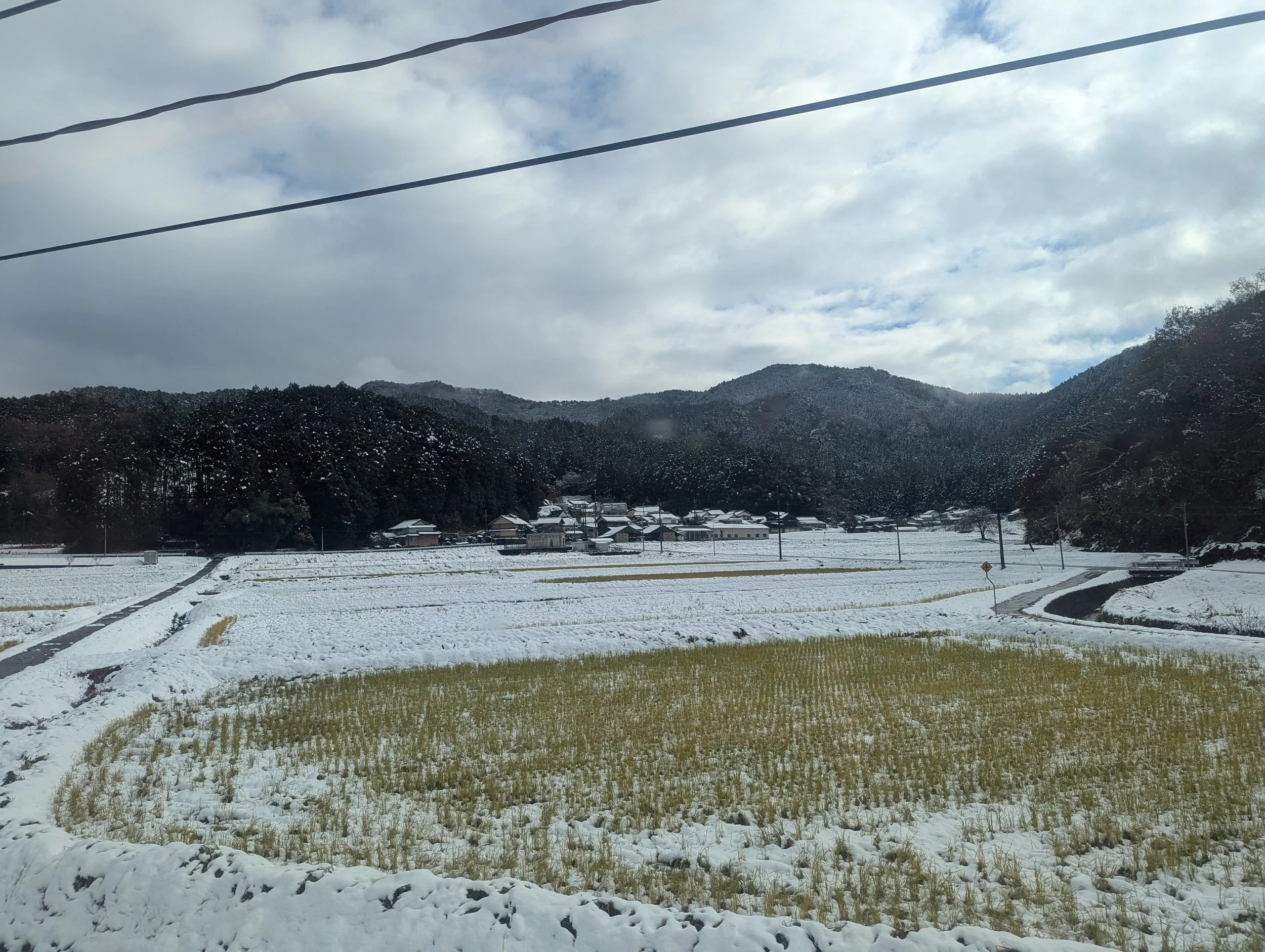
At Kyoto Station, if you are looking for the stamp, it is by the central exit, but before you exit the Shinkansen tracks and exit through the gate - you know you are at Central if you can see the Kyoto Tower. It was still early, and we knew we wouldn’t be able to check into our room yet. We put our packs in a coin locker on the B1 level, accessible from the escalators by the Central Exit.
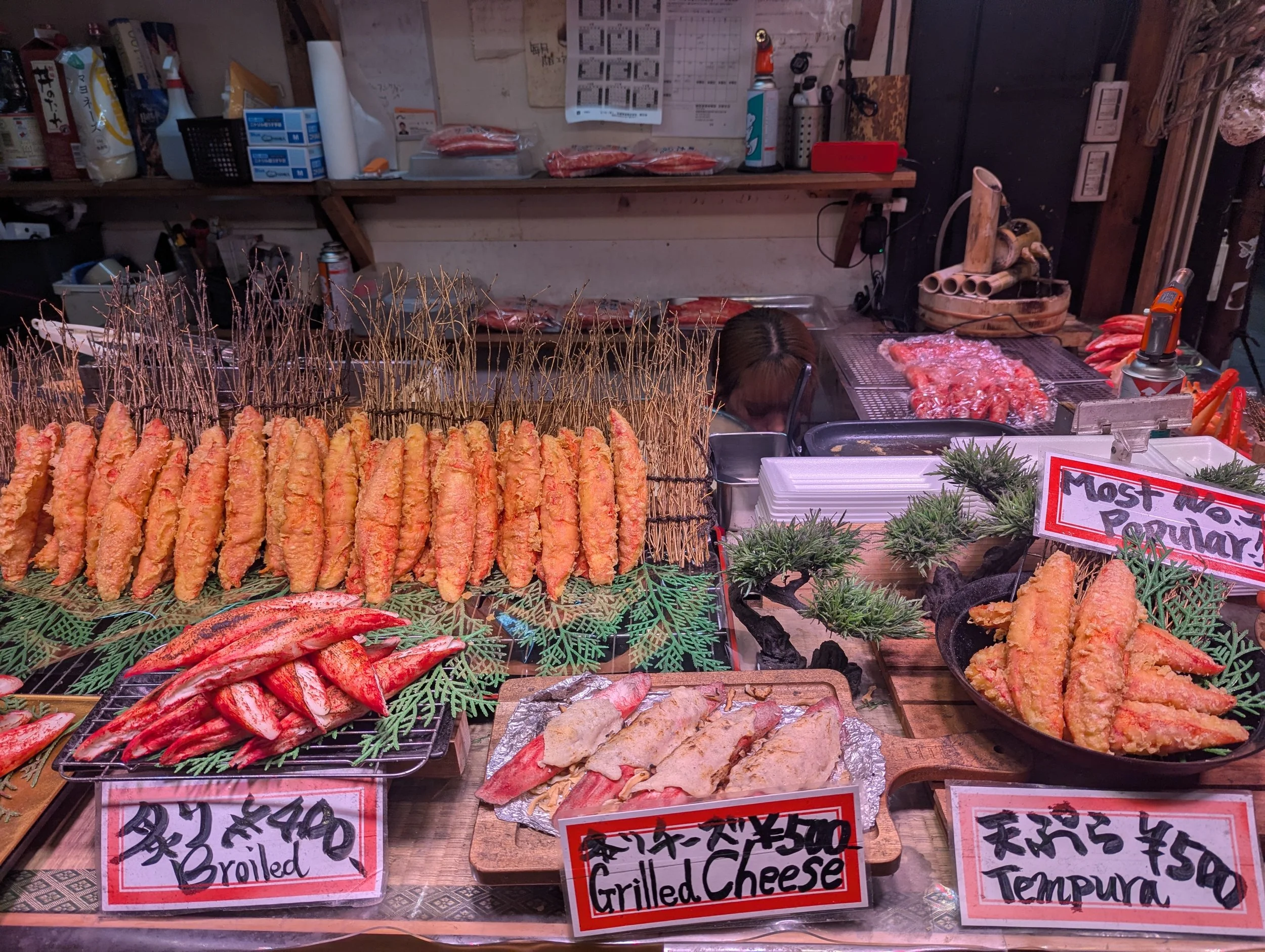
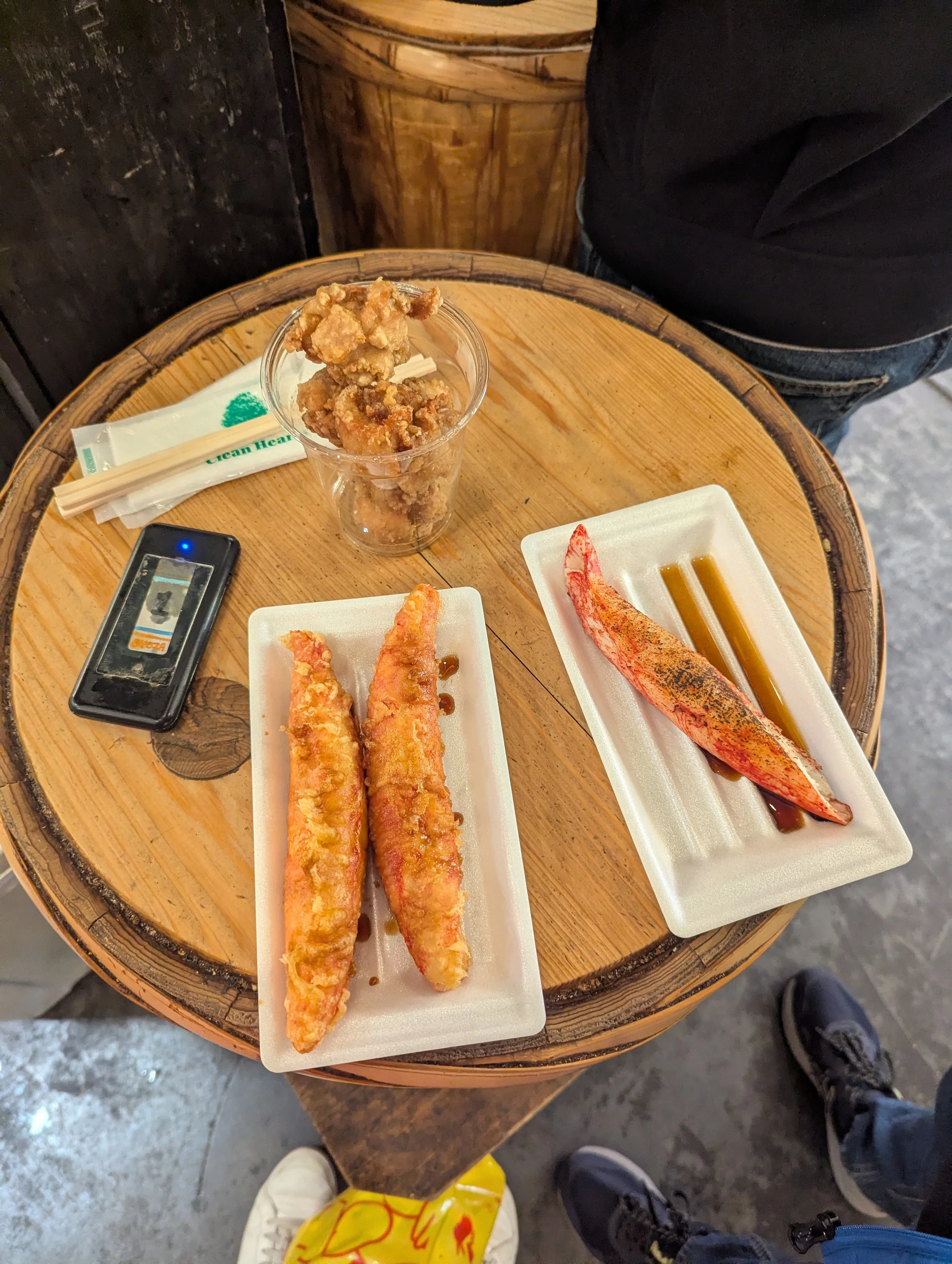
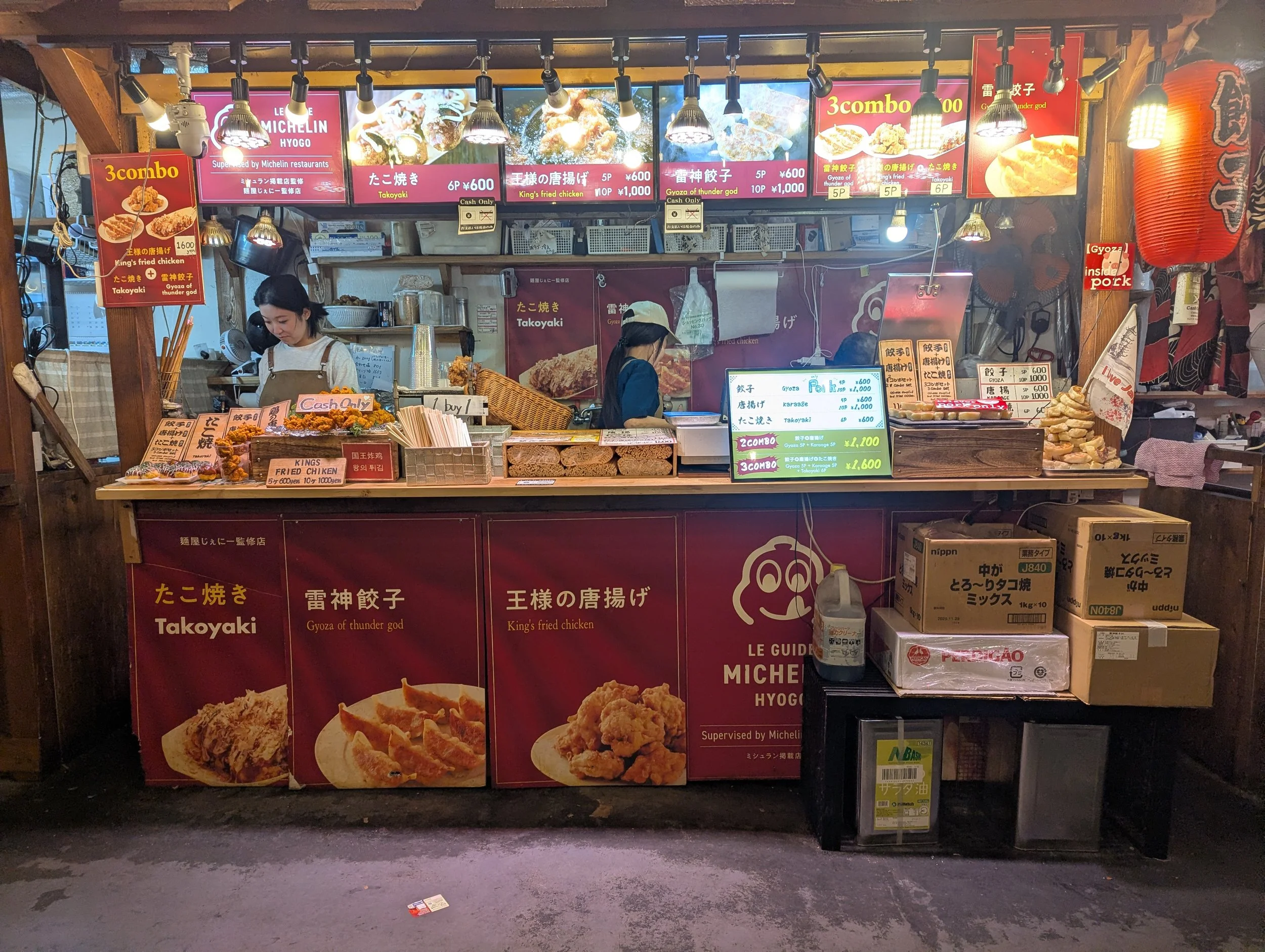
Our first mission in Kyoto was to find a holiday Squirtle at the Pokémon Center for Kevin’s sister, to complete her set. We were not successful - though we did find her a holiday Pikachu that she didn’t yet have, as well as the Kyoto Pikachus that it turned out she did have, so we kept them for ourselves. For lunch, we walked a couple blocks to Nishiki Market at about 2PM. It was so crowded, with so many tourists, it was difficult to walk. We found the area that we had been to before with a variety of stalls, as well as standing tables. The area was packed with tourists, but we recall getting good food in that area from a prior trip. This time around, we got gyoza, karaage, grilled crab legs and tempura crab legs, and shrimp tempura. This lunch cost us $22.
We walked around and explored Kyoto National Garden - it’s a large open space, but not much of a garden in the way we traditionally think of a garden - it felt more like the grounds outside of the palace. It was nice to be outdoors and to be walking around, but it wasn’t anything special, in my opinion.
We headed back to Kyoto Granvia to check in at 4PM. This time, our room was 1219, on the north side, facing Kyoto Tower. We had a little bit of time so we went shopping - first to Don Quijote for obligatory souvenirs and snacks and matcha latte mix, then in Porta, the underground mall beneath Kyoto Station. As this trip was at the beginning of December, we were thinking of finding Japanese treats that we could enjoy with our families over Christmas. We found matcha roll cakes that fit this idea perfectly - originally, we wanted baumkuchen, but they all expire within days of purchase.
We returned to our room with all our purchases, and repacked our luggage that held all our souvenirs. We made sure we had everything we needed for our Shinkansen back to Tokyo in a few days.
One of our favorite restaurants is on the top floor of Kyoto Station, Katsukura. There was a line when we got there at 6PM, as there usually is, but it moves. They provide you with menus as you wait and take your order before you are at your table. There is also seating as you wait, and you sit in order. They are very efficient in Japan! We both order the Hiraboku Kinkaton Rosu tonkatsu, and we shared a yuzu soda that was delightful. The pigs are raised on rice, making their fat taste sweet and savory due to high oleic acid and low linoleic acid content. This restaurant allows you to crush your own sesame seeds with a mortar and pestle, and offers unlimited refills of cabbage and rice.
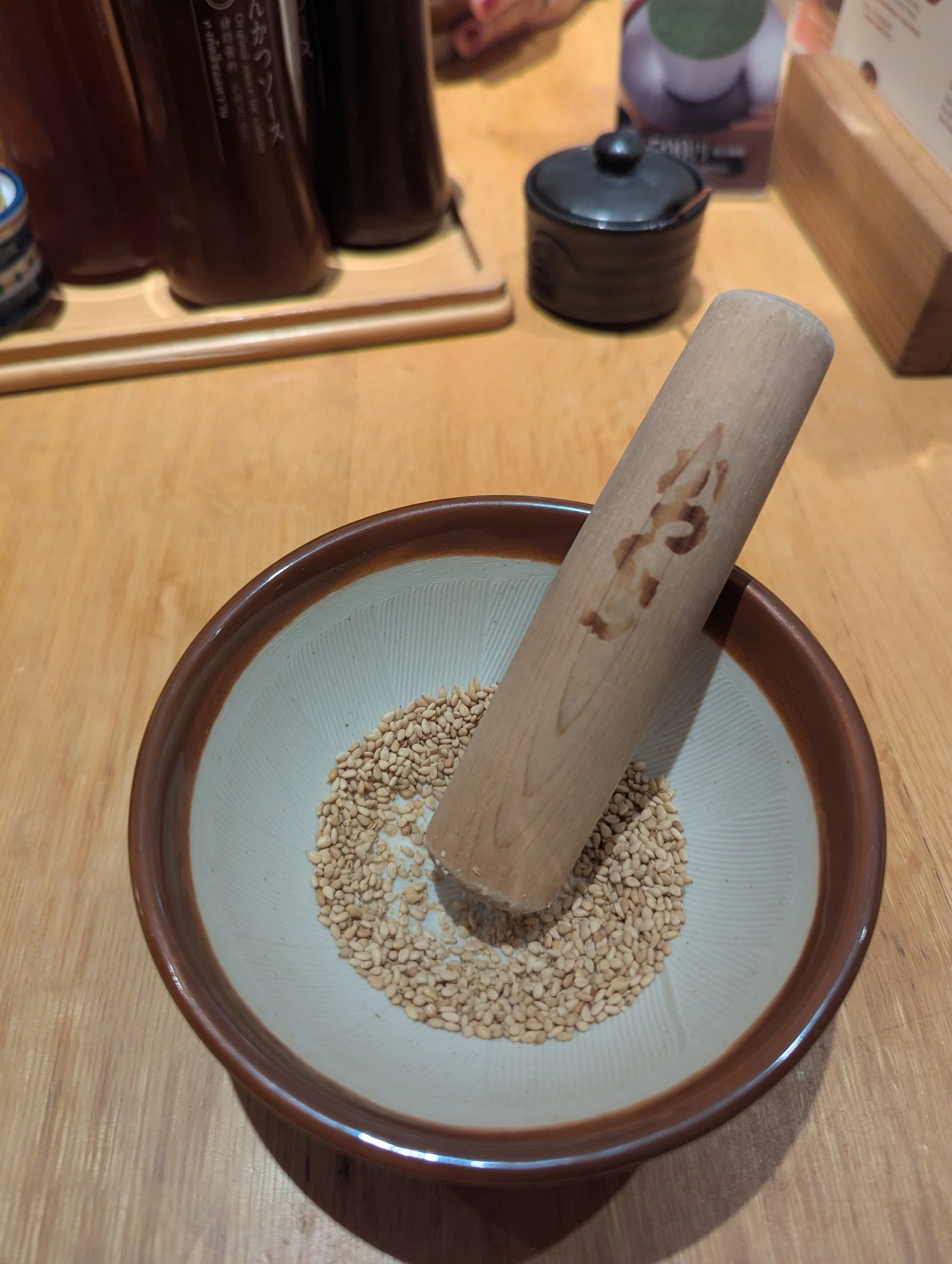
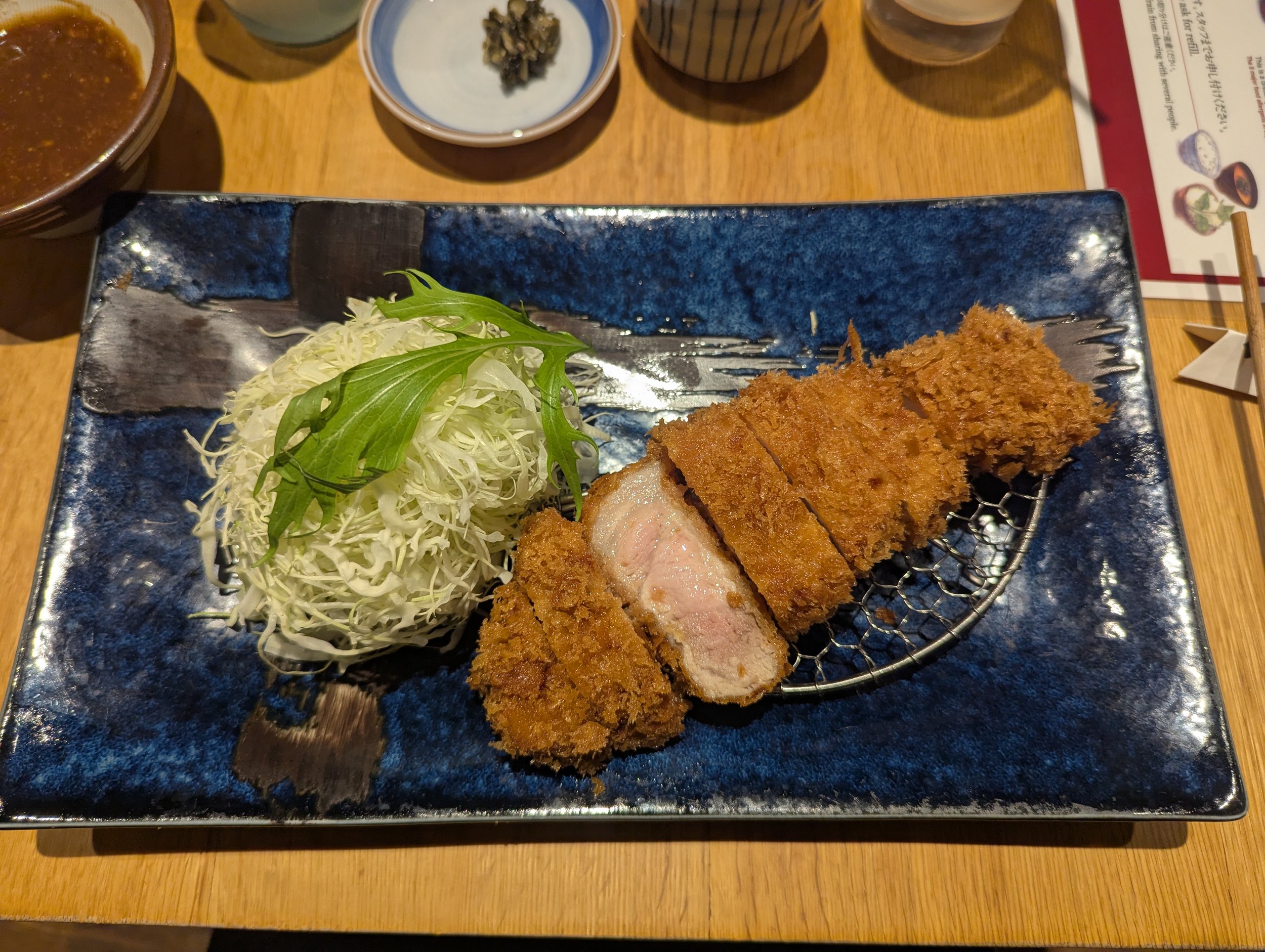
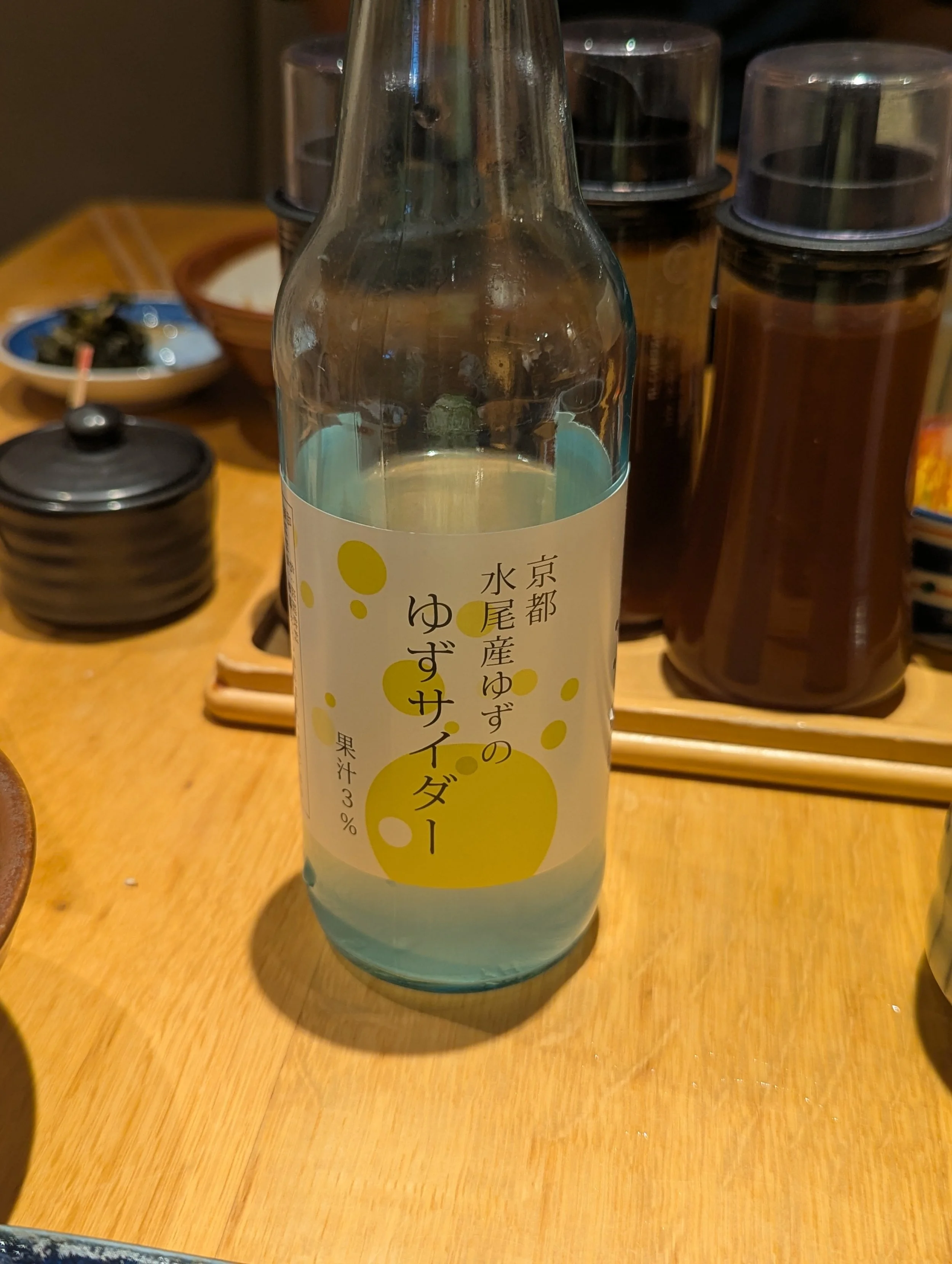
A lot of areas in Japan host special night time events, we’ve noticed particularly in the spring time during cherry blossom season and in the fall during peak foliage season. One of Kyoto’s main attractions is Kiyomizu-dera, a Buddhist temple and pilgrimage site as part of the 33 temple circuit for Kannon, with a large wooden stage constructed without use of nails. We had been there before on a previous trip, first thing in the morning when they opened, and even then, we were not alone. They were having a special night time event for the autumn evening illumination. We swiped our Suica cards as we got on the 206 bus to Kiyomizumichi, and walked the steep street up to Kiyomizu-dera, along with hoards of other people. Entry was 1000 yen for the both of yes. It was very crowded, but it was also very nice.
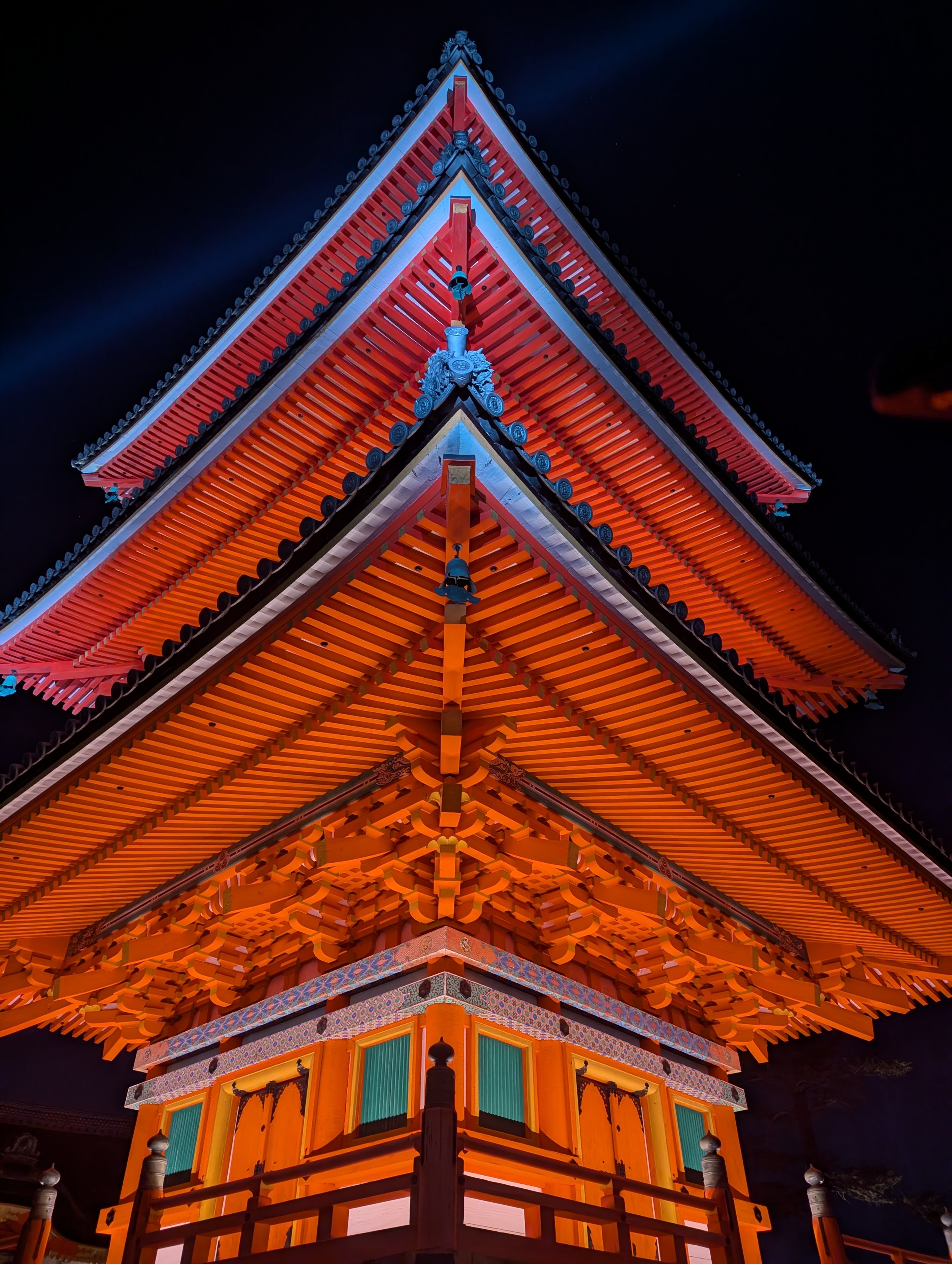
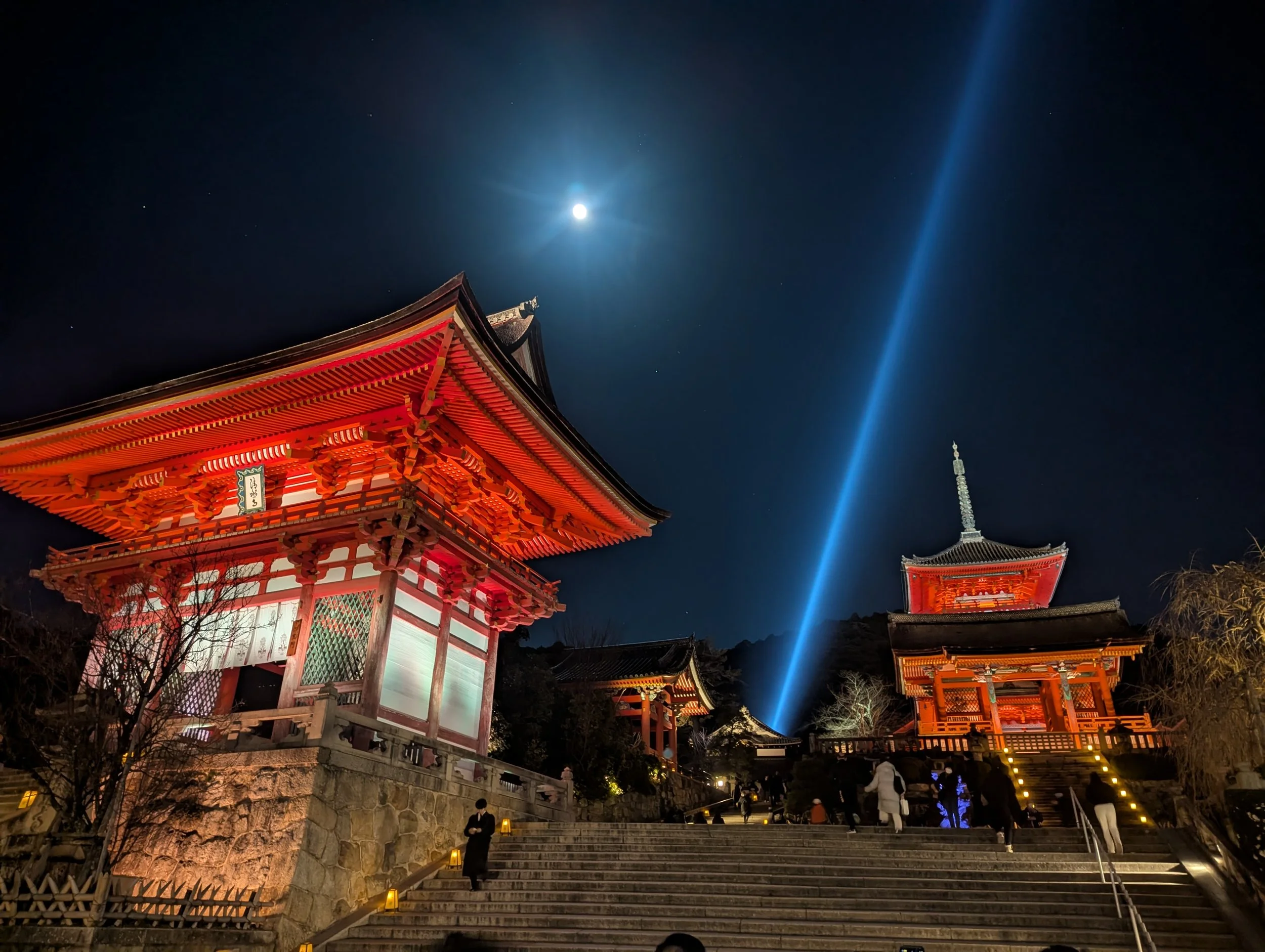
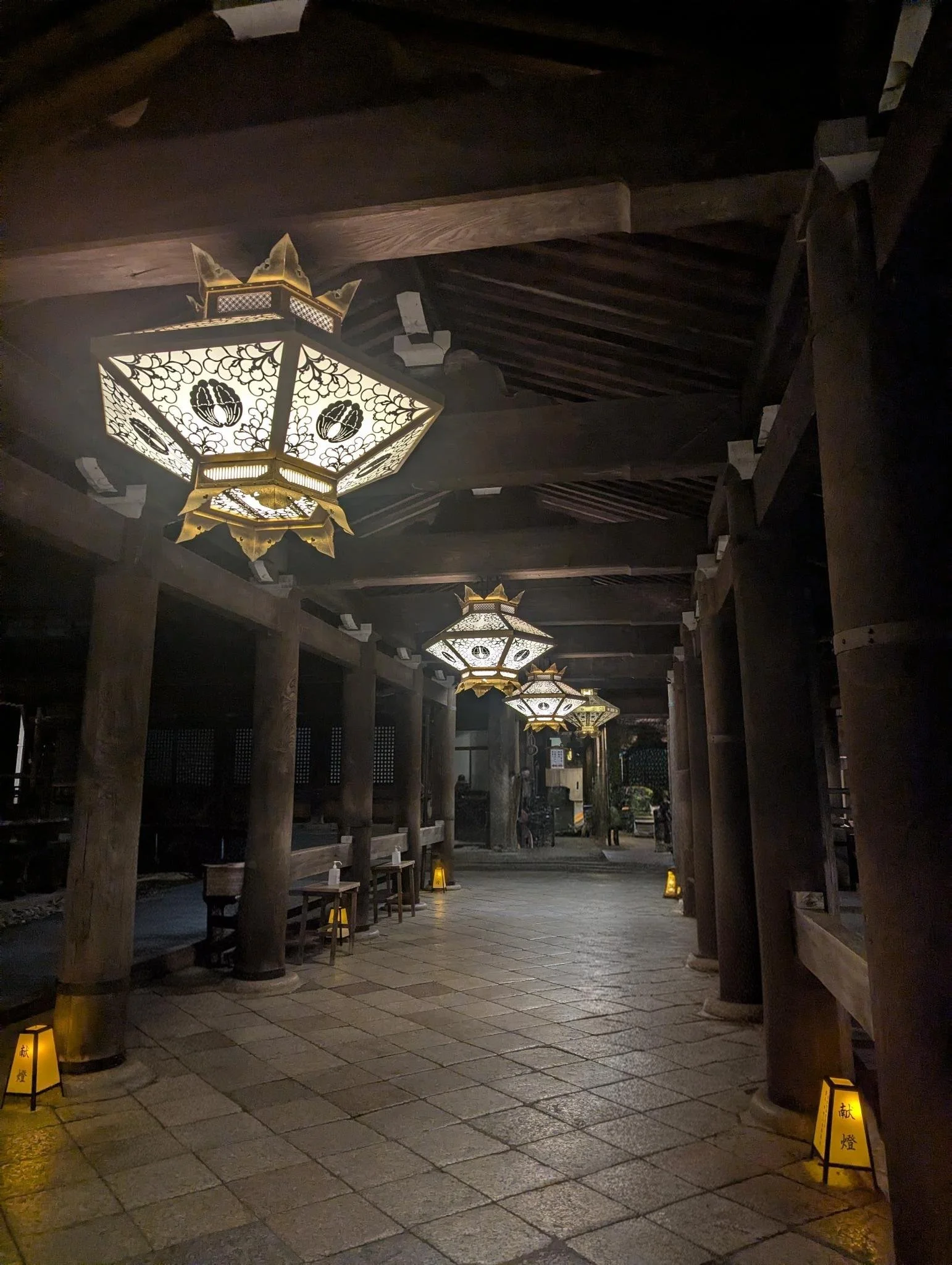
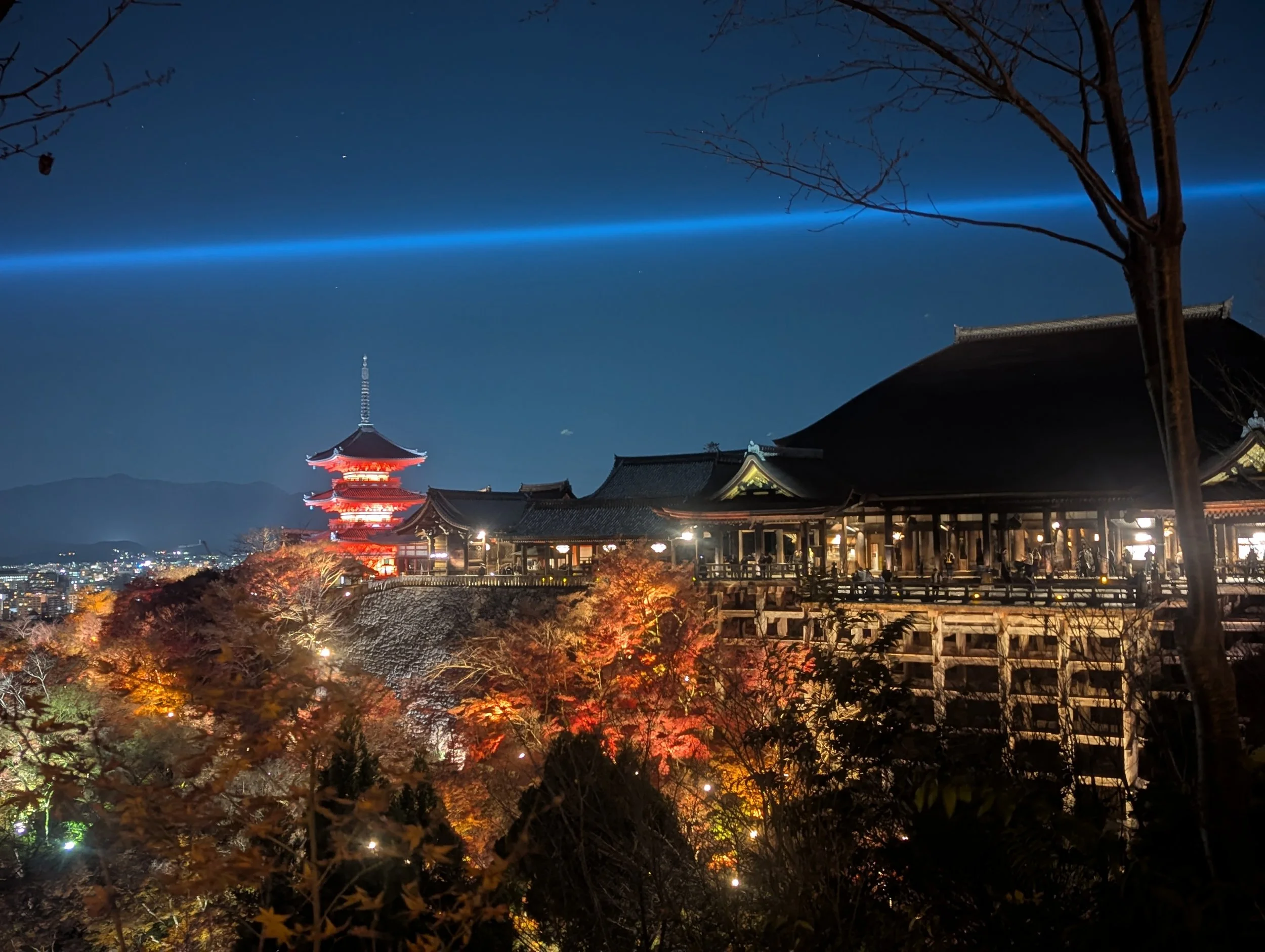
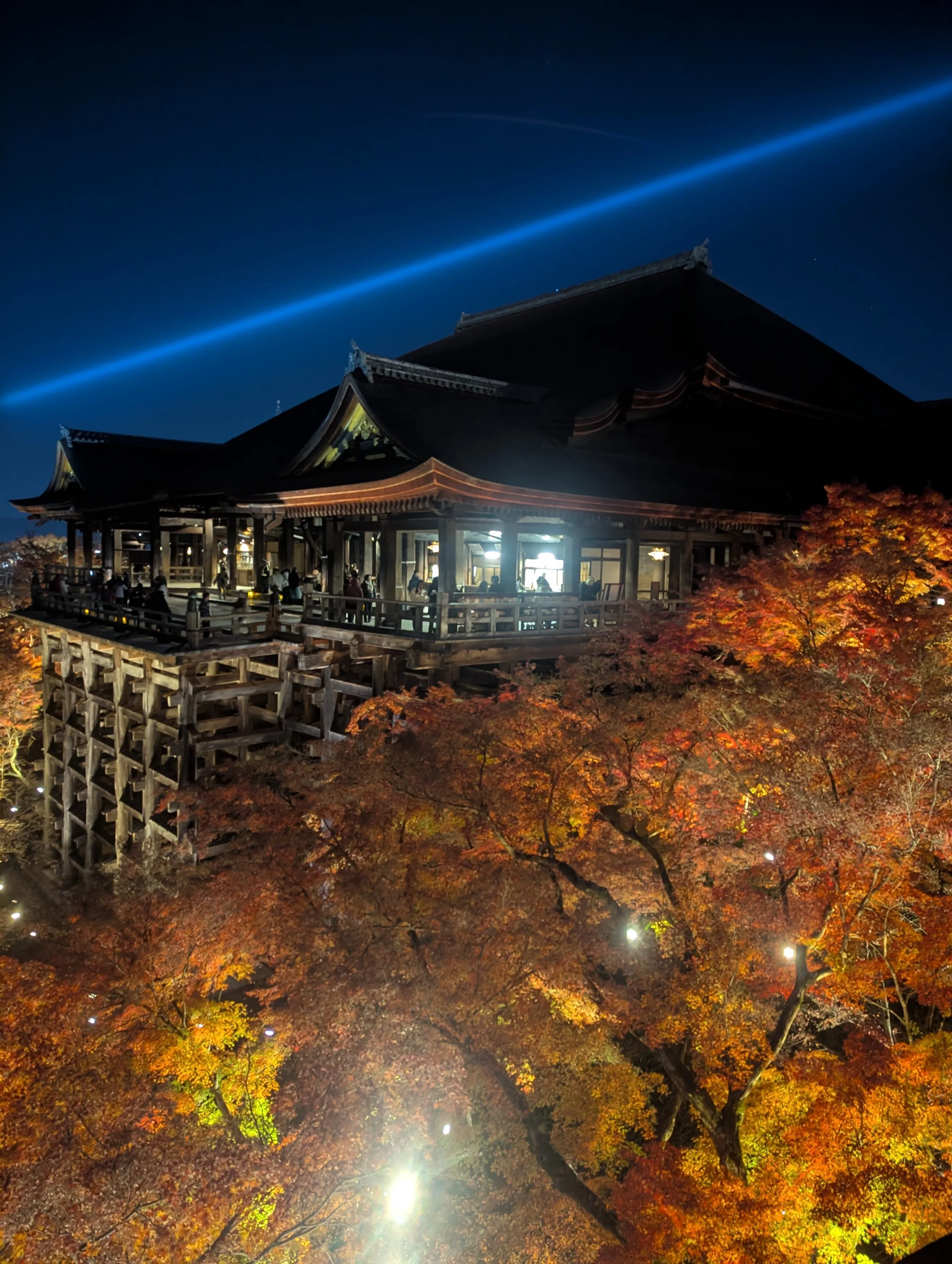
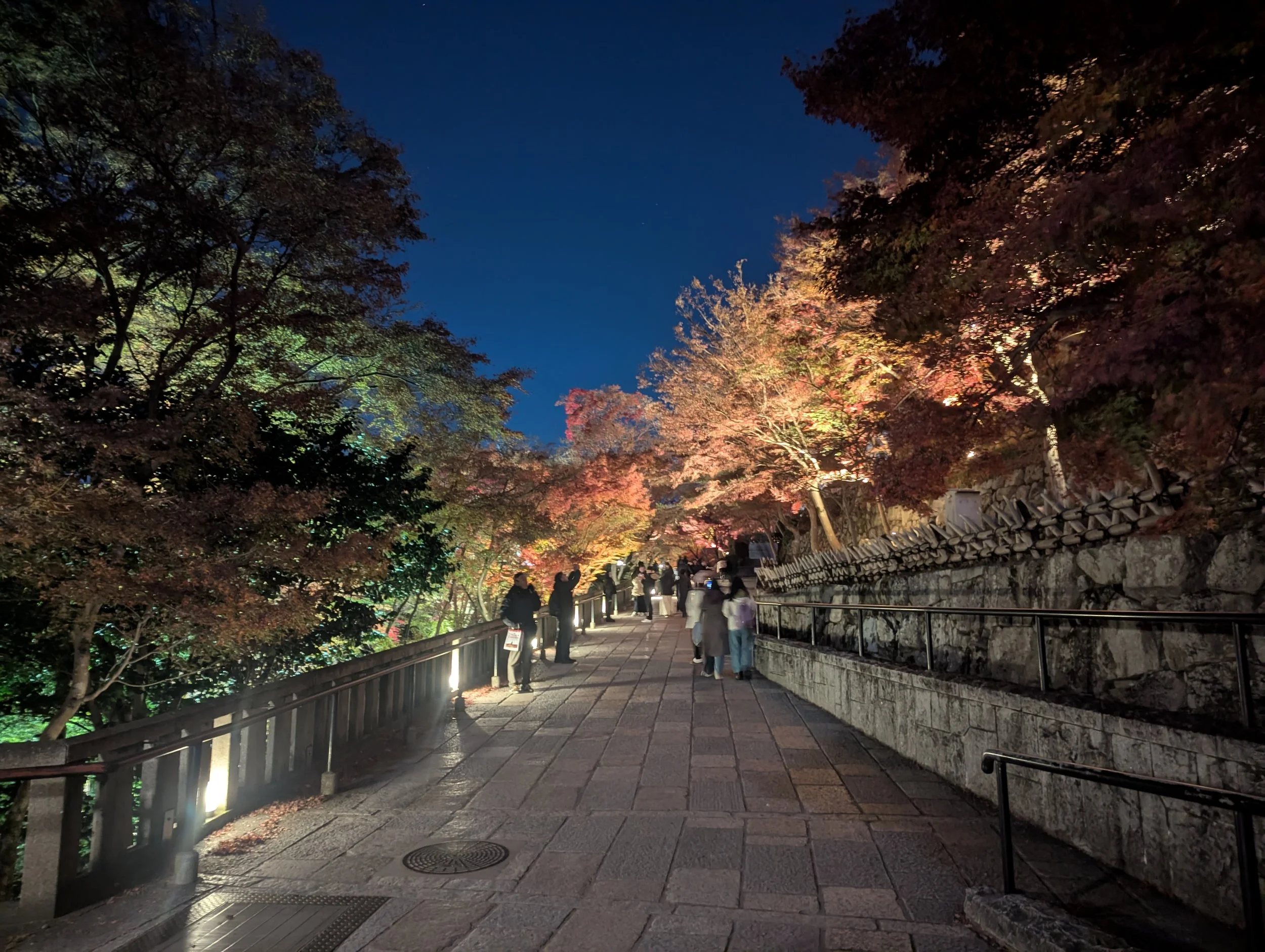
The blue light beam from Kiyomizu-dera represents the compassion and mercy of Kannon reaching out toward the city, and represents a connection between the sacred temple grounds and the heavens. The autumn foliage illumination was really nice. We were just past peak foliage, but there were still plenty of colorful leaves. Despite the crowds, it felt quiet. I’m not sure if that’s just my perception because we were in Japan and Japanese people are very respectful.
We made our way back down through the grounds and down the slope to the bus stop. We had a bit of a difficult time trying to figure out how to get back. The bus stop had a flyer with the bus routes to take, but they didn’t match what Google Maps was telling us. We took the first bus that stopped at the station, which did not have a number, only characters, but got us back to Kyoto Station. We were back in our room at 9PM, we decompressed and went to bed at 22:30.
Day 9: Friday, December 5th - Kyoto and Uji
We woke at 7AM and left shortly after 8AM. The adventure for the day was teamlabs Biovortex, the newest installation, and a visit to Uji, the matcha capital of Japan.
Every time we’ve been to Kyoto Station, we have been unable to get from one end of Porta, accessible from the station escalators themselves, to the other side of Porta, where all the shops are. We finally discovered that Portadoes connect to itself, via B2F. The entrance back to the hotel side is to the right of Ogawa Coffee, if L’occitane is to your back. Went to Ogawafor breakfast. We each ordered a meal set that came with a protein, an egg, toast and salad - mine with smoked salmon and Kevin's with ham. I got a croissant instead of toast. We each got a cappuccino. It was pretty crowded, all the seats were taken and people were waiting. I’m not sure if there were commuters or locals in the cafe too, or just tourists.
We walked fifteen minutes from Kyoto Station to teamlabs, via the south exit. We got in line at 9:20 for our 9:30 timed entry tickets. At first, the line waits outside the building. Once inside, you have access to the lockers and bathrooms, before waiting again to scan your tickets for entry. teamlabs Biovortex was huge! Had a lot of different interactive rooms, some of which were repeats from other teamlabs we’ve been to. The most memorable by far was the room with the soapy bubbles - they offer raincoats for rent, and masks are required. We did not rent raincoats and we were fine, although we did leave with soapy residue on our skin and hair after, but it was no big deal. There are also sinks by the exit of the exhibition to wash up before moving on to the next room. But I actually think my favorite room was a room that was filled with balls and air currents moved the orbs around, including into a vortex.
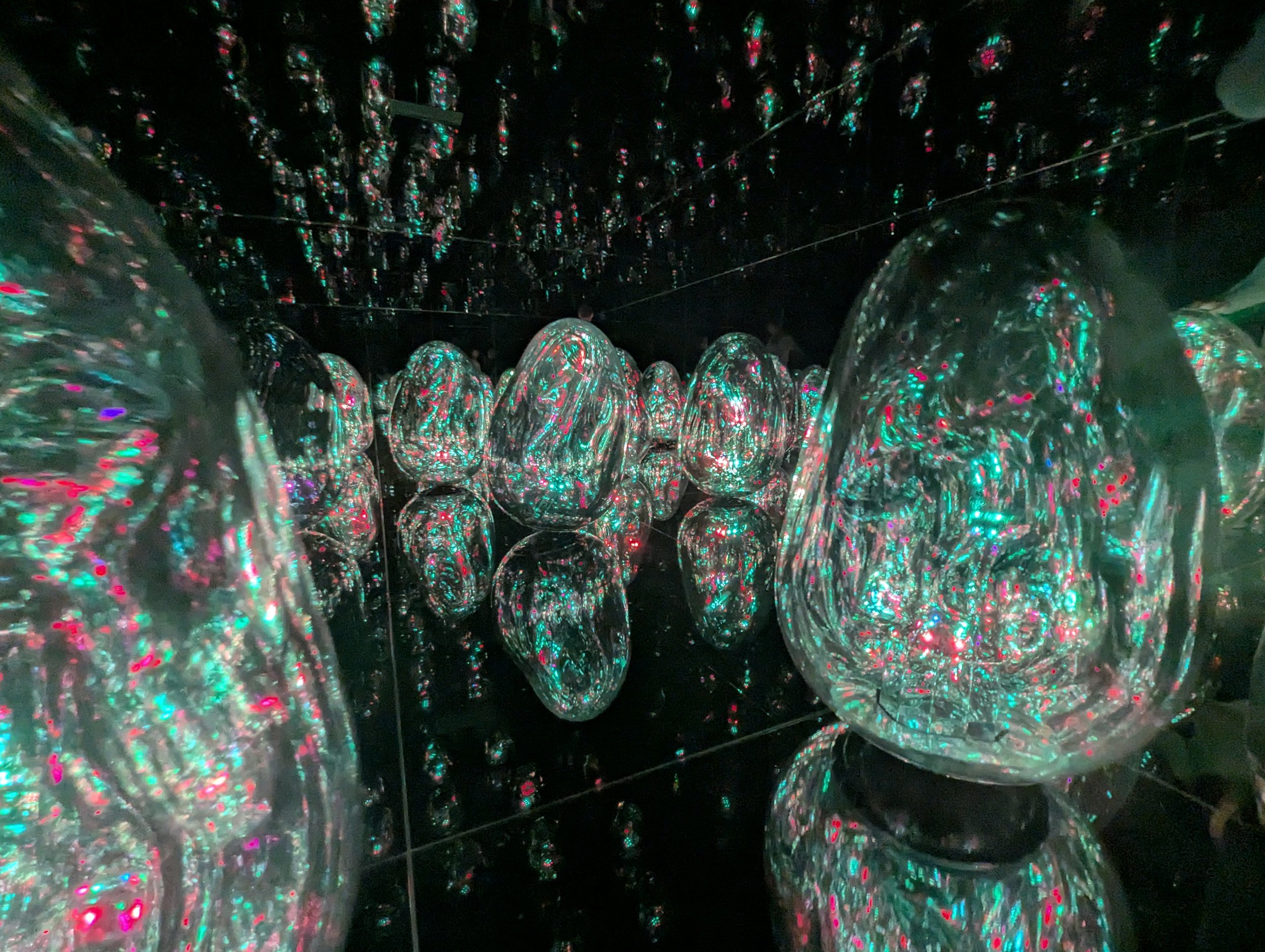
We left teamlabs at noon and caught the 12:36 train to Uji via Nara line. It was an easy fifteen minute train ride. We made a quick stop at the tourist info center for stamp.
Ahead of our trip, we had identified a restaurant at which we wanted to eat, which has really blown up and is Michelin rated. It has several locations, and we had learned that the locations in Kyoto are nearly impossible to get into; however, there is a branch in Uji that is just as good and much less popular. We found our way directly to Menya Inoichi and got in line shortly after 1PM. It didn’t appear to be a very long line, but was slow to move. They handed out menus while we waited in line. We waited outside for about 45 minutes, and it was quite chilly - the temperature was in the 50s but felt like 40s due to the wind - then waited again inside. While waiting inside, there were seats, and they take our order. It is important to note that they do not accept cash, which is the opposite of many other shops and restaurants in Japan. We were finally seated at 2:10, over an hour after first having got in line. Our drinks and shu mai appetizer we ordered arrived right away. Our ramen arrived five minutes later. All the seats are bar seating, facing the kitchen, which was super cool to watch the chefs at their stations and how the bowls of ramen come together. We were done eating twenty minutes later. It was so good, and definitely worth the wait!
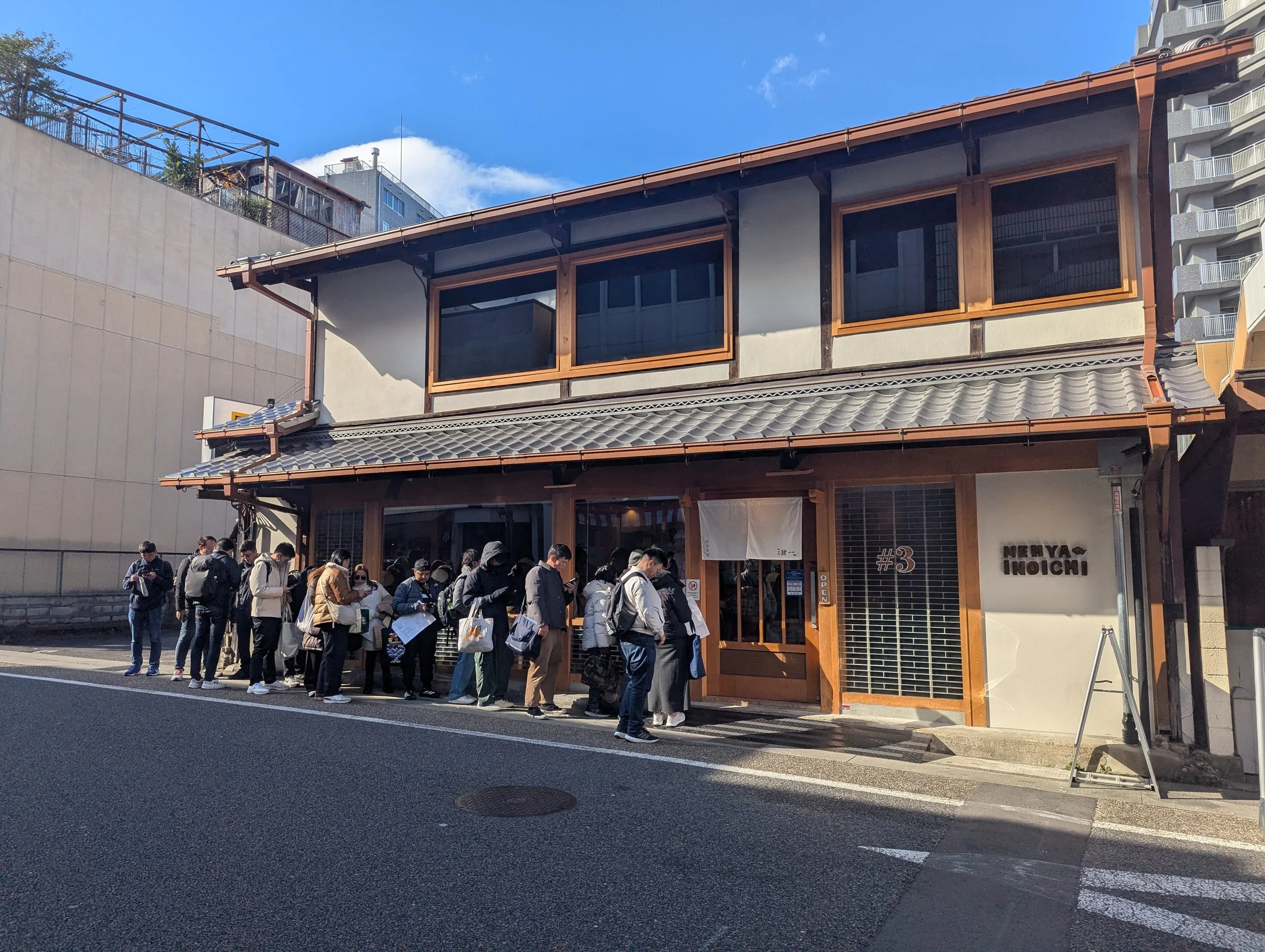
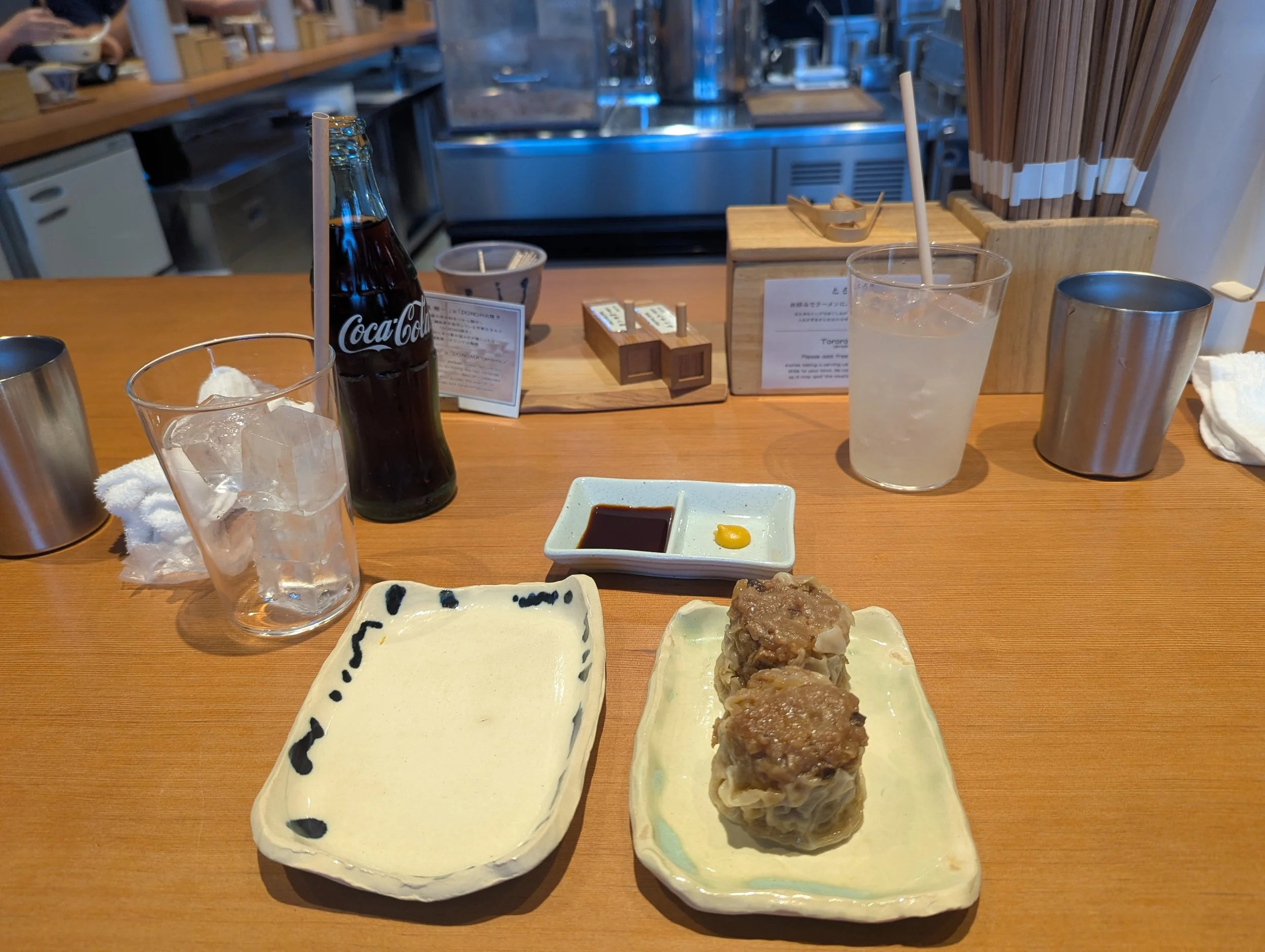
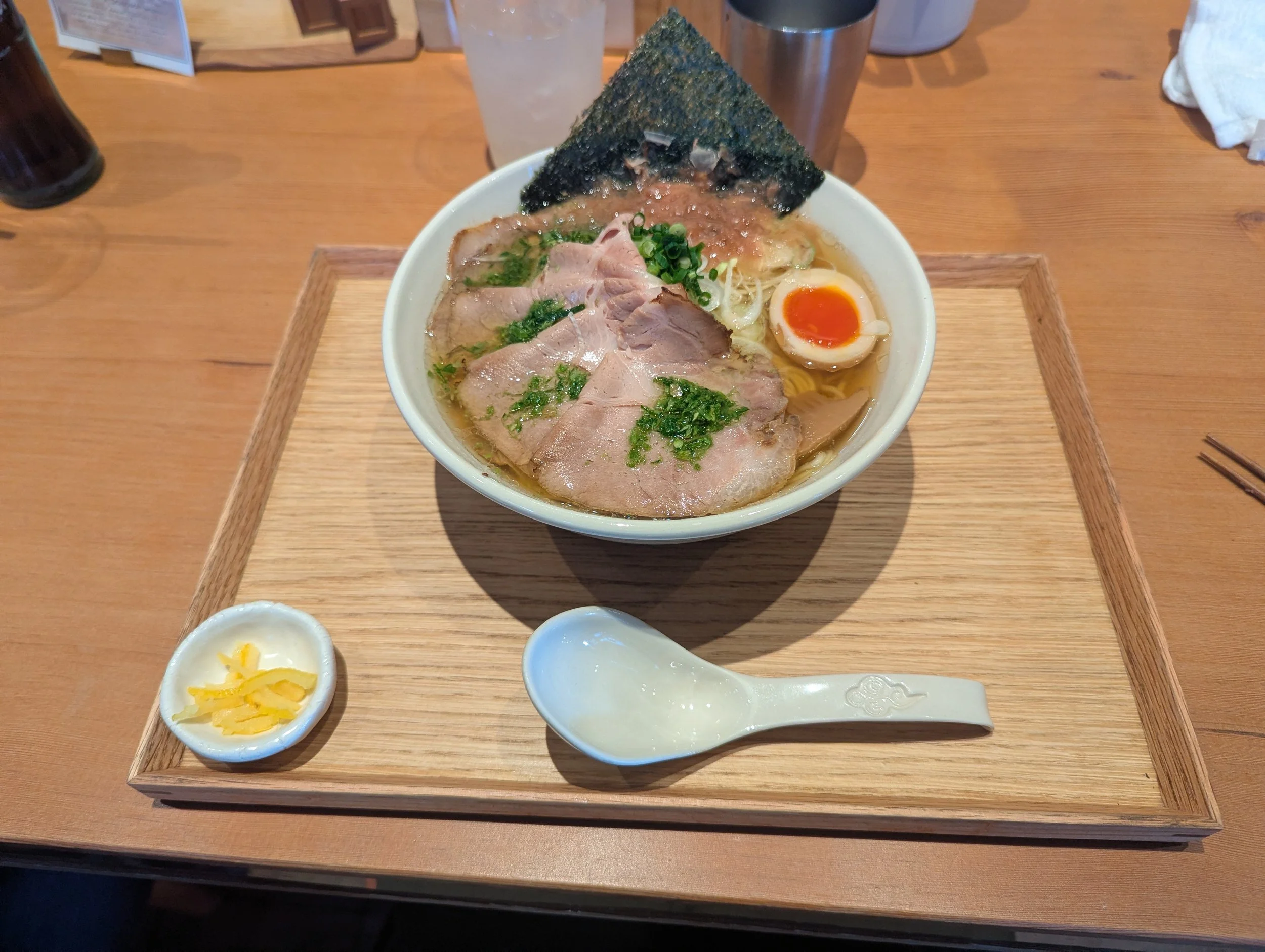
After lunch, we went to Byodo-in Temple, most known for Phoenix Hall, which is featured on the ten yen coin. We visited the museum and wandered the gardens. Outside of Phoenix Hall was very crowded, with tourists and class field trips. The building itself is stunning. You could join a tour to see the inside of Phoenix Hall, but we didn’t have time.
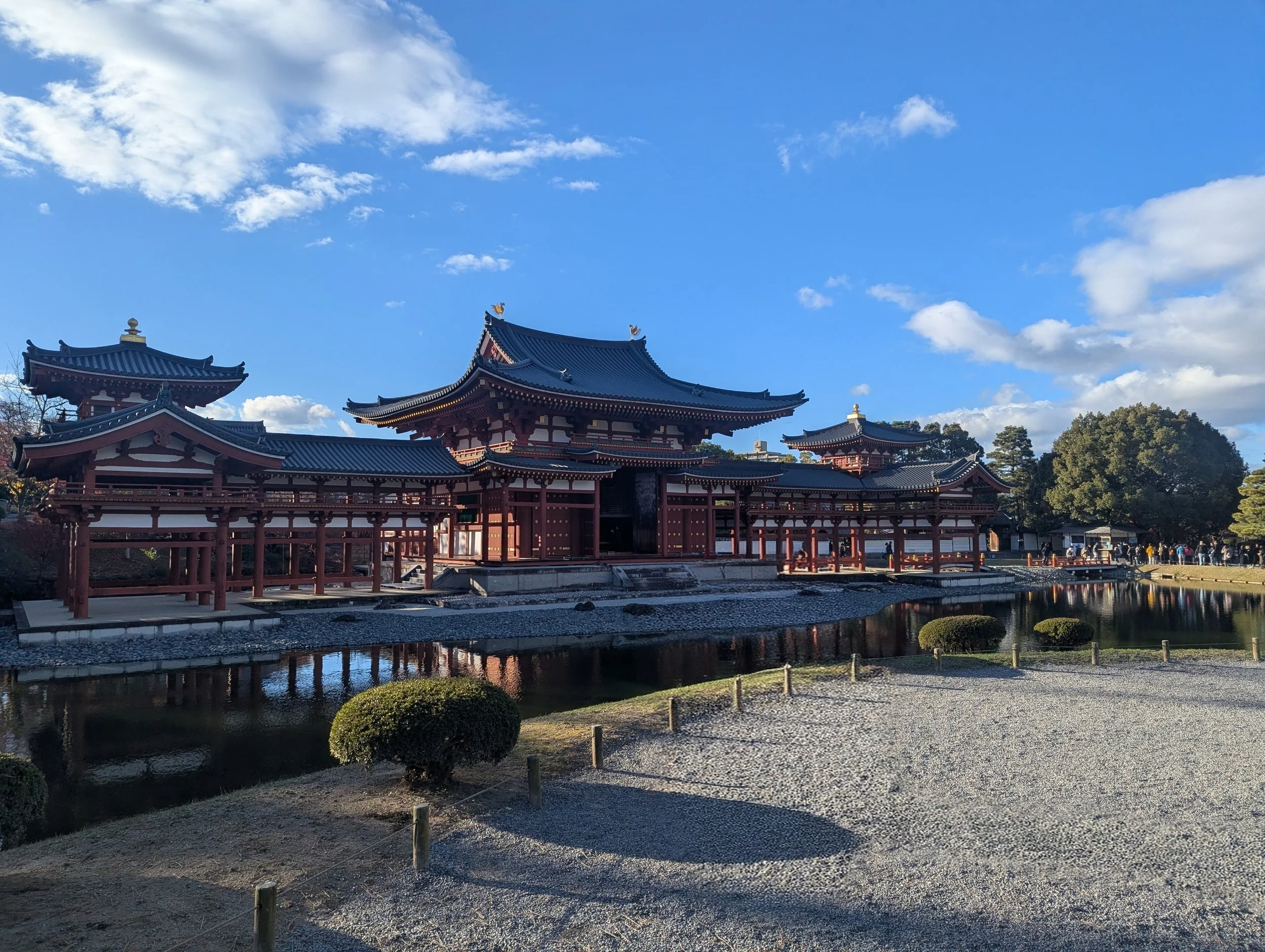
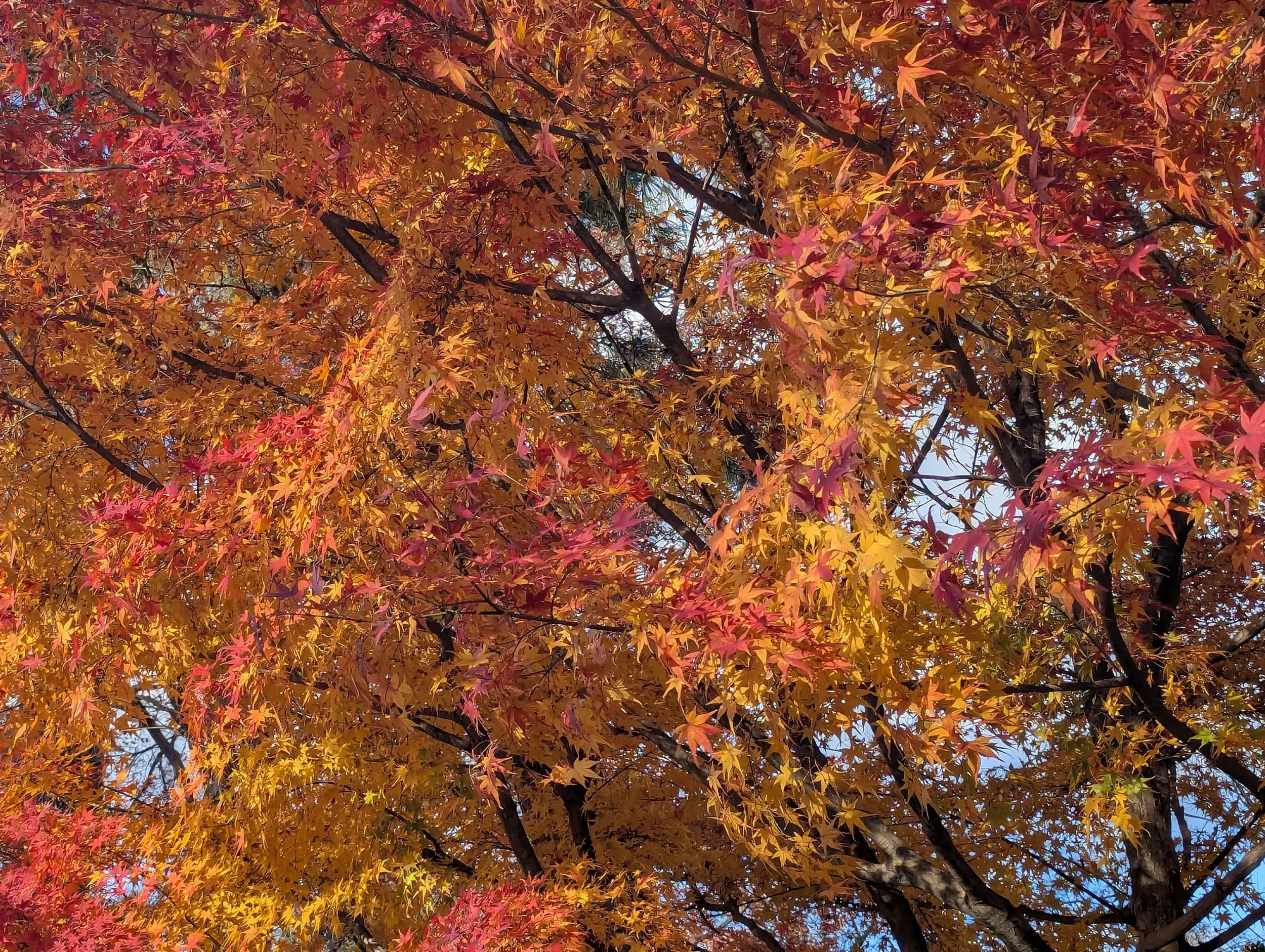
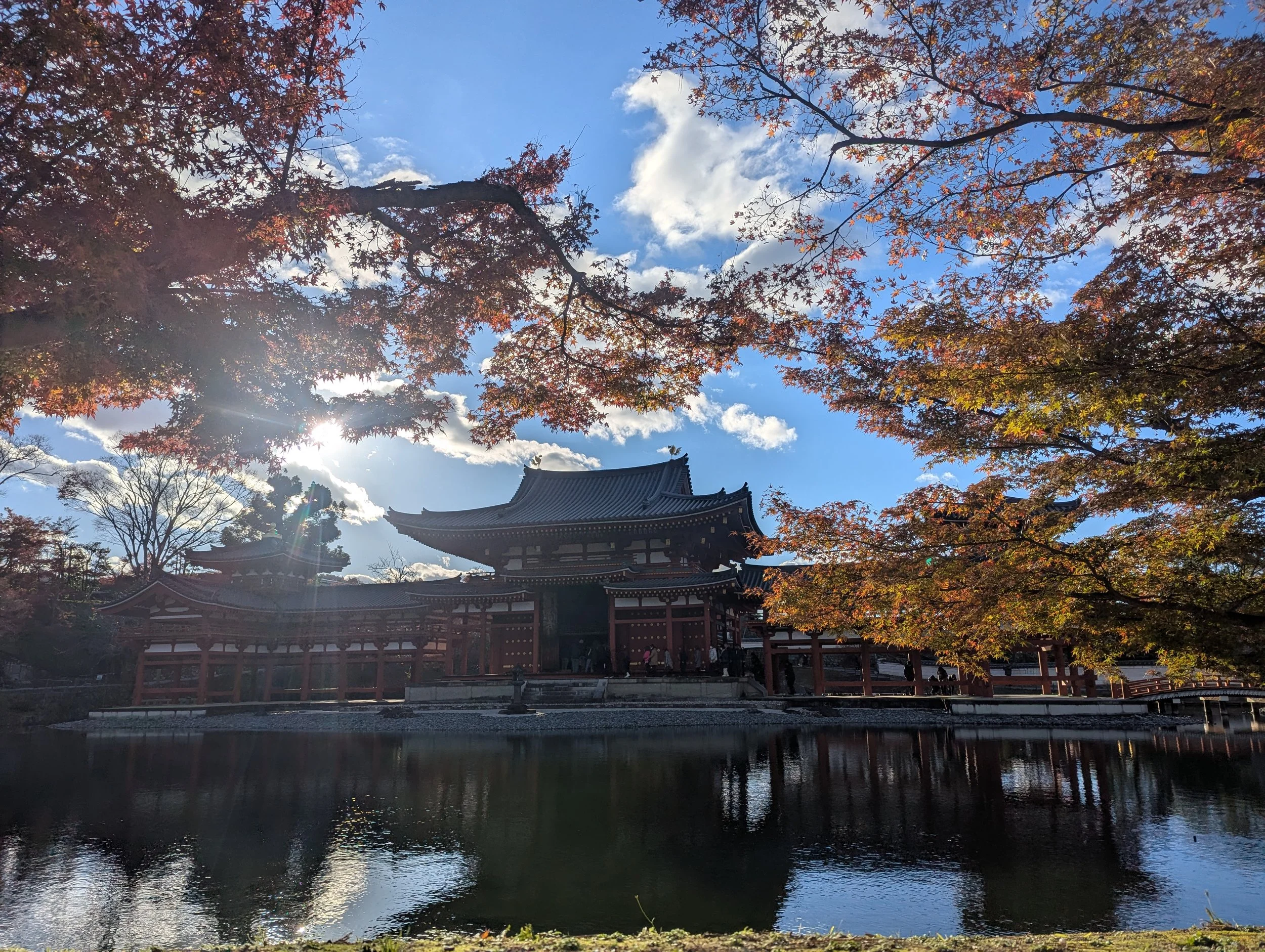
Outside of the temple is a quaint street lined with shops selling matcha, hojicha and matcha treats. The entire street is drenched with the delightful aroma of roasting tea leaves of hojicha. One shop we visited had all different types of matcha and the shop owners speak English to help find the matcha you prefer.
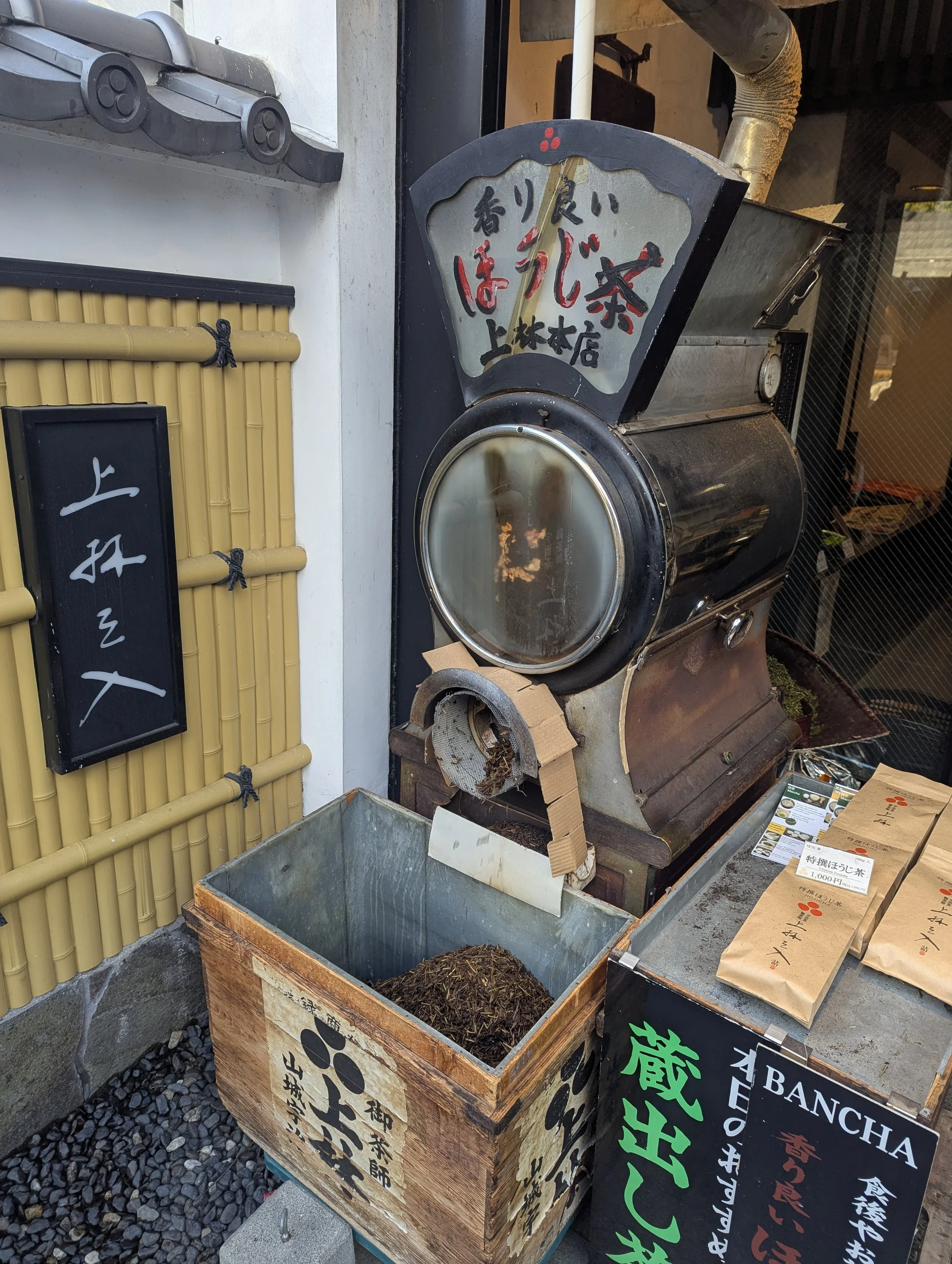
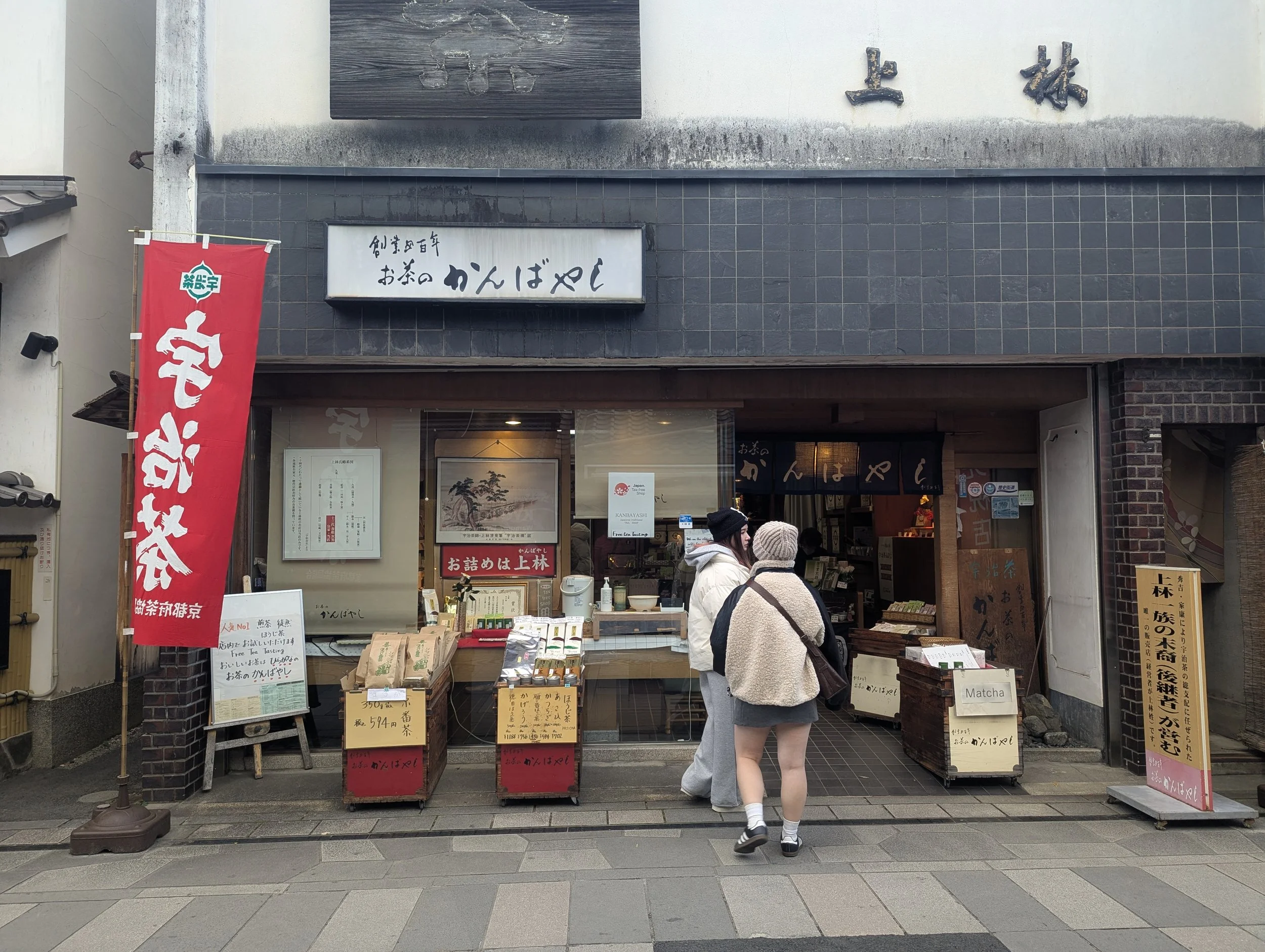
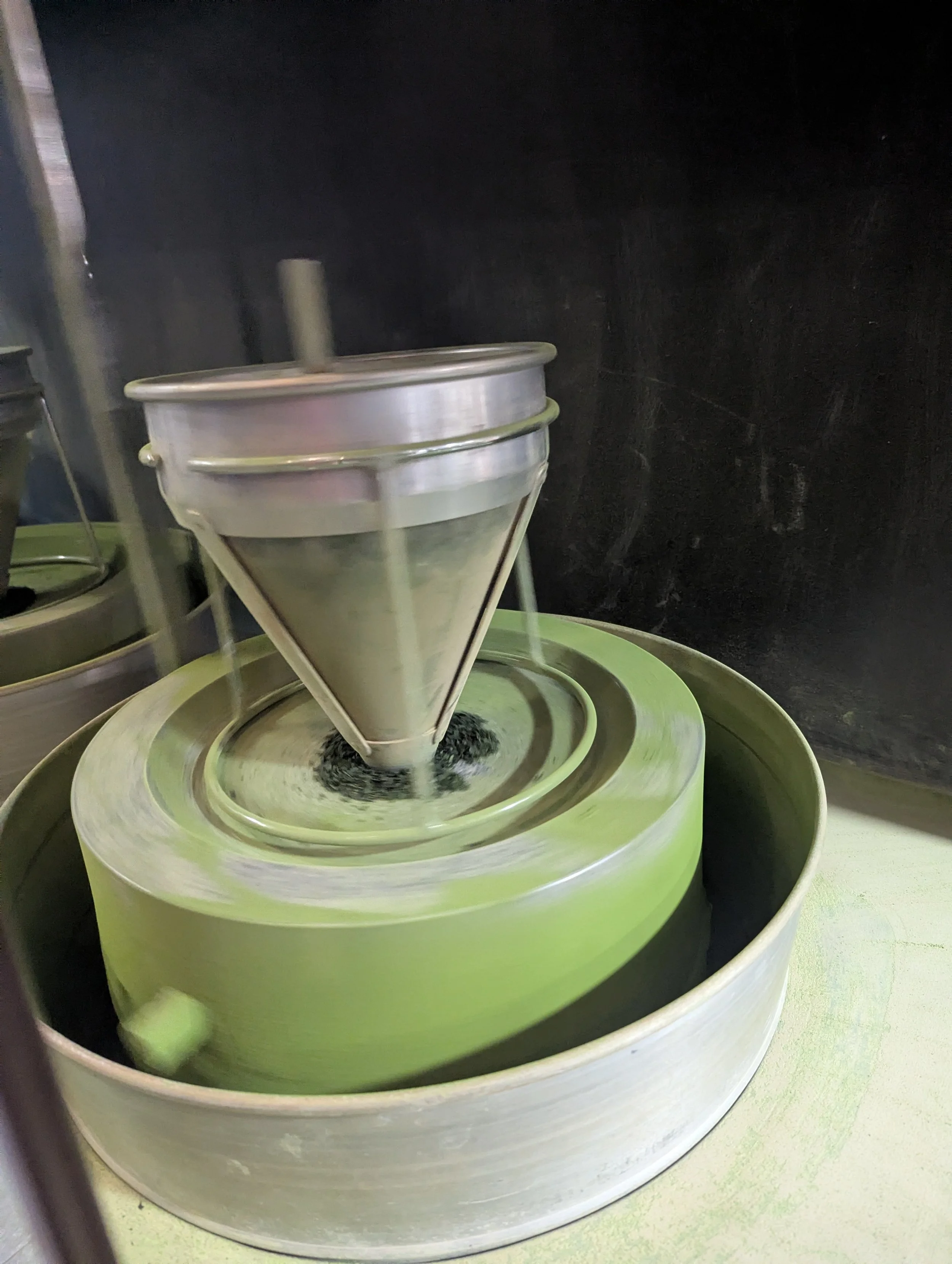
One of the other main things we were hoping to do while in Uji was to have matcha at Nakamura. There are two locations in Uji, and we had learned that the branch by the temple was usually less busy than the main branch closer to the station. Nakamura is a famous matcha shop, that you will see in Tokyo, Kyoto and Osaka. We had seen it before but didn’t realize it was this brand.
When we walked into the Byodo-in branch of Nakamura, the instructions say to find seat first before ordering, but there were none. The location closes at 5, with the last order being at 4:30. According to Google, the main store was open until 5:30 so we decided to go there instead, hoping we’d have better luck. We got there at 4:15….and “reception” closed at 4, so they were no longer seating people; however, the store was open. We ran back to the Byodo-in store. I waited in line to place our order at the kiosk while Kevin scoped out a place to sit. Most all the seats face the big windows overlooking the water. They let people know that it takes 25 minutes to make an order. Our order was placed at 4:26, meaning we just made it! We stayed to finish our drinks until they closed at 5 - I had a matcha latte and Kevin had a hojicha latte. Both were superb. Satisfied and warmed, we walked back to the station, which was just twelve minutes away. Uji is a pretty small town, everything around a fifteen minute walk. We took a local train is at 5:23. Everything in Uji pretty much closes at 5. We felt good with our half day here, even when an hour was spent waiting on line for the ramen restaurant.
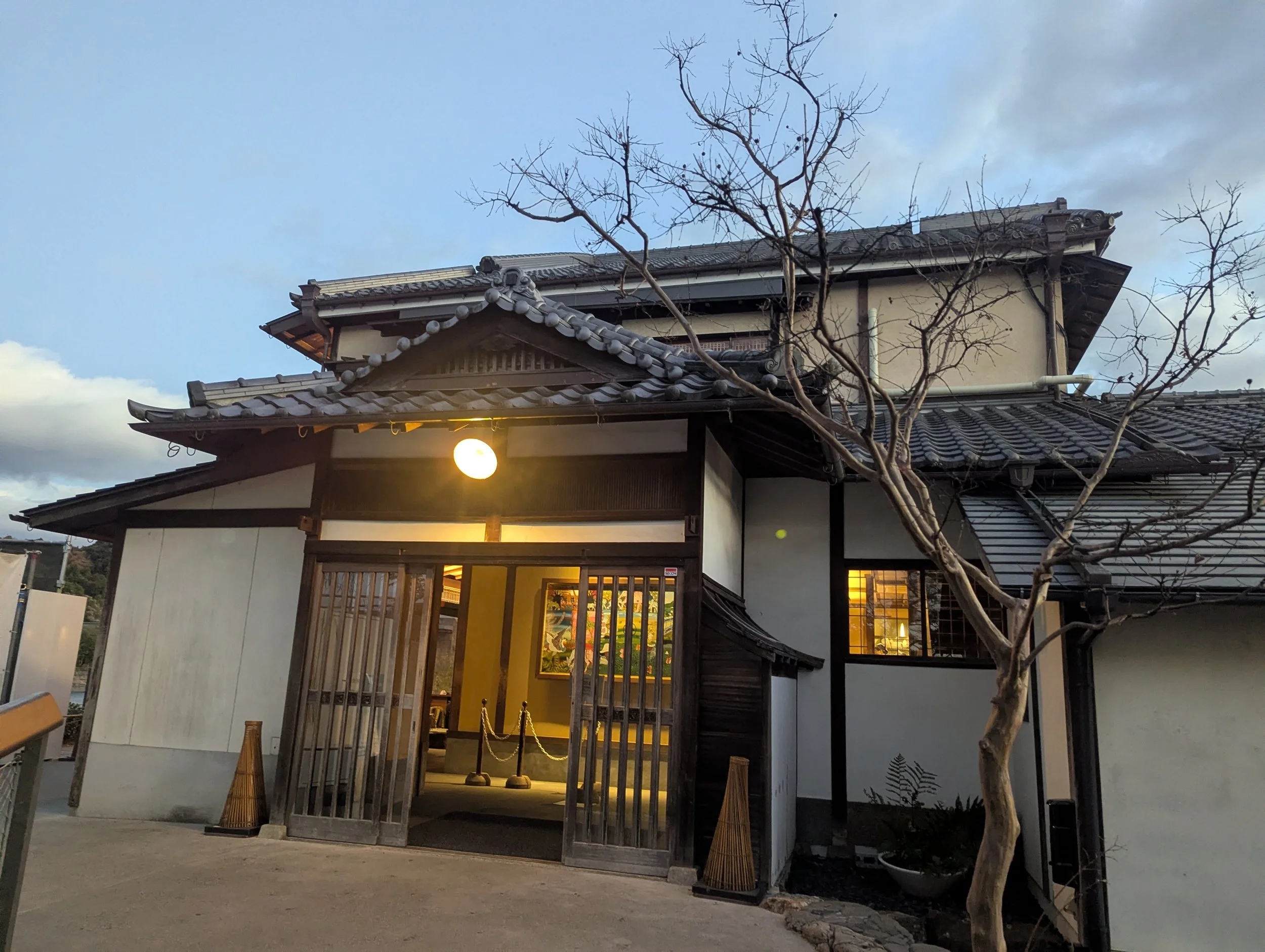
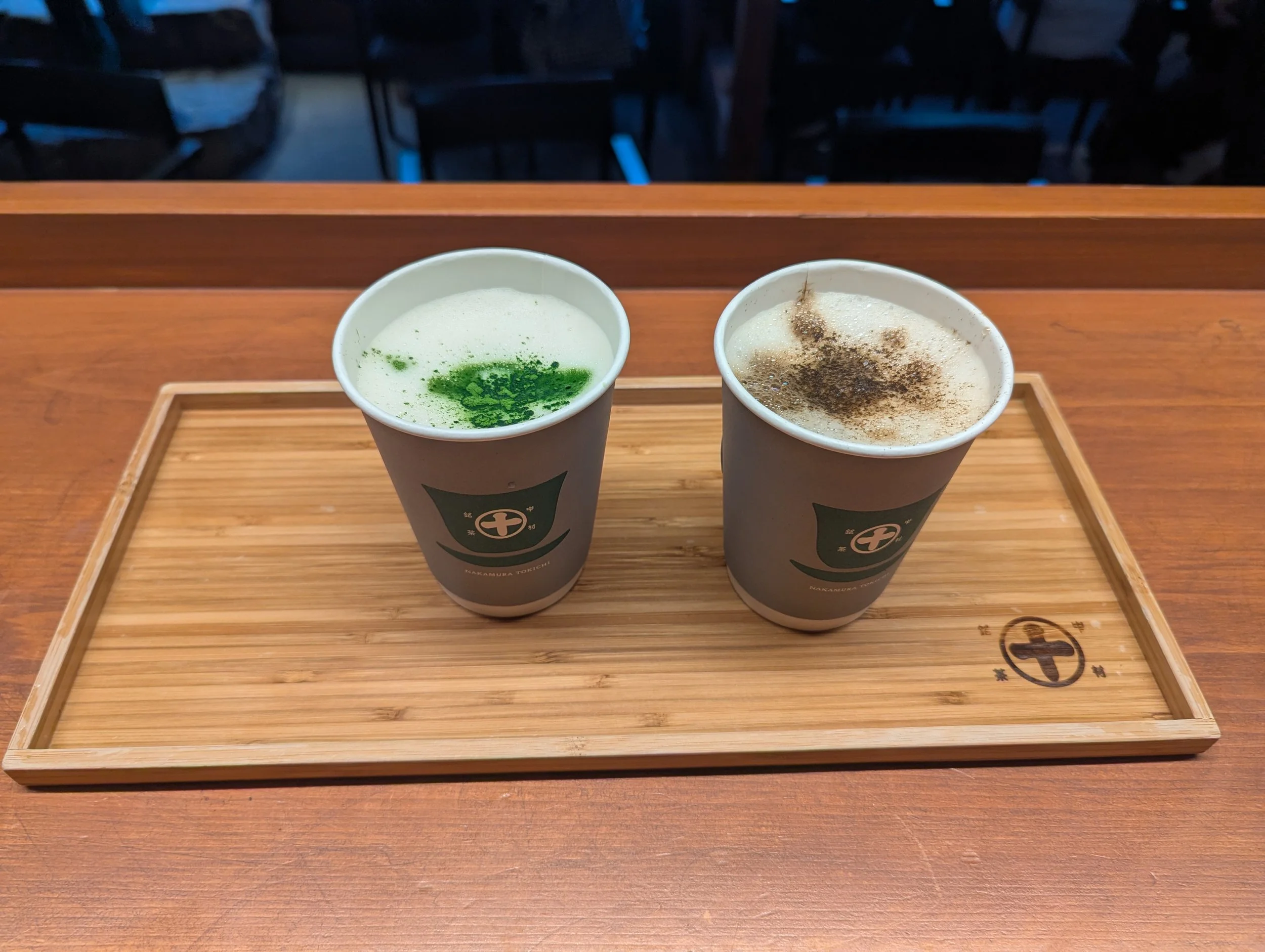
Once back in Kyoto, we did a little shopping - first at Don Quijote, then around Kyoto Station. On the basement level, there was a moomin pop up store. We had never heard of or seen the moomins before, but they are apparently really popular Finnish children’s series. We initially were hoping to have sushi on the 11F of the station, but it was set meals only. We decided on conveyor belt sushi in Porta instead. The wait estimate was 80 minutes, and we got lucky because they closed registration after we got our ticket. The last order is at 9PM, and they close at 10PM.
We were seated around 8:25. Food arrived 8:30 - we ordered from the tablet and pulled plates off the belt. There wasn't a large variety on the belt because it was late, but but we still were able to get what we wanted from ordering on the tablet. To end the meal, we indulged in matcha ice cream since we didn't have any in Uji since it was cold. We finished dinner at 9PM, did some last minute shopping and packing before bed. It’s always nice to spend a day in Kyoto, but sad to wrap up the last day of our Japan trip.
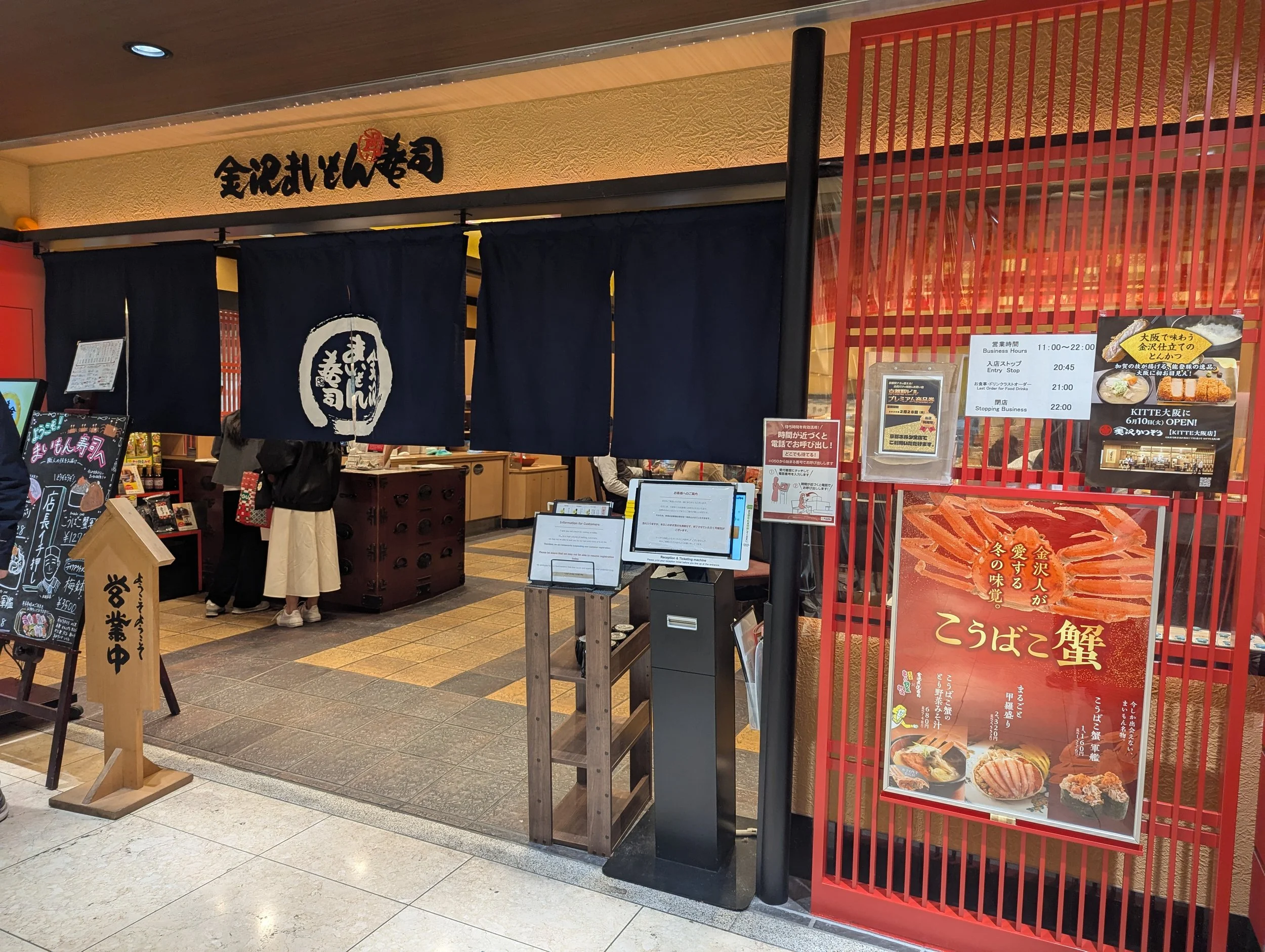
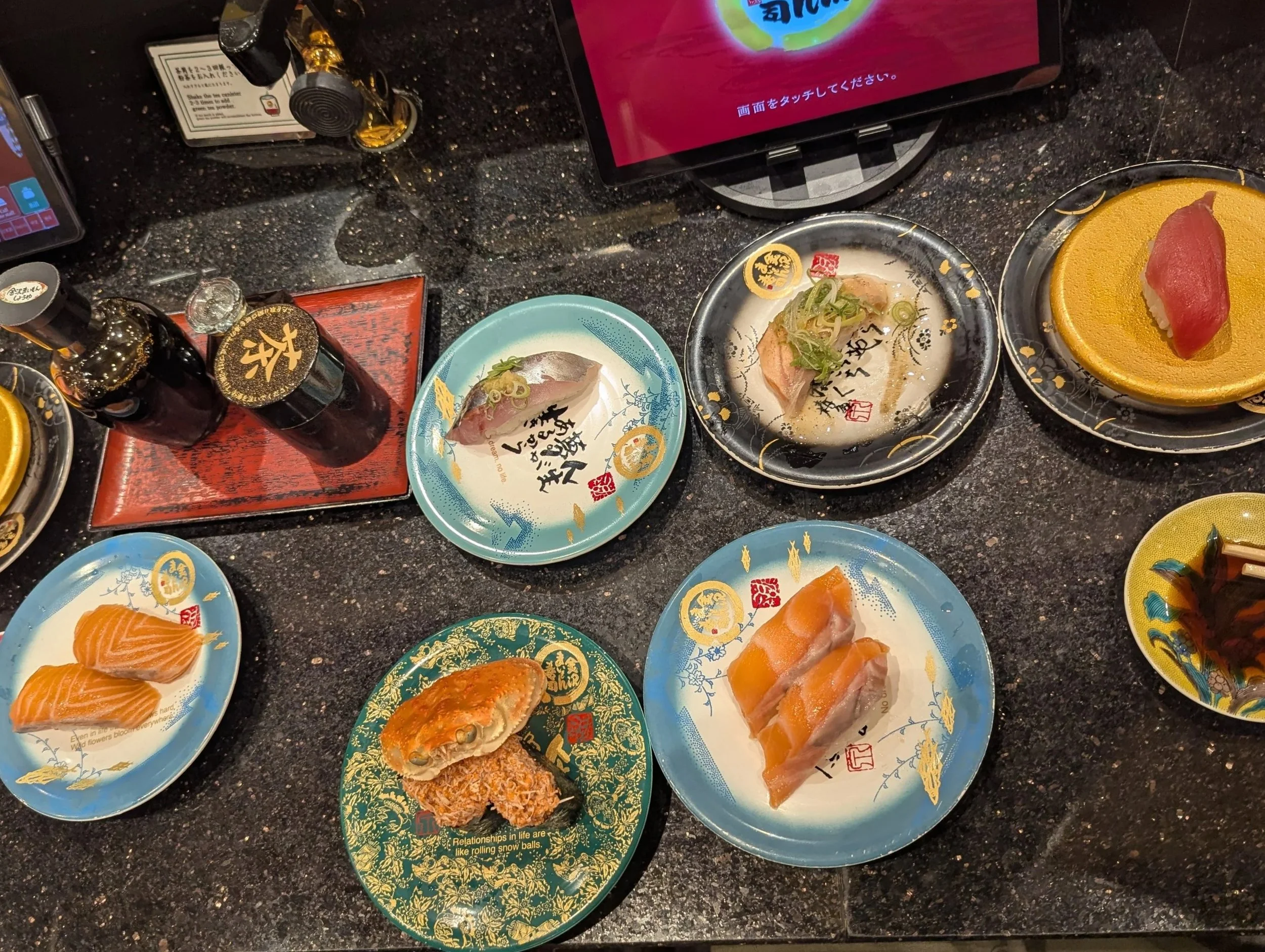
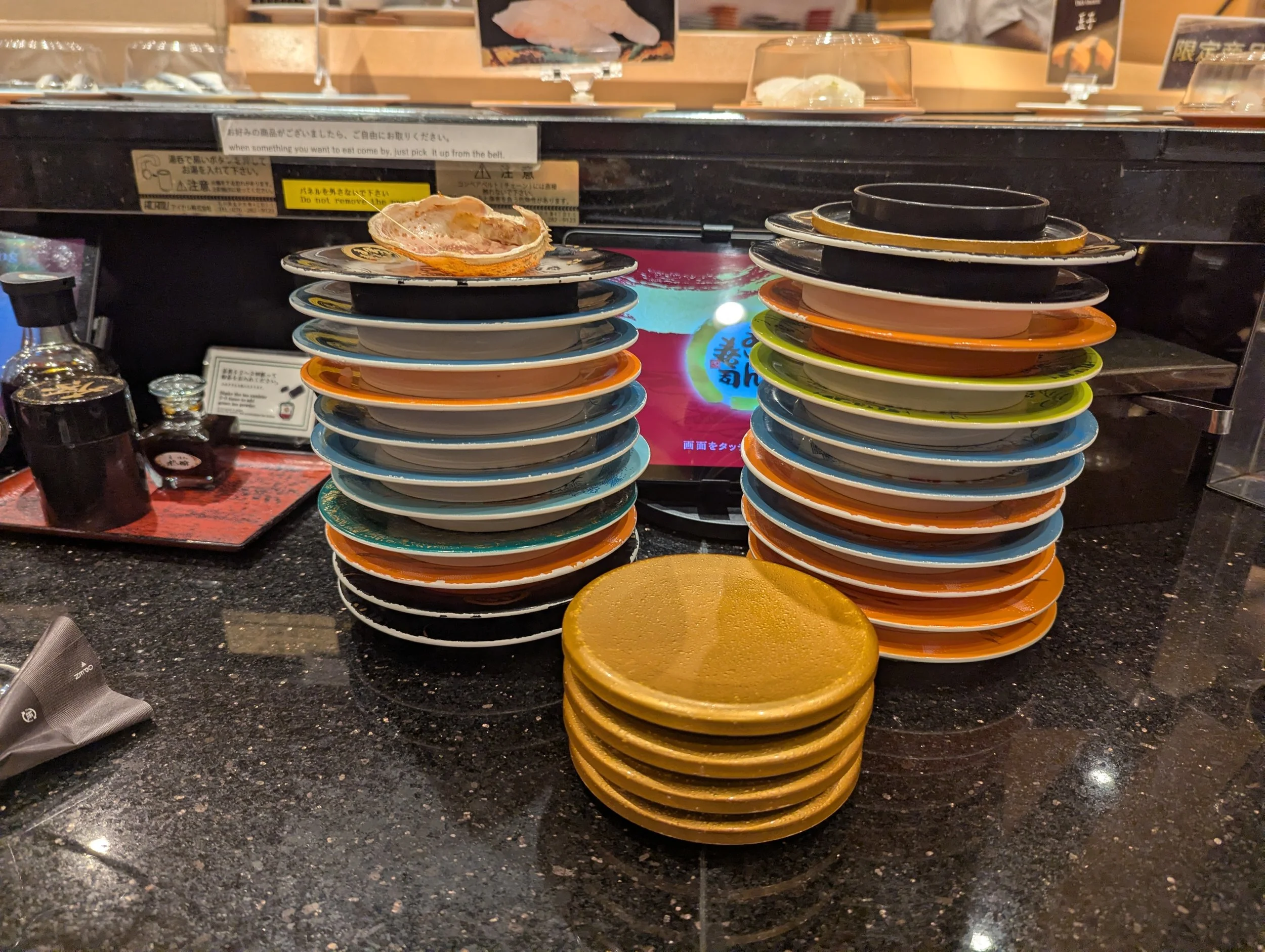
Day 10: Saturday, December 6th - Kyoto to Tokyo to Home
We woke at 6AM to prepare for our last day in Japan - which was going to be a very long travel day.
We checked out of the hotel and went to station to get breakfast. I got onigiri from 7-Eleven and Kevin got an ekiben. It was 36 degrees out.
Our shinkansen was the 8:01 Nozomi 220 to Tokyo, scheduled to arrive at 10:15. This train stops at Nagoya, Shin-Yokohama and Shinagawa before Tokyo. at 9:30, we passed Mount Fuji - you should book seats D and E for the best view. Kevin’s ekiben was self-warming. To warm it, just pull the string and it starts feeling warm within seconds, although it takes 7-8 minutes to fully warm. Kevin has an app that measured we were going 175mph.
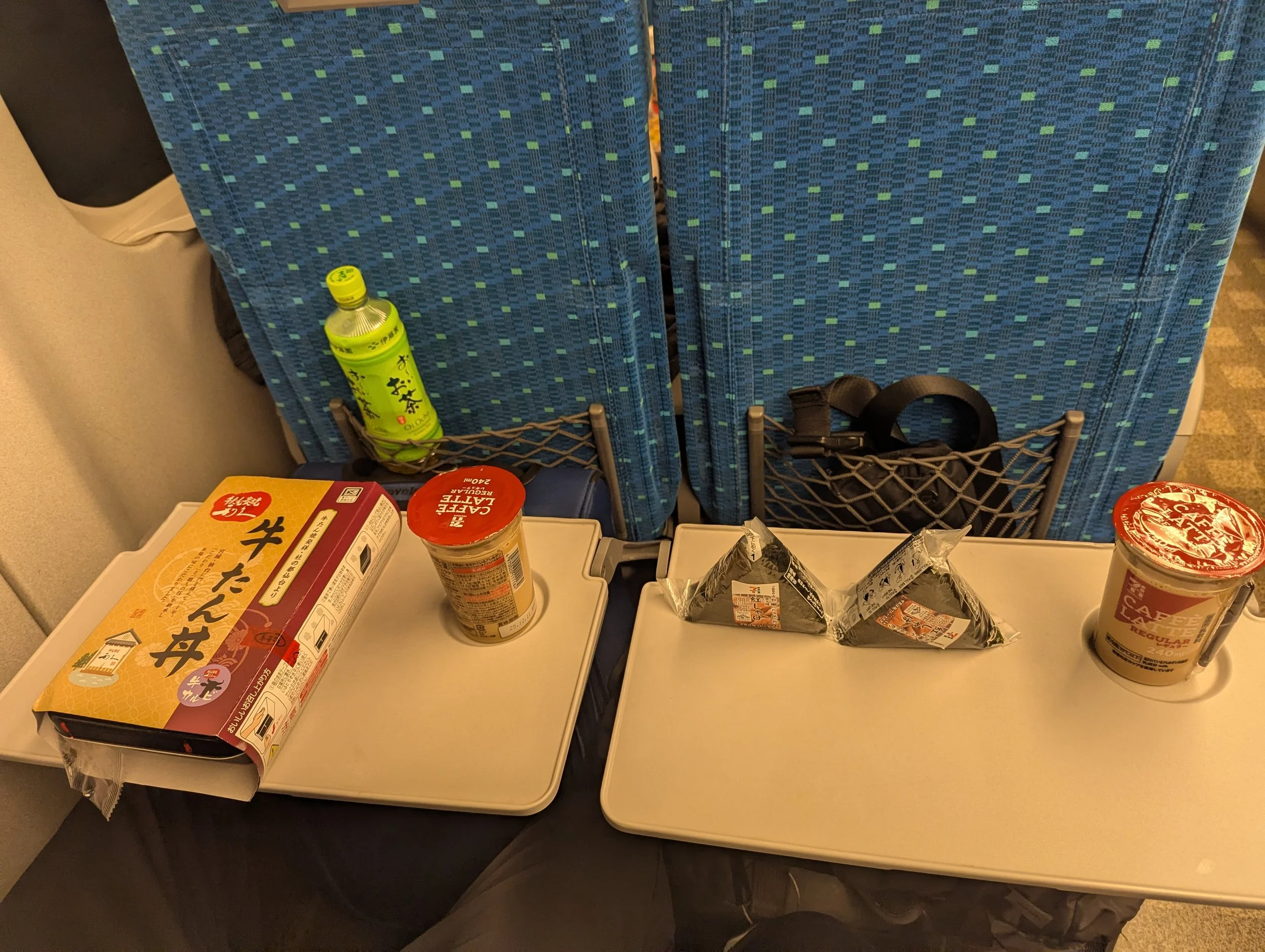
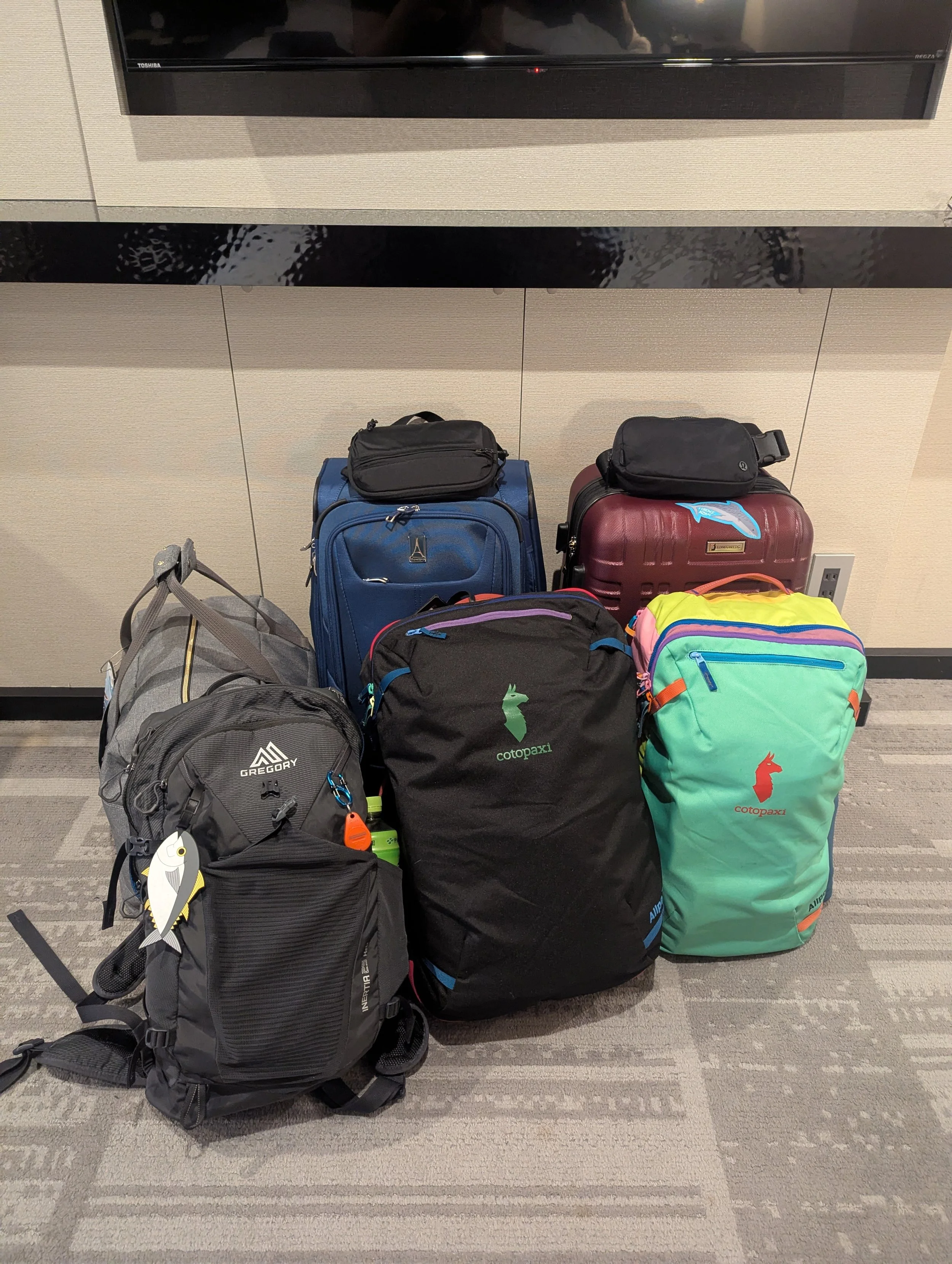
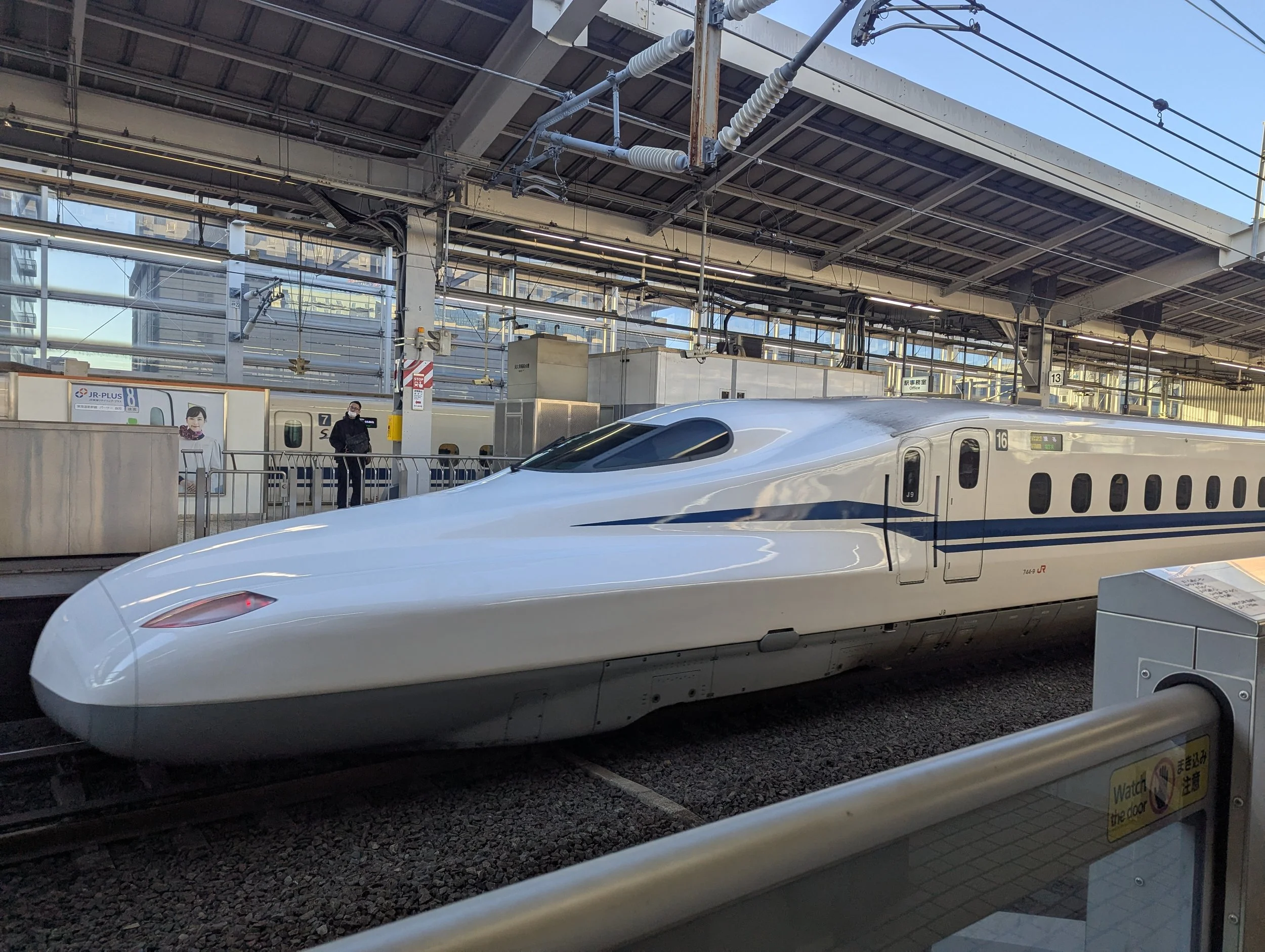
Tokyo Station was a mad house - absolutely insane crowds and difficult to move around. I wanted to shop at the Ghibli store for Totoro souvenirs and check out the other shops on Character Street.
From Tokyo Station, we took the took the Keikyu Line to Shinagawa. There was a lot of construction in and around the station that it was hard for us to recognize. We could not find signs for coin lockers. Usually coin lockers are inside and outside the IC gates but this station had coin lockers only inside the gates, at every gate except the west gate where we were. Instead of tapping back in, we tried coin lockers at the Prince Hotel but the large ones that would fit our luggage were all taken. Instead, we were forced to take our bags with us to lunch.
When we first went to Japan in 2017, my dad had taken us to this tempura restaurant near the Prince Hotel, across the street from the Shinagawa Station. We found the tempura restaurant by memory, amazingly. We ordered lunch at 11:45 and they were extremely accommodating for our luggage. We sat at the the counter and we each ordered Course C, with two shrimp, eel, squid, whiting fish and veggies. They prepared the food right in front of us, with the fryer directly in front of us. In total, there were three tempura chefs and three staff members.
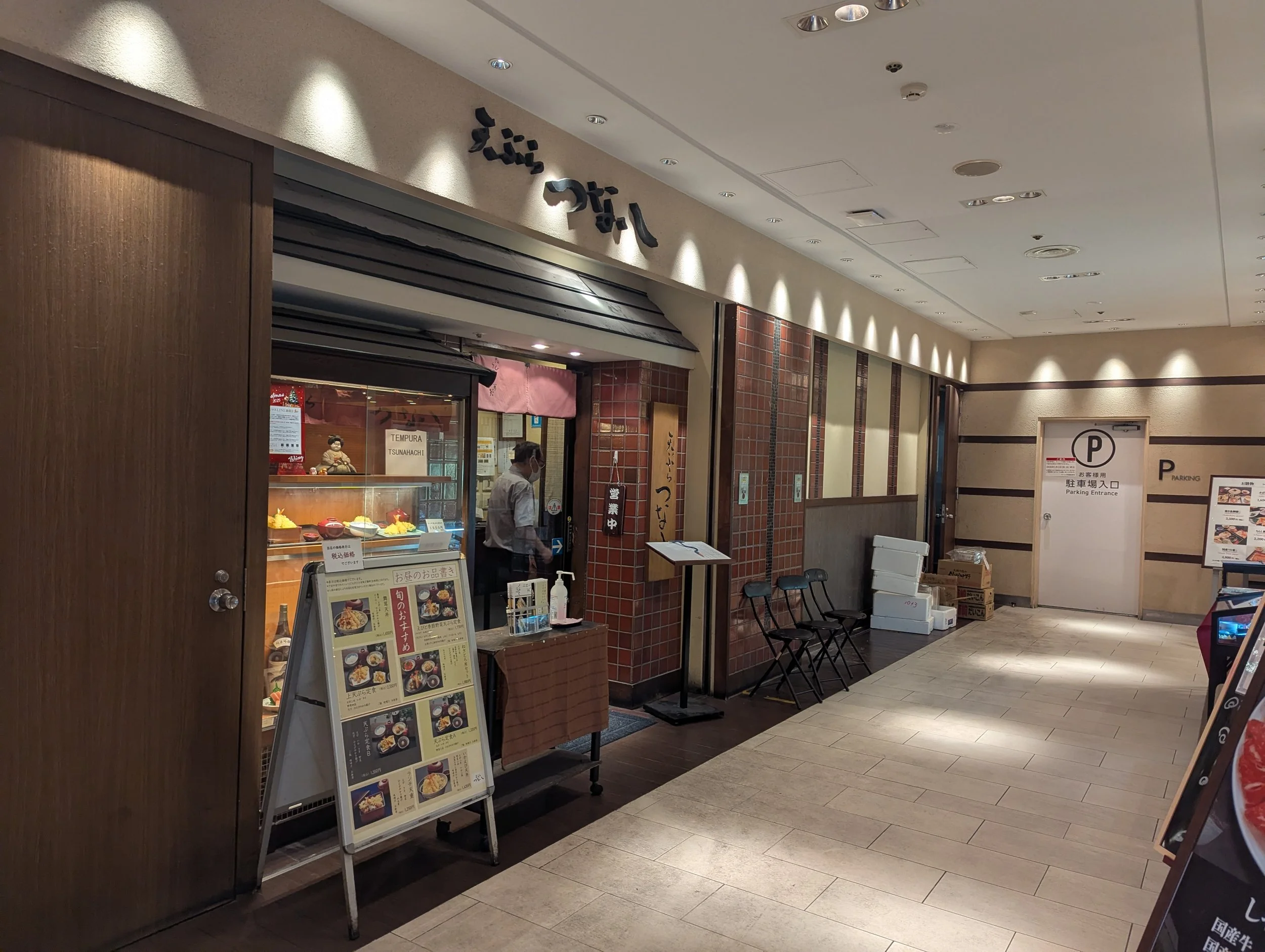
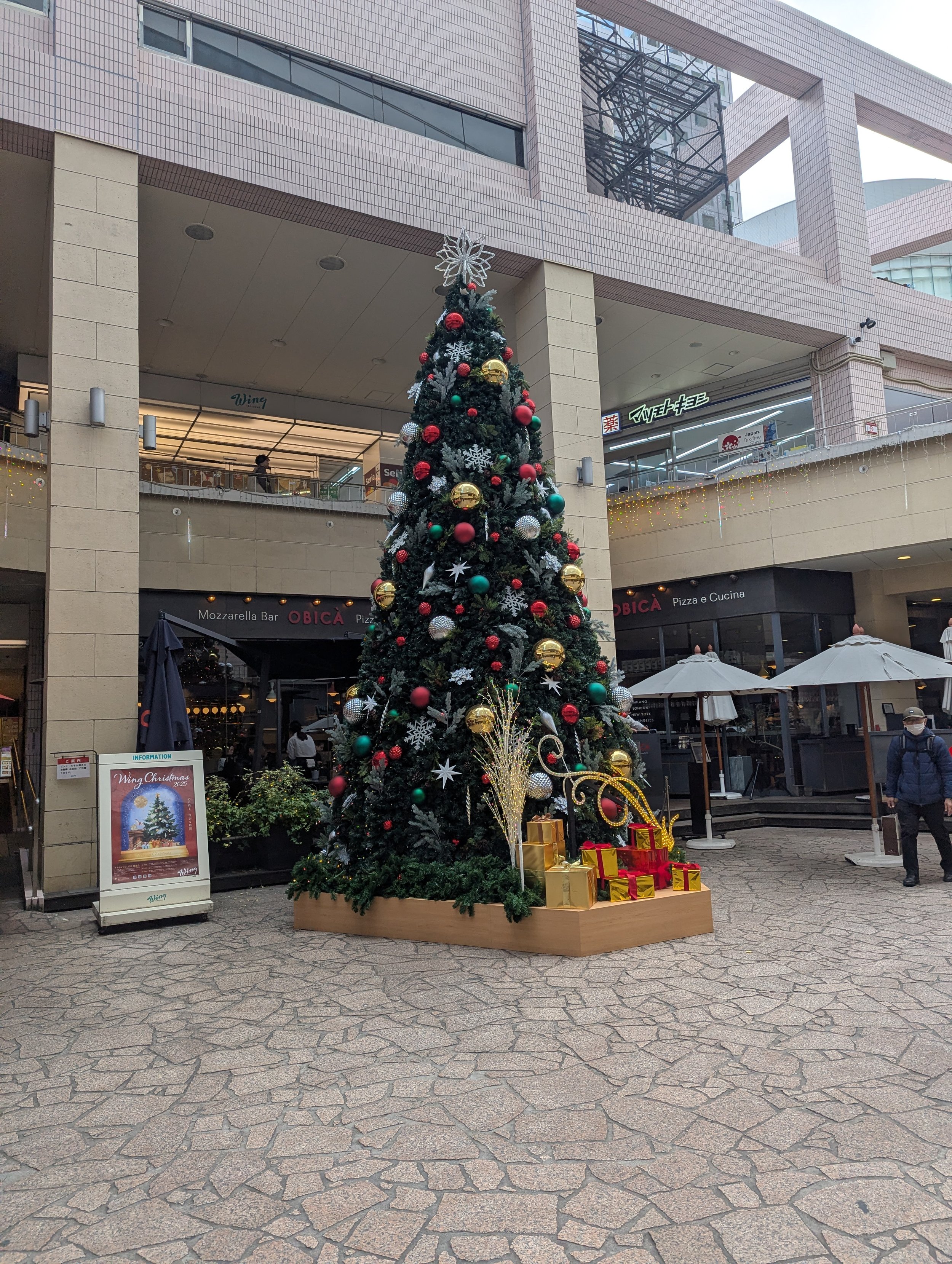
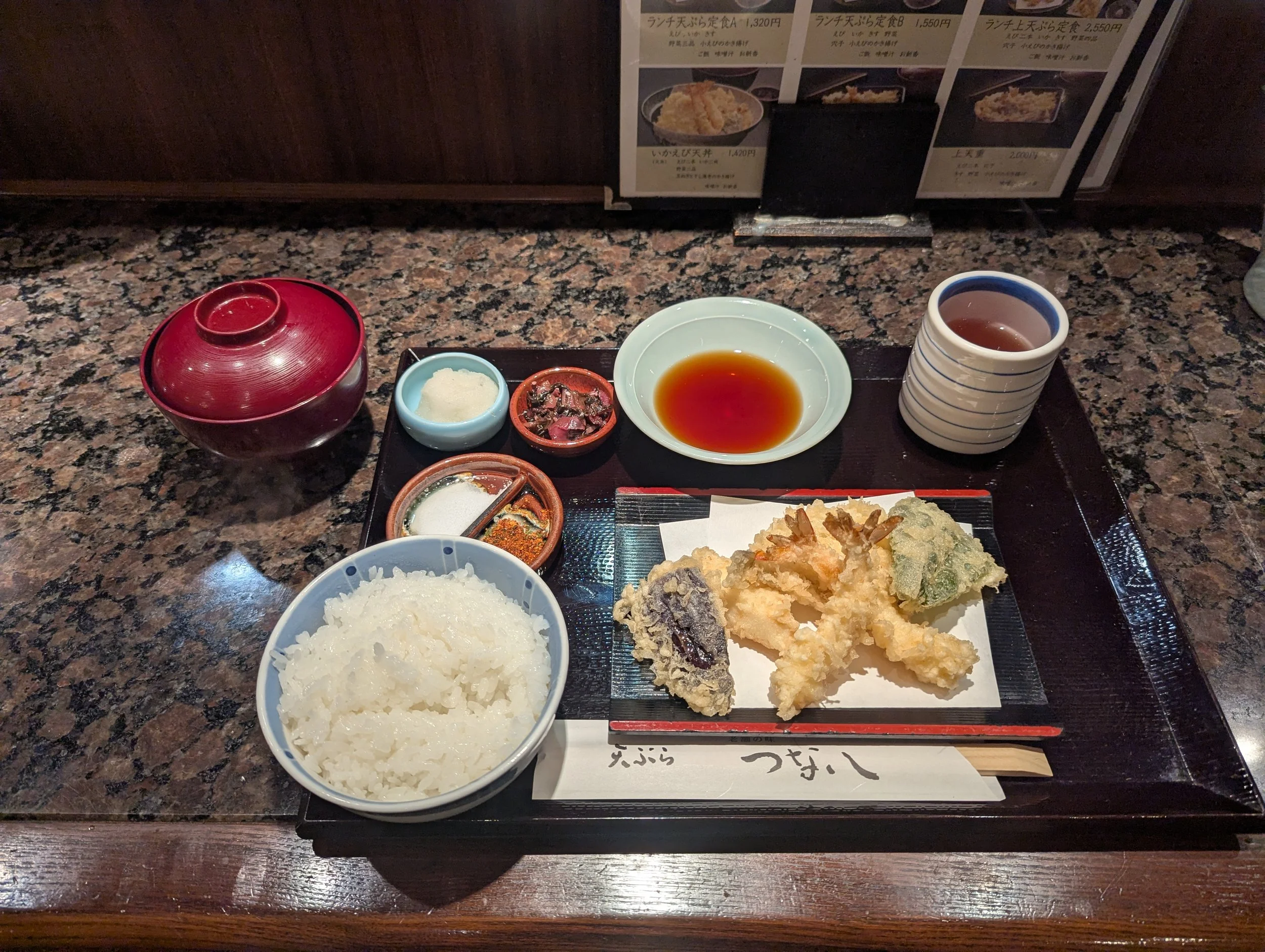
By the time we finished lunch, it was 12:30. We took the subway back to Tokyo to go to the Sky Tree since we had time. In all the times that we’ve been to Tokyo, we still hadn’t been to the Sky Tree.
Unfortunately for us, we couldn’t find coin lockers by the Sky Tree either, but we did find baggage storage. It was 4400 yen, which is quite expensive, considering coin lockers are max 1000 yen. Although later, we did find the coin lockers on our way out, located behind the escalators up to the Sky Tree.
We stumbled upon a Christmas market outside the Sky Tree - our third Christmas market this trip! We got the Christmas cider in the souvenir mugs. There were a lot of food stalls and plenty of seating and photo ops.
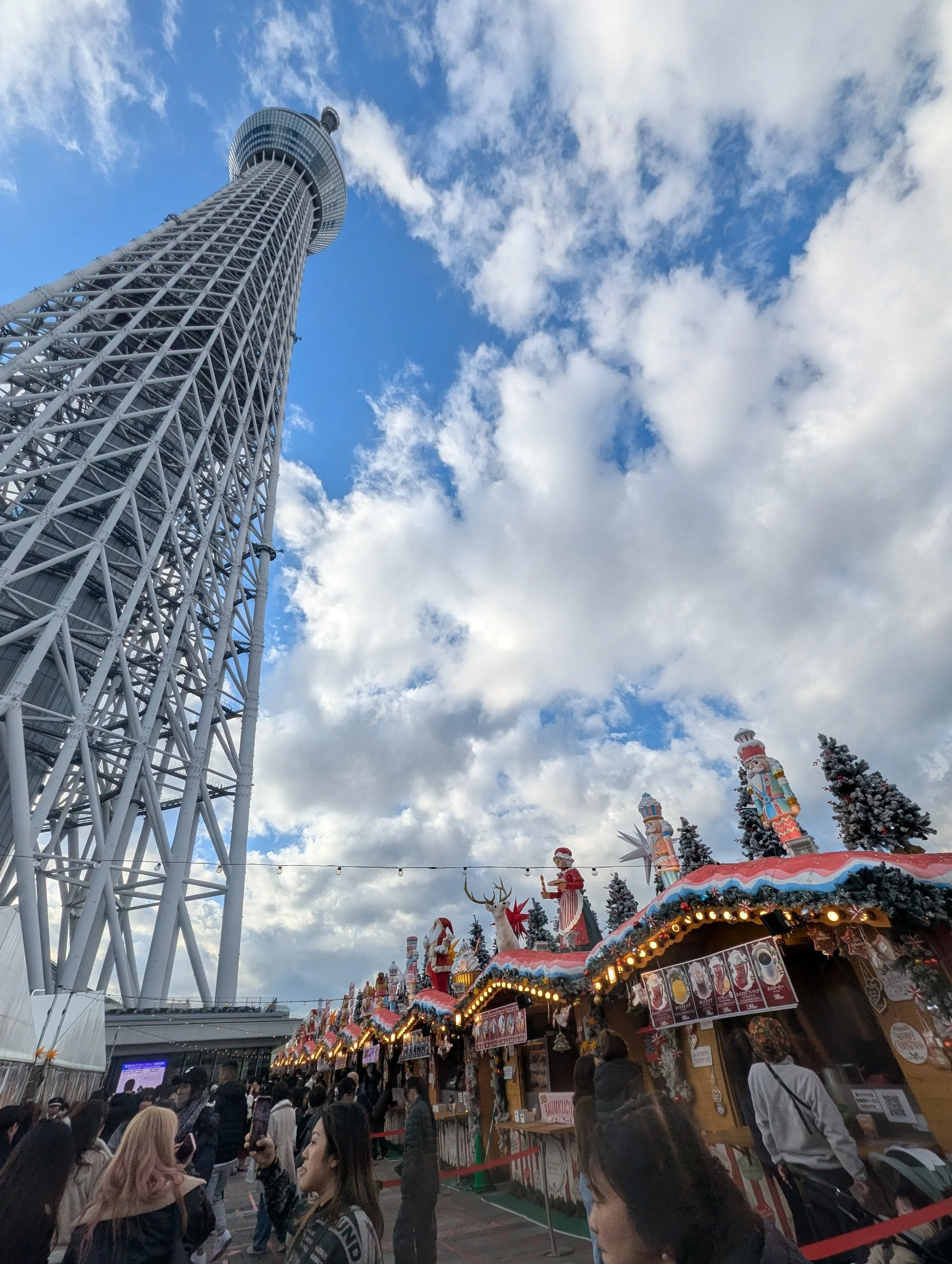
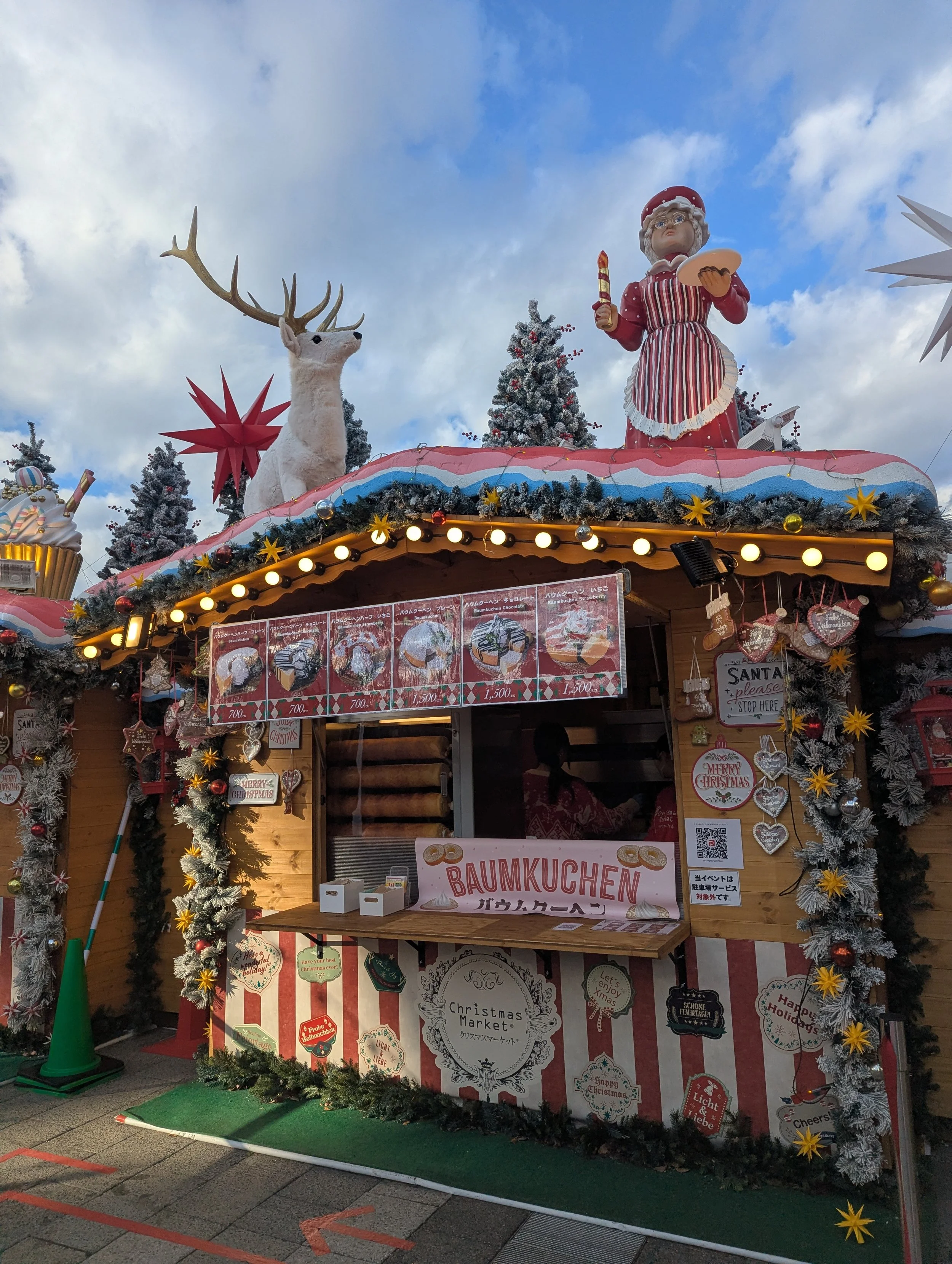
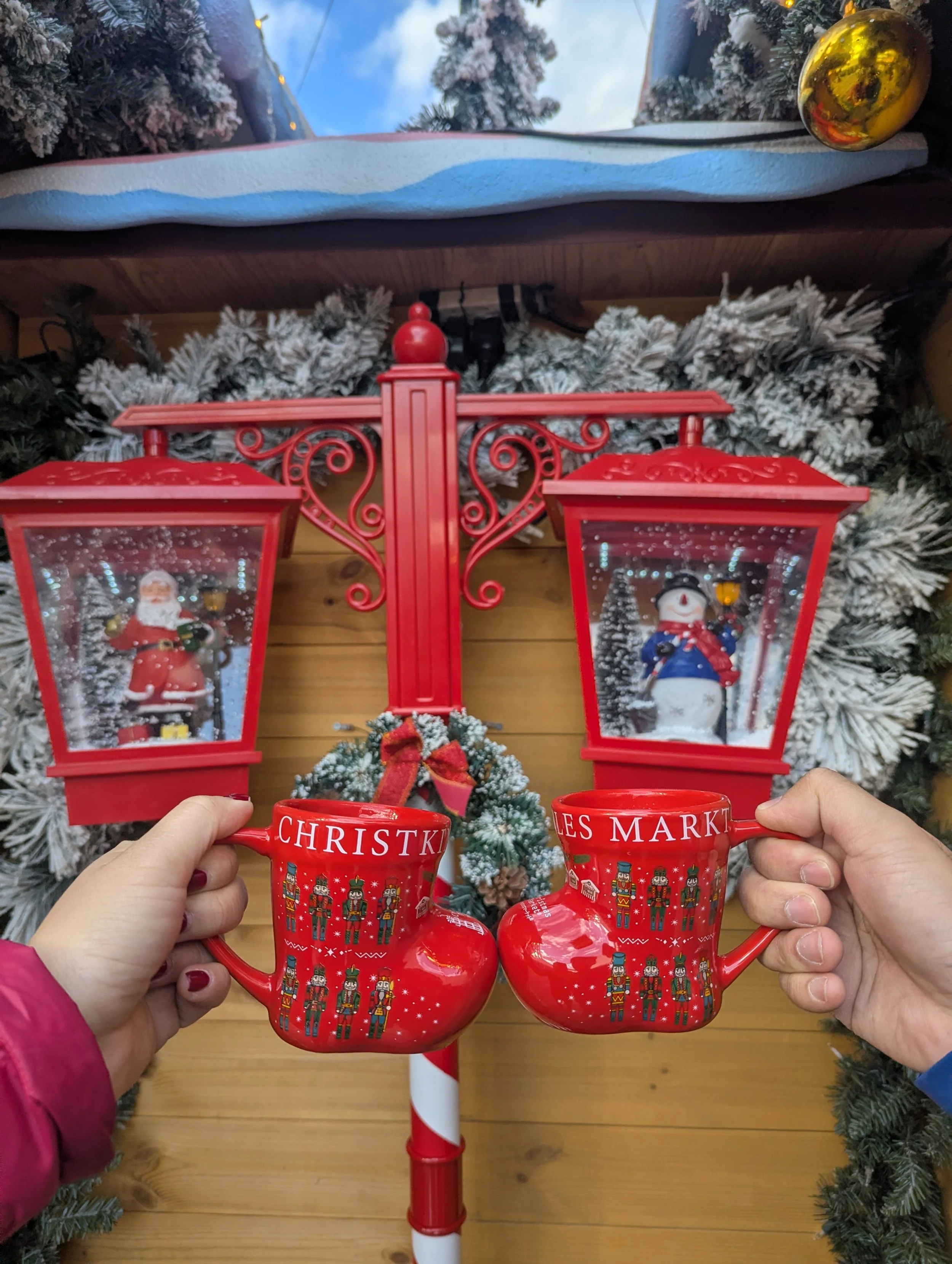
Inside the mall were plenty of shops, but everything was really expensive. There was a huge line for the Pokémon store, so we didn’t do in.
We caught the 15:07 limited express, arriving at Haneda at 15:54. It was later than we usually like to arrive at the airport but the app told us that we couldn’t check our bags until 4pm anyway. On the train, there was an older non-Japanese dude who made space for a younger non-Japanese dude with a large box on the train. They started talking and the older guy didn’t know any Japanese, including “arigato”, he asked what brought the younger guy to Japan and how long he was in Japan for, to which he replied he was in Japan for two days because he was hungry. Nothing has ever resonated with us as much as that sentiment.
Our bags were checked at 16:07 and we were through security at 16:24. There were two lines, and somehow, Kevin and I got separated. The last time we flew home from Haneda, in 2023, the line for security was ridiculously long that it wrapped around the downstairs - yet, even so, it moved quickly.
We got sushi to go from the food court, as we have in years past. The wasabi is under the fish, in traditional Japanese fashion, but I remember it was strong. We did some last minute shopping at duty free, the small Don Quijote in the airport, 7-Eleven for snacks and the Pokémon vending machine by gate 108.
Our boarding was delayed due to the incoming plane being late. Boarding started 6PM instead of 17:30. Take off was scheduled for 18:25 but came out of gate at 19:09 and took off 19:30. Our flight home was full. I watched a bunch of movies: Bride Hard, A Carpenter Christmas Romance, The Family Plan, A Nice Indian Boy and ate almost none of the plane snacks I purchased at 7-Eleven.
I remember feeling like this trip was less exciting than previous trips, almost underwhelming - but I think too that we were spoiled by visiting in 2023, shortly after Japan re-opened to tourists after the pandemic, and we visited Hokkaido in 2024 which is just a completely different, low-key, less touristy experience. This trip we were in Tokyo and Kyoto and it felt inundated withe tourists. Kinosaki Onsen was the vibe we were looking for - relaxed and peaceful.
Concluding and Miscellaneous Thoughts
Toyota built in navigation is better than Google Maps - it shows landmarks at intersections to turn, which is super helpful. The directions are also so polite, like "please turn right.”
The seven baths of Kinosaki:
1) Kono-yu: Water of Happiness
2) Mandara-yu: Water of Prayer
3) Goshono-yu: Water of Beauty
4) Ichino-yu: Water of Luck
5) Yanagi-yu: Water of Fertility
6) Jizo-yu: Water of Safety
7) Sato-yu: Water of Friendship - this bath was temporarily closed for renovations while we were there
My favorite is still gosho.
This trip, the sun rose 6:45 ish and set 4:30-4:44PM depending on where we were. The temperatures ranged from in the 20s in the morning in Takayama, to 63 degrees in Kyoto.